Navigation
- Concept
- Ancient Egypt
- Antiquity
- Byzantium
- Comparative Analysis
- Conclusion
Concept
Sleep is a natural part of the human experience, yet throughout history, it has remained a mysterious and ambiguous phenomenon. The way we conceptualize and visualize sleep speaks directly to people’s worldviews and even their lifestyles. Depending on religious, philosophical, and mythological beliefs, sleep could be perceived as a state of physical rest, a temporary detachment from the surrounding world, an encounter with the divine, or a symbol of eternal life.Of particular interest is how creators have conveyed their perspectives on such a complex and multifaceted phenomenon as sleep.
The primary goal of this research is to trace the connection between the symbolic meaning of dreams and the characteristics of their artistic realization, identifying common motifs and the specific features of each tradition under consideration.
When selecting visual materials, I favored works related to the theme of dreams or those containing significant symbolic imagery of dreams. The main criterion was the ability to trace the specific ways dreams are interpreted in each of the cultures examined. An additional selection criterion was the informational value of the works from the perspective of art analysis. Each piece needed to allow for an examination of visual devices.Textual sources were chosen based on their thematic relevance to the subject of dreams, as well as the accuracy of the information they presented. Scientific articles, art history research, and materials from official museum websites were used to illuminate the historical and cultural context.
The research hypothesis is that the peculiarities of dream imagery in each of the cultures under consideration were determined not only by artistic traditions but also by differences in its symbolic perception.
The structure of the research is built upon a historical and cultural principle and is divided into three main sections: Ancient Egypt, Ancient Greece, and Byzantium. This sequence allows for a logical answer to the study’s central question: «What are the characteristics of dream symbolism within various artistic and worldview traditions?»
It is hypothesized that the evolution of perceptions of sleep was accompanied by changes in the methods of its visual representation—including body posture and plasticity, compositional structure, and the use of symbolic attributes.
Ancient Egypt
In ancient Egypt, sleep was not perceived solely as physiological rest. It was a transitional state where a person partially lost control over their body and mind.
Reclining female figure on a bed. New Kingdom, c. 1550–1295 BCE. The Metropolitan Museum of Art
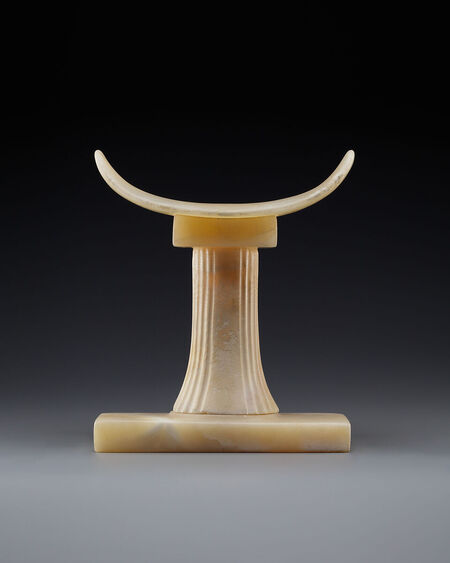
However, the composition did not convey the dynamic development of a person’s inner world during sleep. It was static, and the figures were passive.The true meaning of sleep was reflected in the artwork’s iconography and imagery. Since the Egyptians perceived sleep as a dangerous, sacred experience, the attributes frequently featured images of gods and animals.Headrest of Hentiky. Old Kingdom, c. 2323–2150 BCE. The Metropolitan Museum of Art
Ivory plaque depicting the god Shu, found in the tomb of Tutankhamun. Cairo Museum
Most often, the Egyptians depicted the god Bes for this purpose; he was considered a household deity—a guardian protector of children, mothers, and the hearth.
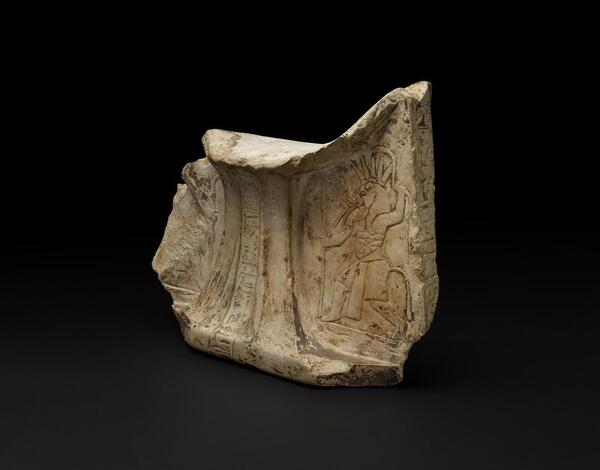
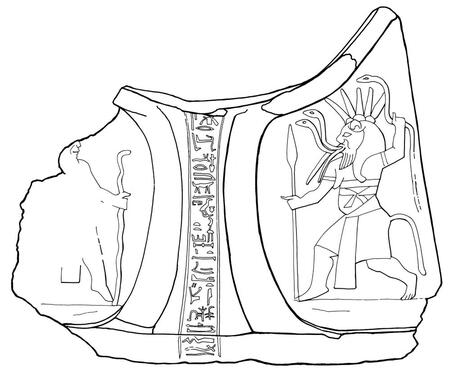
Limestone bedhead depicting the god Bes, c. 1200 BCE, British Museum
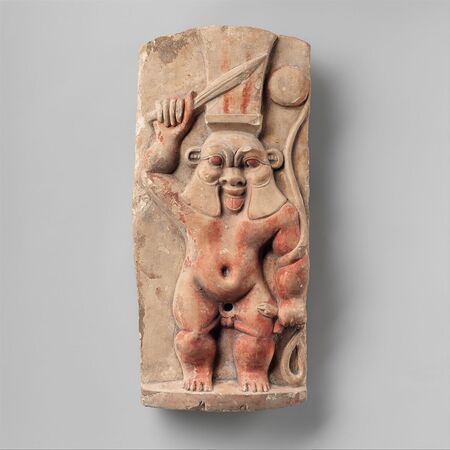
Divine imagery appeared not only on attributes. Temples contained «Bes rooms» with stelae decorated with Egyptian gods. Pilgrims and women would visit these rooms, hoping to receive a divine prophecy or guidance. This practice was known as «incubation.»
One such stela is the «Stela of Bes and the Temple Dream, ” where the divine meaning of the dream is still conveyed only through the recognizable image of the hero.
Stela depicting the god Bes, 4th–1st century CE, Ptolemaic period, Metropolitan Museum of Art in New York.
Sleep as a Metaphor for Death
On average, the burial ritual and the sarcophagus design imitated a person’s night’s rest. In the Sarcophagus of Khnumnahat, the mummy was placed on its left side—a posture used for ordinary sleep.
Coffin of Khnumnahta, Middle Kingdom, c. 1850–1750 BCE, painted wood. Metropolitan Museum of Art
The brick «Sprouting Osiris» reflected the metaphor of death as sleep. Nile silt was poured into a clay mold that featured an indentation shaped like a deity. As the seeds sprouted through the fabric and the earth, the green shoots mimicked the silhouette of the god. This demonstrated the magic of rebirth.By placing the artifact in a tomb near a sarcophagus, the Egyptians equated the deceased with Osiris, ensuring that the departed would «awaken» to eternal life just as the grain sprouts.
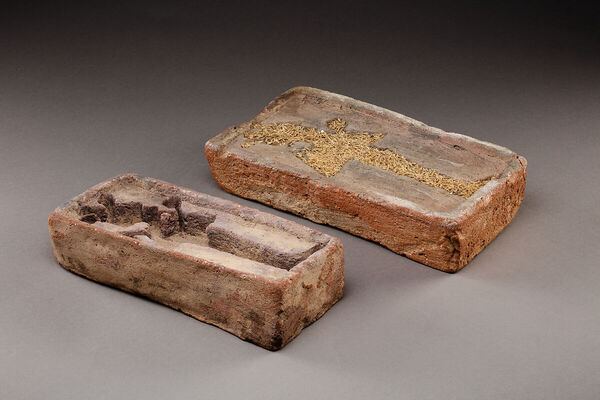
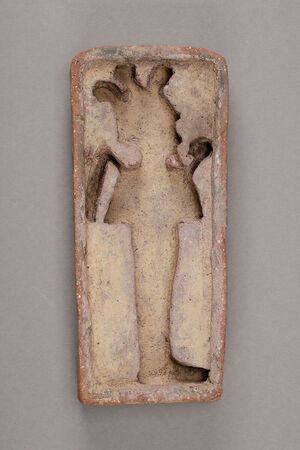
Brick, «Sprouting Osiris, ” Third Transitional or Late Period, circa 1100–300 BCE, ceramic. Metropolitan Museum
The semantic meaning was conveyed not so much by the visual elements, but by the ritual of artifact creation itself. The image remained the primary way to express the work’s conception.
Antiquity
Personification
One of the primary ways sleep is depicted in ancient Greek art is through its personification as Hypnos. Like many other abstract phenomena in Greek mythology, sleep acquires a human form and its own visual characteristics.
Bronze head of Hypnos, Hellenistic or Roman period, 1st–2nd centuries CE. British Museum
Hypnos was typically depicted as a young, winged youth. His soft, rounded facial features emphasized the connection to the tranquility that sleep provided.
Metaphor of Death
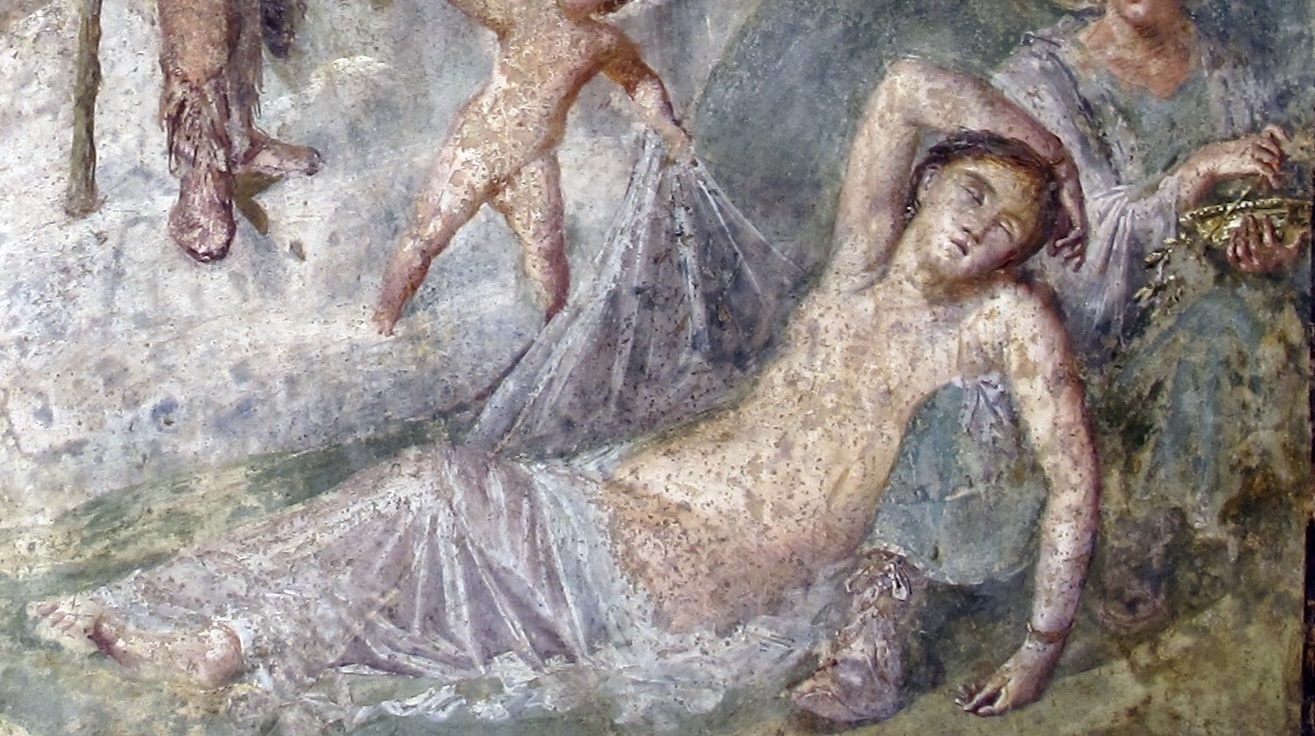
A narrative about the beautiful youth Andymion, who is immersed in the eternal sleep of Zeus.Here, sleep functions as a direct euphemism for death while simultaneously symbolizing the hope for immortality and afterlife.