Concept
FISH OM — a popular science media platform about fish in science and mass culture.
We gather everything related to fish in one place: articles, memes, internet projects, works of art, and much more.
Media Goal: To gather diverse information about fish in one space, popularize knowledge about them, and make it easier for those interested in fish and the natural world to dive into the topic.Target Audience: Fish enthusiasts looking for something non-mainstream in this subject, as well as people who enjoy broadening their horizons through edutainment.Platform and Content: A Telegram channel featuring short informational posts, visual cards, and curated resource collections.Unique Selling Proposition (USP): You no longer have to scroll through endless public groups about animals just to find a couple of notes on the pufferfish. RYB OM focuses on interesting and unusual information specifically about fish.
Segment:
Popular science mediaNiche Topic:
Fish, information retrieval, and fish researchData sources for media
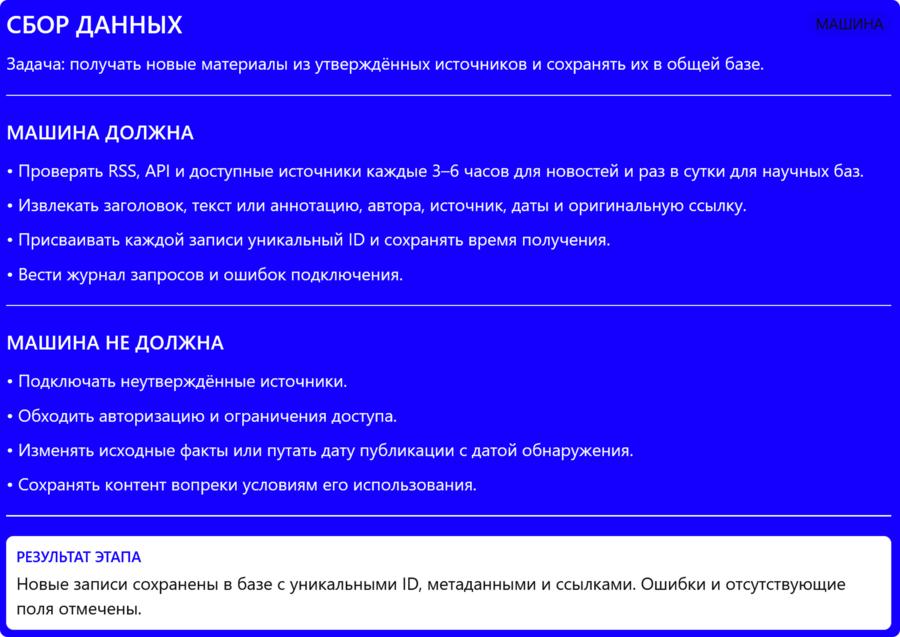
To maintain a diversity of publications, it is necessary to integrate several types of sources—this includes both textual materials and visual accompaniments, as well as interesting internet artifacts. Ideally, preference should be given to platforms that update regularly and provide RSS feeds, APIs, or open data.
Source Selection Principles:Thematic Relevance — regular publications regarding fish, their biology, behavior, habitat, or cultural representation.Reliability — the information must be attributed, linked to research, or verified by scientific organizations.Automation Potential — the availability of APIs, RSS feeds, open databases, or the capability to retrieve structured data.Accessibility— free access or acceptable terms of use for the data.Content Diversity — we ensure that sources provide varied types of raw content and do not solely consist of dry scientific papers.
Sources
Media Editorial publications that cover scientific discoveries, ecological events, and wildlife research. These allow you to track current agendas and find angles for publications.Scientific Journals and Digital Libraries Platforms that publish peer-reviewed scientific articles and research. Suitable for finding new academic work in ichthyology, biology, ecology, and marine science.Social Media Thematic groups, forums, and communities for aquarists, fishermen, and underwater photography enthusiasts. Useful for finding memes, unusual observations, user stories, and discussions.Video Hosting Sites, Digital Archives, and Catalogs Online libraries, cinematic databases, and catalogs for audio, video, books, and comics. Used to find works featuring fish, about fish, concerning fish, or mentioning fish.Stock Photo Sites and Open Media Libraries Digital archives of photographs, video footage, and illustrations with the ability to search and filter by theme. Used to select visual support for publications.
Data schema and processing division
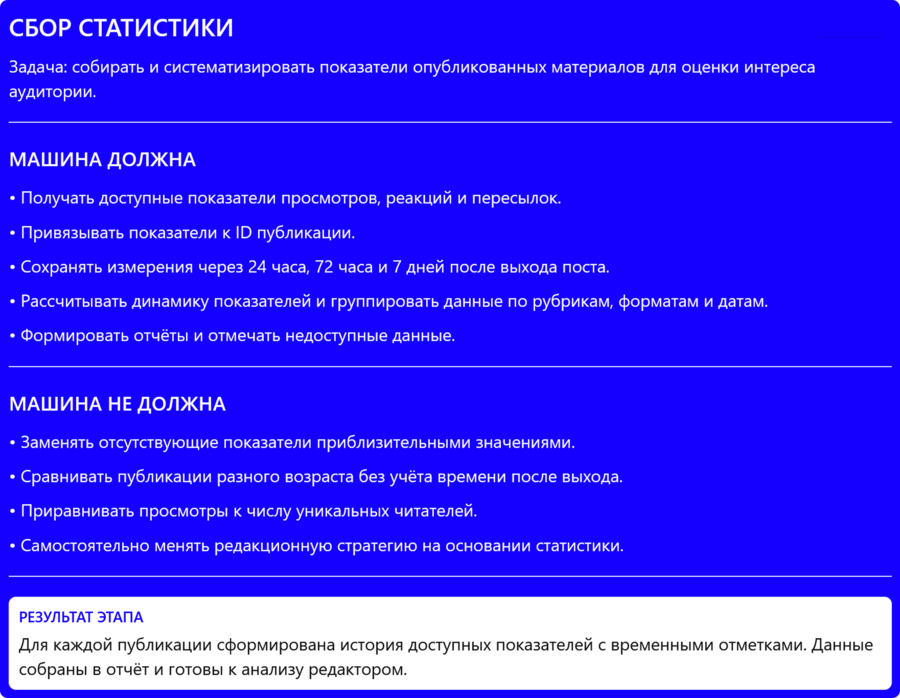
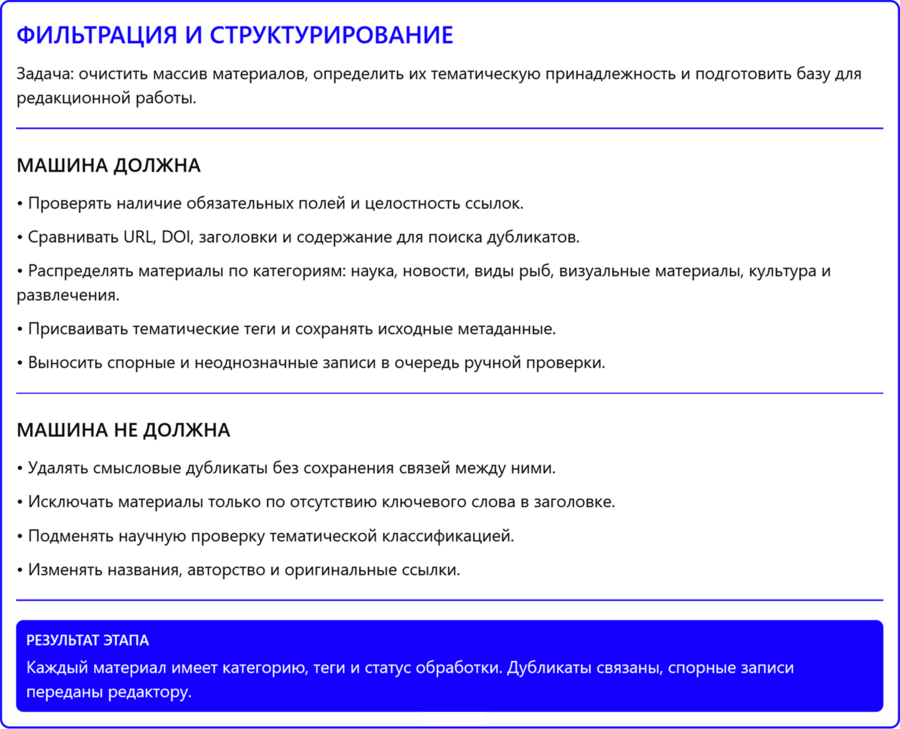
The data workflow is based on the principle of automated information gathering and initial processing, followed by editing. The machine is responsible for searching, filtering, and systematizing information; the human is responsible for selecting topics, assessing information quality, and transforming it into final content.
Guidelines for Automated Services
General Rules for the System:Factual Accuracy Do not invent facts, quotes, sources, or scientific data.Transparency Maintain links to original sources and mark any unverified information.Copyright Do not copy others' materials without permission or an appropriate license.Security Do not transmit passwords, access tokens, or confidential data to third-party services.Editorial Oversight Do not publish content without human approval.Error Handling In the event of a failure, a dubious result, or insufficient data, pass the task to the editor instead of inventing an answer.