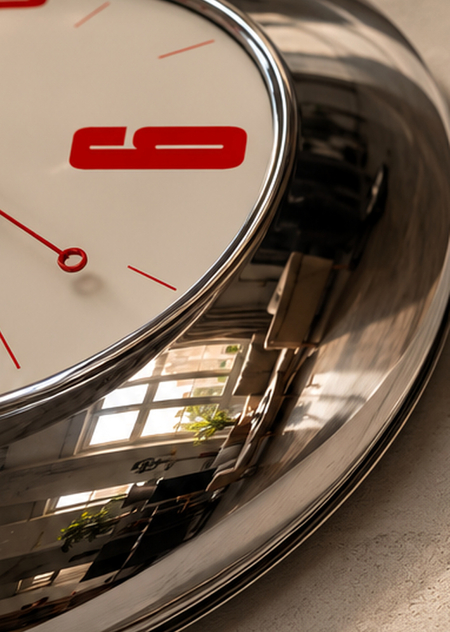
RUSH HOUR — wall clocks inspired by the convex mirrors found in the subway.
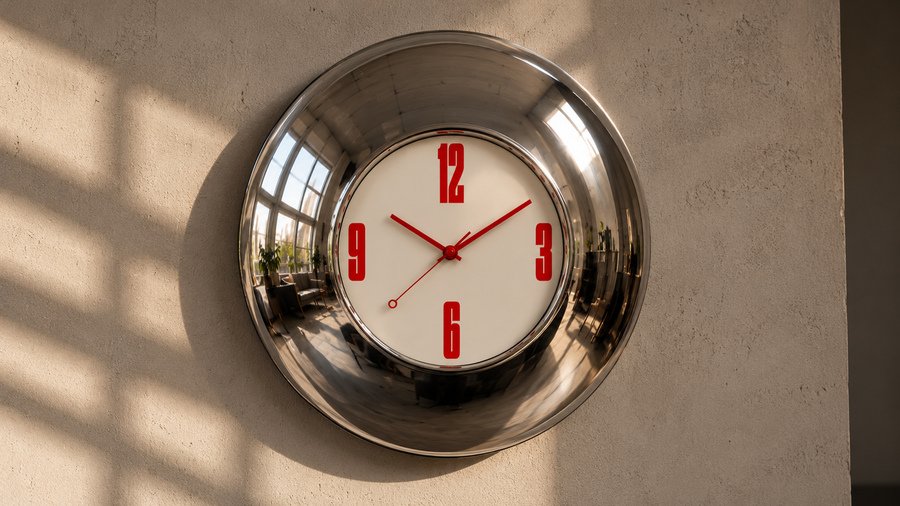
The central idea is to translate the visual language of the urban environment into interior design, transforming a familiar piece of infrastructure into a standalone design object.

The title, RUSH HOUR CLOCK, references both the film of the same name, which served as inspiration for the title sequence I created, and the constant movement of the city.
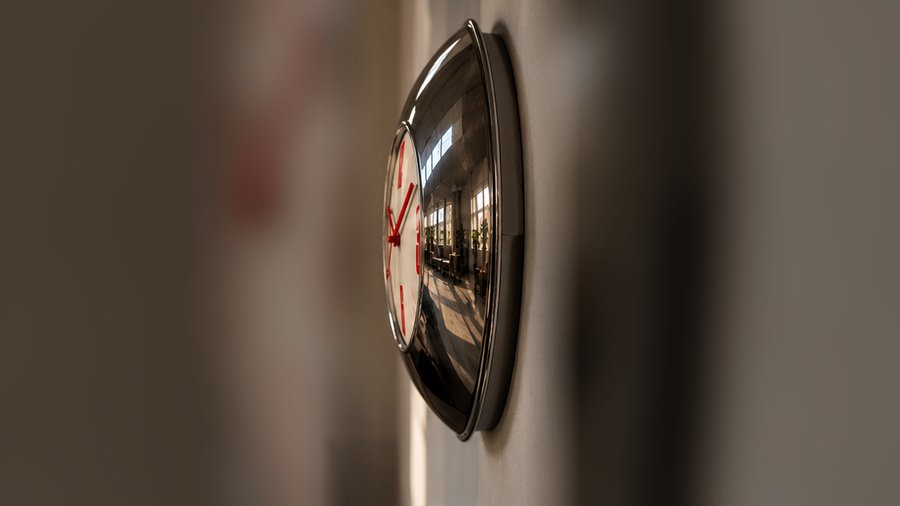
At the core of the object is a circular reflective casing with a protruding central dial.

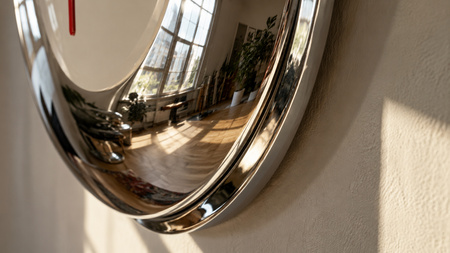
The dial is rendered in a concise graphic style. Narrow, bold typography serves as the main focal point, while the red hands complement its color and character. The reflective housing creates volume, and the protruding dial adds depth to the construction, separating the watch’s functional components from its outer casing.
Object Parameters
— Product Type: Wall-mounted interior clock.
— Outer Diameter of Casing: 450 mm.
— Nominal Depth of Casing: Approximately 100 mm.
— Dial Diameter: 190 mm.
— Dial Thickness: Approximately 2 mm.
— Projection of the Dial Face from the Top of the Casing: Approximately 25 mm.
— Estimated Depth from Wall to Dial Face: Approximately 125 mm when mounting the casing directly to the wall.
— Casing: A finished, convex mirror with a reflective surface.
— Dial: Aluminum or aluminum composite panel with a matte, milky finish.
— Graphics: Red numerals and hour markers.
— Hands: Red, compatible with the chosen quartz movement.
— Power: AA battery, 1.5 V.
Construction
The object consists of five main components:
1. Convex reflective shell.
2. Separate circular dial with graphic design.
3. Quartz clock mechanism with hands.
4. Three metal supports holding the dial in front of the shell.
5. Rear mounting plate for wall installation.
The dial is affixed to supports engineered to accommodate the shell’s actual curvature. The mechanism is positioned on the reverse side of the disc. The mounting system must transfer the load to the load-bearing base, not just the thin reflective surface. The design allows for access to the mechanism for battery replacement and maintenance.