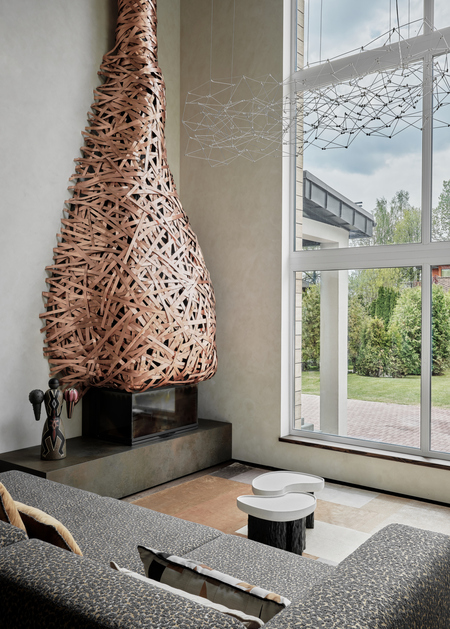
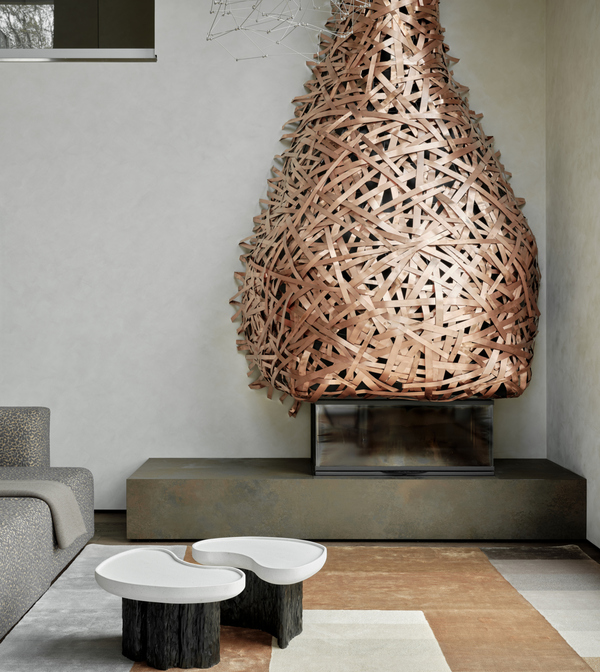
The house is situated on the banks of the Volga, and it is this natural context that served as the starting point for all of the interior architecture. Many ancient and medieval authors referred to the Volga under the name «Ra.» For example, Ptolemy and all other ancient authors who wrote about this river called it that. RHA comes from the Latin word for generous. The image of a family ancestral home was the association that guided the design of the space. Thus, the unusual fireplace appeared here, its chimney adorned with a sculpted volume of copper; the saturated golden frame reflects the sun’s rays and shimmers in various shades.
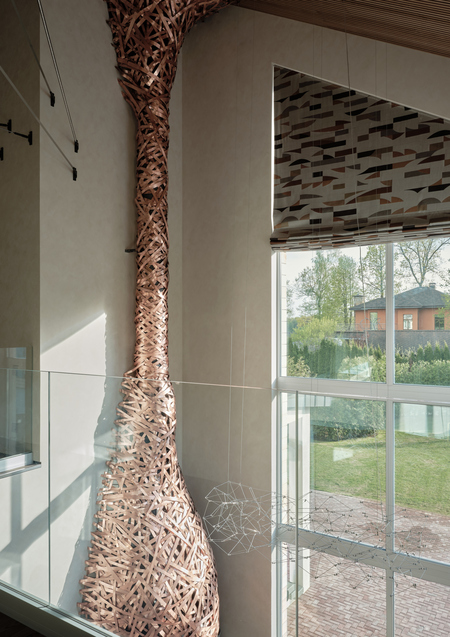
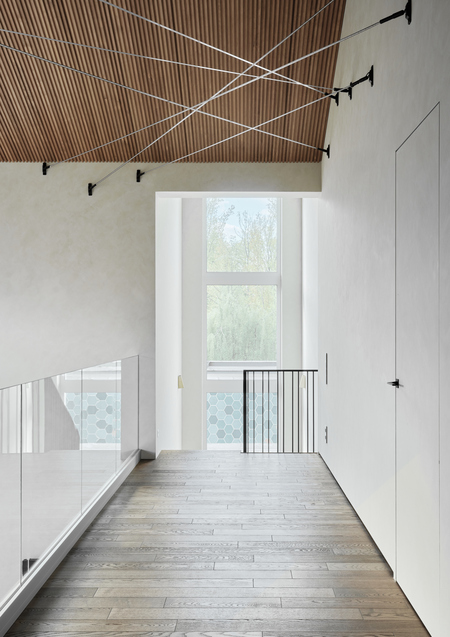
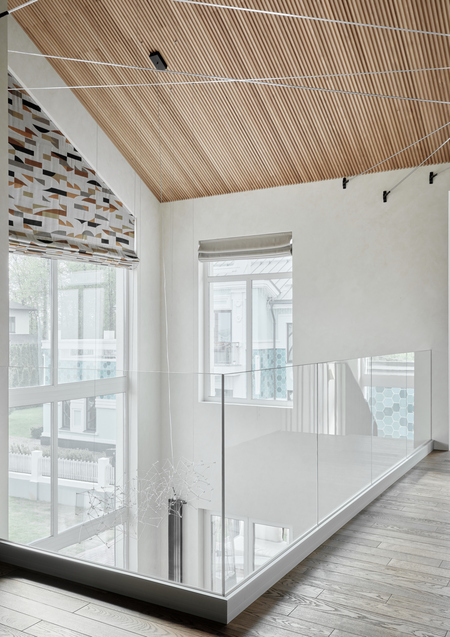
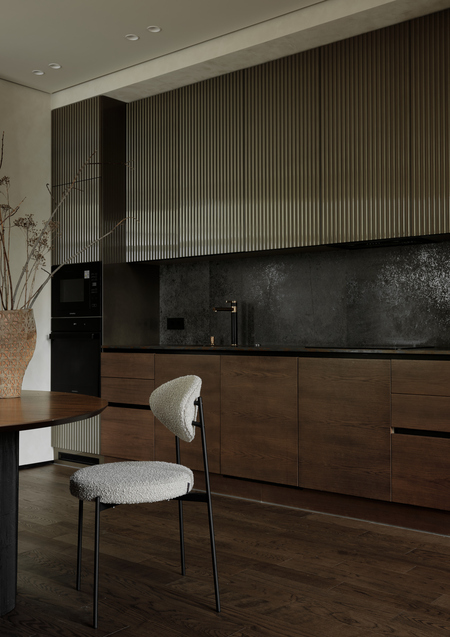
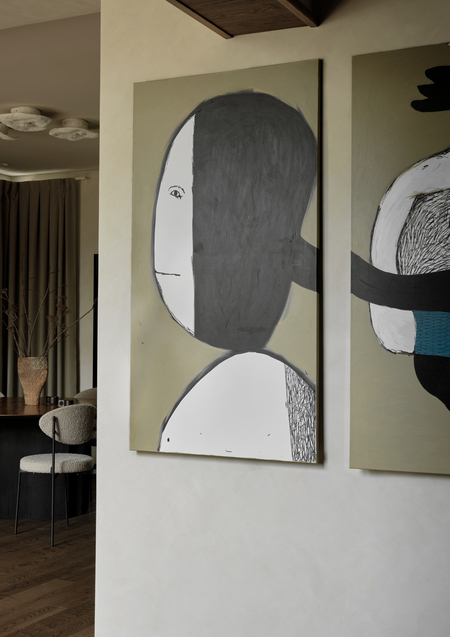
The connection to the environment here is built into the core design decisions. The preserved grove on the site has become a full part of the living narrative, and the large window openings and open spaces allow the landscape to be incorporated into the perception of the interior. The house is not isolated from nature—it exists in dialogue with it.
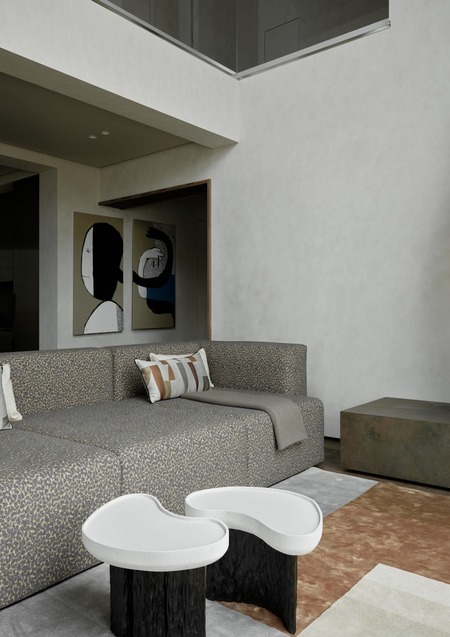
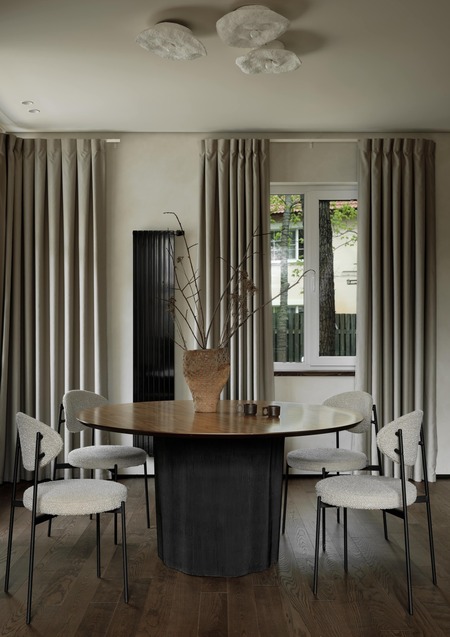
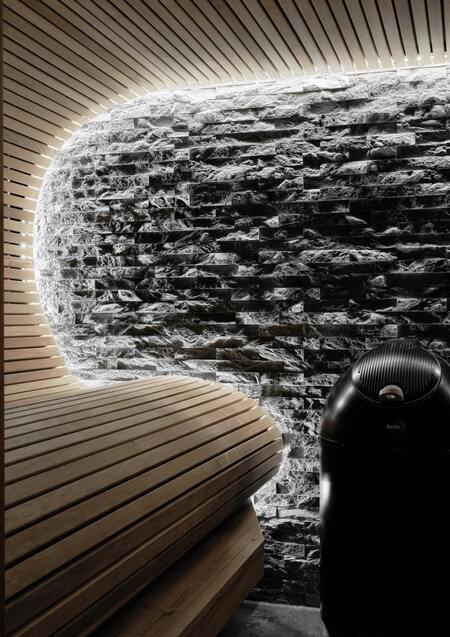
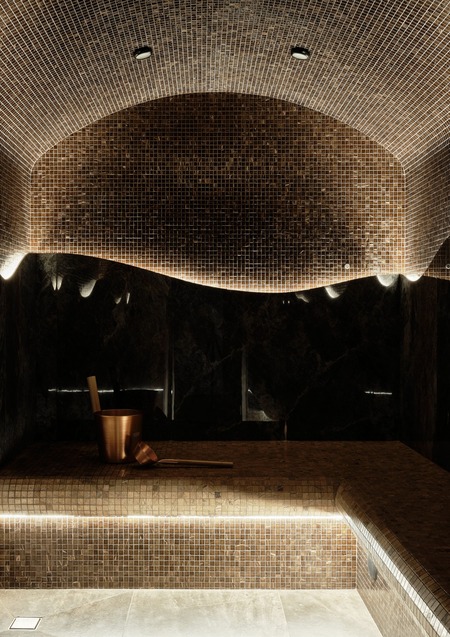
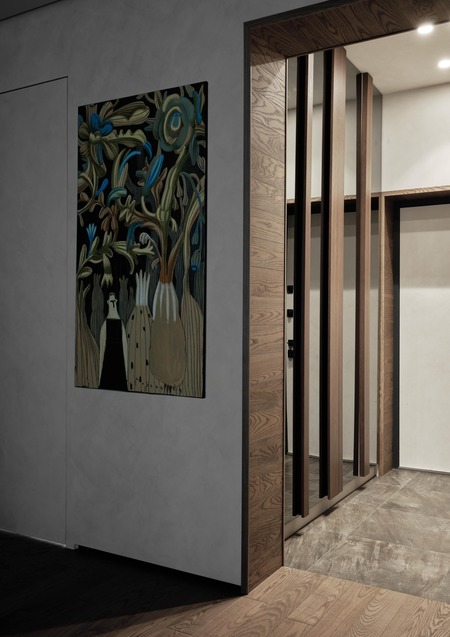
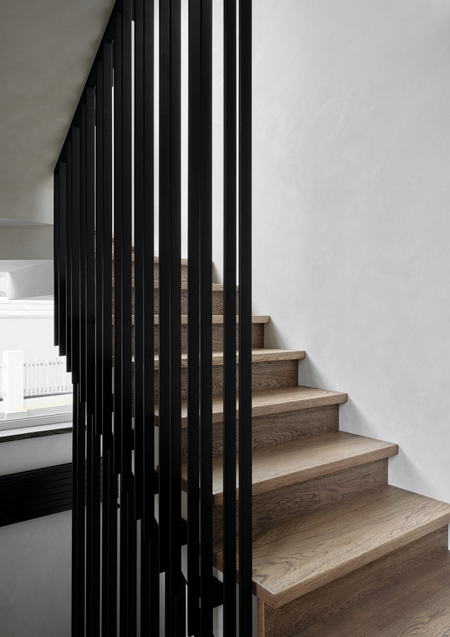
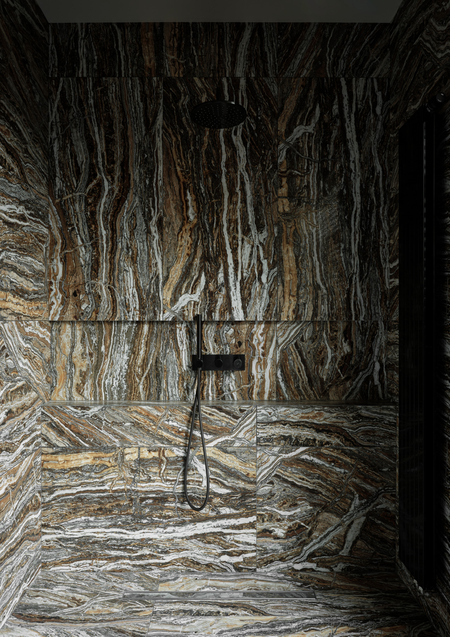
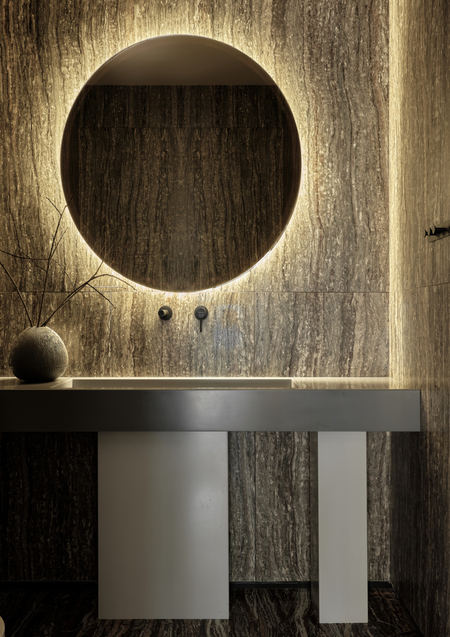
The material palette follows the same logic. The interior incorporates wood, stone, metal, and textile—natural materials with predictable temporal behavior. These elements create a serene, tactilely comfortable environment that does not require frequent replacement, which is directly tied to an ecologically conscious design approach. The furniture, lighting, and art objects in the project are of Russian manufacture; there are pieces created based on my sketches in workshops located in Nizhny Novgorod, Moscow, and Saint Petersburg. For instance, the sofa and beds were produced by the company Nesthome from Nizhny Novgorod. The table is a custom order based on the designer’s sketches. The coffee table, Shelest, was designed by designer Evgenia Shilova (Be Home buro, Manner & Matter). The lighting comes from Bezhko, Woodled, Zenit, and Tayga Design. Hand-woven rugs made from art silk and wool from the Bauhaus and Irregular collections were sourced from kover.ru. The ceramics are «Sornyaki» by Irina Bobylkova. The vase is made from Divyeev clay, glaze, and glass, from Nizhny Novgorod. The custom dinnerware is by Anastasia Nikolaeva from Nizhny Novgorod. The paintings are by Evgenia Goltseva (Nizhny Novgorod): «Catching Luck by the Tail» (2024), «Elena in the Botanical Garden» (2024), and «When I Counted on Less» (2024).
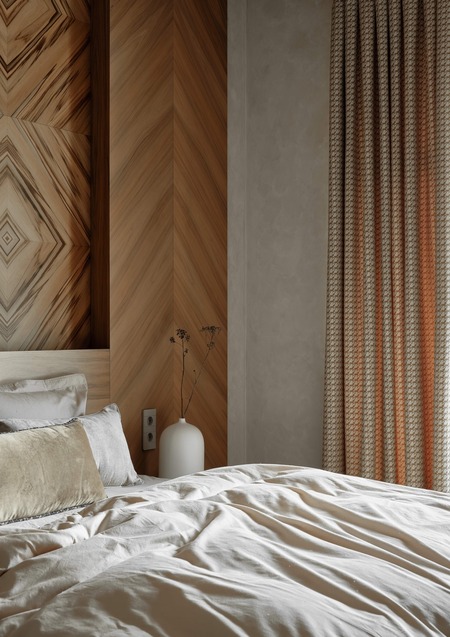
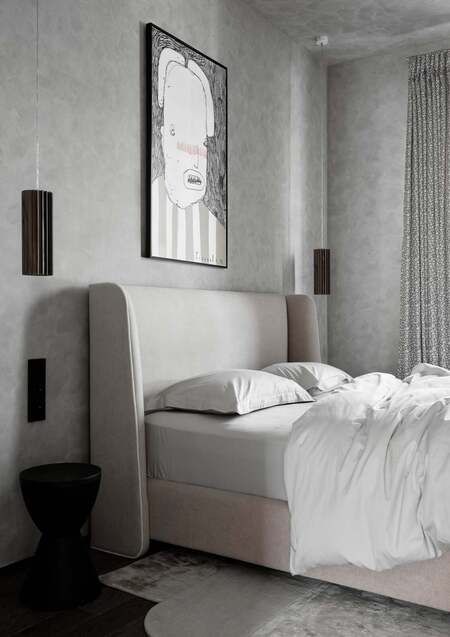
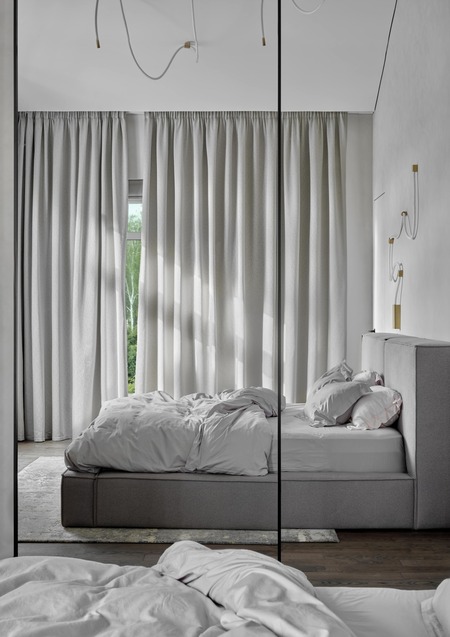
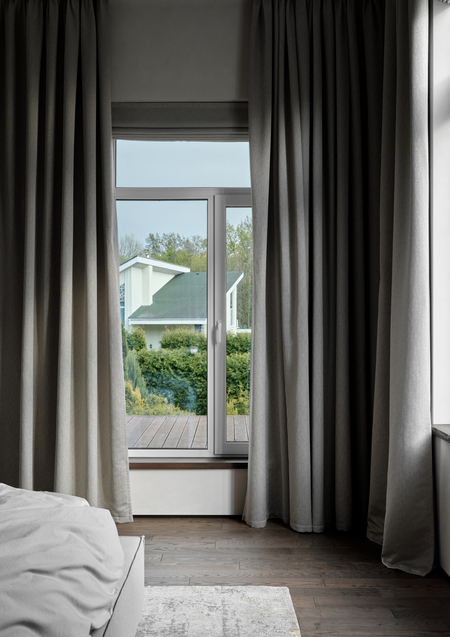
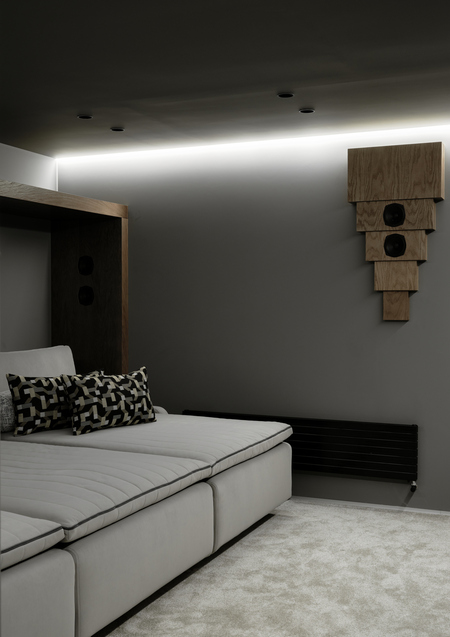
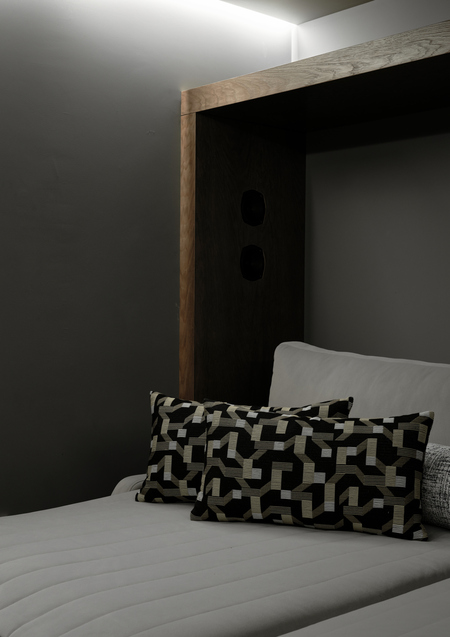
The space is designed as a place for rest and rejuvenation: the lighting design, soft color palette, tactile surfaces, and thoughtful layout create a comfortable environment. Even the expressive elements function as part of the overall material system of the interior, where texture, light reflection, and interaction with the space are paramount.
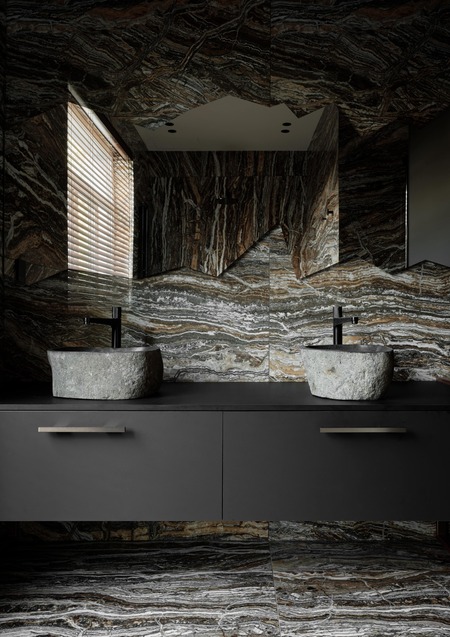

In this project, sustainability became an intrinsic part of the concept.