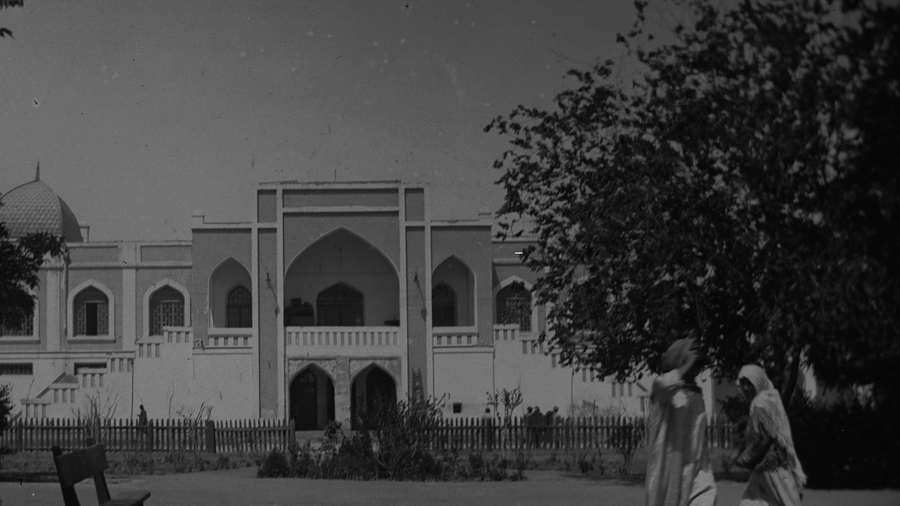
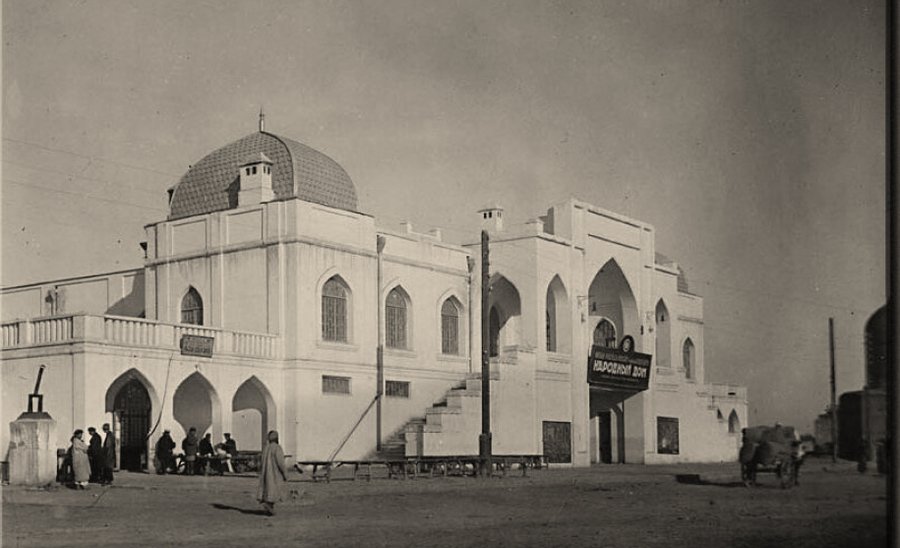
The construction of the building was completed in 1923; exact timelines are unknown. On February 17, 1925, the Soviet Union of Uzbekistan was proclaimed in this building: the Kurultai of Soviets adopted the declaration on the creation of the Uzbek SSR, approved the Constitution, and elected the first government. For a brief time, Bukhara served as the republic’s capital, and the building functioned as the primary state edifice.
Later, it was handed over to the Bukhara Regional Uzbek Theater of Musical Drama and Comedy, which was founded in 1922. The theater has a capacity of 450 seats. The ground floor housed the stage and halls, the second floor contained political and public organizations, and the ancillary wings included the library, club, women’s department, and editorial office. The People’s House became a hub of public life, hosting rallies and demonstrations.
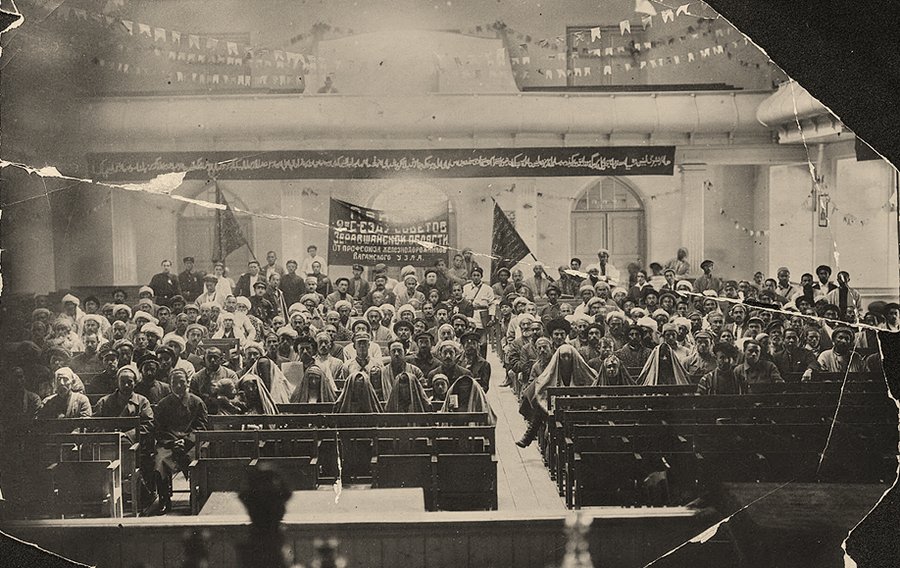
Meeting held at the People’s House in honor of the visit of Mikhail Ivanovich Kalinin, Chairman of the Central Election Commission of the USSR from the RSFSR, 1923.
Area Analysis
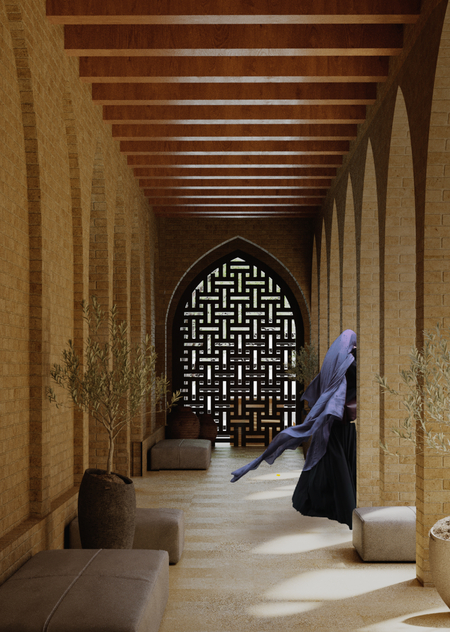
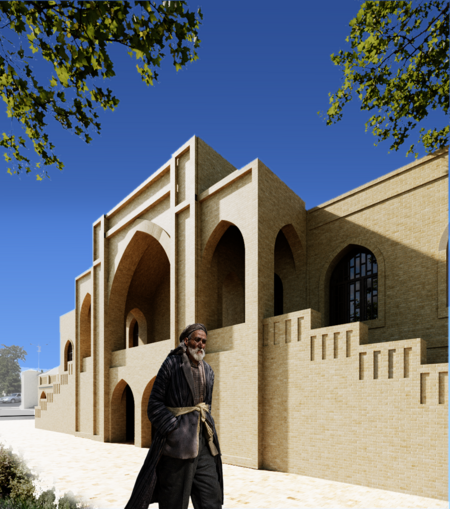
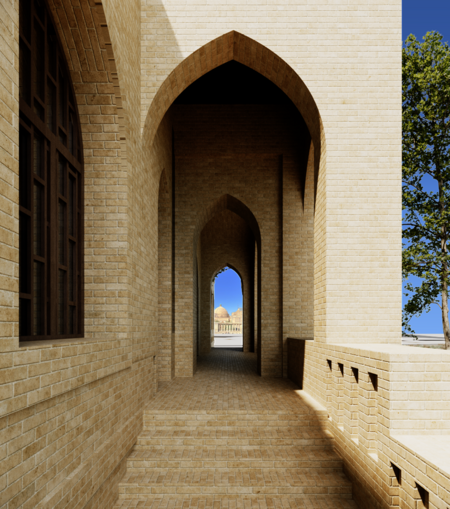
Open doors—a symbol of hospitality. The visual design concept is built upon the metaphor of open doors and open spaces.
«Only sometimes, very rarely, my babushka (grandmother) would close the door. It was always ajar, and guests were always at home, ” my dad would say about his grandmother.
Site Master Plan
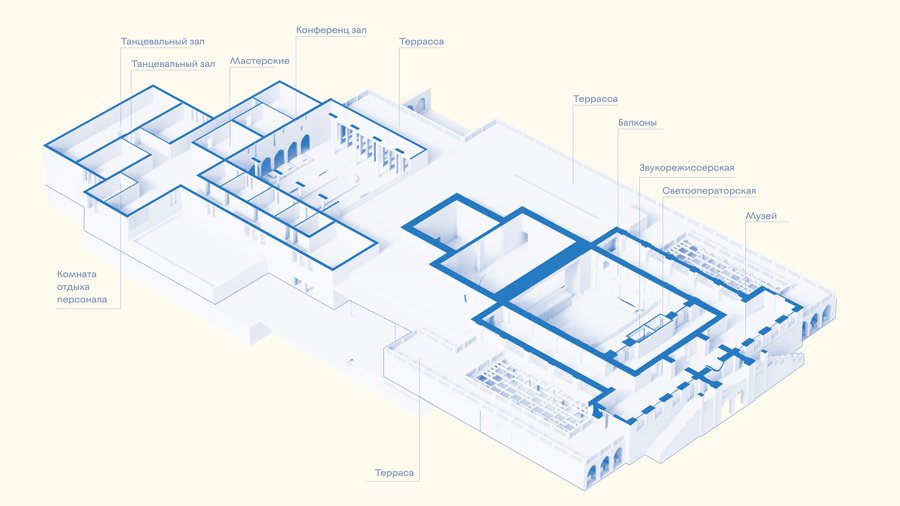
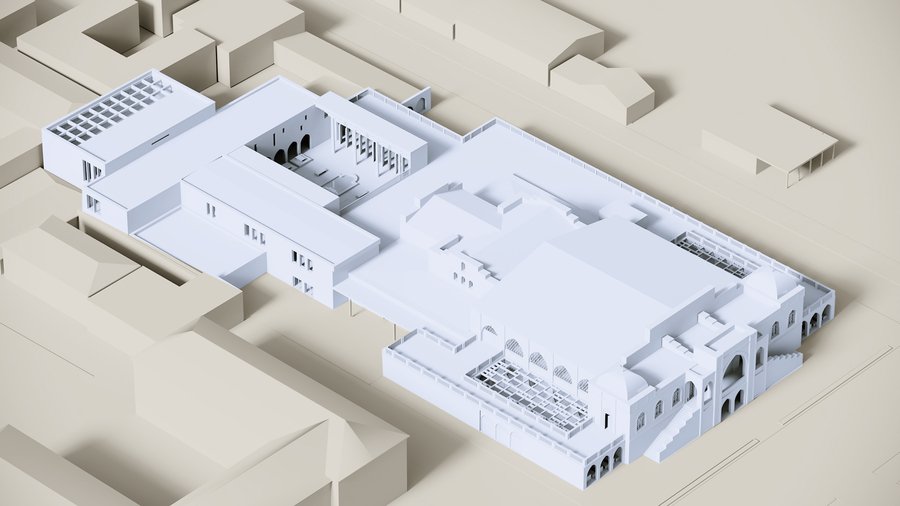
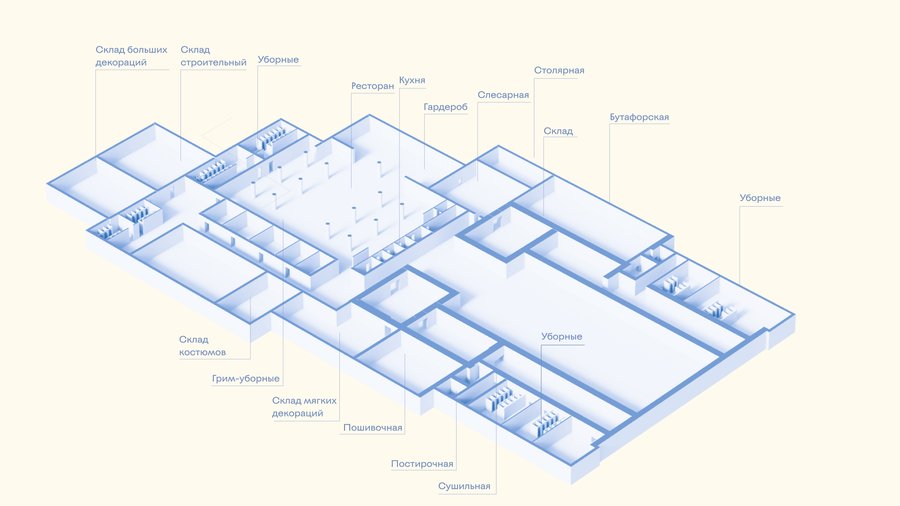
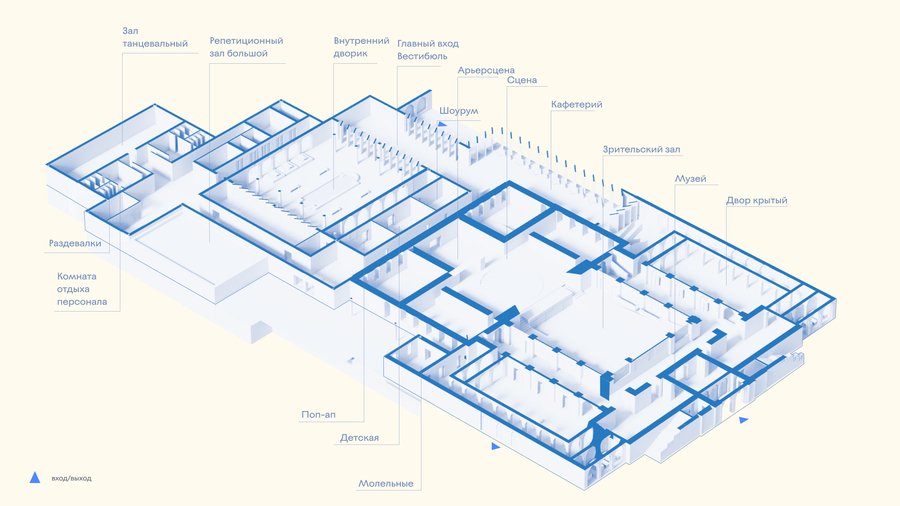
Overall View / Isometric
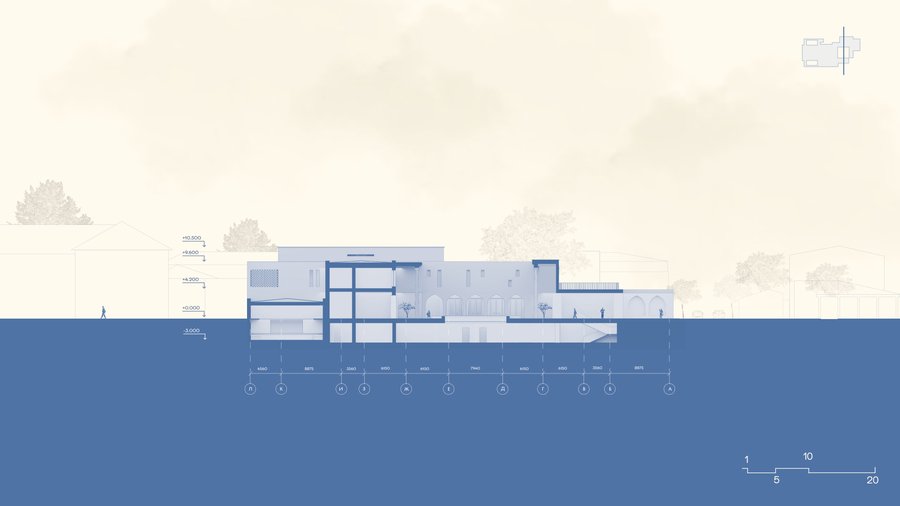
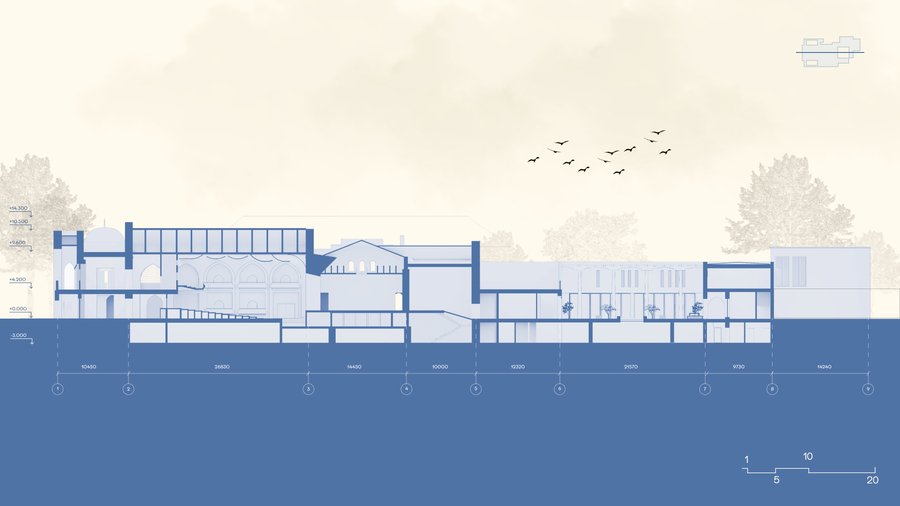
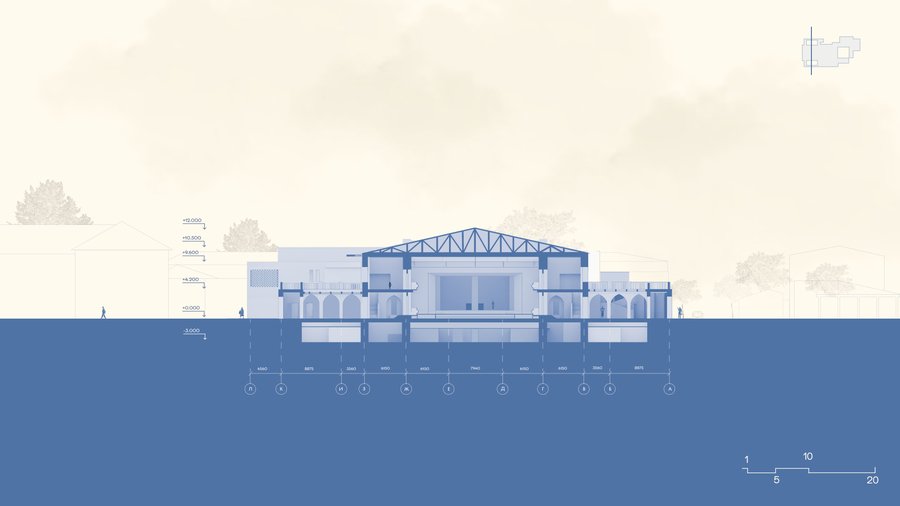
Sections
Facades