Navigation Menu01. Concept 02. Preserving the Core, Changing the Surface 03. Serialization Does Not Preclude Disassembly 04. Mass-Produced Clocks and Factory Repair 05. Why Repair Loses to Replacement 06. Monolithic Form as a Result of Technology 07. Swatch: The Rejection is Stated Directly 08. Parallel Strategy: Preserving the Core 09. The Smooth Casing Does Not Explain the Motive 10. Battery Compartment and Main Casing 11. What the Comparison RevealedBibliography Image Sources

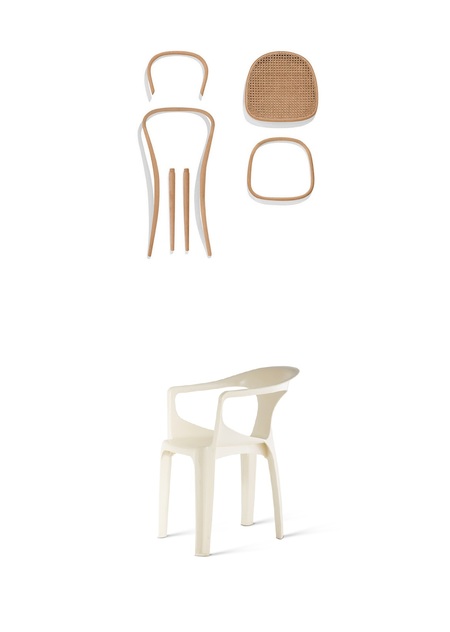
The front leg on the chair is broken. In Michael Tonnet’s Model No. 14, this is a separate component. On the Fauteuil 300 plastic chair, the leg is molded as one piece with the seat. Both items were conceived for mass production. However, in one case, the damaged part can be detached, while in the other, even a minor break affects the entire load-bearing structure. Why did the drive to make the chair accessible lead to such different solutions? [4; 11]
I am interested in the point when the possibility of future repair stops influencing the design. The engineer has solid reasons to keep it whole or, conversely, to separate it. A chair that needs to be shipped across the ocean can be conveniently packaged in sections. A chair that must emerge from the mold complete is more economical to cast as a single unit. The difference in production organization remains visible even many years later, when that very leg breaks.
I am comparing furniture, watches, and household electronics. These items have different loads and lifespans, but a single question can be posed to each concerning its structure: What happens to its functionality if one part fails? Three themes of the course converge here. Technology determines how the parts are made, structure connects them, and the item’s function suggests what needs to be accessible. Catherine Jeil and Claire Brune provide the historical framework, alongside the research by Stephan Krebs and Heike Weber on how an item’s service life depends on its usage patterns. [1; 2, pp. 28–32]

C01. Authors' Diagram of the Problem. Verification against Thonet, Monobloc, and Swatch. [4; 11; 14]
Research Question When and why did mass producers begin abandoning the repair of individual components, and how did this choice reshape the object itself?Hypothesis I hypothesize that in postwar mass production, repairing individual components began to give way to replacing entire assemblies whenever combining parts made assembly cheaper, saved space, or simplified sealing. Consequently, the failure of one part affected components that might otherwise have remained functional. If an object is designed for longevity, I expect that worn parts can be removed while preserving the rest of the structure.How to test this assumption? First, I search for early evidence suggesting that repair became difficult. Then, I determine what problem the manufacturer was trying to solve. The final test is object-based: can one identify on a photograph, cross-section, or disassembly diagram where the replaceable part ends and what it connects to?The sample includes European and American examples from the mid-18th century to the 2020s. Jean Bocq’s chair provides a baseline. Thonet furniture and early mass-produced clocks help to test whether mass-market production inherently leads to repair avoidance. Pocket radios, cast chairs, and Swatch illustrate how priorities changed throughout the 20th century. Modern phones and controllers allow us to check how visible these distinctions are externally.
C02. Author’s Method Diagram. The reason cannot be derived from the photograph alone.
For each pair, I select images that illustrate a single operation. A removed upholstery reveals the wooden frame of a chair, a patent cross-section shows the junction of the glass and the clock casing, and a sequence from the instructions leads from the back of the phone to the screen. A general view is needed alongside the detail so that the same joint can be found on the assembled object. The image number is retained if the shot is repeated.A photograph has a limitation: it shows where a seam runs but does not explain why it was made. For the answer, I refer to a document—a patent or a manufacturing description. For a Swatch watch, text from 1983 remains, explicitly stating the decision not to repair the mechanism. For a molded chair, the manufacturer’s intent is known, and the consequence for repair can be determined by the design itself. These are different grounds for conclusion. I attribute a modern instruction only to the specific version of the product for which it was written. [11; 14; 25, pp. 11–13]Under repair, I understand this to mean restoring an object after a malfunction. Replacing a depleted battery or changing the fabric for a new season can also be done on a perfectly functional item. These operations are interesting because they demonstrate the accessibility left by the designer. The possibility of separating a part must still be distinguished from the possibility of purchasing a replacement part. [2, p. 28; 23]
Historical Context
C03. Authors' Section Map. The final section compares different eras rather than continuing a single line of decline.
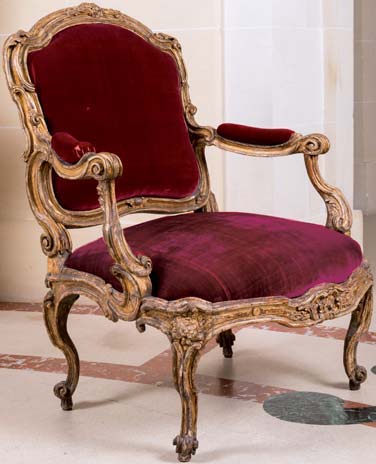
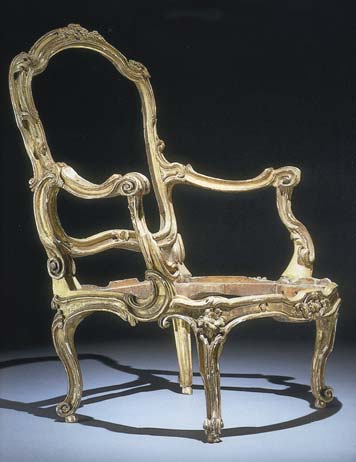
Jean-Jacques Bouchet. Chair à châssis, c. 1758. With upholstery. (I01) Jean-Jacques Bouchet. Chair à châssis, c. 1758. Frame without upholstery. (I02)
In the photo on the right, Jean Boco’s chair has almost entirely lost its color but has retained its silhouette. Red fabric covered the seat, back, and armrests. When the upholstered frames were removed, a carved frame remained, complete with openings for each. [3, p. 34]In the 18th century, furnishings were changed for summer and for winter. On a regular chair, this meant re-stretching the fabric or keeping a second set of furniture. The removable frames allowed the setting to be changed while preserving the expensive carved work. The initial reason for this design was the change of seasons. The same principle would later apply to chairs whose upholstery was changed due to wear and tear.
Chair No. 14, 1859

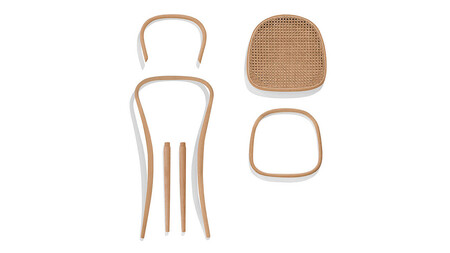
Michael Thonet. Chair No. 14, design 1859. Fragment of the assembled chair. (I03) Michael Thonet. Chair No. 14, design 1859. Disassembled elements. (I04)
The arch that outlines the back of chair No. 14 descends to the floor, forming both rear legs. On the photo showing the disassembled parts, this line can be traced in its entirety. The front legs, seat, and bottom ring are manufactured separately. The bending of the beech allowed Tonet to achieve a long, continuous line from one rear leg to the other. [4]Assembling the chair required six wooden components, ten screws, and two nuts. It’s best seen in the following photo why such many connections are left in an inexpensive item. [4]
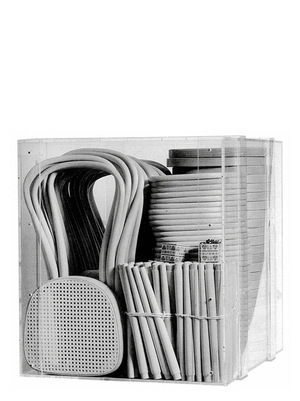
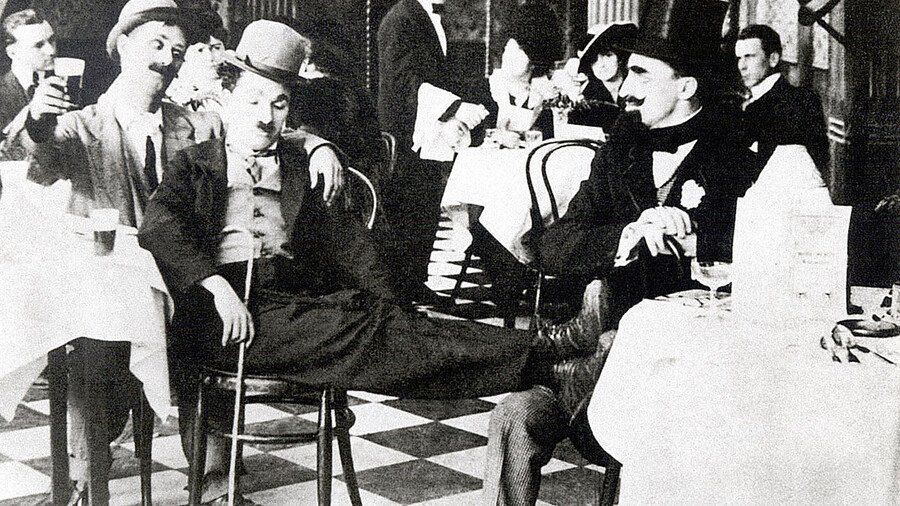
Thonet. Transport packaging for disassembled chairs No. 14. Date of photograph is not indicated. (I05) Café with Thonet chairs. Author and date of photograph are not indicated. (I06)
Parts of 36 chairs, along with their hardware, fit into a one-cubic-meter wooden crate. Assembly took place on site. The curved backs were particularly effective in saving space during transport—they were nested one inside the other within the crate. [4]
If a chair leg broke, the front leg could be detached from the seat. This possibility was made available due to the shipping method. Based on a photograph of the crate, it is impossible to determine whether spare legs were available to the 19th-century buyer.
Ingersoll. Wristwatch, c. 1908; case hallmark 1914. General view. (I07)
In the 1850s, Waltham clockmakers in the United States established mass production of interchangeable parts. This approach, which made the series more affordable, allowed for the replacement of individual components. By the end of the century, watches in the U.S. sold for about a dollar, giving rise to the term «dollar watches.» How did the fate of such an inexpensive item change if it stopped working? [5; 6]
The answer was preserved literally inside the watch. The museum describes a paper warranty located under the back casing of Ingersoll wristwatches. The owner could send the watch to the manufacturer, and after the first year, order a paid repair for the model as long as it was still in production. The museum dates the watches themselves to approximately 1908, with a 1914 hallmark stamped on the case. [7]
The photograph shows the familiar round dial. It would be impossible to determine from this view whether the watch had undergone factory service. It is the warranty that provides the basis for comparing Ingersoll with other inexpensive watches, like Swatch, where the manufacturer made a different decision several decades later.
C04. Author’s Comparison to Primary Text and Museum Archive. [8; 9]
Can an item be retired before it breaks? In 1932, Bernard Lawson proposed limiting its lifespan. His idea was that removing old goods would bring orders back to factories and maintain employment for workers. The proposal remained a conceptual plan for exiting the economic crisis. [8, pp. 1–3]In 1954, industrial designer Bruce Stevens spoke of the consumer desire to acquire the next model while the previous one was still functional. Here, changing the external appearance is sufficient. Mechanical repair may remain available in both cases. Therefore, the history of model updates is important to consider, but it does not, in itself, explain the emergence of the integral casing. [9]
C05. Author’s diagram based on Max Weber. It explains historical conditions rather than calculating the cost of individual repairs. [10, pp. 236–238, 252–253]
In post-war West Germany, the same customer might call a technician to fix a television or discard a broken portable radio receiver. Televisions frequently broke down, and the network of repair shops sustained their circulation. Meanwhile, the prices of some small appliances were dropping, yet diagnosing a fault still required the time of a skilled technician. [10, pp. 236–238, 250–252]By around 1960, repair manuals for radio technicians noted how difficult it had become to fix newer models. Hayke Weber attributes this to the drive toward smaller size, low production costs, and frequent design changes. Components were packed more tightly and integrated within the portable chassis, and adhesive joints replaced threaded fasteners. The same process saved space during assembly while obstructing access to the point of failure. [10, p. 252]
C06. Original diagram based on the research of Max Weber. It is not a blueprint for a specific model. [10, p. 252]
In 1963, over a hundred models of pocket receivers were being sold in the Federal Republic of Germany. A year later, the consumer magazine DM discovered that for some of these models, neither service nor spare parts were offered. This data is presented by Hayke Weber. It allows for dating this phenomenon within a specific industry and country. [10, p. 252]
With radios, two circumstances aligned: it became harder for the repair technician to open the casing, while it was easier for the buyer to find an inexpensive new receiver. A cast chair operates differently. In that case, the possibility of replacing a broken leg disappears even in the mold design.
Armchair 300, 1972