Rubric: (1) Hypothesis (2) Concept (3) Goal (4) Brands (5) Research (6) Social Survey (7) Conclusions (8) HSE FASHION DAYS Booth Development (?)
HYPOTHESIS: The more developed a brand universe is, the greater its success and recognition.
CONCEPT
In a world where similar items can be found across dozens of brands, a single logo is no longer enough. Why do audiences return to certain brands, follow their stories, and are willing to pay more? Perhaps it’s the brand universe—the narratives, the visual language, and the community that transforms purchasing an item into belonging to a particular world.
BRANDS
We analyzed five Russian fashion brands: Vereja, Sorelle Era, Ushatava, Gate31, and .Solutions. Despite operating in the same industry, each one constructs its own unique system of meaning and audience engagement.Vereja — a fairy-tale universe. Mythology, characters, and artisanal techniques form an independent fantastical world that is embodied directly in the garments.
Sorelle Era — an archetypal universe. The figure of the heroine, femininity, and a recognizable visual language create an aesthetically cohesive world.
Ushatava — a cultural ecosystem. The brand extends beyond clothing, uniting fashion, research, cultural projects, and community.
Gate31 — an urban universe. The city, architecture, motion, and functionality form the foundation of the brand’s concept and its product.
.Solutions — a gaming universe. Riddles, game mechanics, and audience involvement transform interaction with the brand into participation in a shared system.
RESEARCH
To analyze five Russian fashion brands, we identified six criteria to assess the integrity and depth of their brand universes:Narrative — the presence of a consistent story that develops over time and is reflected not only in communication but also in the actual products.
Characters and Archetypes — the existence of heroes, characters, and established imagery that shapes the brand’s identity.
Spaces — the presence of physical environments that reflect the brand’s aesthetics and concept, expanding its world beyond the product.
Audience Engagement — methods of involving consumers in the brand’s life outside of purchasing: events, exhibitions, collaborations, and special projects.
Own Language — the existence of a unique lexicon, consistent expressions, terminology, and symbolic designations that form the brand’s recognizable communication.
Additionally, the longevity of the narrative development within the product.
SURVEY
To study the perception of brand universes of selected Russian fashion brands, we conducted an online survey that included 24 respondents interested in fashion.
The questions focused on several aspects:
- **Brand Recognition: ** How familiar are audiences with the selected brands, and what associations do they evoke?
- **Visual Identity: ** How distinct and memorable are the brands?
- **Interest in the Brand Universe: ** How interested are audiences in engaging with the brand beyond purchasing clothing?
- **Consumer Behavior: ** Does the brand’s history influence purchase decisions, willingness to recommend, and repeat buying?
- **Emotional Attachment: ** Are consumers willing to pay a premium for a brand with which they feel an emotional connection?
CONCLUSIONS
Brand universes influence consumer choice
66,7% of respondents would prefer a brand with a more compelling visual world and story when price and quality are equal.16 out of 24 people chose the brand with the richer history.
16.7% would focus solely on the product regardless of its history.
Another 16,7% stated that the brand’s history does not matter to them.Conclusion: a brand universe can act as an additional deciding factor when a product’s core attributes are comparable.
Brand recognition is not the same as interest in its universe.
Research results indicate that visual brand recognition and interest in the brand outside of apparel do not always align.
Key Observation:
Vereja has the most distinct visual identity, but the interest in its world is noticeably lower. Ushatava leads in brand interest outside of apparel. Gate31 is well-recognized by the audience, but its visual distinctiveness and world interest do not reach top-tier levels. Sorelle Era shows the lowest results on both metrics.
Conclusion: a strong visual code helps a brand stand out, but it does not inherently guarantee deep interest in its world.
Ushatava transforms from a clothing brand into a cultural community
Ushatava shows the strongest results across several metrics of content engagement with the brand.
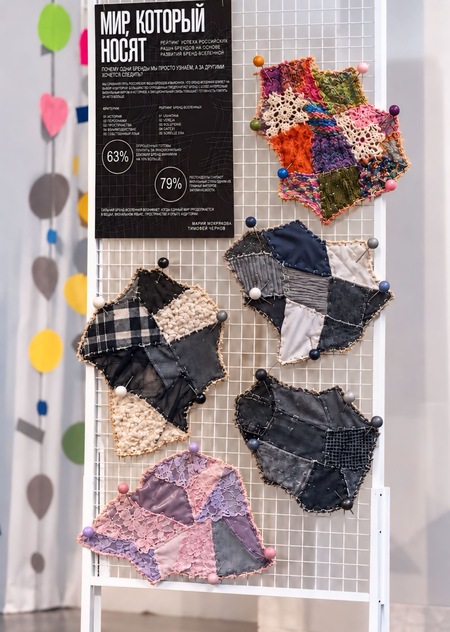
95,8% of respondents are familiar with the brand. 79,2% can describe it in a few words—the highest result among the five brands. The average rating for interest in the brand outside of apparel is 3.54 out of 5. Community has become one of the primary associations with the brand, cited by 29,2% of participants.
For comparison, for Vereja, visual style is the main association for 50% of respondents, whereas for Ushatava, both visual style and community received an equal share of responses.
Conclusion: Ushatava’s results suggest that the brand is perceived by the audience not only through its visual image and product but also through its cultural environment, projects, and community.
This is an interesting example of how a brand universe can extend beyond clothing and become part of the audience’s lifestyle.
The brand’s narrative functions through visual language and social media.
When asked what makes a fashion brand memorable, respondents most often selected:
Conclusion: Audiences tend to remember the elements of a brand universe with which they have direct contact—the visual style, social media content, and the products themselves.However, brand storytelling can work indirectly—through visual imagery, characters, and recurring communication elements.A crucial caveat: a low number of direct mentions of the brand’s history does not prove that it has no influence on recall. It is possible that respondents perceive the history through its visual embodiment without recognizing it as a distinct factor.
Emotional attachment can increase willingness to pay
87,5% of participants indicated a specific amount they would be willing to increase their brand spending by if they had an emotional attachment to it.
Conclusion: Emotional attachment can possess not only image value but also potential commercial value, given its correlation with a consumer’s willingness to pay a premium.