Media Concept
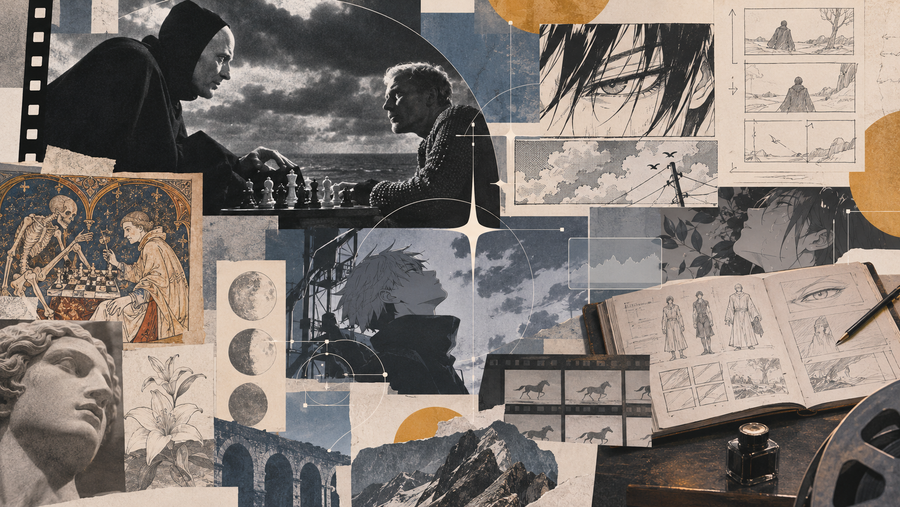
«Refrain» — Media and Visual Storytelling Studio «Refrain» is a cross-platform media outlet focusing on artistic narrative across film, anime, manga, comics, and video games. The project explores evocative scenes, dramatic structure, artistic techniques, and cultural connections between different works. Analytical content is combined with entertainment designed for both a broad audience and those deeply interested in the mechanics of art.The second direction of the project is an original story studio. It creates original comics, illustrated narratives, and short animated works. The development process itself becomes part of the content—from scriptwriting and storyboarding to the final product.Content is distributed via TikTok, Instagram, VKontakte, Telegram, and the dedicated website. The primary revenue model includes advertising, sponsored integrations, and brand partnerships.Role of AI: automating information retrieval and systematization, preparing research dossiers, assisting in production, adapting publications for different platforms, and processing analytics. Final editorial and artistic decisions are made by humans.
Data Sources
«Refrain» utilizes four data types: research, creative, user-generated, and analytical-commercial. The first two form the content of the media, while the others allow for studying audience interests, assessing publication effectiveness, and developing the advertising model.
The primary sources are the works themselves: films, manga, anime, comics, literature, and video games. Additionally, we utilize scripts, art books, interviews, production notes, academic articles, and museum archives.
Key resources include BFI, Criterion, JSTOR, Oxford Academic, Cambridge Core, The Met, the British Museum, Getty, and the official websites of studios and publishers.
For reference information, we use AniList, TMDb, and Open Library. These help in verifying titles, dates, authors, editions, and production personnel.
Some metadata can be obtained through official APIs. For example, AniList provides a GraphQL API, and The Met offers information on museum objects and images available under Open Access.
Creative Assets These are internal materials from the studio itself: ideas for projects, scripts, character descriptions, world-building details, sketches, storyboards, visual references, and draft animations.They are created by the project authors and stored in the central production database. When developing a new scene, the system can reference approved character descriptions, previous script versions, and existing artistic decisions.Such data helps maintain narrative consistency and the coherence of the work, especially when multiple people are involved or generative tools are utilized. User Data The source of this data is audience interaction with the media: comments, questions, survey results, suggested topics, and voluntary feedback.This data helps determine which works resonate with readers, what questions arise most frequently, and which formats require refinement.During machine processing, anonymized information is primarily used. Private messages, contact details, and specific user information are not shared with external AI services without proper justification and authorization. Analytics and Commercial Data Statistics are gathered from proprietary social media accounts, website analytics, and advertising campaign reports.The system tracks reach, views, audience retention, saves, comments, traffic, and the performance of individual posts. For promotional materials, placement terms, budget, agreed-upon metrics, and campaign results are also saved.This data is used to adjust the content plan, compare formats, and prepare reports for advertisers. Access to statistics via API is dependent on the capabilities and permissions of each platform.
Data Processing
Information Collection The automated process tracks new materials from a pre-approved list of sources: studio official websites, professional publications, academic resources, and reference databases.
Permitted APIs are used for structured data. Other materials are added by an editor or processed using available official tools. The system saves the title, author, date, link, and time of information retrieval.
Collection is suggested on a daily basis. Duplicate entries must not create new records. If a source is unavailable, the system logs an error and retries later, without substituting missing information with assumptions. Data Organization AI distributes the collected information into categories: artworks, authors, artistic techniques, historical contexts, interviews, and studies.
Materials pertaining to a single artwork are consolidated into one master record. If an artwork has multiple titles, the system retains the original title alongside its localized variations to prevent record duplication.
Preliminary relationships are established between records. For instance, a piece on «The Seventh Seal» might be linked to themes of medieval iconography, biblical imagery, and cinematic composition. Each such connection preserves its basis and source.
Developing a Research Dossier Based on the chosen editorial theme, the AI prepares a working dossier that includes: a brief description of the work, gathered research, verified facts, cited quotations with sources, and potential analytical avenues.Information requiring verification is noted separately. For example, the compositional similarity between a film and a historical painting is not considered proof of direct borrowing without additional evidence.The editor receives not a finished publication, but a structured foundation for their own research.Assistance in Developing Original Stories When working on a project, the AI receives an approved script, character descriptions, rules for the fictional world, and visual references.The system helps identify contradictions in the narrative, construct a chronology of events, suggest storyboard options, and create preliminary images or animatics.The results are saved as drafts. The AI does not alter the approved plot, character traits, or artistic concept without the author’s consent.Content Adaptation After the primary material is approved, the system prepares versions for different platforms.A research article can be adapted into a short video script, an Instagram carousel plan, a Telegram post, or a VK video description. For an original story, announcements, previews, subtitles, and short promotional clips can be generated.The adaptation considers the specific characteristics of each platform but must not alter facts, introduce unverified information, or reveal plot twists that the editorial team has decided to keep confidential.Publication Logging and Analysis The system retains information on all prepared and published materials: date, platform, format, sources used, and the approved version.After publication, available metrics—such as views, reach, retention, and engagement—are collected. This data is grouped by theme and format, after which the AI generates a periodic report.The report details the factual metrics and hypothesized reasons for any changes. The decision to adjust the editorial plan remains with the human editor.
Manual Processing
Topic Selection by the Editor The editor studies system proposals, new works, cultural events, and audience requests. When selecting a topic, consideration is given not only to its potential popularity but also to its substantive value, relevance to the project, and the feasibility of preparing an interesting, independent piece.
For example, a striking scene from a new film might attract viewers, but for a thorough investigation, one must determine what specific artistic question it allows to be explored.
After selection, the editor formulates the objective and passes it to the research service.
Fact and Source Verification The editor independently studies the work and verifies the information prepared by the AI. Special attention is paid to quotes, historical facts, creators' commentary, and presumed artistic influences.
If the link between works is not documented, it can be presented as an editorial interpretation or a comparison, but not as an established fact.
Materials with significant unverified claims are returned for revision.
Creation of Original Works Studio authors devise narratives, develop characters, write scripts, and define the visual style. AI can assist in finding solutions, but it does not replace artistic direction.
Following preparatory work, the artists create the final comic pages, and the animators produce the finished scenes. Approved generative materials are used as needed.
The primary goal of the manual phase is to maintain the integrity of the work, the expressiveness of the artistic language, and the autonomy of the author’s vision.
Publication Preparation The editor transforms the research dossier into a finished piece: structuring the narrative, defining the sequence of arguments, selecting illustrations, and editing the text.
For video, the voiceover script, editing, and visual explanations are approved separately. The correctness of the images, the rights to use the materials, the accuracy of the descriptions, and the publication’s compliance with the editorial style are checked.
The finished material is given the status «Approved.» Only then can it be sent for publication.
Audience Engagement The editorial team interacts directly with subscribers through comments, polls, discussions, and suggestions for new topics.
AI can group recurring questions and prepare review summaries, but communication on behalf of the media should not entirely turn into an automated mailing. Audience comments are used not only to gauge the popularity of publications but also to understand which research or original stories should be developed further. Working with Advertisers Advertising partners, placement formats, and integration terms are approved by a human. AI helps process briefs, prepare advertising material options, and gather statistics, but it does not make independent decisions about entering into agreements. The editorial team verifies the advertising’s relevance to the media’s themes, the accuracy of the advertiser’s statements, and the necessity of labeling. Independent research must not be altered at the partner’s request.