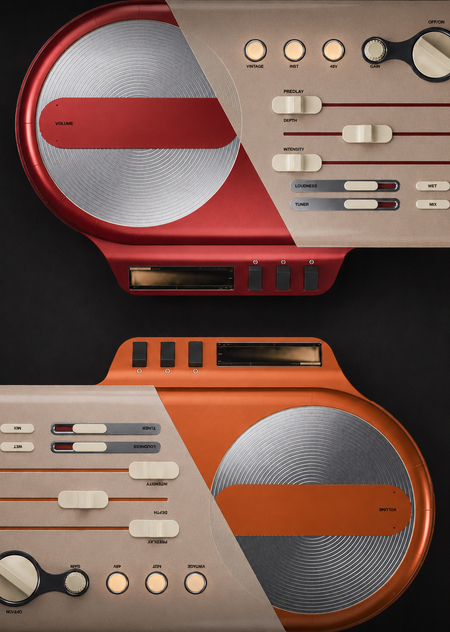
Design Project
A premium sound card that blends professional studio sound standards from the 1980s and 1990s with the expressive aesthetic of retro-futurism and universal usability in any environment.
Market Analysis
The professional audio equipment market is experiencing steady growth: its volume is projected to exceed $12 billion by 2027.
A new trend has been the democratization of studio sound—home studios are becoming a full-fledged alternative to professional spaces.
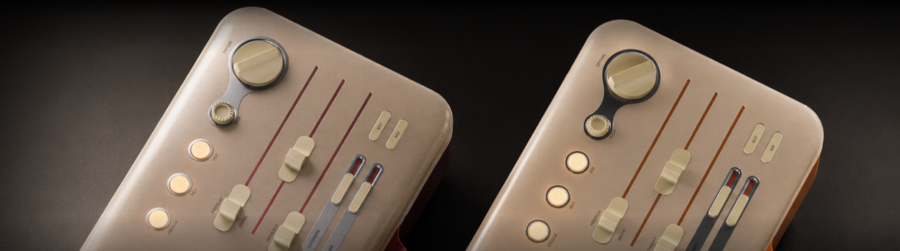
Despite the market’s diversity, emotionally resonant products with a strong design narrative are almost non-existent.
Historical Code
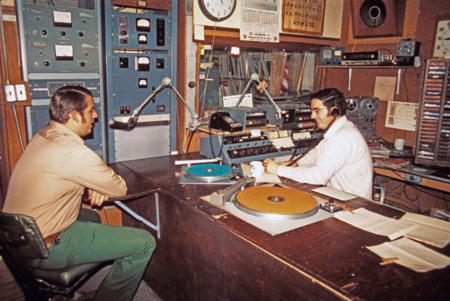
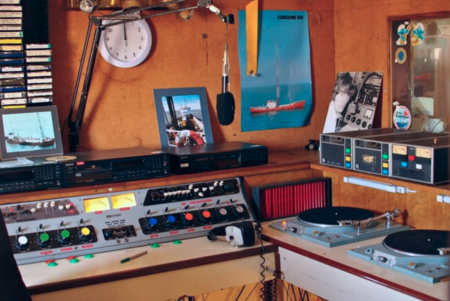
The 1970s and 1980s gifted the world a distinct visual language for technology: saturated terracotta, orange, and red casings, milky-beige control panels, rounded organic shapes, and tactile elements with pronounced relief.
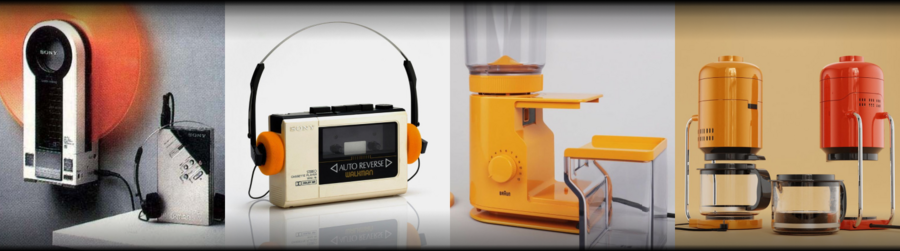
This was an era of progressivism, where industrial design believed unequivocally in the future, and technology seemed like a promise. Sony and Braun created objects that were perceived simultaneously as tools and as artifacts of what was to come.
This specific visual language—warm, bold, and self-assured—forms the foundation of this design.
Iconic References for the Project
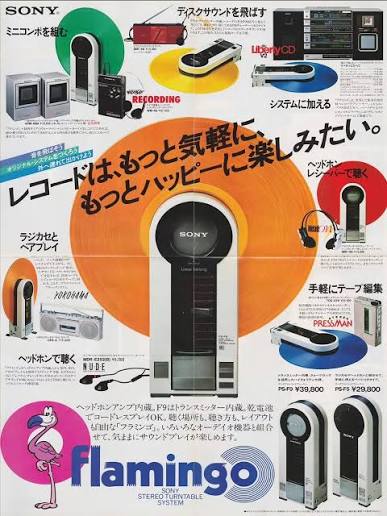
Braun T1000 (1963): Two-zone panel layout, contrast between dark and light, expressive tactile faders.
Sony Flamingo TC-6950SD (1976): Terracotta-orange casing with a milky panel, organic, rounded forms.
Pioneer RT-909 (1979): Monumental circular cartridge as the dominant visual element.
Braun Regie 550D (1974): Horizontal two-material layout, milky control surface.
Archetype Analysis
The sound card inherits the archetype of the studio processor—a device that stands at the center of the creative process, setting its tone and character.
The studio processor of the 1970s–1980s was more than just a device—it was a symbol of a serious commitment to sound, an object with character and weight that set the tone for entire generations of musicians. The goal of this design was to reinterpret this archetype: it retains that sense of gravitas but translates it into the language of retro-futurism.
Similar
Universal Audio Apollo
An industry standard with a recognizable sound, but the design remains faceless and technocratic.Arturia AudioFuse
A noticeable attempt to add visual character, yet the design remains utilitarian.Focusrite Scarlett
The mass-market segment; it has a recognizable casing color, but lacks aesthetic ambition.
Target Audience
Enthusiasts with an aesthetic sensibility, collectors of vintage culture, musicians, sound designers, and creative professionals.
This audience places special value where material quality meets emotional resonance: they care not just about what sounds good, but also how the sound source looks. They are also united by a distinct nostalgia for the «future of the 80s and 90s.»
Construction
Typical Layout Analysis
1. Horizontal Chassis: width 18–25 cm, depth 12–18 cm, height 4–6 cm
2. Front Panel: controls, faders, encoders, signal level indicators
3. Rear Panel: XLR, Jack, USB, MIDI input/output connectors, power jack
4. Internal Components: ADC/DAC converters, preamplifiers, signal processing unitConstruction Materials
1. Chassis: anodized aluminum, impact-resistant ABS plastic, polycarbonate
2. Control Panel: matte ABS, rubberized coatings for tactile areas
3. Mechanical Components: POM and polyamide for faders and encoders
Concept
Design reinterprets the past through the lens of retro-futurism.