Introduction
This visual study aims to examine methods of constructing Uzbek space in archival photographs dating from the late 19th to mid-20th centuries. The research is based on the idea that space is not a passive backdrop or an external stage upon which the events of human life merely unfold; rather, it is a product of the interaction between various forces, practices, and worldviews. Photography, as a form of visual knowledge, does not merely fix reality but actively participates in its creation. It determines which aspects of the world and which bodies become visible and which remain in shadow, and it also shapes numerous images of the country and its people.
Negative: Hotel. Uzbek SSR, Khorezm Region, Yangi-Aryksky District, Narimanov Kolkhoz. 1962.
The research is based on two complementary visual archives. The first archive consists of photographs taken by Russian photographers during expeditions in the Uzbek SSR and is housed in the Russian Ethnographic Museum. The second archive, belonging to the Uzbek House of Photography, compiles the works of both Uzbek and foreign photographers. The first focuses on an external, investigative approach, aiming to document, classify, and typologize spatial and cultural phenomena. The second, unlike the first, captures the dynamics of daily life, movement, emotional tonality, and the aesthetic perception of space. The photographs create a sense of immediate presence and immersion within the depicted spaces.
This study aims to demonstrate how external and local perspectives generate different images of Uzbekistan, which in turn shapes varied attitudes toward this place. A comparative analysis of two archives will allow us to trace how photography participates in constructing spatial representations—identifying which aspects become central, which fade into the background, and which types of connections to the place are most probable. This implies that visual archives do not merely record historical events; they continue to influence our perception of space in the contemporary world.
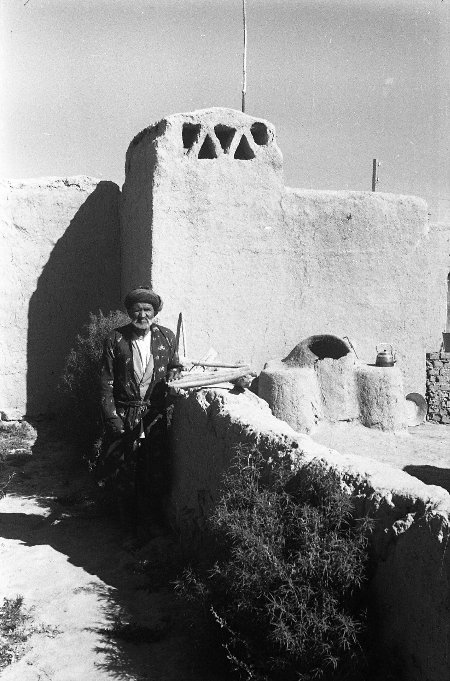
Negative: Family. Uzbek SSR, Fergana Region, Bagdadsky District, village Zodian, «Communism» collective farm. 1965.
Categories
Introduction
- External View: Expeditionary Photographs of the Russian Ethnographic Museum
- Internal View: Archive of the Tashkent Photo House
- Comparative Analysis Conclusion
External View: Expedition Photography from the Russian Ethnographic Museum
Visual materials created by external observers during ethnographic expeditions are not merely a capture of a moment in time. They are the product of a specific point of view. In Sara Ahmed’s phenomenological approach, the gaze is considered a directed practice. The body, by orienting toward an object, creates lines of perception that structure the visible and the invisible, determining what falls within the field of view and what remains outside of it. This approach is inevitably conditioned by the subject’s position, habits, and social environment, which makes some objects more visible and accessible than others. In the case of archival expedition photographs, this allows us to interpret the composition, angle, and spatial placement of people and buildings as a reflection of a particular orientation—a frame through which the space of Uzbekistan is ordered from the perspective of the visiting observer.
Street. Museum documentation territory: Uzbek SSR, Khorezm Region, Yangi-Arik District, Narimanov Kolkhoz. 1962.
Frantz Fanon discusses how the gaze of an outside observer shapes perception within colonial relationships. His fixity, static nature, and transformation into an object become an inalienable part of the visual order in which the body is framed by the observer. In numerous expeditionary photographs of Uzbekistan taken by Russian photographers, a common pattern of observation can be traced—such as people captured in motionless, reserved poses, predominantly in frontal projection or in recurring typological groups. This approach to photography creates a sense that people are not active agents in events, but rather objects to be classified and described. While this does not always align with the photographers' intentions, this tendency is connected to the way scientific observation—with its goals and methodologies—tends to perceive space as an object for fixation and ordering.
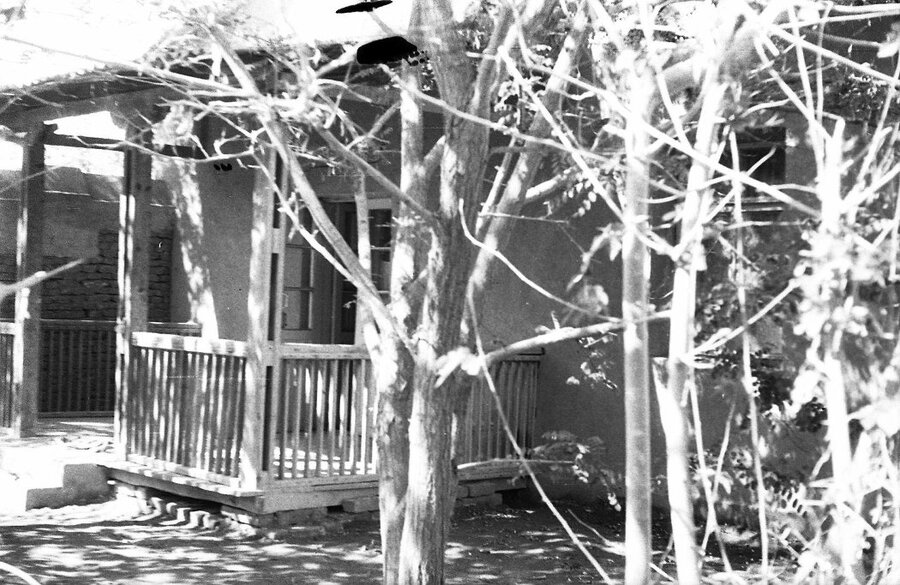
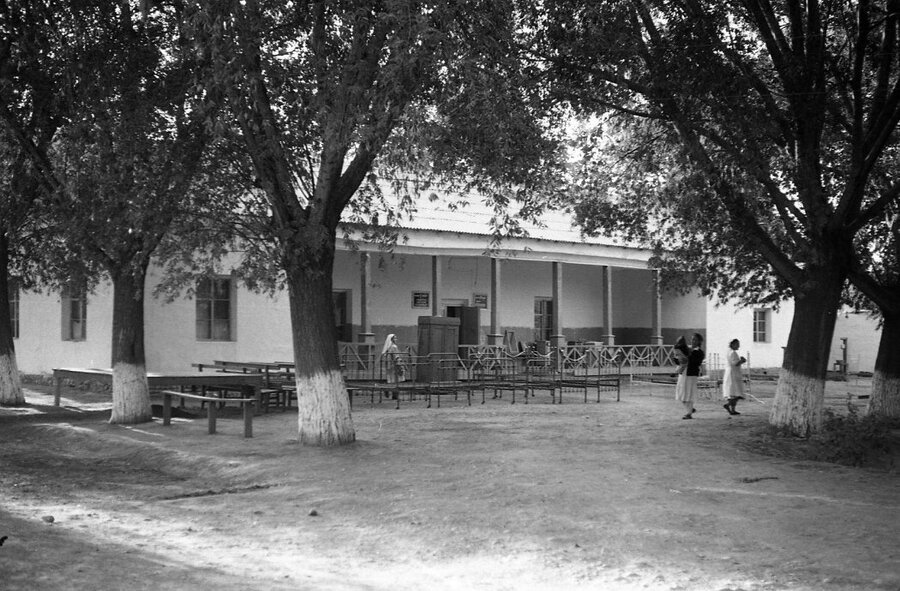
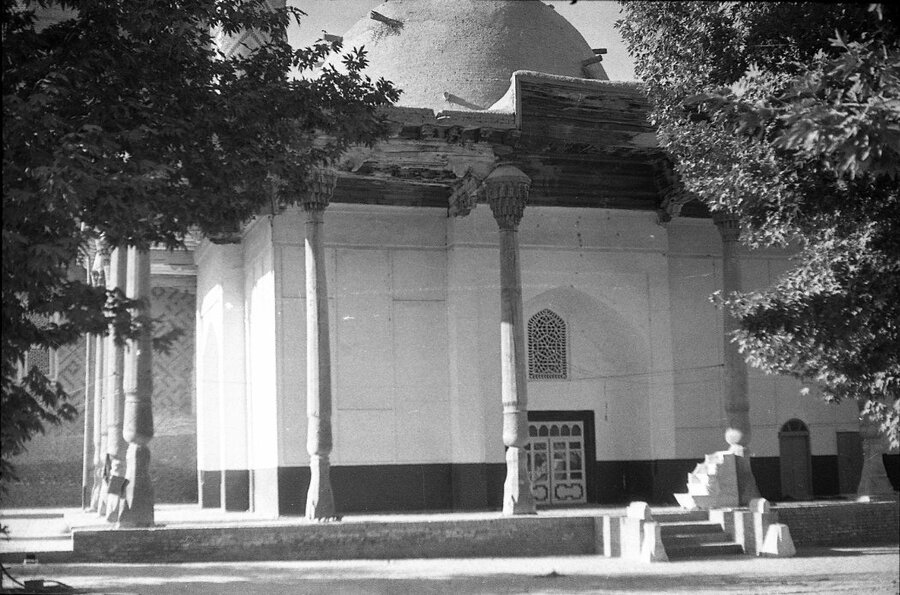
Expeditionary photographs reveal Uzbekistan’s architecture as structured and immutable. In these images, houses, courtyards, facades, and streets are presented as if captured according to a single template. They predominantly feature frontal perspectives, lack dynamism, and exclude people from the space. The photographers' objective gaze manifests in their desire to convey the characteristics of the space, capturing the architecture as a static form that can be described, systematized, and presented as a unit for study. Such photographs transform space into an object, detached from its temporal and social contexts.
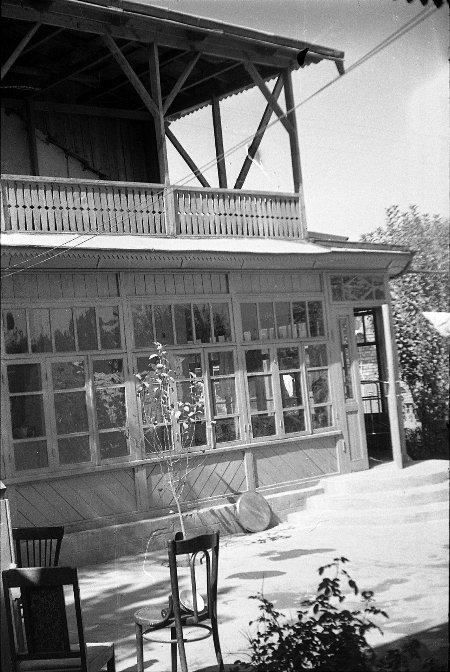
House terrace. Uzbek SSR. 1961.
Hospital terrace. Uzbek SSR. 1961.
In these photographs, people are often depicted as detached, as if caught in a situation where their active participation is not expected. Pose, facial expression, placement within the frame, and other elements create a sense of distance between the photographer and the subject. The external gaze fixes the body, striving to make it «visible» within a defined composition—more whole, clearer, and still—without gestures that might disrupt the frame’s harmony. The subjects become part of a visual system where their existence serves to demonstrate space rather than express their individuality.
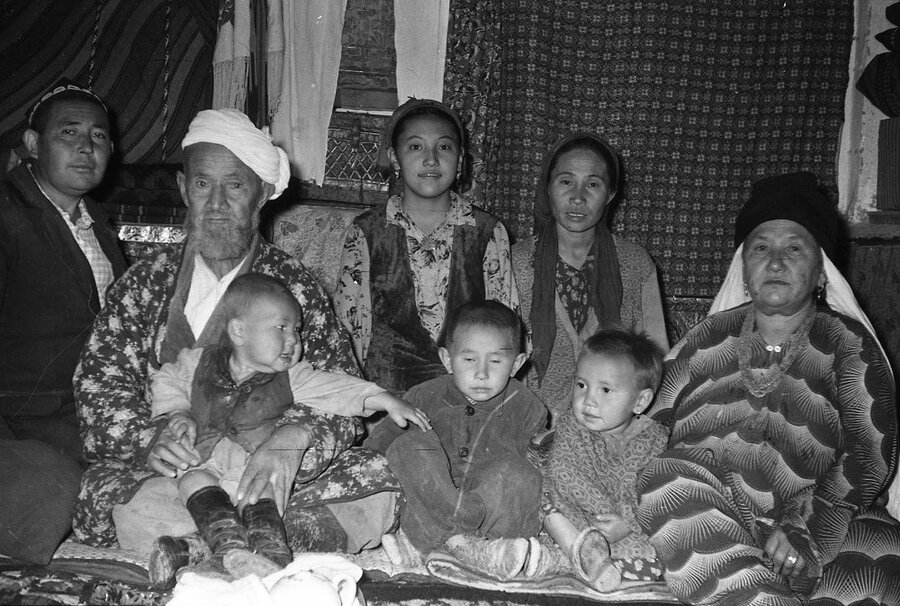
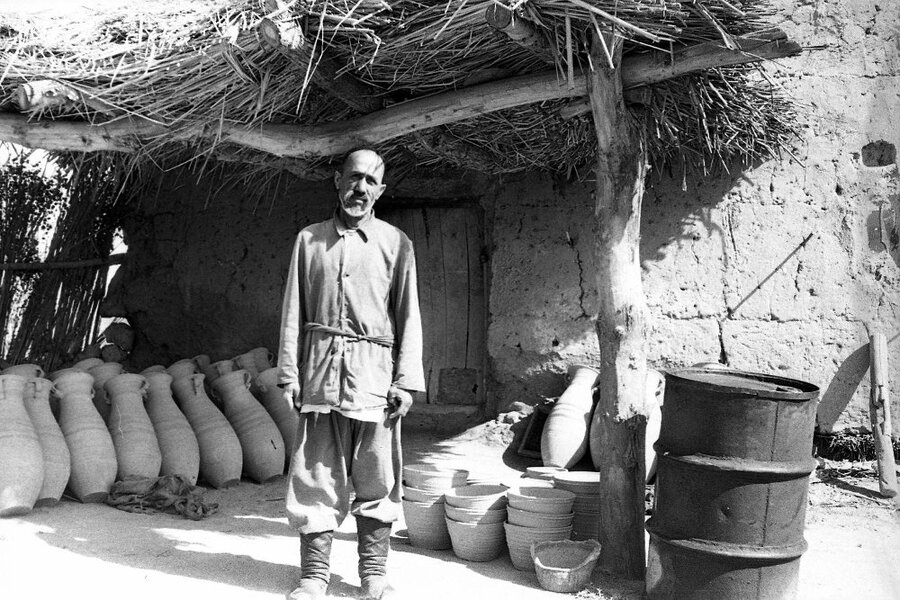
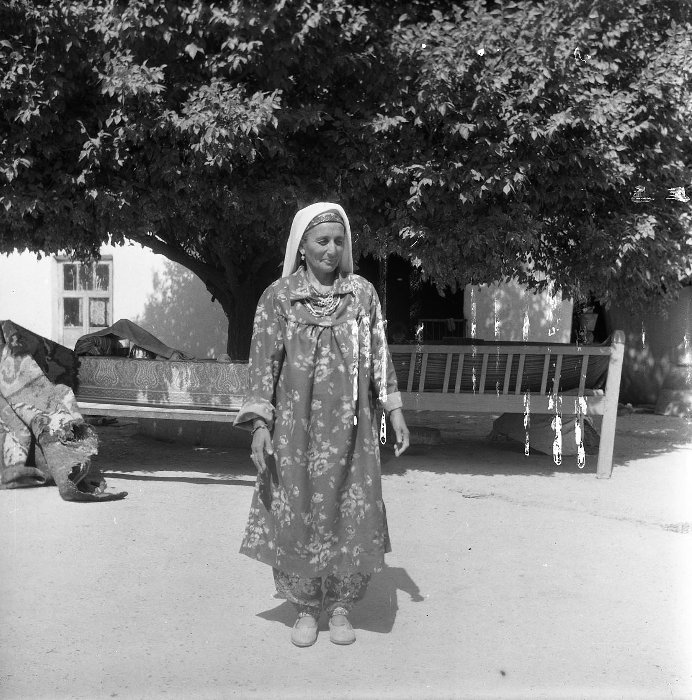
Potter. Uzbek SSR. 1962.
Negative: Woman. Uzbek SSR, Kashkadarya Region. 1988.
Family. Uzbek SSR. 1965.
Consistency is also created through repeated perspectives; most shots were taken head-on, at eye level, with only slight changes in perspective. This compositional approach imparts a feeling of the observer’s unchanging position, from which space appears whole and open, governed by the logic of their perception and construction.
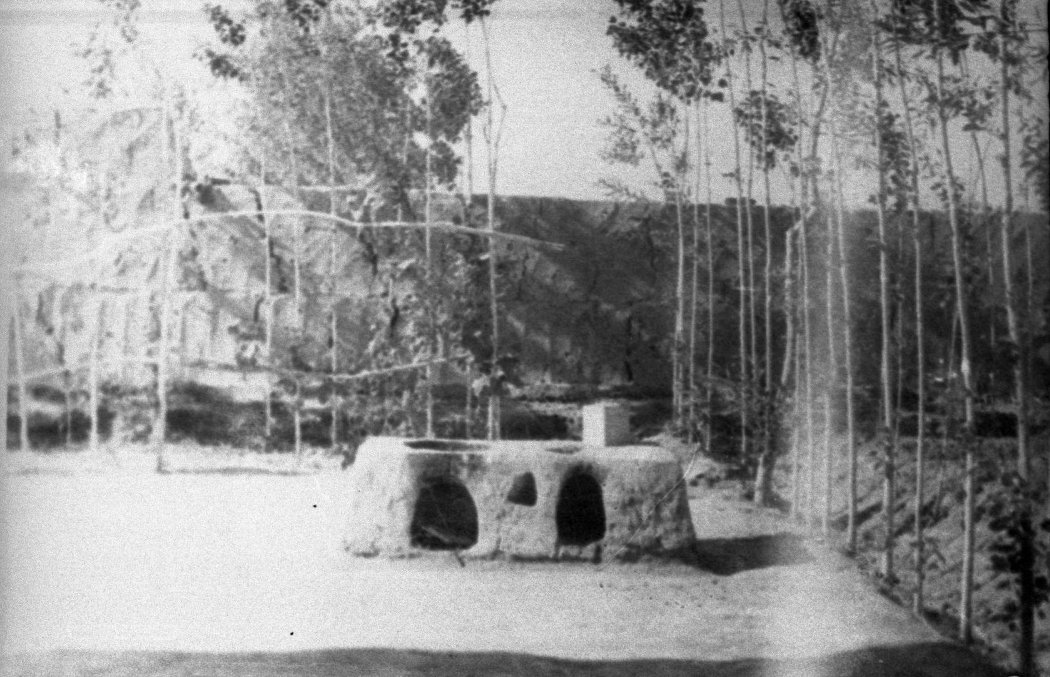
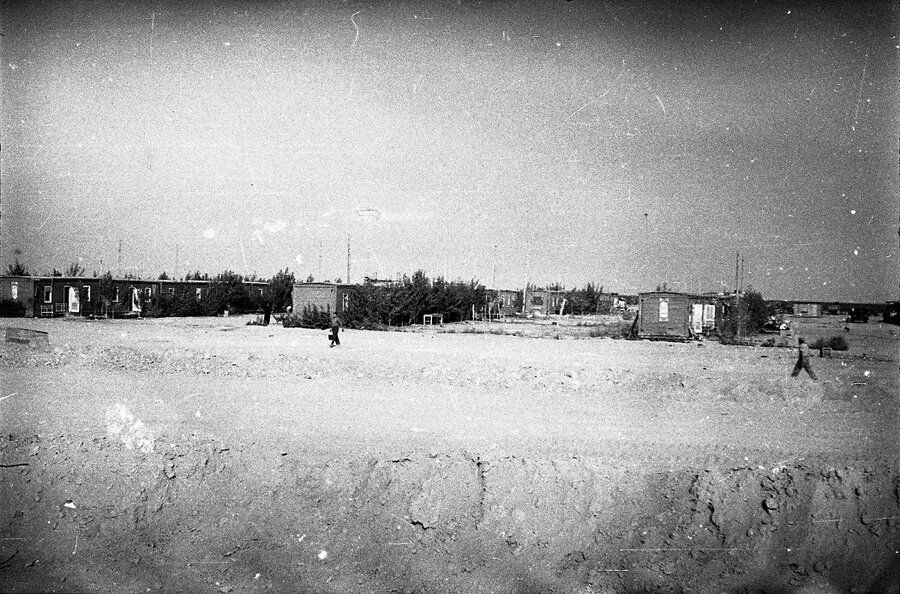
Construction Workers' Settlement, Uzbek SSR. 1961
Ochak, Uzbek SSR. 1961
Visually, expedition photographs of Uzbekistan depict a picture of a country devoid of movement, daily hustle, and internal rhythm. People, buildings, and streets appear frozen in a state of observation, transformed into objects for classification but lacking the ability to express their own lived experience. The photographer’s external gaze structures the space, turning it into a subject of study rather than a living environment. This focus creates a particular stereotype of the country: ordered, stable, and structured to meet the needs of external observation. This makes expedition photography a valuable indicator of how visual methods participate in shaping perceptions of geographical space.
An Inside Look. The Tashkent Photo House Archive
The Uzbek House of Photography collection offers a different perspective on space, one that diverges from expeditionary photography. While photos taken by external observers emphasize stasis, distance, and objectivity, the work of local and professional photographers demonstrates the opposite—a dynamism, emotionality, engagement, and physical closeness to the subject. In this context, Uzbekistan is not presented as an object of study, but as a living space filled with relationships, gestures, and a direct sense of presence.
In the village of Zangi-ata. 1938
The nature of these images stems from the photographer’s gaze, which seems to penetrate the very structure of the space. From a phenomenological standpoint, according to Sara Ahmed’s article, orientations form a line of proximity to specific objects and world structures, determining what in the space is «in front of» our perception and how it becomes meaningful to us. While expeditionary photographs present the space of Uzbekistan as distant and ready for description, the photographs from the home of Tashkent offer a different perspective. As a result, the elements of the space do not appear to the viewer as exhibits, but rather integrate into the familiar rhythms of everyday life.
Kiat Village
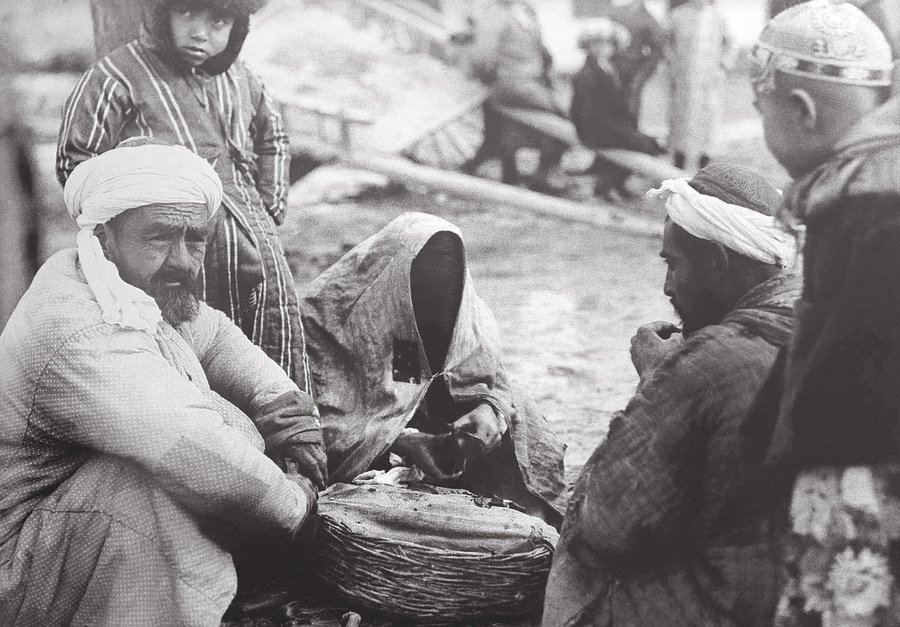
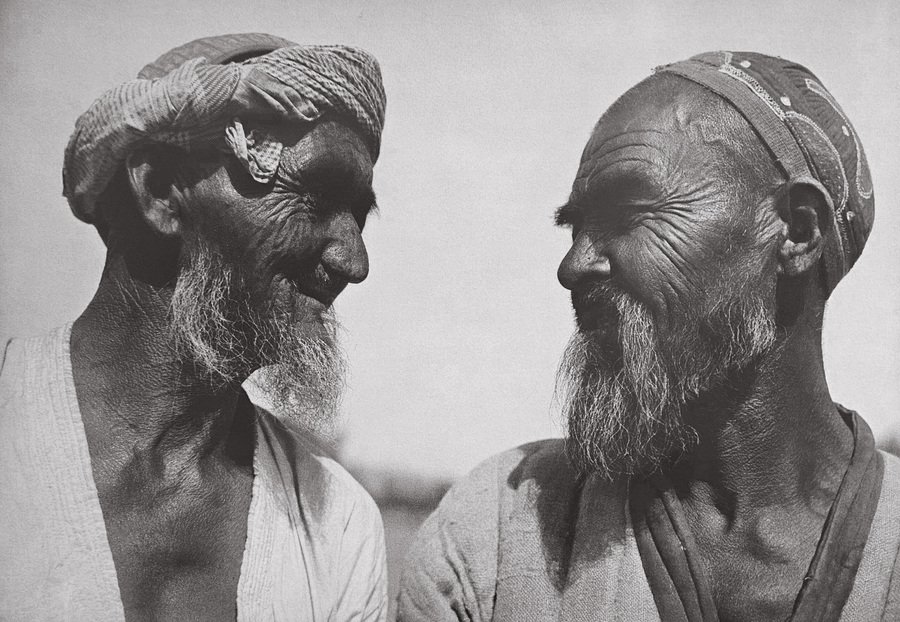
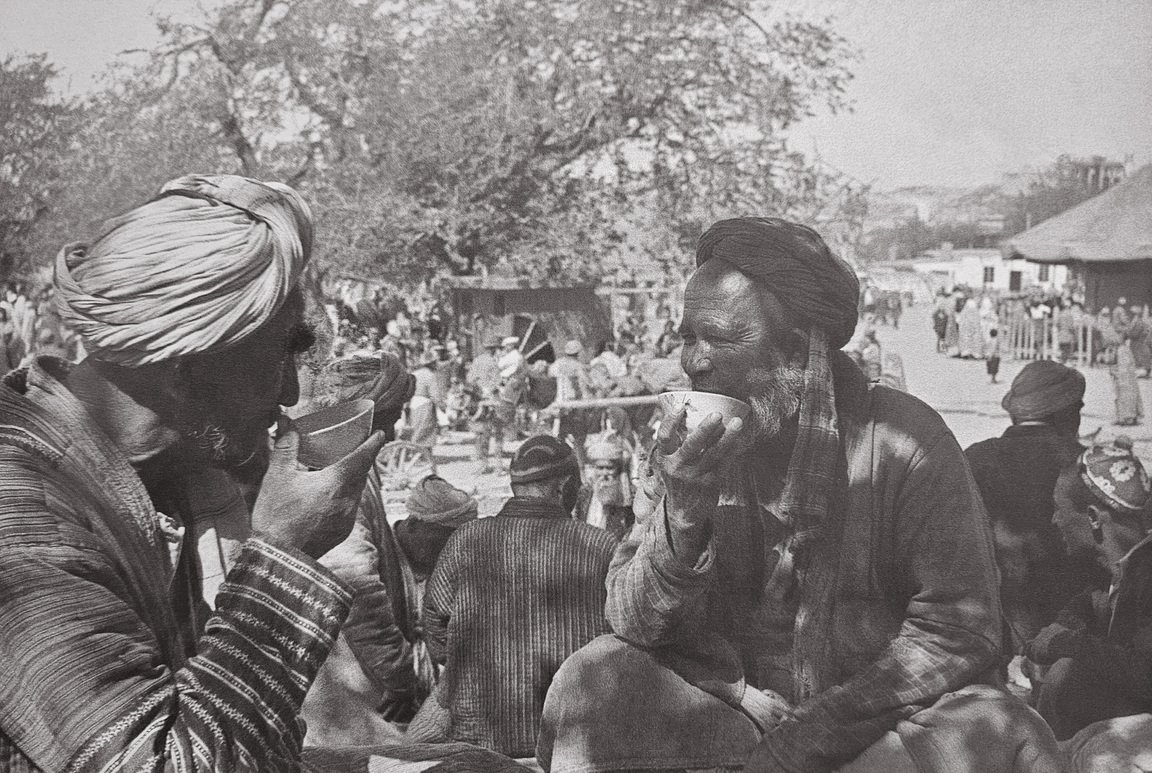
Old Friends
In a Teahouse. Samarkand. 1938
The Landlady. Samarkand. 1933
In photographs that capture people in action—in motion, engaged in daily activities, strolls, or interacting with their surroundings and each other—this sense of immersion is particularly vivid. Such images give the impression that space is not frozen in a predefined structure but is closely interwoven with human life. Unlike static, posed photographs, these images are full of rhythm and dynamism. Architecture, streets, and courtyards are not finished creations; rather, they act as stages upon which daily life unfolds. Instead of being perceived as generic examples, they emerge as environments that people engage with and in which they find their place.
Bazaar. Samarkand
Visual form achieves expressiveness through the diversity of angles and modes of approach. The camera is often positioned closer to the subject than in traditional expeditionary photography, which generates a sense of not just observation, but direct participation. The distance is reduced not only spatially but also semantically. The viewer is offered not the passive perception of space as external, but its lived experience as something mastered from within. This proximity aligns with how Ahmed characterizes orientation in space—when repetitive lines of interaction transform a location into a familiar and comfortable place.
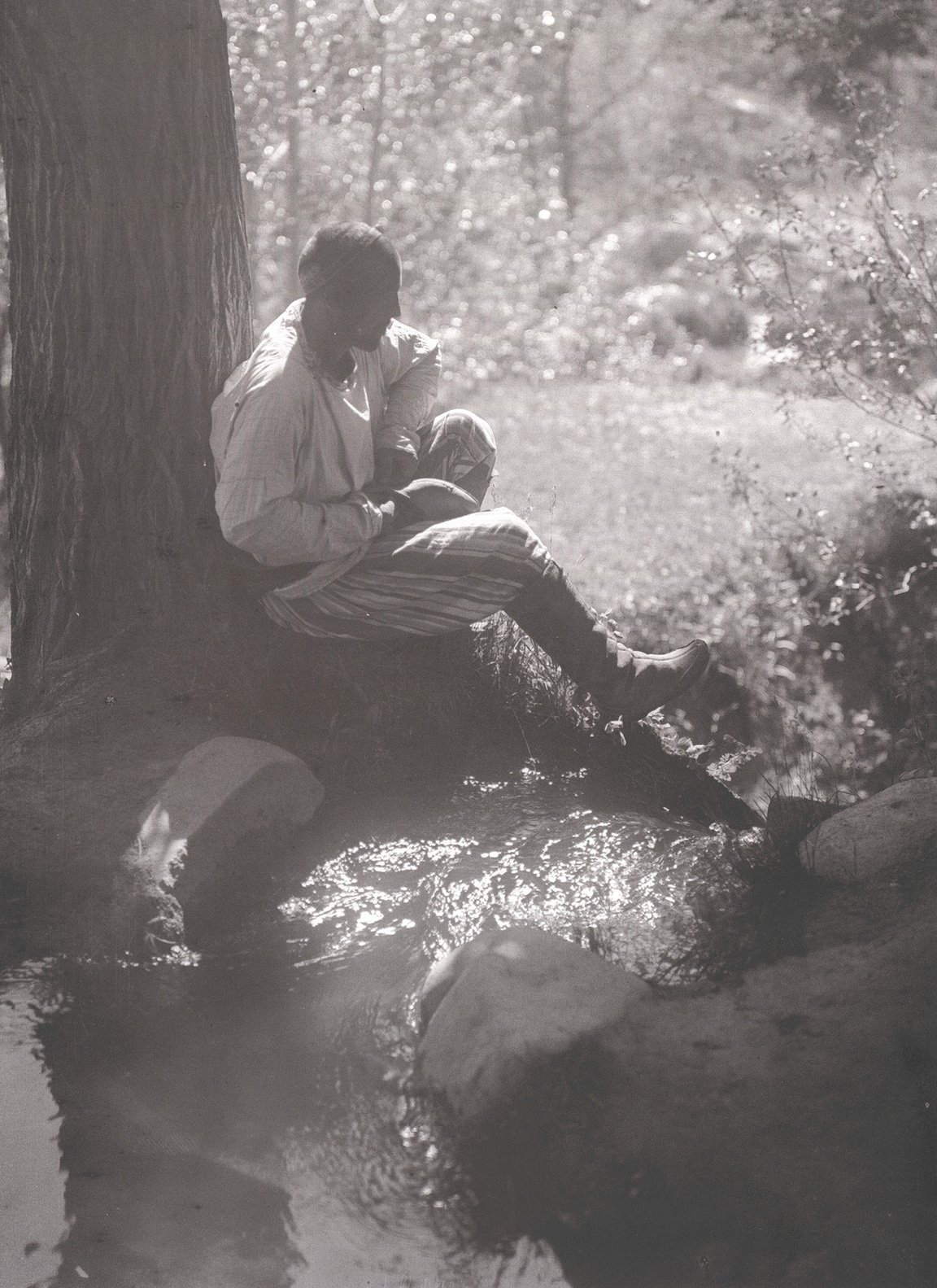
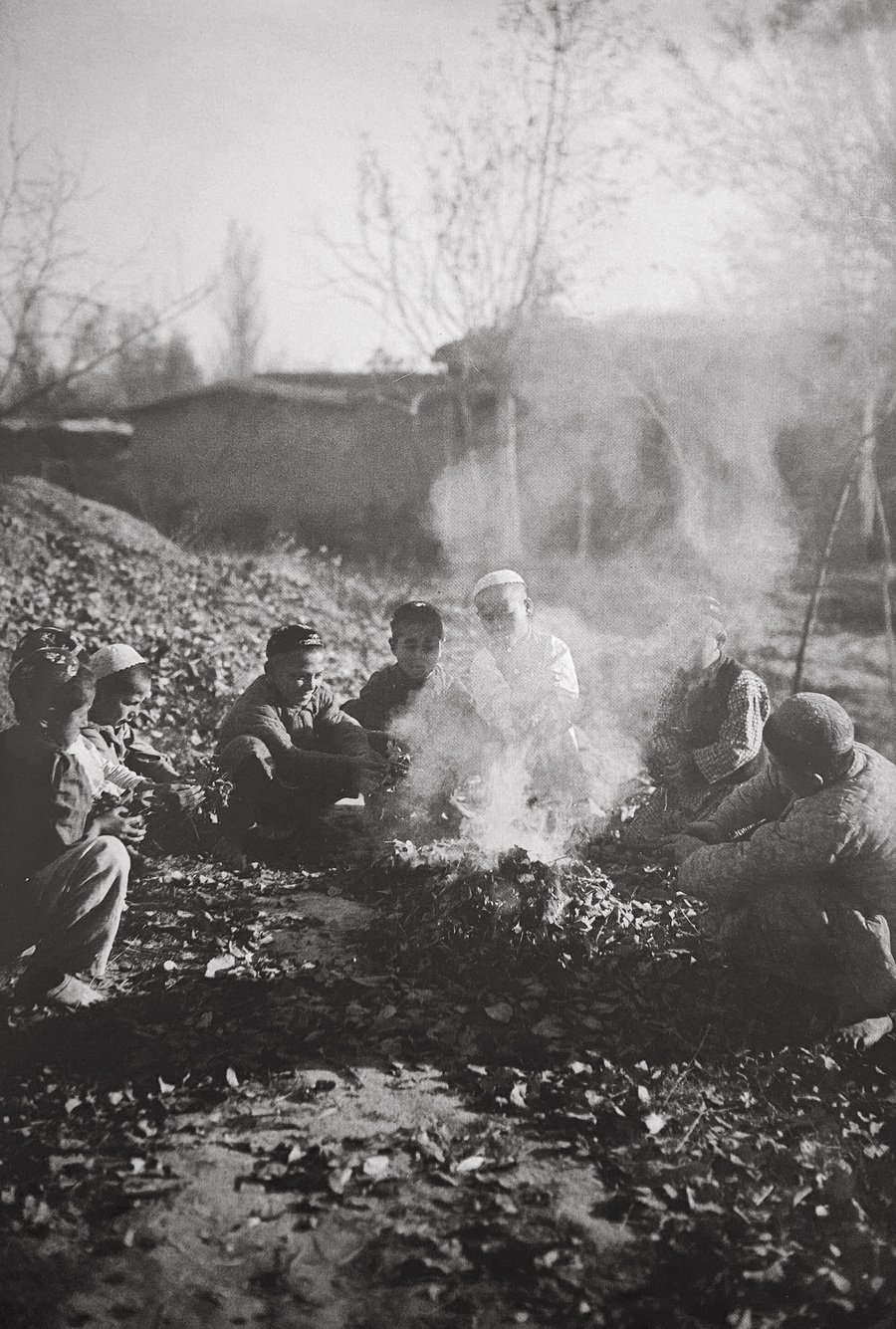
Autumn Bonfire. 1930
Cobbler. Samarkand. 1928
The emotional coloring and aesthetic expressiveness of many photographs from the Tashkent Photography House attest to a unique perspective on the world. They do not simply capture individual elements of a space; instead, they strive to convey its atmosphere, the character of interpersonal relationships, the interplay of light, gestures, and human expressions. This focus on an emotionally rich perception implies that orientation shapes not only physical access to objects but also their value to the observer. Consequently, an image of Uzbekistan is formed as a vibrant, dynamic space where continuous connections—rather than static structures—are the defining factors.