Проект ревитализации заброшенного пионерского лагеря «Искра», Тверская область
План работы над ВКР
The final project plan focuses on revitalizing the abandoned site of the «Iskra» Soviet Pioneer Camp and adapting it for modern formats of collective recreation, cultural events, and creative activities. The core concept is preserving the architectural identity of the location while integrating new infrastructure and functions: a camping ground for adults with thematic rotations and opportunities for professional development, a festival venue, and an art residency.
01. Final Project Topic
Revitalization of the territory of the abandoned Pioneer Camp «Iskra,» Tver Oblast
02. Location
Russia, Tver Oblast, Kalininsky District, territory near the villages of Chadovo and Dudenevo.
Cad. No.: 69:10:0000023:1
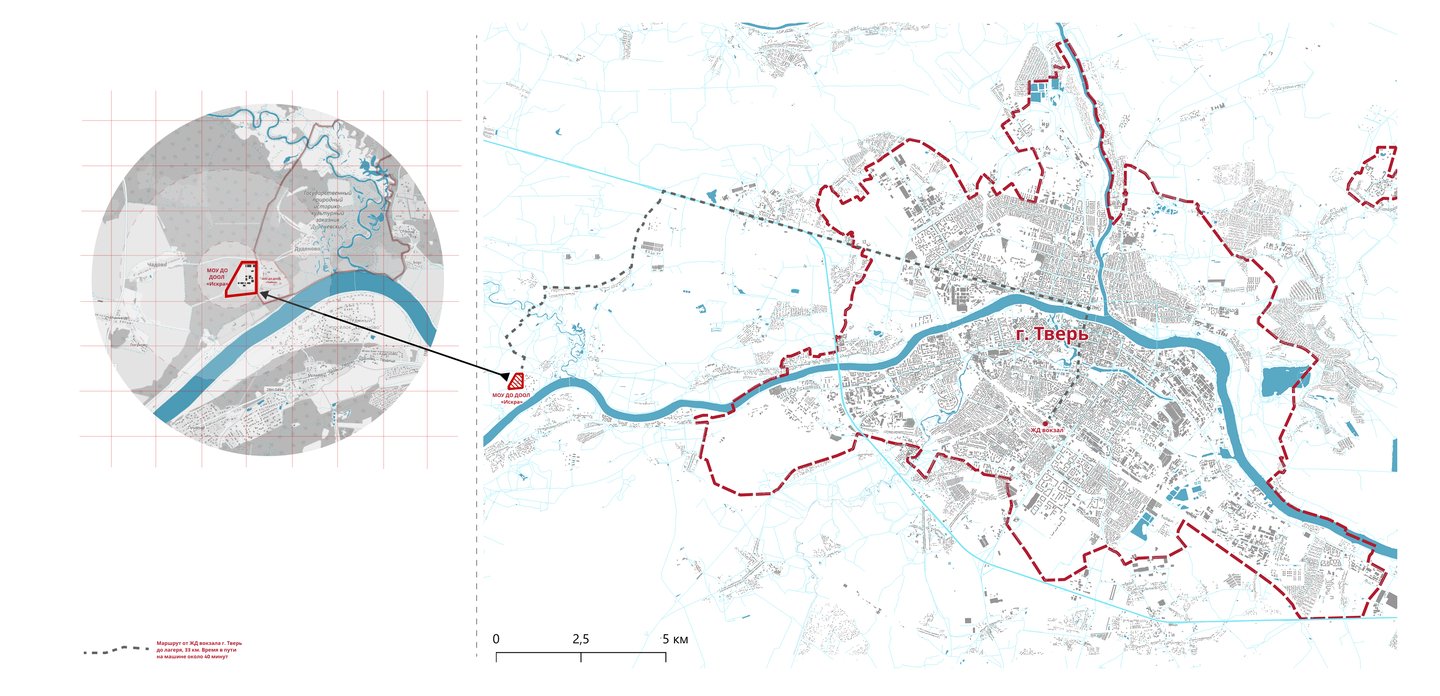
The former «Iskra» Pioneer Camp is located in a forest area west of Tver, near the Volga River and the state reserve of Dedenovskiy. Its proximity to the regional center allows the camp to be considered a potential site for short-term suburban recreation, and its setting amidst the forest allows for the organization of dynamic, collective uses of the territory.
03. Photography and Historical Context
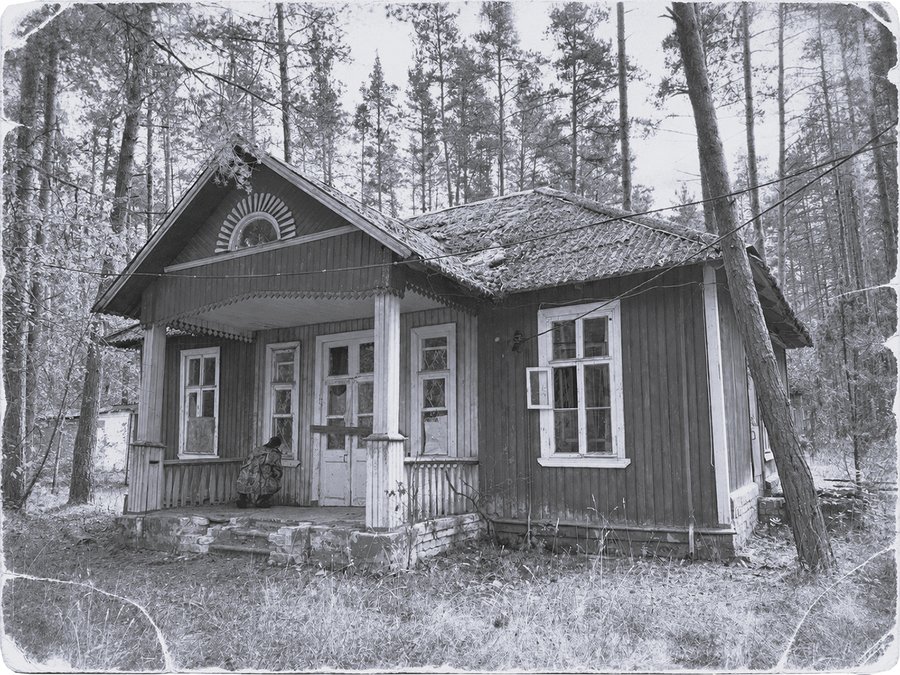
MOO DO DOOL «Iskra» was founded in 1972 as a departmental Pioneer Camp belonging to the Kalinin Tram and Trolleybus Department. Following the bankruptcy of the Tram and Trolleybus Department, the camp received its last session in the summer of 2006.
Over 20 years of abandonment, the noise of the camp sessions has yielded to the silence of the forest, and today, only the weathered buildings remain a reminder of the territory’s former life.
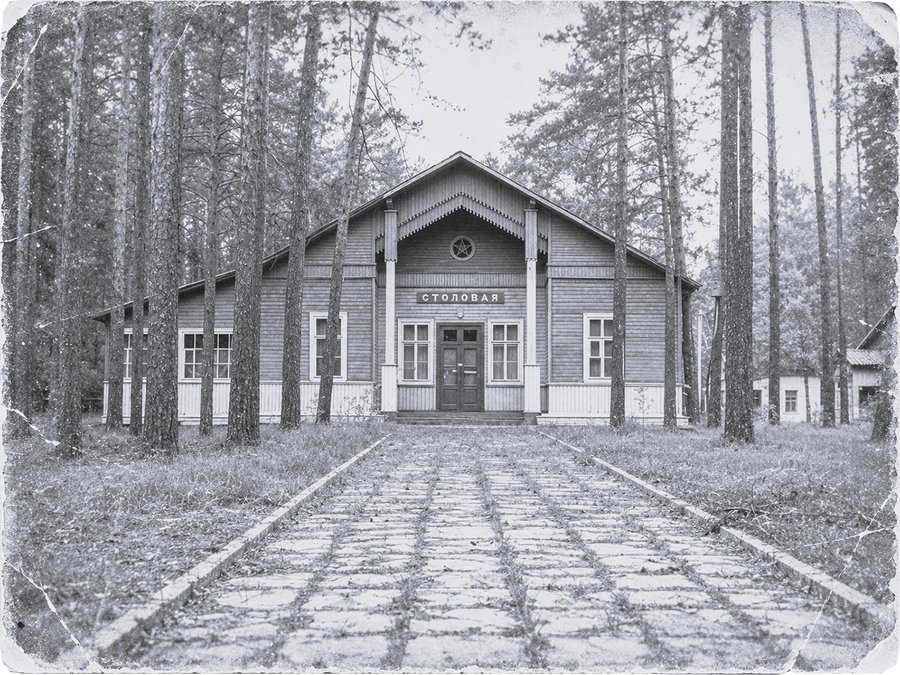
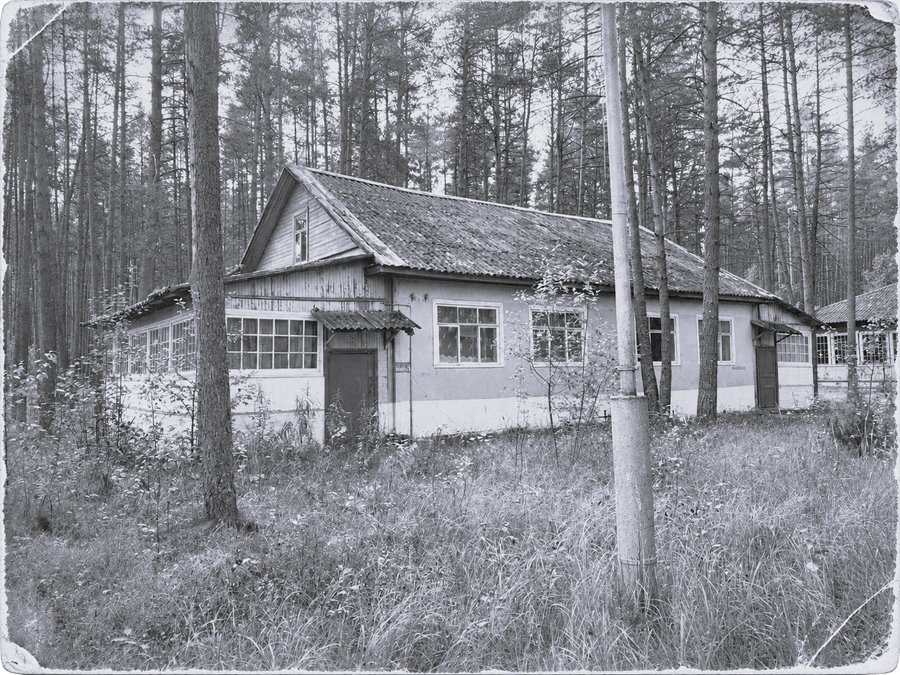
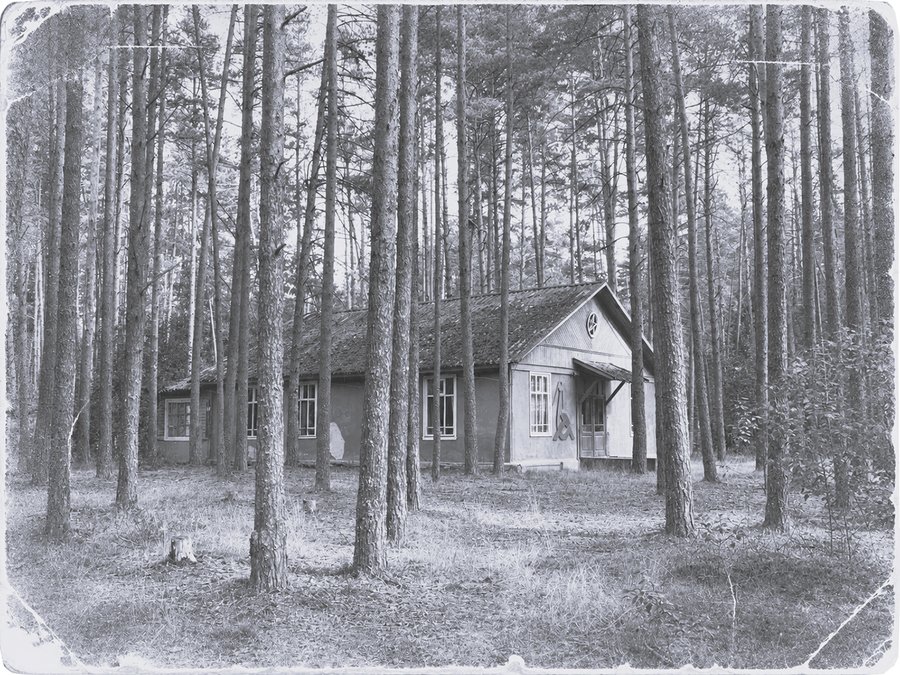
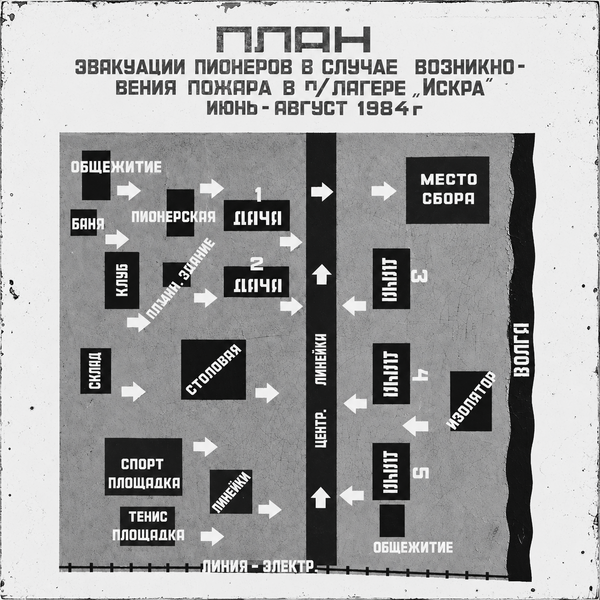
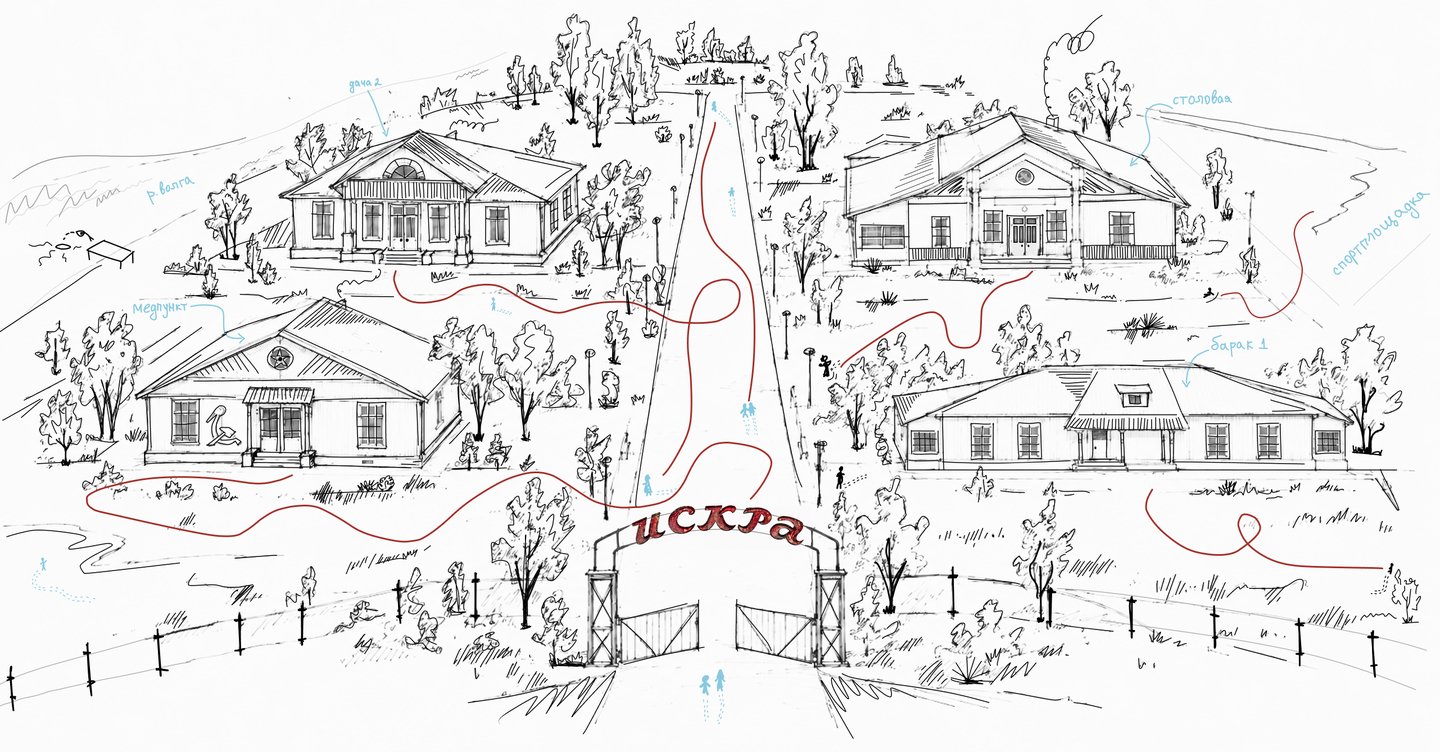
One of the most valuable materials found is the evacuation plan dated 1984. It depicts the central alley, residential buildings (on the «dacha» plan), dining hall, club, sports fields, and other elements of the camp infrastructure.
This document allows one to observe the characteristic principle of Pioneer camps: arranging buildings around a system of shared routes and public spaces.
It is important to note that this is the only surviving site plan upon which further analysis can be based.
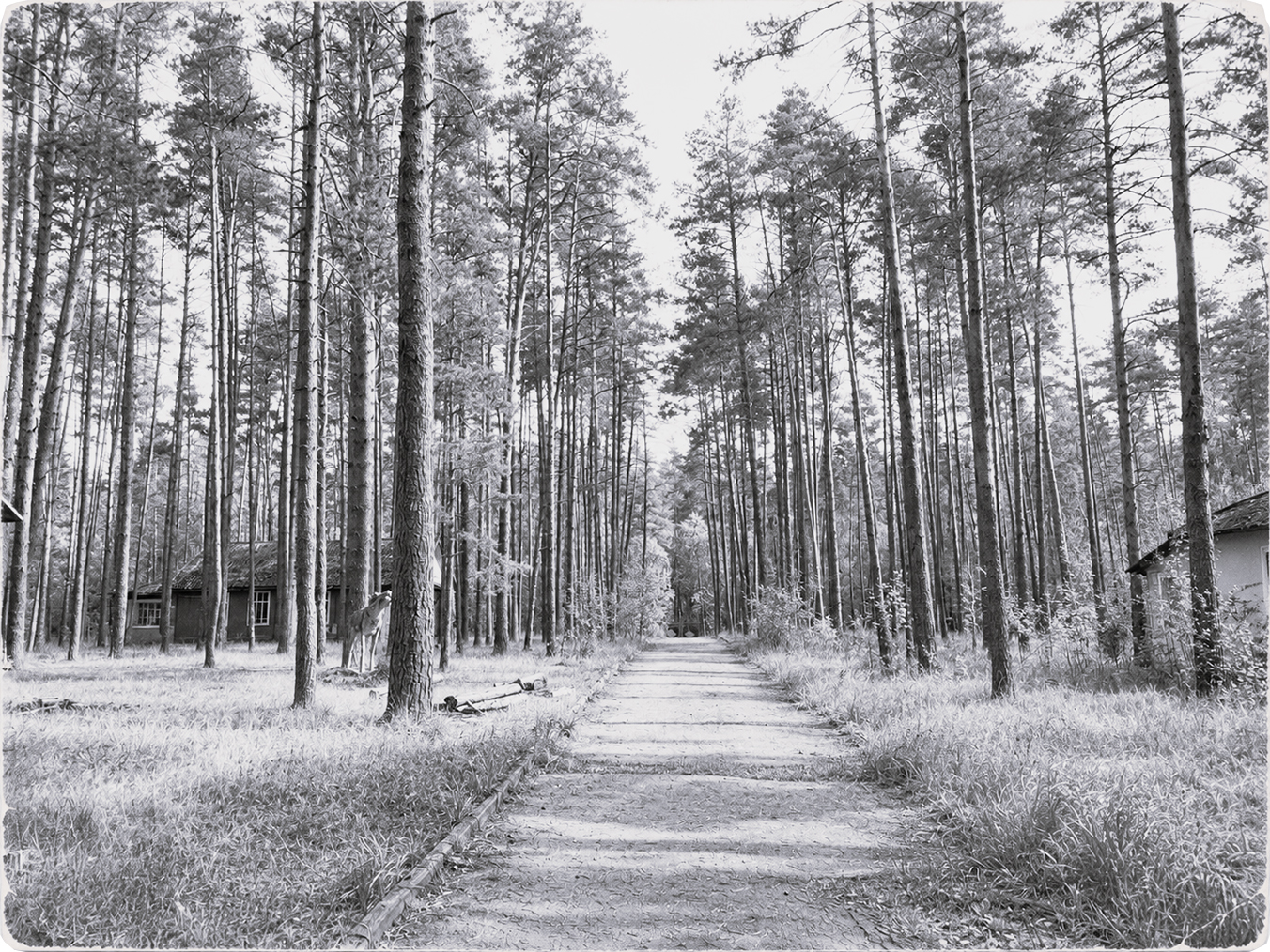
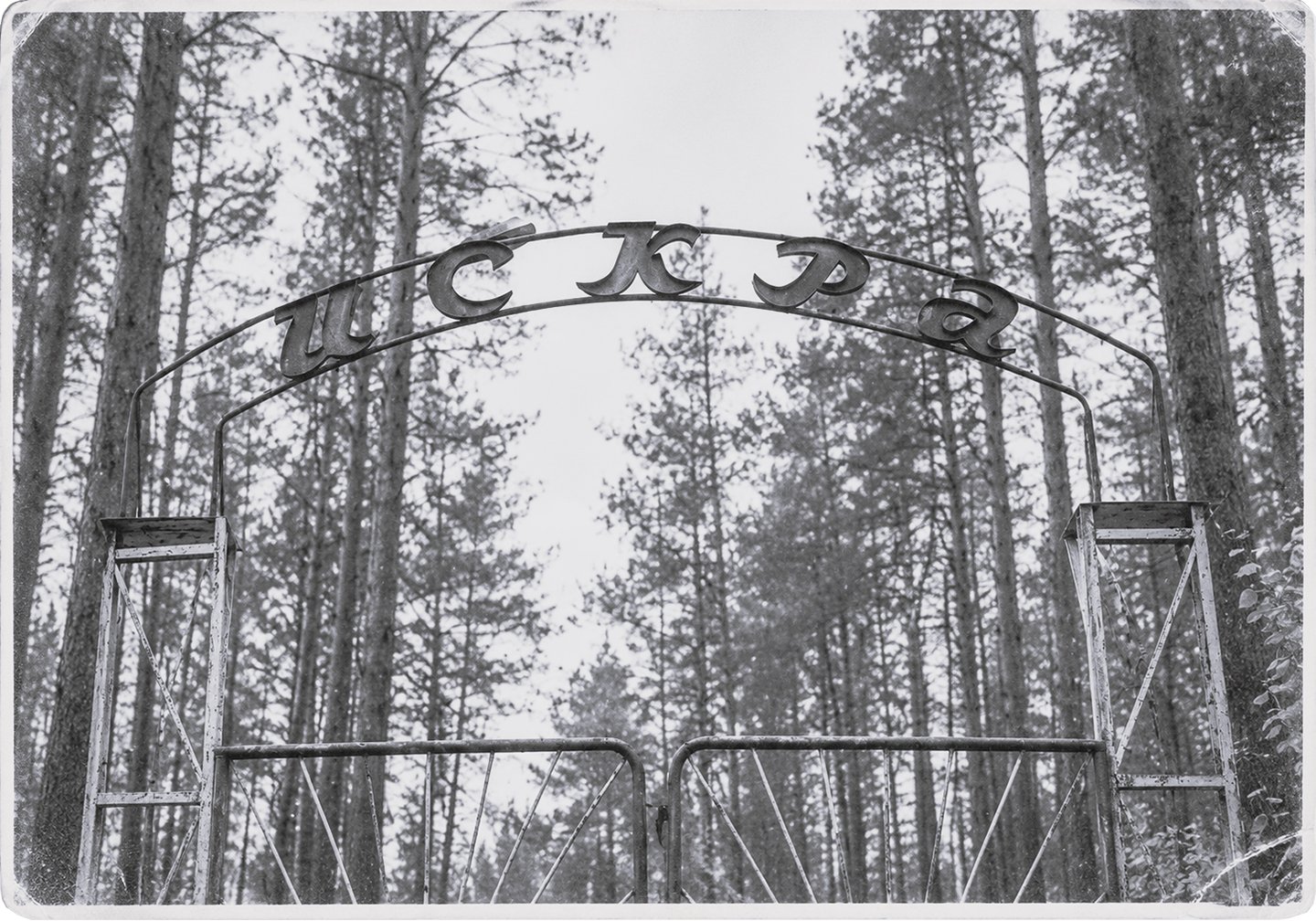
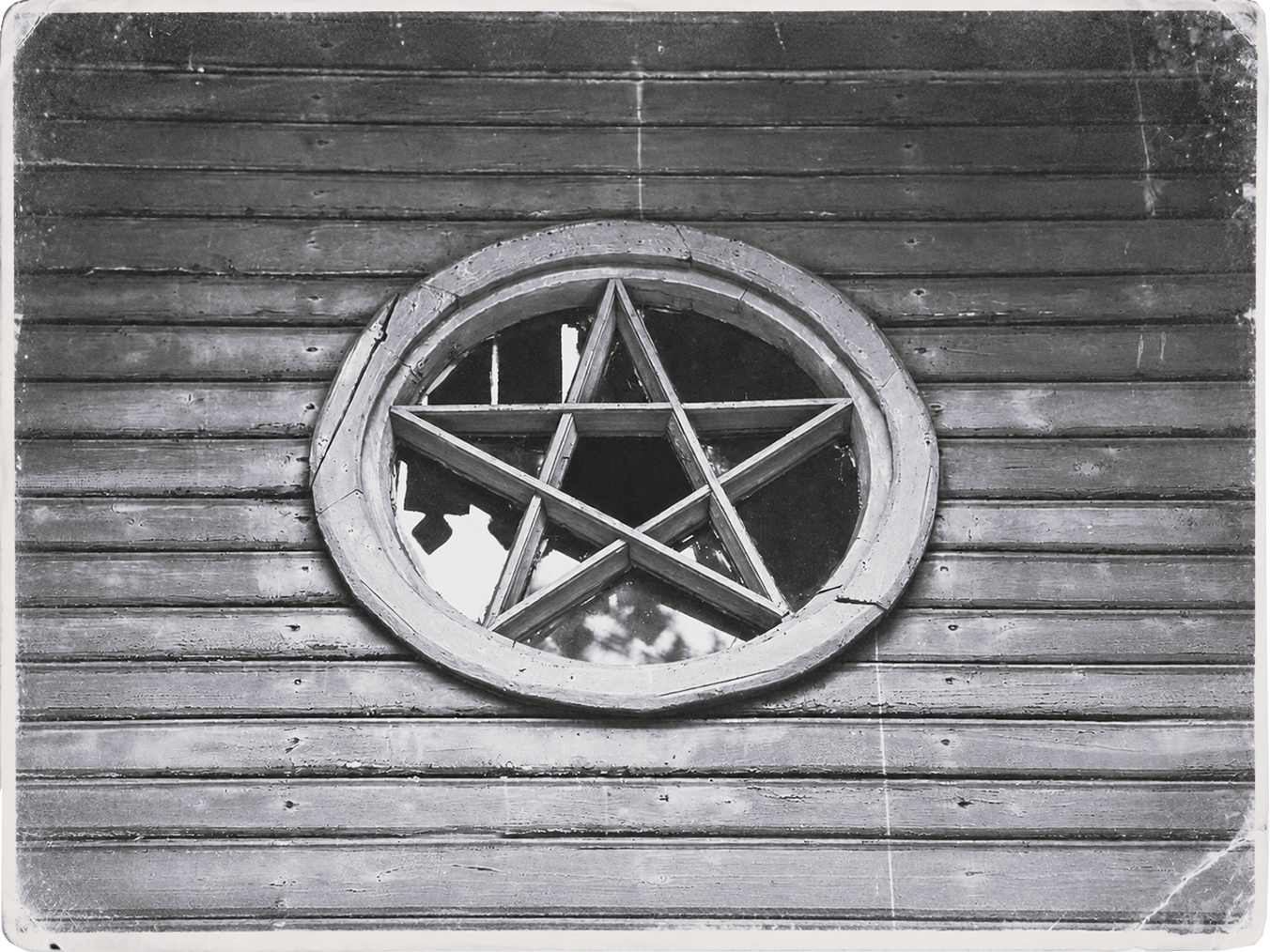
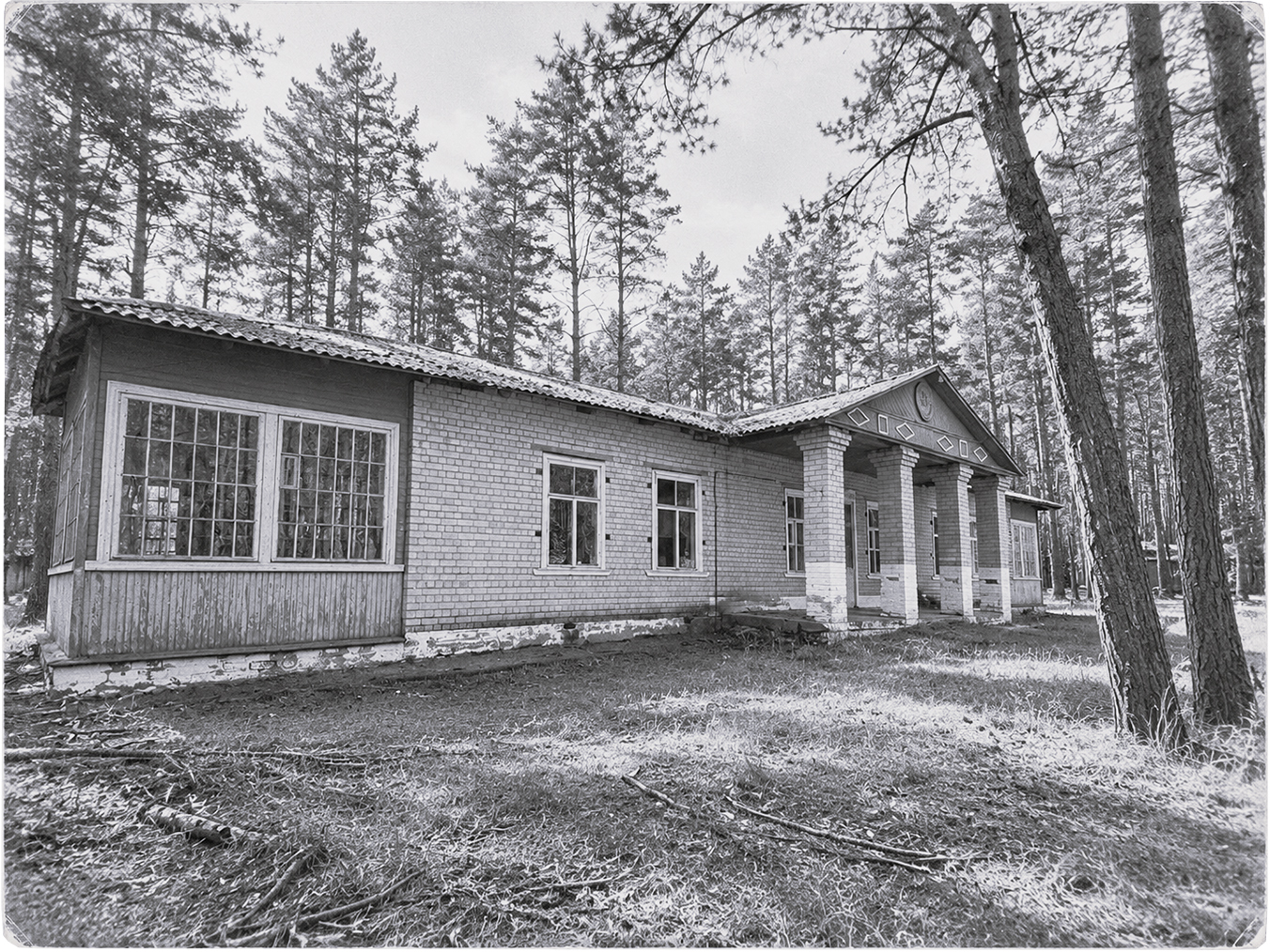
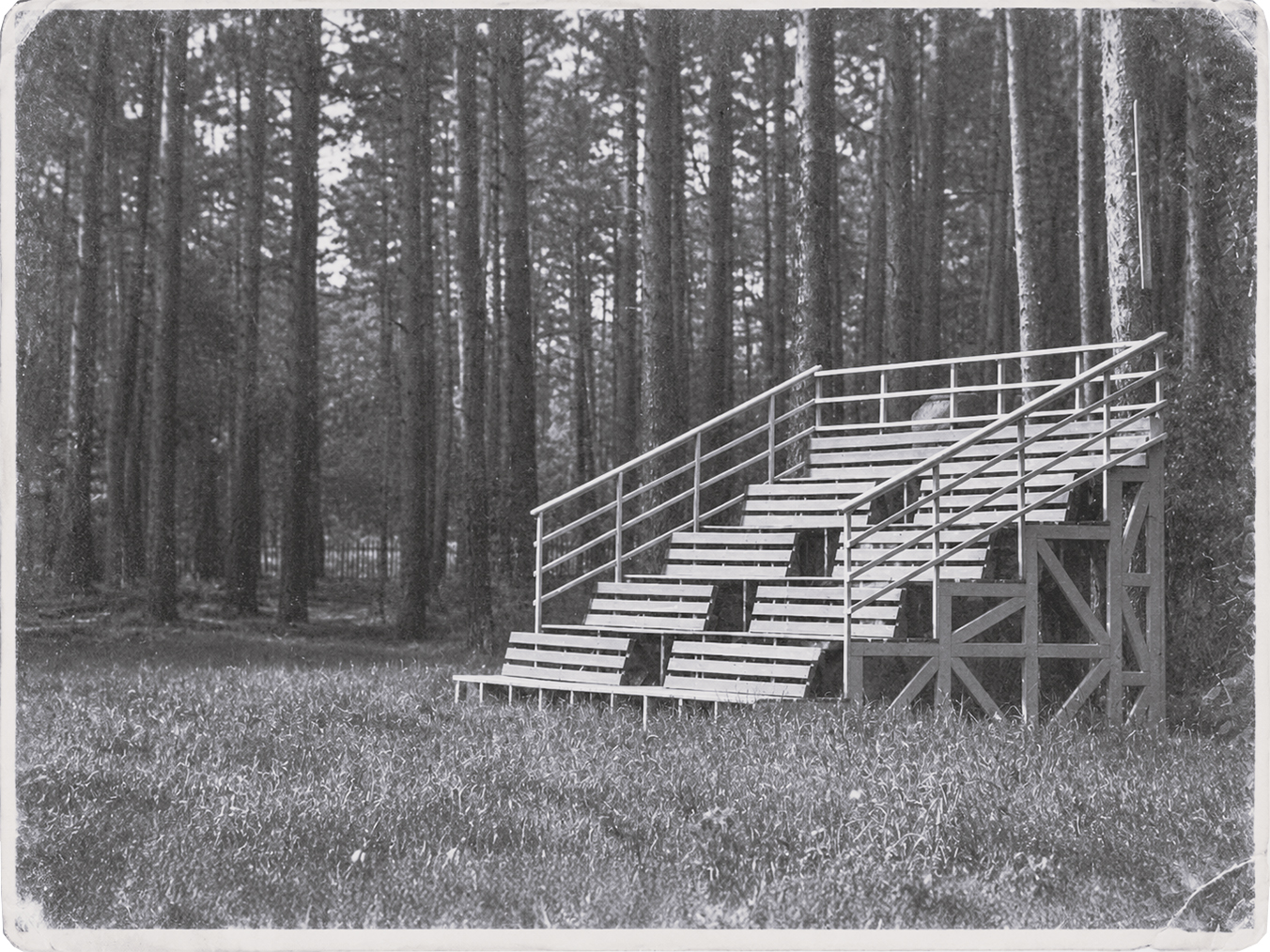
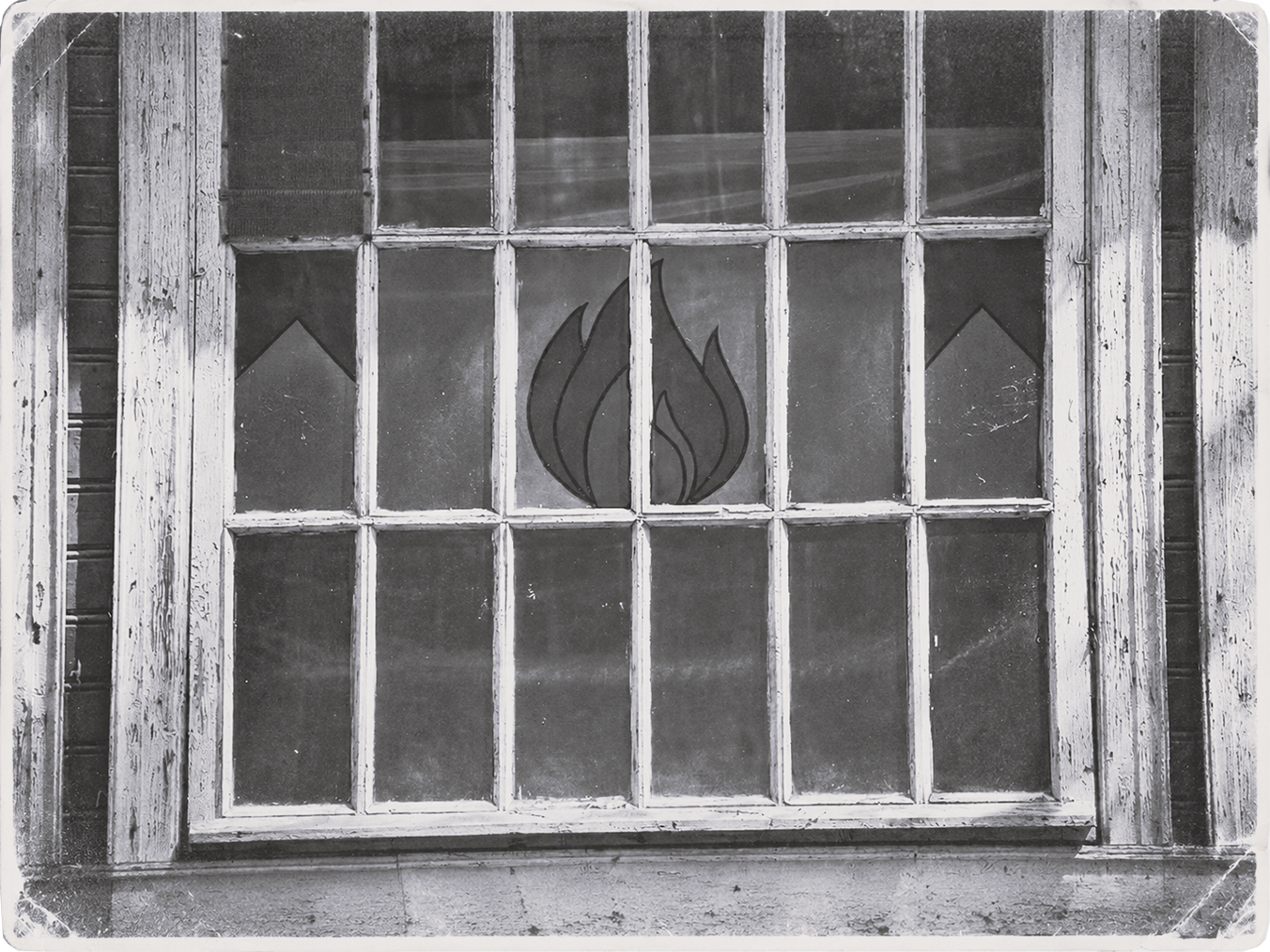
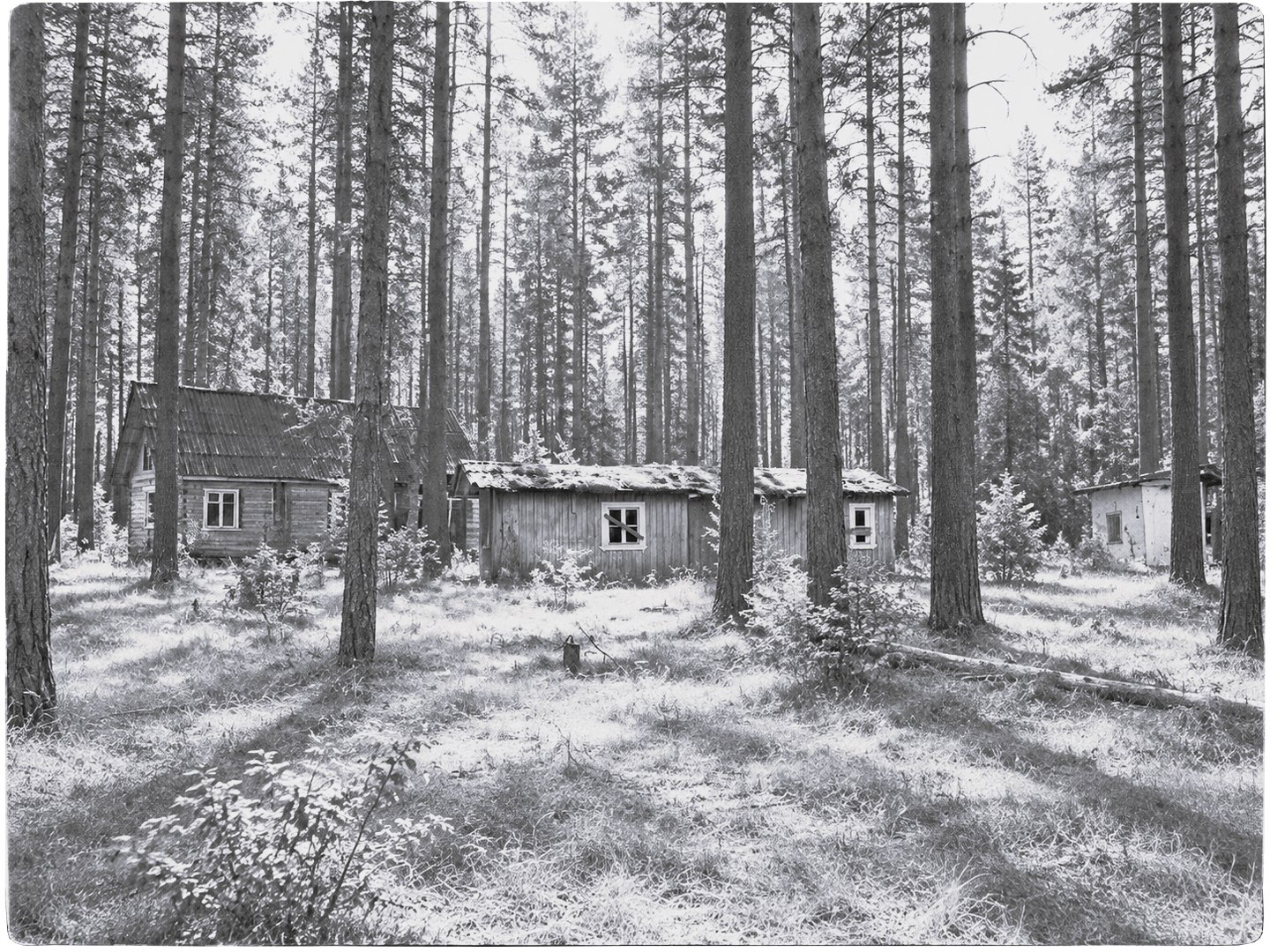
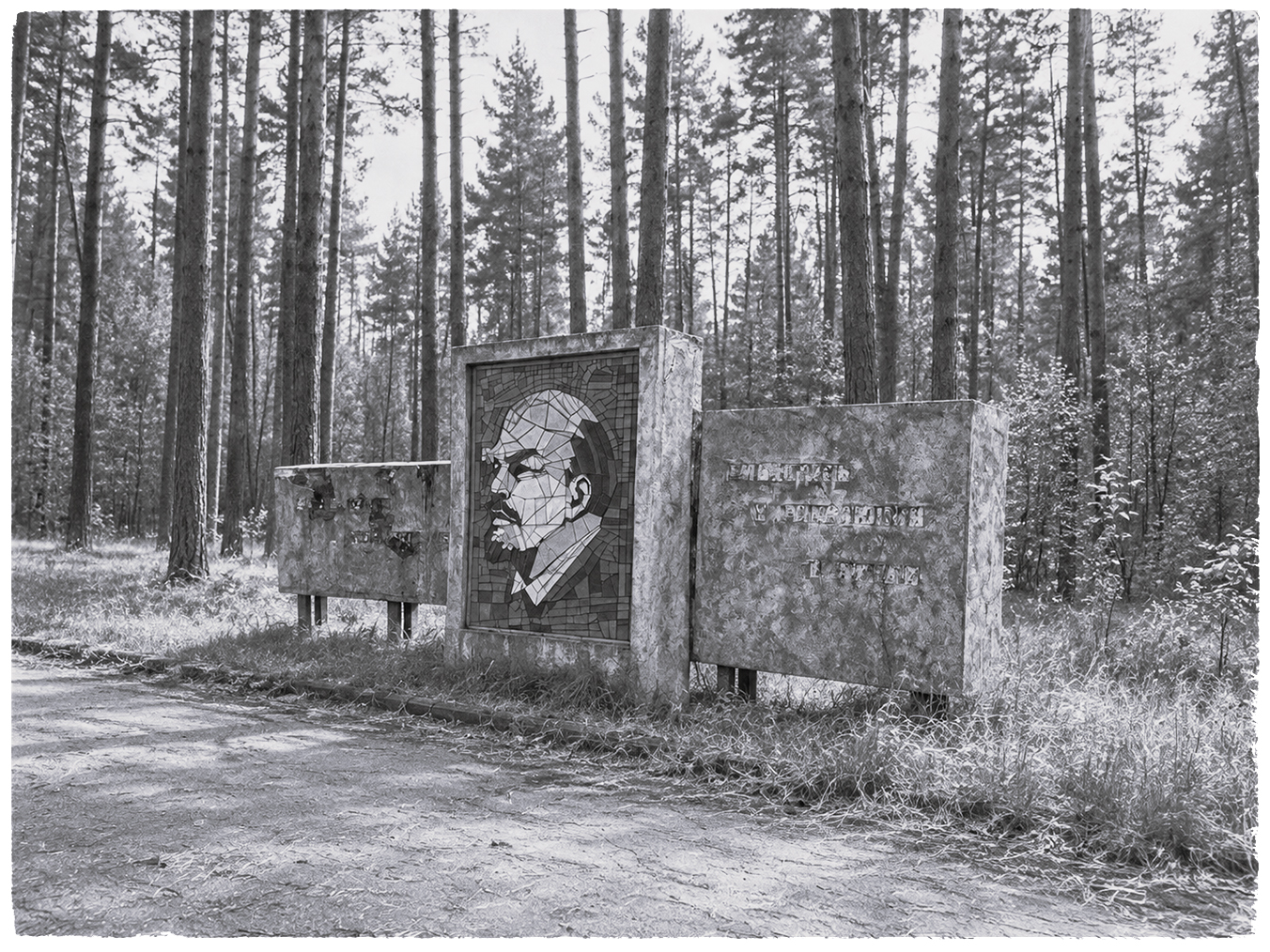
For several generations, a pioneer camp has been associated with a specific type of vacation—a temporary escape from routine life, communal living, group activities, new friendships, and the experience of independence.
Today, this social model can receive a new interpretation, oriented toward an adult audience.
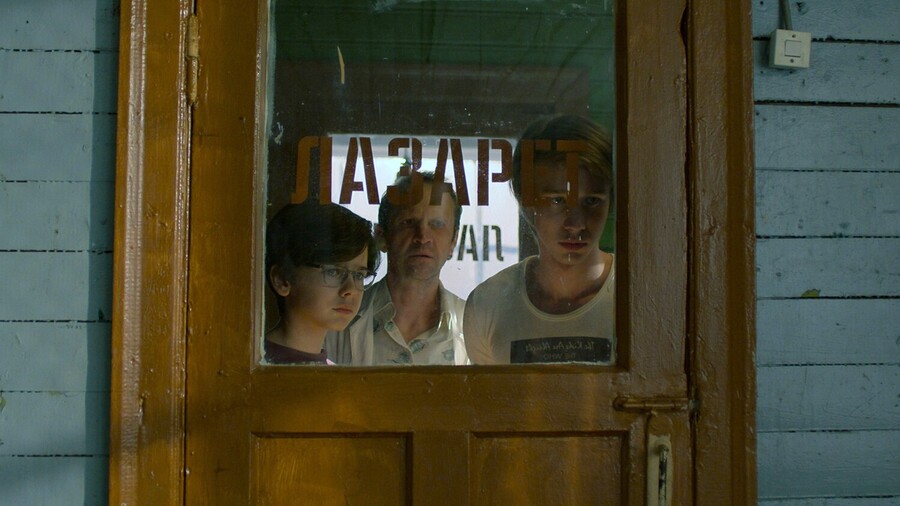
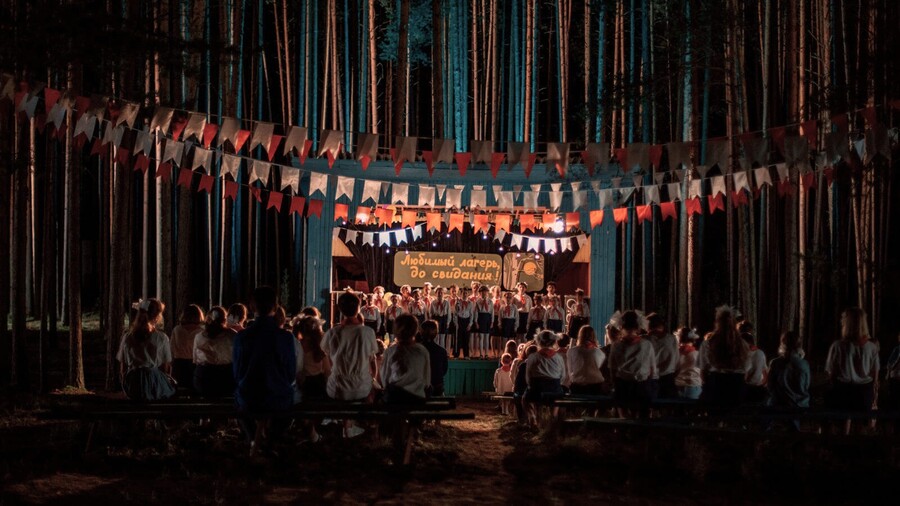
Stills from the series «Pishcheblok, ” 2021
For the last seven years, the camp territory has become a focal point of life for «Iskry"—it has served as a filming location. Numerous short film scenes for Russian cinema, as well as feature films, have been shot here; the most renowned among them include the series «Pishcheblok» and «Motay!».
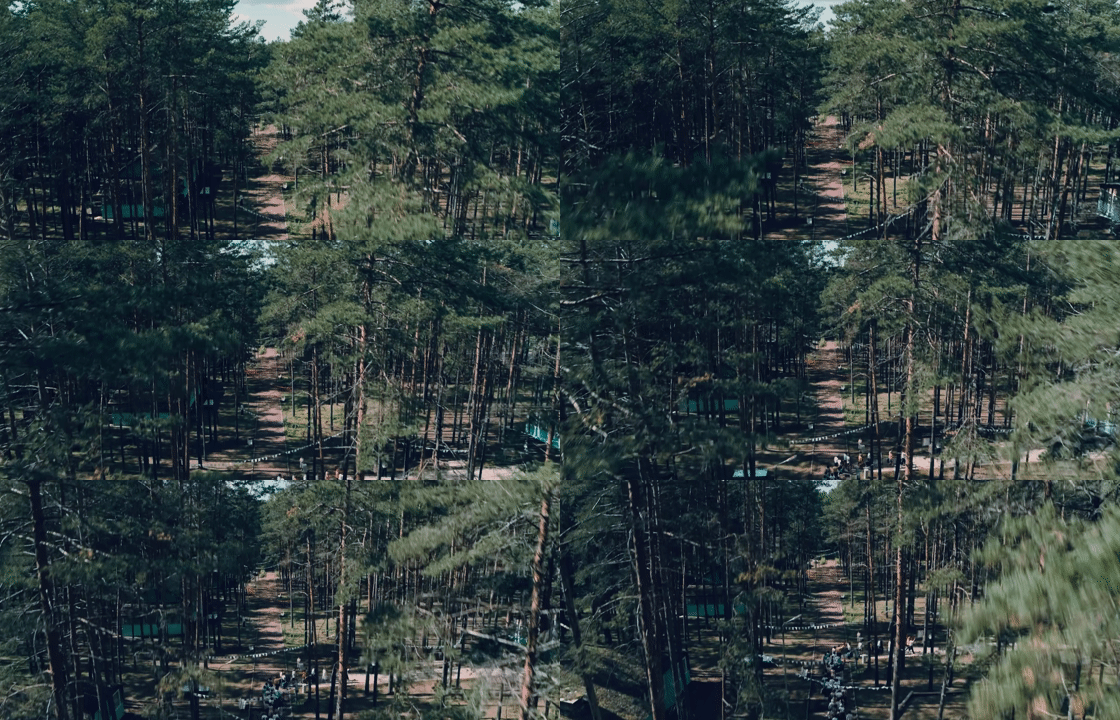
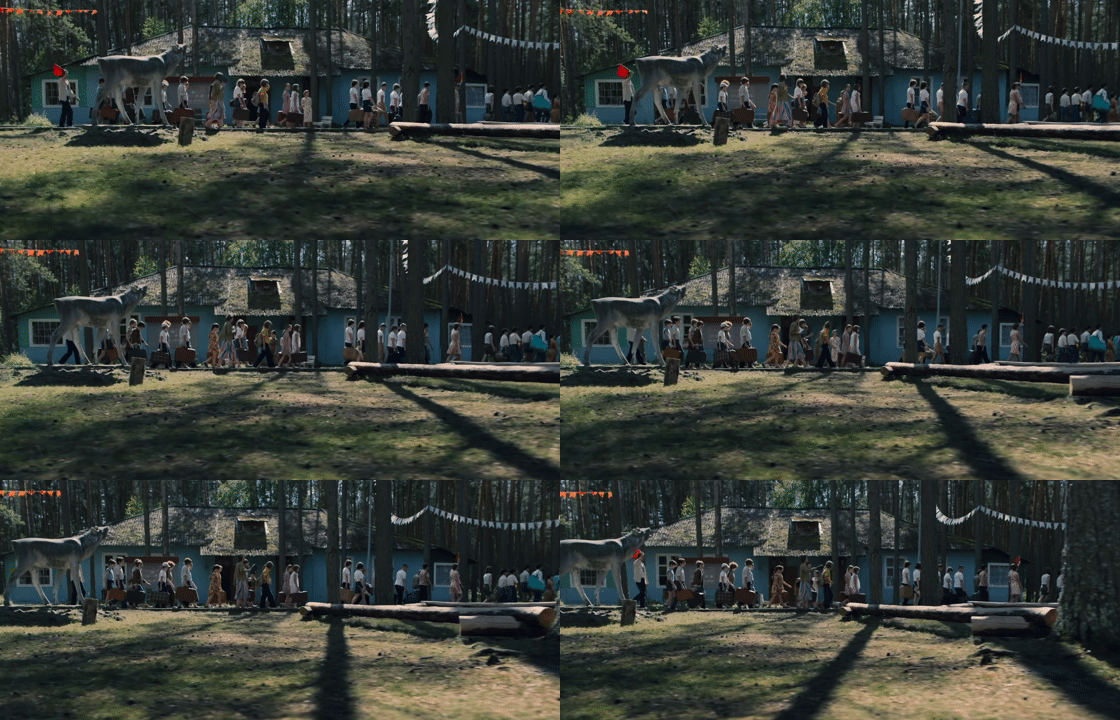
Stills from the series «Pishcheblok,» 2021
Project Goal: To revitalize «Iskra» into a hub of collective life by creating the largest cultural cluster in the Tver region for creative professionals from across Russia to meet and interact.
04. Hypothesis
How?
By redeveloping the territory of the former «Iskra» pioneer camp and implementing a hybrid functional model—an adult camp with thematic shifts and opportunities for continuing professional education (CPE), a festival venue between shifts, a recreation base, and an art residency—the site will not only be restored but will also achieve year-round utilization and develop a sustainable territorial brand built upon the conversion of its cultural capital.
The core principle of the project is preserving the original concept of the camp as a space for collective experience while modifying its audience, functional program, and architectural content.
05. Relevance | Problems and Objectives
Why?
The core idea of the project is not only to create a new center of attraction in the Tver region by reinterpreting traditional forms of collective recreation and creativity for a modern audience, but also to develop a model for the adaptive reuse of pioneer camp territories applicable to other abandoned, similarly typological summer camps.
Challenges:
FUNCTIONALLoss of original function and lack of activity on the camp grounds.
ARCHITECTURAL–ENVIRONMENTAL
Gradual decay of existing buildings, loss of landscaping elements, and the absence of residential structures capable of accommodating large crowds outside the summer season.SOCIO-CULTURALThe gradual erasure of the site’s memory and its exclusion from the contemporary cultural and social life of the region.ECONOMICThe seasonality of traditional camp recreation and the need to find formats that ensure the use of the territory outside the summer period.
Objectives: