Introduction: Problem setting and strategy
In the modern creative industry, the success of a specialist is increasingly dependent on talent or portfolio. A personal brand for a designer, an artist, or a manager is no longer just a beautiful window of work, but a proven ability to think systematically, to solve problems and to generate value. The main challenge today is to get through a huge information noise and bring its expertise to the target audience: clients, employers, and the professional community. This is where the artificial intelligence tools come into play. They stopped being just text generators or pictures, turning into powerful strategic assistants. They can be used to analyse audiences, develop content strategies, optimize materials for search engines (SEA) and adapt them to different platforms, ranging from professional networks such as VC.ru to viral sites with short videos.
This project is a practical study and a briefcase showing how IA can take a highly specialized, niche theme and build an effective promotional campaign around it.
As an example of my participation in the All-Russian BISTI-100 poster competition, I will show the full cycle of work from initial analysis and the generation of ideas to the creation and distribution of content, and most importantly to the analysis of the results obtained. This is a step-by-step review of how a system approach and the correct use of neuronets make a local creative project a visible information tool and an effective tool for building a personal brand.

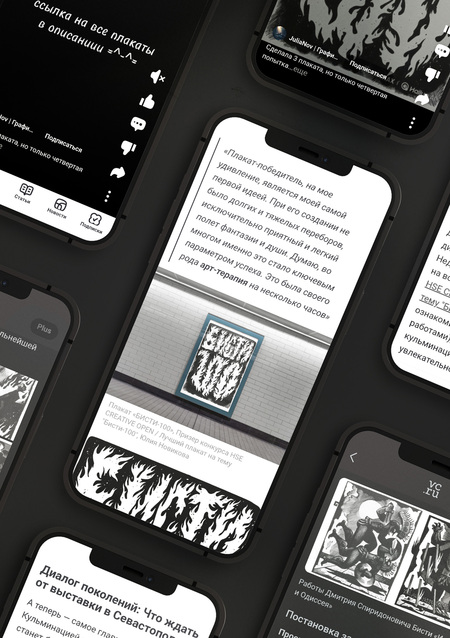
My BISTI 100 Platat project, which became the winner of the BISTI 100 poster contest and used to promote a personal brand
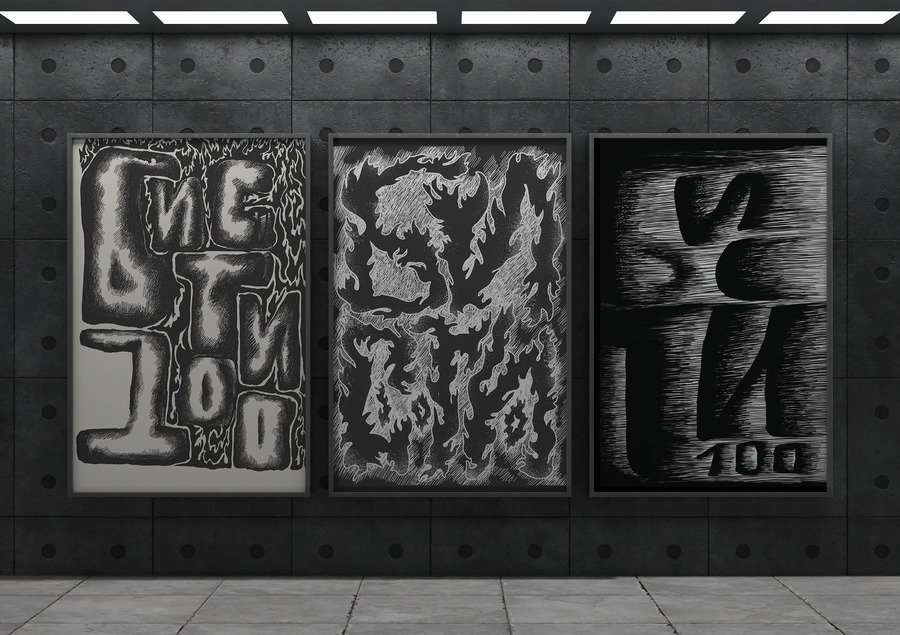
My posters for the BISTI 100 competition.
SEO analysis as the foundation of content strategy
Before writing at least a line of text or building a single video frame, AI and I did a deep SEA analysis to understand the entire search ecosystem around my project.
The goal was not just to select key words, but to answer three main questions: What is the demand already? (What topics are the audience interested in?) Where is my project in this coordinate system? (How interested is the audience directly?) How to find an entry point? (How to link my niche project to topics that are already in demand?)
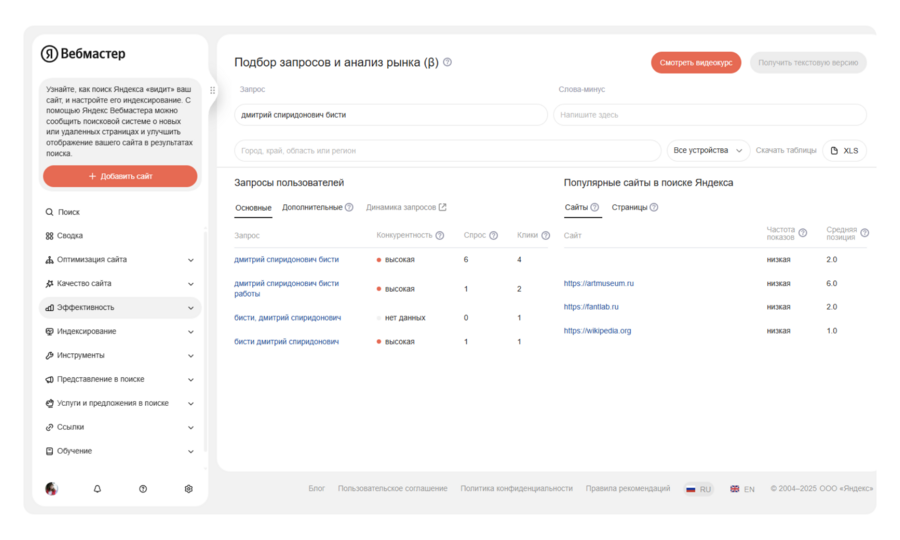
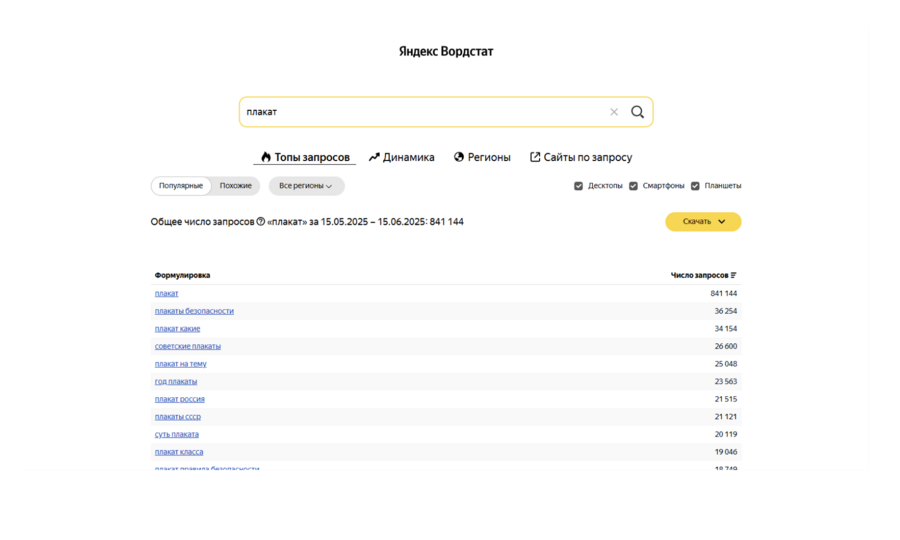
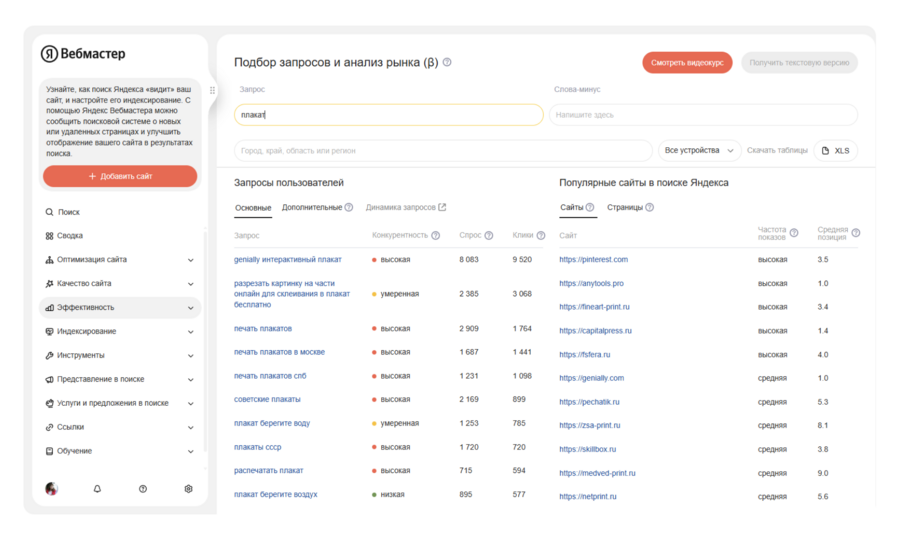
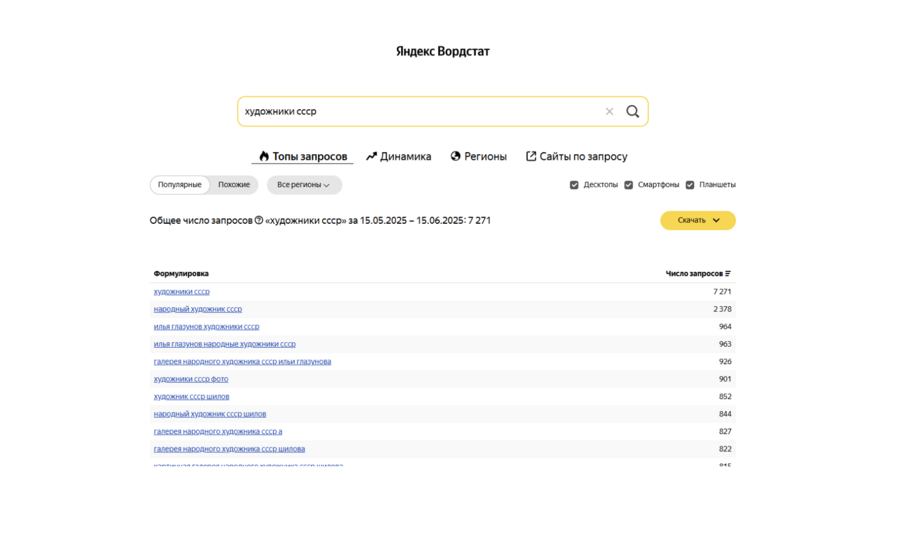
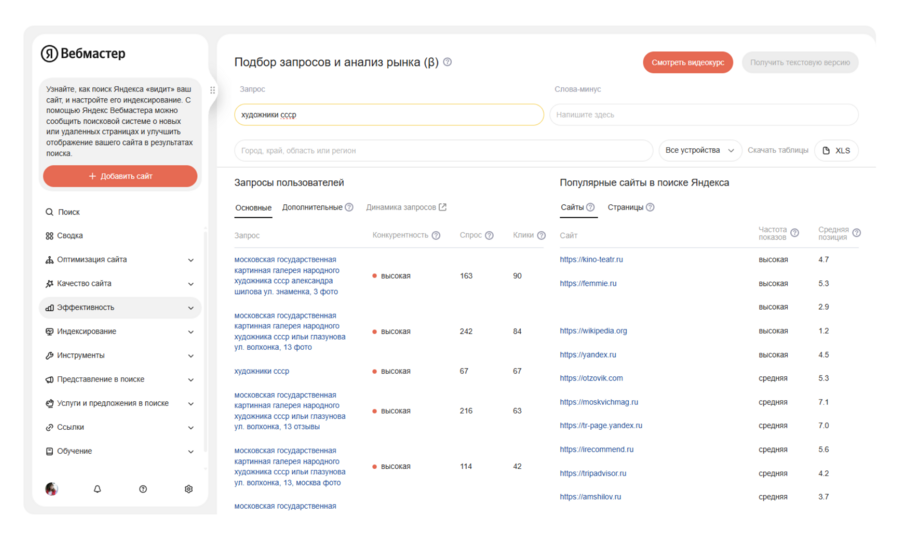
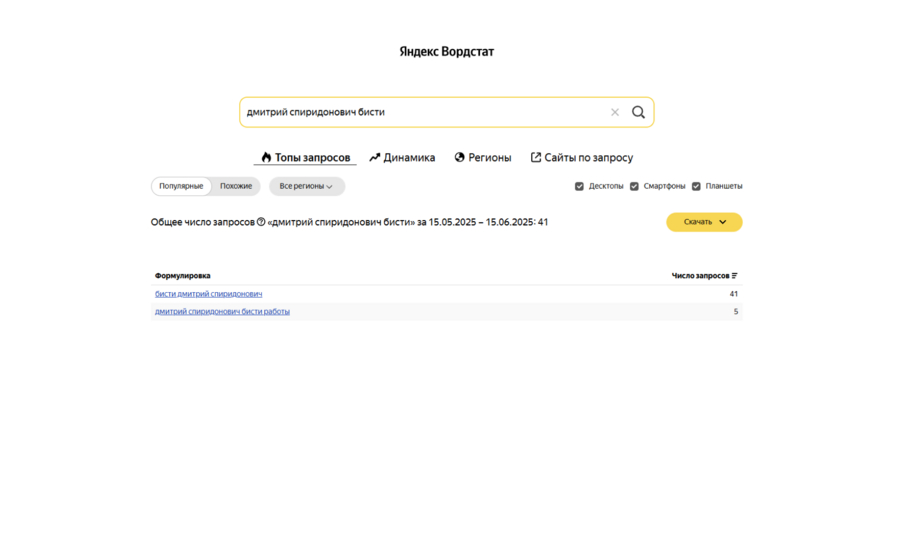
Search for key words that will lead to the highest traffic
The analysis of these data provided a clear picture of the audience ' s interests:
The analysis revealed a «demand gap» between broad, popular themes (design, posters, USSR) and my narrow-minded topic (the work of Dmitry Bisty). Problem: Direct advancement at Dmitri Bisty’s request has no prospect due to almost zero search volume. An article or video with such a title would never get organic coverage because no one is looking for it. It has become obvious that it is not necessary to act in the head. We have developed a strategy, the essence of which is not to try to promote the niche theme directly, but to create high-quality content on a broad, popular topic, and inside it to hide my narrow expertise and project. My Dmitri Bisty project has become not a content theme, but a unique case and evidence base within more popular topics. We have identified the following «entry points» for the audience: — Users looking for a design card. — Students and beginners looking for a «how to win» contest. — Professionals interested in I.E. promotion. — A broad audience who likes trend memes and success stories.
My strategy:
Expansion of semantics: Link the niche theme to more popular and broader demands («the design», «the art of the USSR», «the creation of a poster», «Neroneti»). Storitelling from the first person: Turn the creation process into an exciting story of the hero’s journey, showing not only success but also failure. Content adaptation: Create different formats (article, videos) for different platforms (Dzen, VC.ru, YouTube Shorts), taking into account the specifics of their audiences. Targeted use of AI: Use neuronets not as «author» but as a strategic partner at all stages, from analysis and generation of ideas to content creation and SEA-optimization.
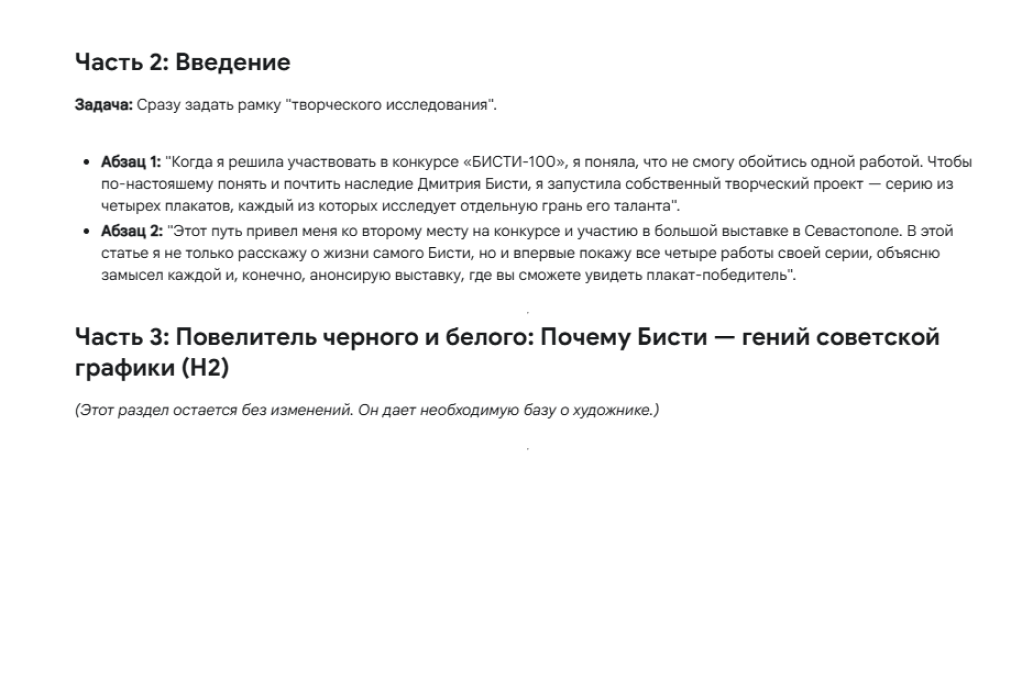
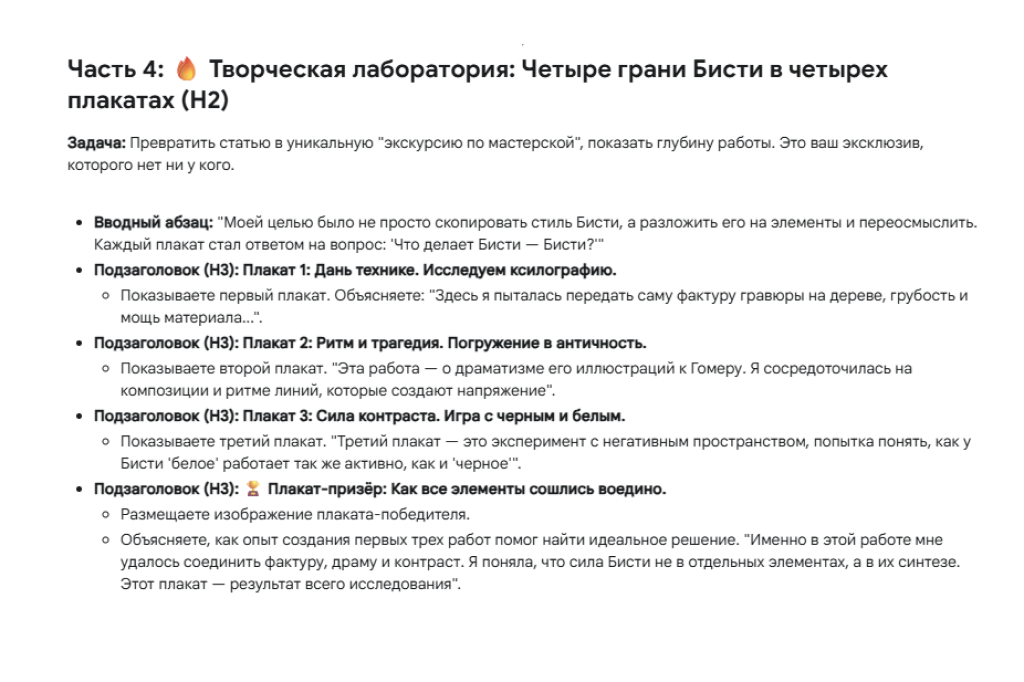
Final outline of the SEO-effective article on Dmitri Bisty
Response from ChatGPT-4 (Google AI Studio):
Target audience:
Shark: Users interested in art, USSR, personal success stories. Target: Designers, artists, students of creative institutions. News: People looking for cultural events in Sevastopol. Lower B2B: Collectors, Gallers. Key strategy: Positioning the author not as a biographer, but as an expert and a hero of history (a contestor) who shares exclusive information (annotation of the exhibit) and personal experience. We use the E-E-A-T principle to the maximum.Response from ChatGPT-4 (Google AI Studio): Benefits of the plan: Unique 100%: No one but you can write such an article. You share exclusive content (3 additional posters and the history of their creation). Maximum E-E-A-T: You’re not just a prize, you’re a researcher. This demonstrates the utmost expertise and experience. Increased engagement: Readers will be interested in watching your creative search, comparing posters, agreeing or disagree with your choice. Time on the page (an important SEA factor) will increase significantly. More content: The article will become longer and more visually rich, which will also have a positive impact on SEO. Strong personal brand: You position yourself as a thoughtful, serious analytical designer, not just «the author of one good job».
Process to select key words to move the project forward
Creation and publication of an article with SEO
Interview about my project.
To create deep and authentic content, we have abandoned mere fact-finding and TK. Instead, we initiated a structured interview process, where I acted as an expert and a hero of history and an AI as a professional journalist. The purpose of this phase was not to write a text, but to obtain material for it: to find a narrative thread, to identify unseemly details, to formulate personal websites and to obtain «gold» quotations that could not be generated from scratch.
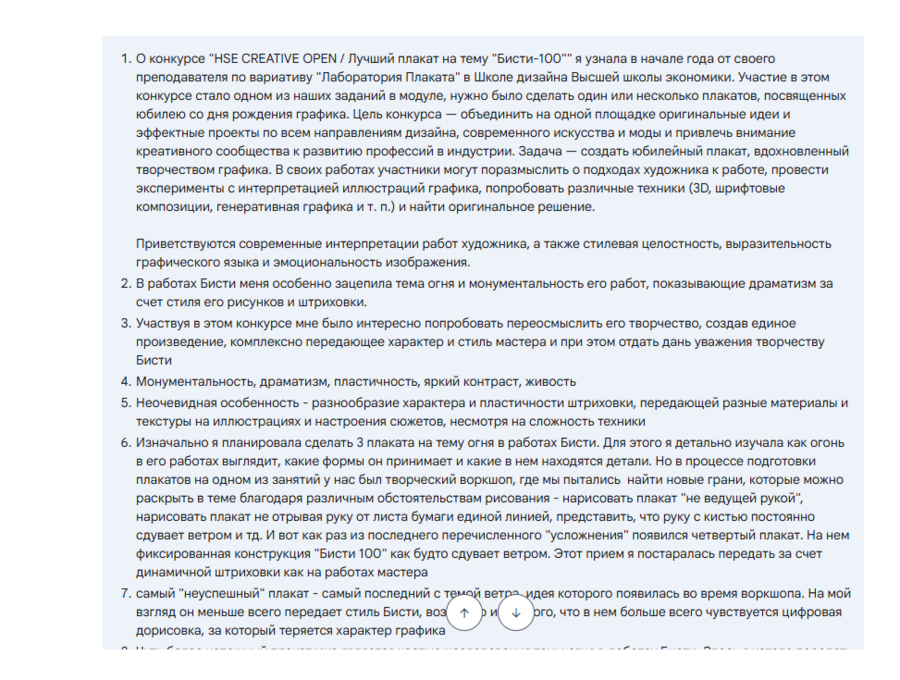
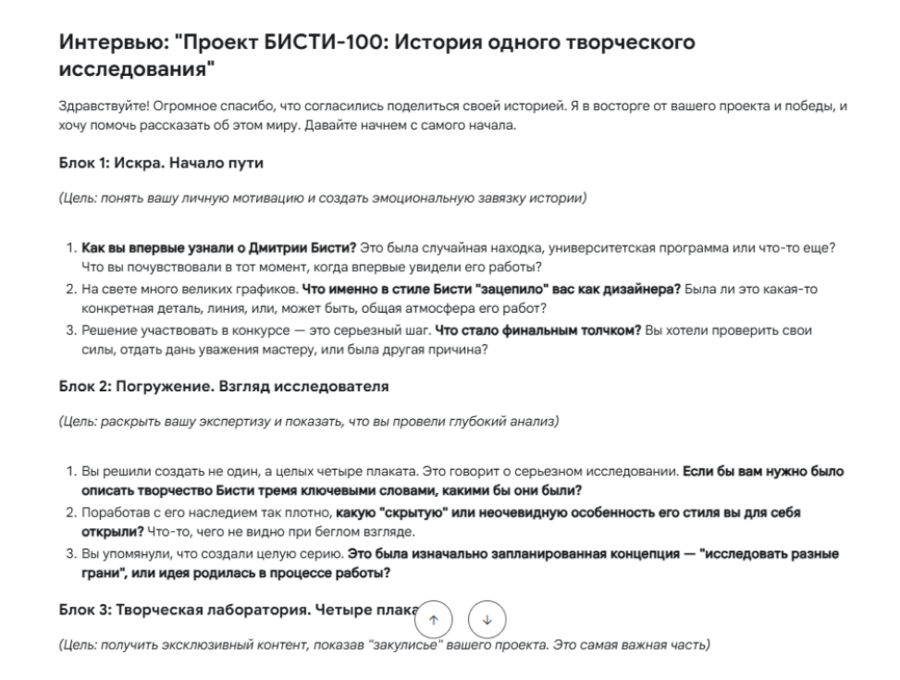
Interview process
The interview was divided into six logical blocks and contained 18 questions, which allowed me to reveal the story in a consistent manner and to conduct me through the classic hero route structure: Ishmael Block: Questions about personal motivation. Why Bisty? What’s up? It helped to create an emotional bond. Immersion Unit: Expert questions. Key words, hidden style features. This block helped to formulate the analytical part of the article. Creative Laboratory Unit: Detailed questions on each of the three «not winning» posters. What idea? Why didn’t it work? What did you learn? This was the basis for the most exciting part of the case, the search and iteration history. Consumation Unit: Questions about the winner poster. What was the «Eureka moment»? How did he synthesize the experience? This helped to build the culmination of the narrative. Confession Unit: Questions about emotions and events. How did you feel? How was the award? What do you mean, an exhibition? This block has added personal experience and news value to history. Philosophy cluster: Conclusions and mission questions. What’s the main lesson? What message to the audience? This helped to formulate a strong, inspiring conclusion.
This approach has provided us with three key assets that formed the basis of both articles: -A clear-cut narration arc: Interview naturally built a story with a fixation (task), development (analysis), conflict (creative search through 4 posters), culmination (win) and unbundling (conclusions and announcements of the exhibit). — «Golden quotations»: Direct, authentic quotations have been received that cannot be generated. The phrases «it was a kind of art therapy» or «it gave me a sense of my own importance as an emerging professional» made the text live, honest and relatable. — Unseemly details: In the question-and-answer process, important details emerged that could have been missed in the simple writing of the text: the history of the veteran poster’s birth on the vorkshop, the transformation of the idea of the winner poster from «gobelen» to the monument, the use of the «Bisty frame» and others.
As a result, the IE interview was not just a process of gathering information, but a fundamental process of shaping the whole structure and tone of content. It has turned the dry report of the project into a deep and multilayered story that works equally well as a business census and as a personal inspiring story.
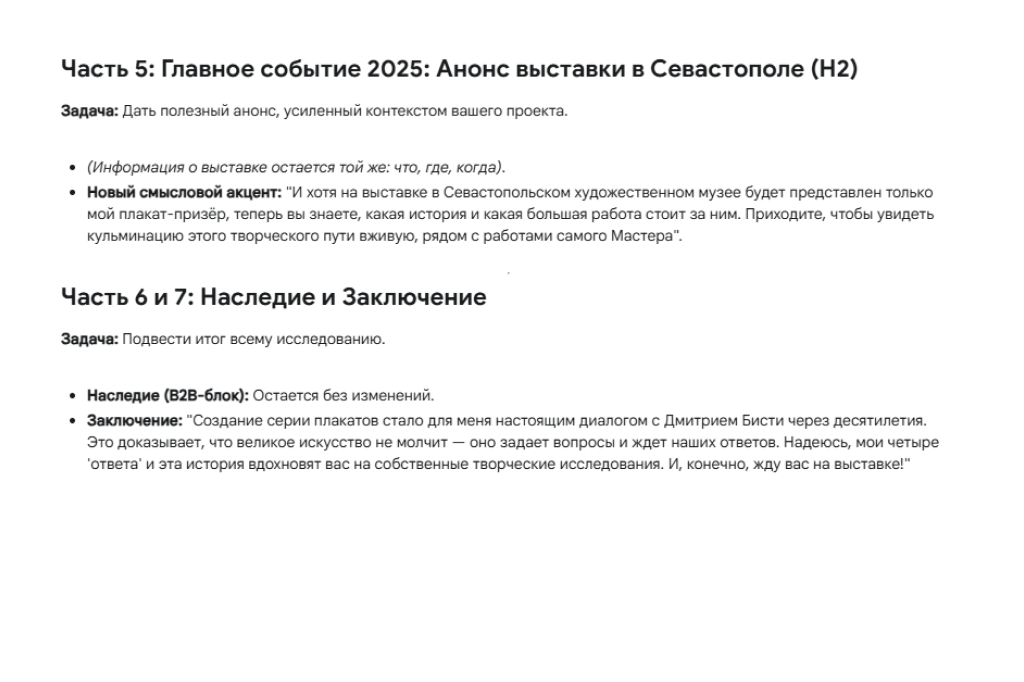
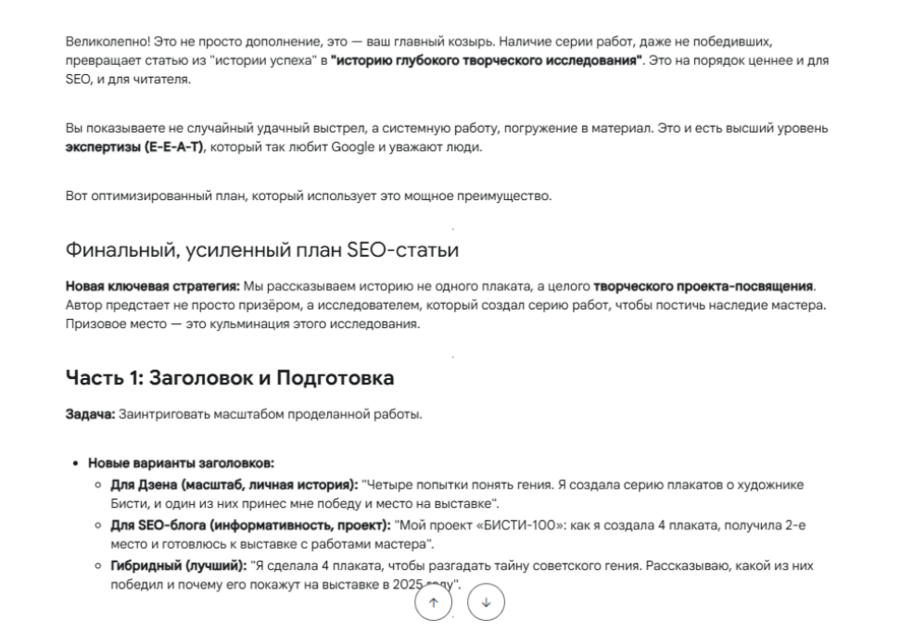
Draft article developed
The key decision to write an article on the project was to abandon the principle of «one content for all». Realizing that VC.ru and Zen audiences are looking for very different things, we repacked the same story of my project with I.I. into two unique information products.