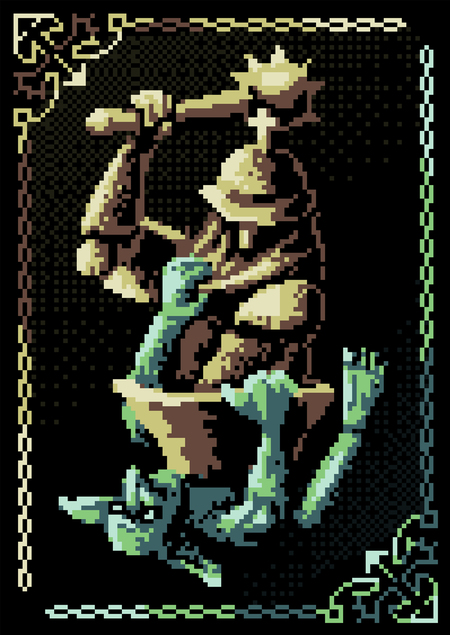
How goblins can find out that they are breaking human laws—the correct way is to come and report it.
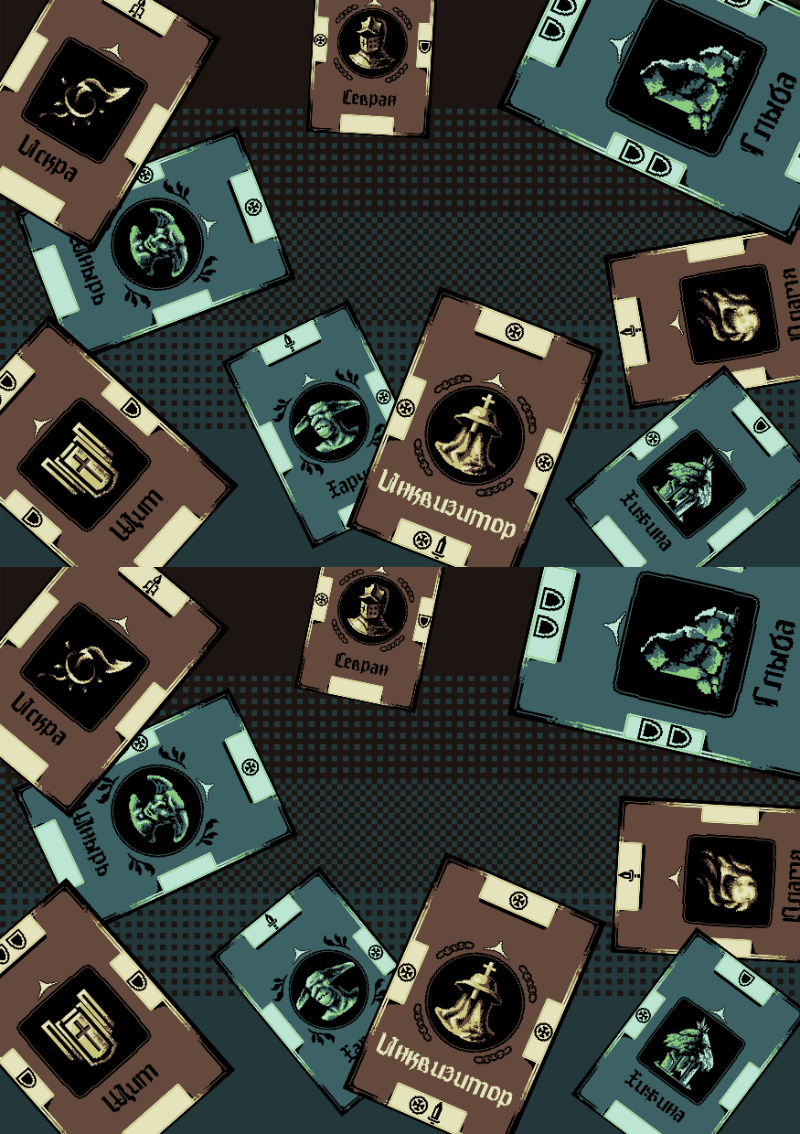
A card-dueling game where you command paladins or goblins: to slay, to flee, or to perish—they will execute your every command because you carry divine will. And what is a better testament to faith than the sharpness of a blade?
Battle Conditions
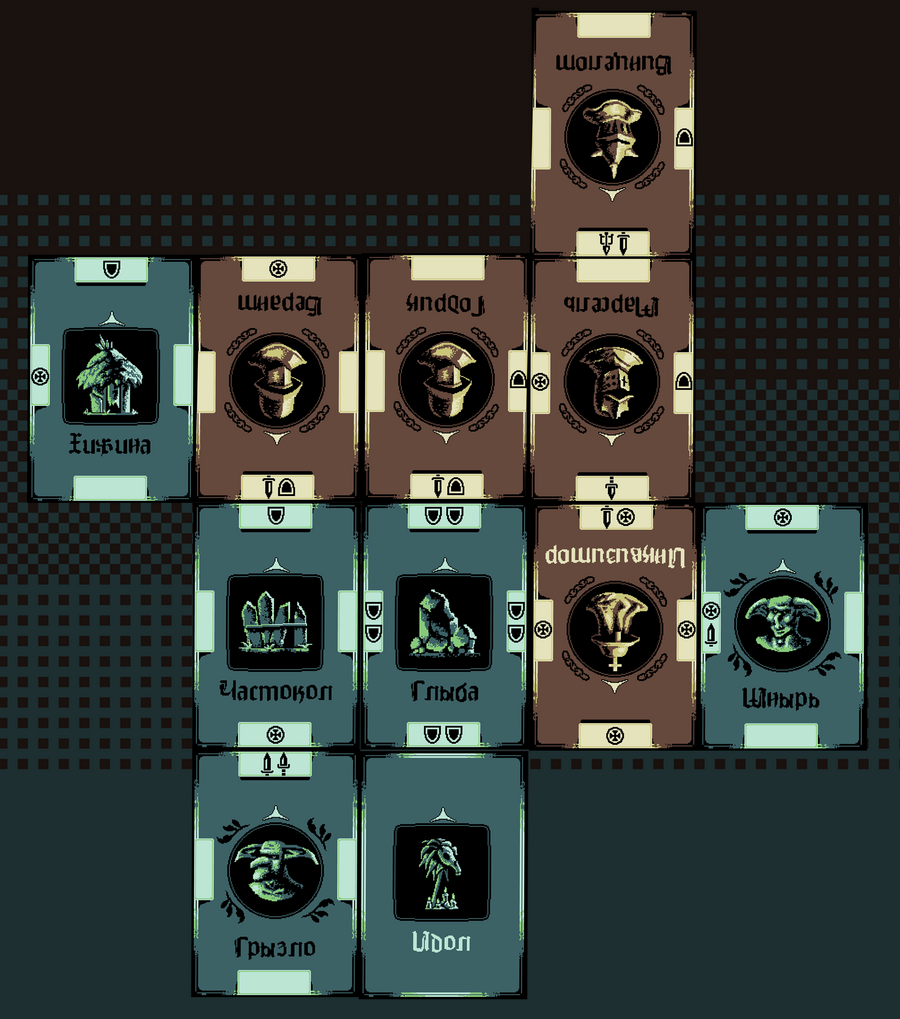
The dimensions of the game board and the number of actions per turn are unlimited. Everything depends only on the size of the army you control.
Paladins


The paladins' objective is to guide the inquisitor’s map deep into the village, to the idol’s map.
Goblins
The goblins' objective is to kill the inquisitor before he reaches the goal.
The map of the inquisitor and the idol is placed on the field at the beginning of the game.
Rules of Engagement
Draw up to 2 cards into your hand. Place them on the field. Take one action with each card.
Each warrior can either take an action or move. When taking an action, a warrior uses the symbols drawn on one side of the card.
Swords, spears, arrows
Attack symbols with varying ranges that allow you to defeat enemy warriors.
Boards
A warrior with a shield can withstand one attack. However, they will not survive a second blow in the same turn.
I command
Command — a symbol on the map that allows one warrior to pass their turn to an ally. This way, you can destroy cards with shields.
Movement
If the warrior does not take an action, it can move one square in any direction. When playing as goblins, you can move warriors diagonally. When playing as paladins, you can swap adjacent pieces.
Cabins and Explosions