Companions are non-playable characters (hereafter NPCs) who accompany the player character for extended periods and can act as assistants or allies.
Due to their near-constant presence during gameplay, companions are the NPCs with the greatest influence on player experience and expectations.
Although the player recognizes that the companion is part of the code and feels they are the primary, dominant force, they still perceives the companion as a full participant in the events.
For many games, implementing companions presents a significant challenge. Some researchers attribute this to the implausibility of their execution: it is the character’s behavior, appearance, backstory, dialogue, and relationship with the protagonist that creates an emotional bond between the player and the companion. Others point to the technical difficulty of developing AI for companions: a character that is constantly near the player must be able to navigate space, react to the player’s actions, and not appear unduly clumsy or weak in comparison to them.


Stills from the games The Last of Us—Naughty Dog, 2013—and Bioshock: Infinite—Irrational Games, 2013
The player perceives the companions as an integral part of the game world, and their behavior that doesn’t align with the world sharply breaks the player’s immersion. This causes irritation.
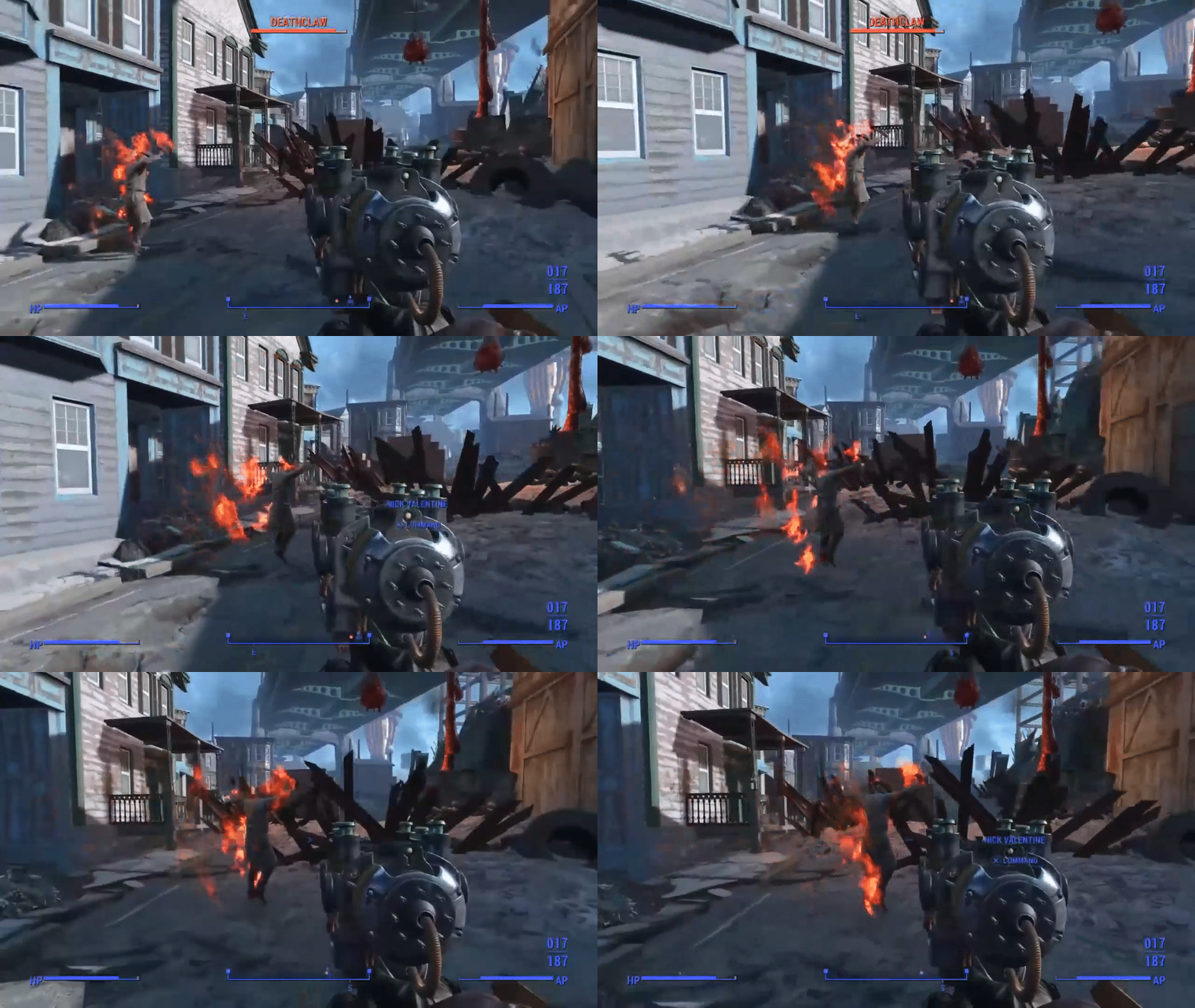
Stills from the game FallOut 4 — Bethesda Game Studios, 2015
Even with the advancement of technical capabilities and the growth of the industry, companions continue to frustrate players. Teammates often get stuck in doorways, freeze in place, or become lost. These situations stem from minor glitches that are impossible to completely anticipate in a large game, but they become noticeable when a companion is constantly within the player’s line of sight.
But technically complicating companion systems doesn’t solve their problem—it fragments it into numerous, less noticeable issues that are harder to track.
So, how can we actually implement companions if attempts to solve their problems only increase their number? Through companion design. In his article, Nave Barlev proposes the concept of reciprocal understanding between the player and the companions. Within this concept, mechanics, narrative, and gameplay—the components that constitute the relationship with a companion—simultaneously influence each other and the player, each from their own perspective.
Concept of interactive understanding between the player and companions by Nave Barlev
According to this concept, companions are part of the game’s internal system that primarily influences the player’s emotions. And players become engaged with games precisely because of their unique way of evoking emotions—through gameplay mechanics. Therefore, a reliable method for creating a good companion is to start with its mechanics and how players feel when interacting with them. But there are many problems hidden here as well.
Platformers, camera, and player attention
Platformers expose the shortcomings of AI companions particularly well. Level design in platformers relies heavily on precise timing and efficient use of space, meaning the player is constantly scanning the environment and strives for high action accuracy.
Stills from the game Songbird Symphony — Joysteak Studios, 2019
In such a system, any deviation is immediately noticeable. This is the primary reason companions are rarely featured in platformers: they might lose the player, choose a suboptimal path, or simply act too late. A camera fixed on the player character only intensifies this effect—the companion’s mistakes are constantly in the player’s line of sight.
Screenshots from the game Songbird Symphony — Joysteak Studios, 2019
All-Powerful Companions
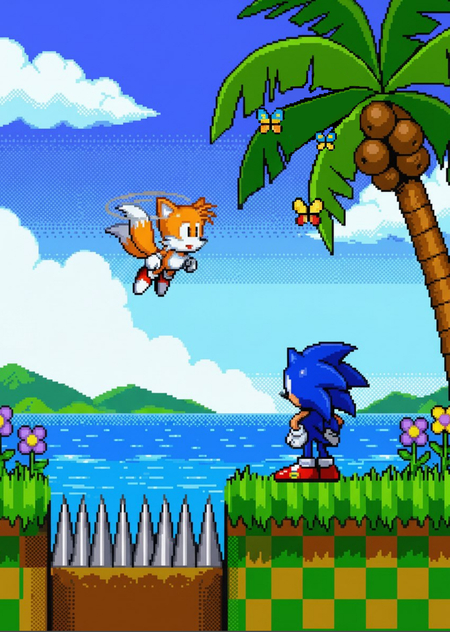
In Sonic The Hedgehog 2, they attempted to solve the camera issue by enhancing Tails with AI: he can accelerate, fly over dangerous sections, and recover easily after falling.
Stills from the game Sonic The Hedgehog 2 — Sonic Team, 1992
To prevent the player from feeling that Tails is «cheating,» the game designers heavily restricted his influence on the progression, thereby causing the player to perceive him as an addition rather than an ally. Tails' mechanics communicate to the player: «You play by yourself—chase for points and time—and I will only lag behind and interfere.»
Stills from the game Sonic the Hedgehog 2 — Sonic Team, 1992
Companions and Abilities
Some platformers go further and directly tether the companion to the player. This solves the problem of camera issues and AI orientation errors. Since the companion is always close to the player’s avatar, the developer doesn’t have to teach it pathfinding on its own, and the player doesn’t have to monitor it.
The autonomy of companions in such games is severely limited, and their role becomes diffused. They end up being a hybrid between a companion, a mechanic, a game object, a character modifier, or an accessory for the player character.
Companion Mechanics
In Ori and the Blind Forest, Sein is a part of the protagonist’s body and cannot independently decide when to attack enemies. However, as soon as the player gives him a command, he aims and attacks autonomously. Sein is an inseparable part of the game; he is connected to all the core mechanics, and in terms of gameplay, he is just as vital as Ori. Players perceive Ori and Sein as an inseparable duo, with mechanics distributed between the two characters. For example, the article editor was surprised when reading this section: they played the game but don’t remember there even being a companion.
Stills from the game Ori and the Blind Forest — Moon Studios, 2019
Thanks to this design, the connection between the player and the companion feels genuinely intimate, unique, and valuable. The player perceives the companion as helpful, even caring—yet its presence makes gameplay significantly smoother, while its limited autonomy creates the illusion of the companion making decisions on its own.
Companion Objects