
RUBRICATOR
[1] Introduction [2] Communication Channels [3] Theoretical Framework [4] Analysis [5] Conclusion and Recommendations [6] Bibliography and Image Sources
[1] Introduction

Halloween Drop 10/25.
Planta Rosa is a Russian fashion brand founded in 2021 by Evgenia Pavlin and Ibrahim Gatsiev. From the outset, the brand was connected to vintage aesthetics, photography, pop culture, and expressive visual storytelling. Its identity was not limited to clothing as a functional product. Planta Rosa presented fashion as a means to create mood, image, cultural association, and personal style. In its early stages, the brand was largely associated with sporty silhouettes, oversized sweatshirts, retro-inspired prints, and streetwear aesthetics. This direction was closely linked to the founders’ backgrounds—Evgenia Pavlin had a public image as an influencer and entrepreneur, while Ibrahim Gatsiev was known as a stylist, photographer, and creative director. Their partnership helped the brand develop a recognizable visual language from day one.


PLANTA ROSA’s collections before the transition
Over time, Planta Rosa expanded its product range. Today the brand includes not only baggy clothing, but also jackets, leather goods, dresses, skirts, knitwear, and accessories. This shift demonstrates that Planta Rosa has evolved from a primarily streetwear project into a broader contemporary fashion brand. This development can be described as a soft brand transition. It is not a radical, official rebranding because the name, general identity, and core visual codes remain recognizable. However, the brand’s scale, product offerings, and public context have changed. This transition became particularly visible in 2025, when Ibrahim Gatsiev announced that he was no longer involved in creating the brand’s image and clothing collections due to differing views on the business’s future.
EDITORIALS NEW YORK CITY



EDITORIALS NEW YORK CITY
This situation presents a significant communication challenge. Planta Rosa must maintain recognition and trust while demonstrating that the brand can evolve following a major creative shift. In this project, the brand is analyzed as a communication system—its website, catalog, editorials, product names, social media presence, customer service tools, and visual style all work in concert to construct meaning around the brand.
Planta Rosa’s core positioning can be described as a contemporary fashion brand that transforms clothing into a form of visual and cultural self-expression. The brand does not aim to be a basic mass-market label; instead, it builds its communication around atmosphere, references, styling, and symbolic value. Its products are presented not merely as wardrobe items, but as signifiers of identity and taste.
Planta Rosa’s target audience consists of young adults interested in fashion and visual culture. These customers use clothing not just for practicality, but also to communicate mood, lifestyle, confidence, and affiliation with a specific fashion community. The expanded product range also enables the brand to reach a broader audience, including those interested in more mature wardrobe pieces and premium items.

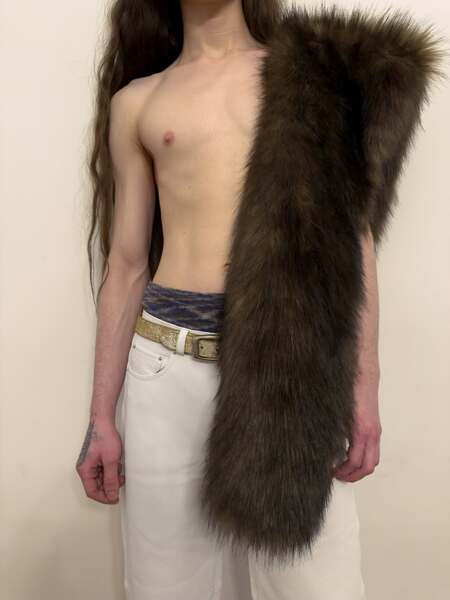
EDITORIALS NEW YORK CITY
Planta Rosa’s brand personality can be described as bold, nostalgic, ironic, urban, artistic, youth-oriented, and culturally aware. The brand deliberately avoids appearing neutral. Its personality is built through product names, editorial imagery, styling, website design, and social media communication. Following the creative transition, this personality becomes even more critical, as the brand must demonstrate that its identity can persist as a stable system—not merely as the expression of a single creative figure.
[2] Communication Channels
Planta Rosa communicates across several public channels. The most important include the official website, the online catalog, editorial pages, social media, the mobile app, the in-store experience, the e-mail newsletter, and customer service sections. Together, these channels construct a cohesive brand environment where the audience can discover the brand, grasp its aesthetic, browse products, receive updates, and interact with the company.
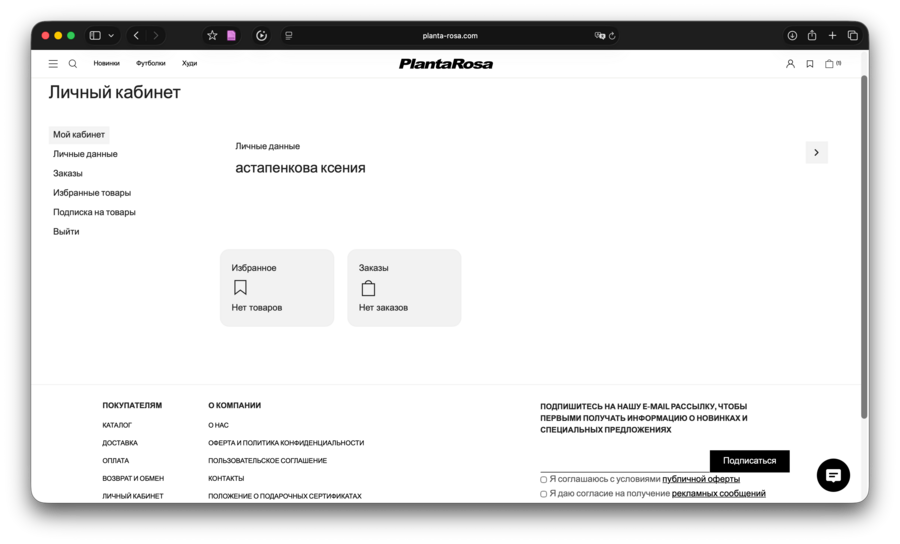
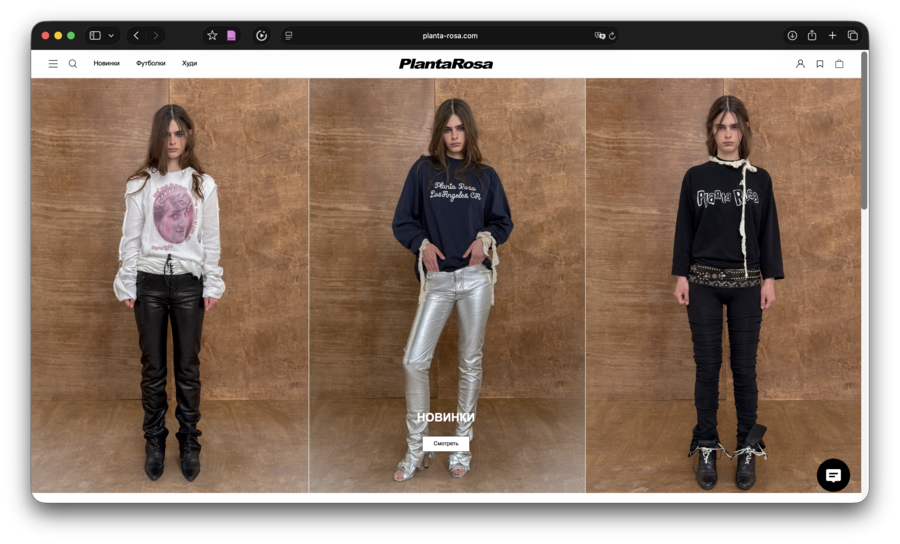
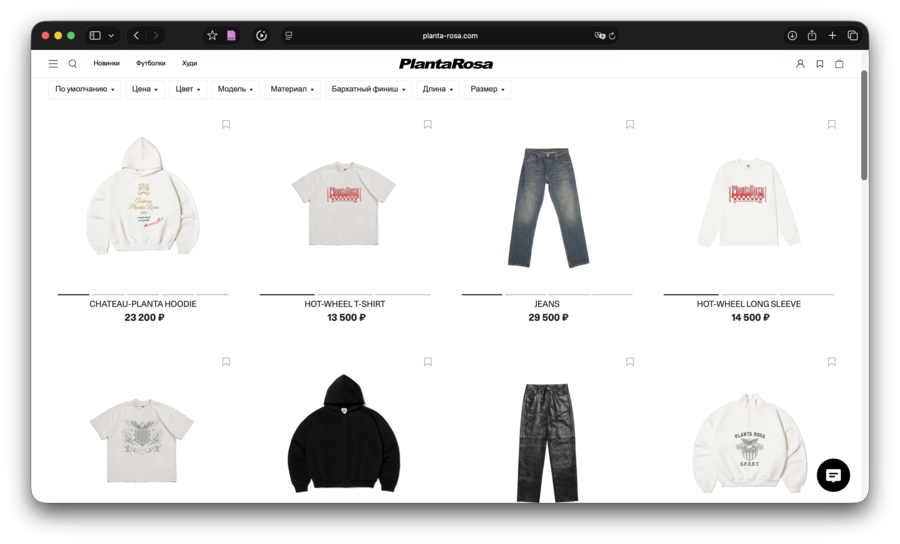
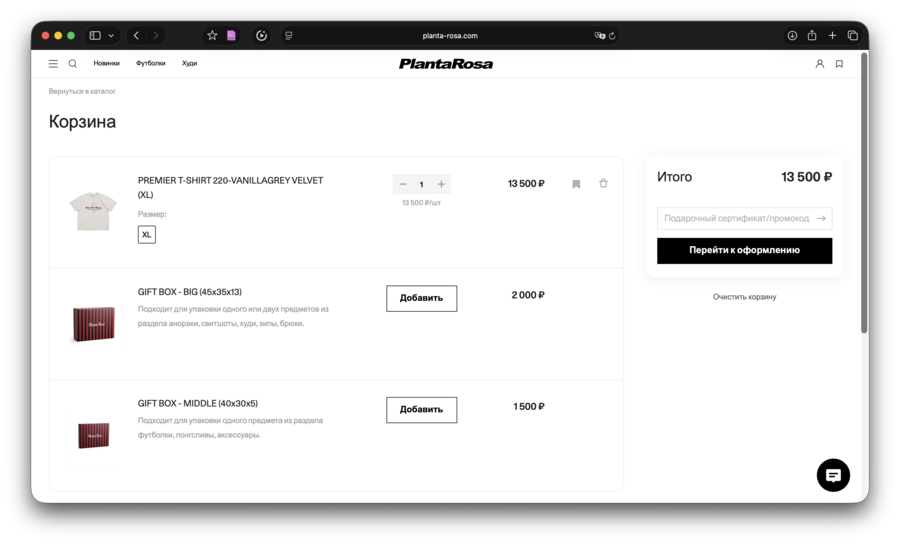
planta-rosa.com
The official website serves as the central platform for Planta Rosa’s communications, integrating commercial, informational, and brand-building functions. On one hand, it allows customers to shop, utilize filters, create personal accounts, save items to favorites, place orders, and view delivery or return information. On the other hand, the website presents the brand’s visual identity through its structure, imagery, typography, product nomenclature, and editorial sections. This elevates the website beyond a mere transactional sales platform; it functions as a controlled brand space where Planta Rosa dictates how its audience enters its visual world.
The catalog stands as one of the brand’s most potent communication channels because it directly bridges product and identity. It features an extensive range of apparel categories. This variety reflects the brand’s evolution from sportswear and streetwear toward a more comprehensive fashion wardrobe. Furthermore, the catalog aids rational decision-making through filters based on price, color, material, model, length, and size. Simultaneously, product names such as LEATHER PANTS, LEOPARD DISTRESS TOP, CHATEAU-PLANTA HOODIE, HOT-WHEEL T-SHIRT, and LOST-ANGELES SWEATSHIRT infuse the experience with emotional and symbolic meaning. They imbue the shopping process with a sense of connection to pop culture, irony, and attitude, making it far from neutral.
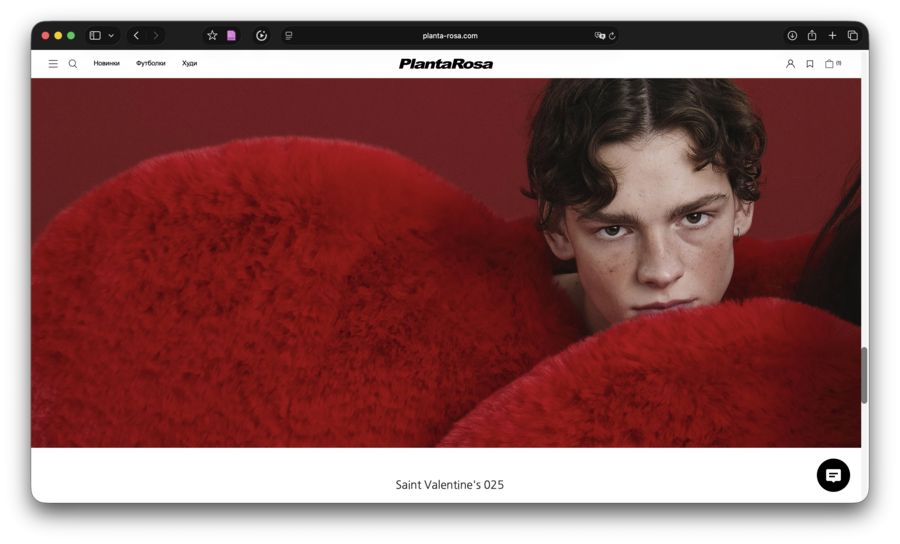
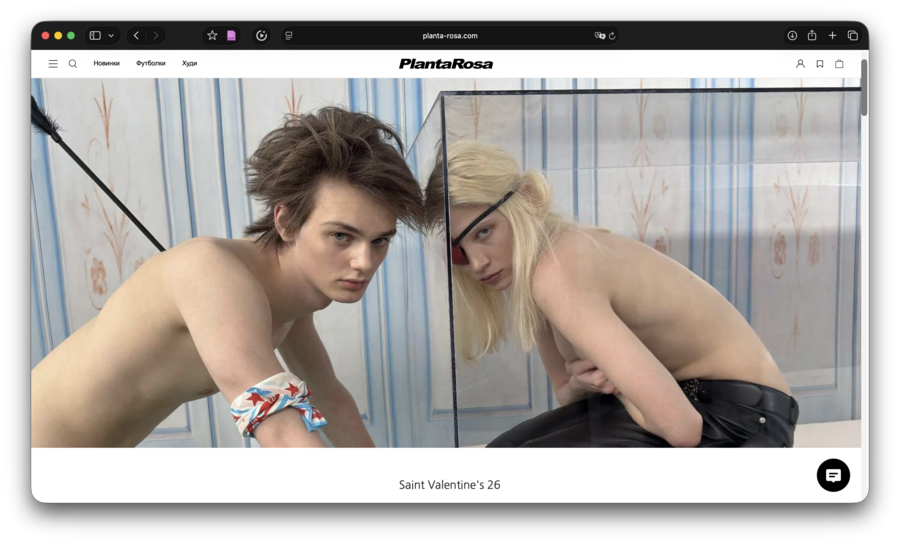
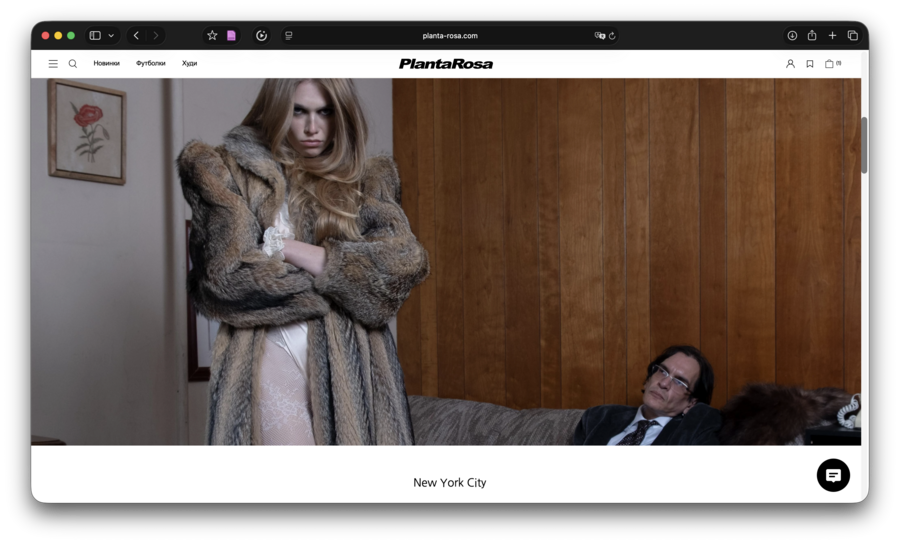
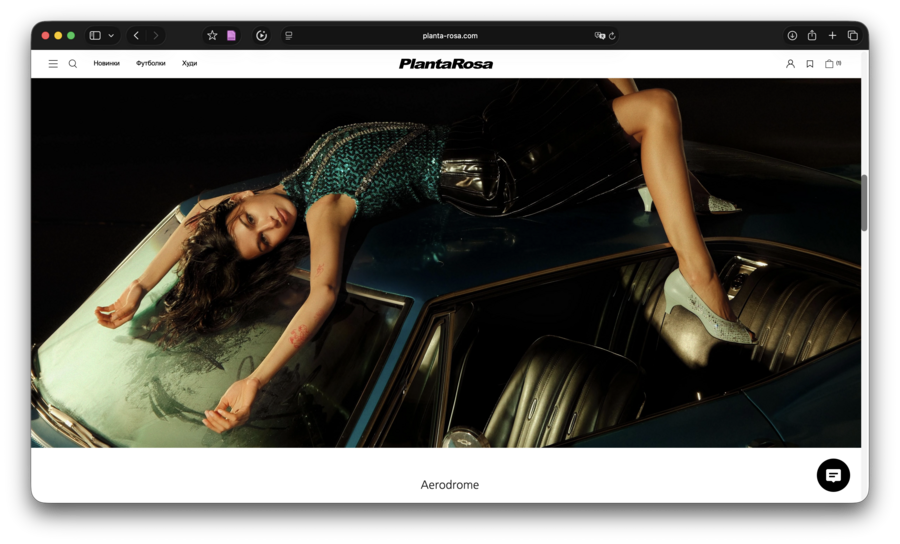
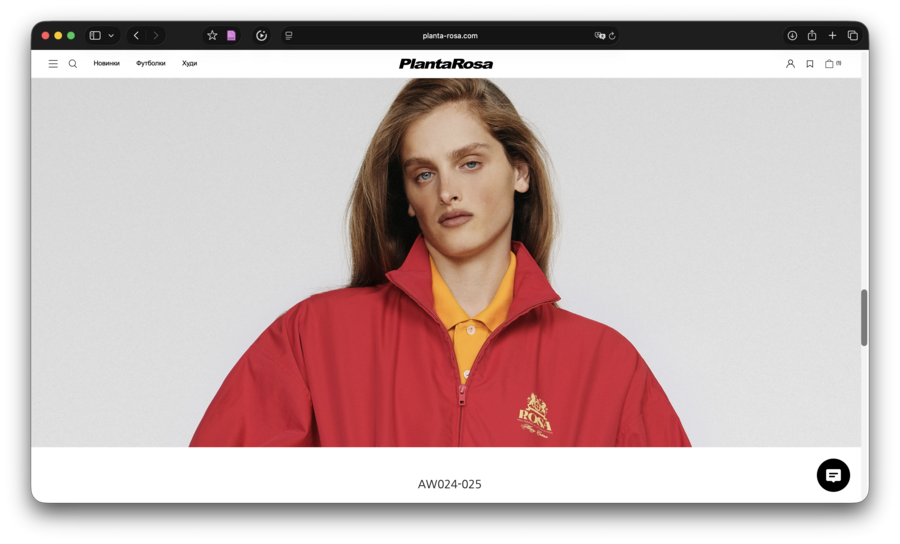
EDITORIALS on planta-rosa.com
The editorial section is especially crucial for Planta Rosa because the brand heavily relies on visual storytelling. Editorials allow the company to present clothing not as isolated products, but as part of a mood, scene, or narrative. Through the selection of models, locations, poses, styling, lighting, and composition, the brand cultivates a distinct atmosphere. This is significant because the audience interprets more than just the garments themselves; they interpret the lifestyle and identity the brand conveys. For example, the styling by Una Vertuka and photography by Slava Porozhny help to define this visual identity.
Instagram* of PLANTA ROSA
*Meta Platforms Inc., which owns the social networks Facebook and Instagram, has been recognized as an extremist organization in the Russian Federation, and its activities are banned in the territory of Russia.
Social media is another key channel, especially for a fashion brand with a strong visual identity. Through social media, Planta Rosa can announce new drops, showcase campaign imagery, present styling ideas, share editorials, build anticipation before product releases, and maintain daily visibility.
mobile app
The mobile app strengthens direct communication between the brand and the customer. It makes the shopping process faster and more personal. For a brand that features new drops and visual desirability, an app can cultivate a sense of immediate access. Push notifications, product updates, and simplified browsing can turn communication into a more regular habit.


PLANTA ROSA offline stores
The offline store experience adds a physical dimension to the brand. A store is not merely a place where customers purchase apparel; it is also a space where they experience the brand through its interior design, service, product presentation, music, and overall atmosphere. For Planta Rosa, the offline format is vital because it supports the perception of the brand as more established and premium.
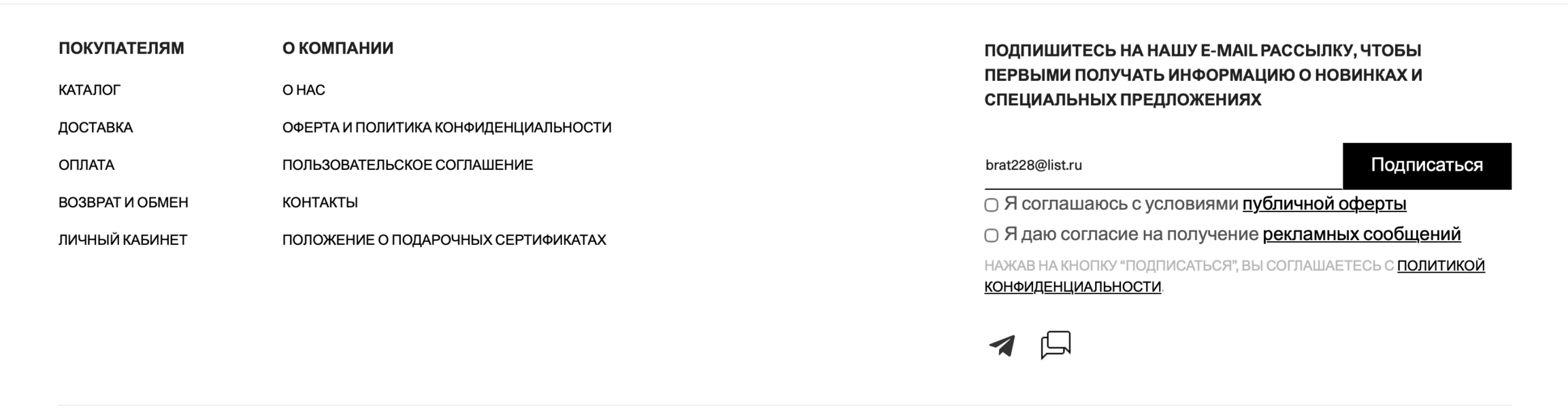
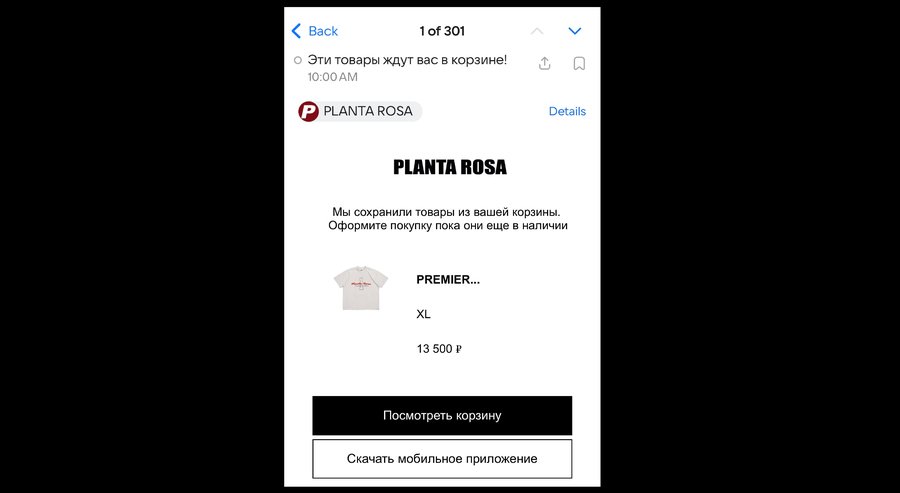
PLANTA ROSA’s e-mail newsletter and footer planta-rosa.com
The e-mail newsletter serves as a more direct and controllable communication channel. It allows the brand to distribute information about new products and special offers without being entirely dependent on social media algorithms. While the newsletter primarily functions as one-way communication, it is crucial for maintaining long-term engagement with interested customers.
Customer service tools also play a vital communication role. Features such as delivery tracking, payment options, refunds, exchanges, contact information, request-a-call functionality, personal accounts, carts, and favorites reduce uncertainty and build trust. This aspect of communication is less emotionally driven, but it is indispensable—even the strongest visual identity will fail if the customer does not understand how to purchase, receive, or return a product.
Planta Rosa’s PR strategy can be characterized as a synthesis of visual branding, cultural positioning, drop-based communication, direct digital outreach, and community-focused identity. The brand primarily communicates through imagery and atmosphere, but it strategically leverages cultural references and product scarcity to heighten the desirability of its collections. Following the brand transition, these communication channels also operate as instruments of reputation management, needing to demonstrate that Planta Rosa remains recognizable, active, and consistent.
[3] Theoretical Framework
Two theories serve as the main analytical framework for this project: the Elaboration Likelihood Model and Framing Theory.
[1] The Elaboration Likelihood Model (ELM), developed by Richard Petty and John Cacioppo, explains two routes of persuasion. The central route is activated when individuals are both motivated and able to process information carefully. They focus on arguments, facts, product quality, practical value, and other rational details. The peripheral route occurs when people do not deeply analyze the message but instead respond to external or symbolic cues. These cues might include visual appeal, emotional atmosphere, influencer endorsement, social proof, status, and aesthetic consistency. Analyzing Planta Rosa is relevant because fashion communication integrates both rational and emotional persuasion. While customers may consider practical details later, initial interest is often shaped by visuals, styling, cultural references, and community appeal.
[2] Framing Theory, developed by Erving Goffman and later expanded in media studies, explains how organizations shape audience perceptions by emphasizing certain aspects of reality while de-emphasizing others. Instead of presenting information neutrally, communication frames influence how audiences interpret brands, products, and events. Analyzing Planta Rosa is relevant because the brand relies heavily on visual framing. Through its campaigns, styling, photography, and product presentation, it frames clothing as an element of a fashion world associated with confidence, sexuality, nostalgia, and contemporary culture. The theory is also useful for understanding the brand’s rebranding, as Planta Rosa transitioned from a sporty streetwear image to a broader contemporary fashion identity.
[4] Analysis
Planta Rosa communicates through a combination of visual, verbal, and functional elements. The visual elements encompass conceptual product photoshoots, editorial imagery, models, poses, color palettes, website layout, styling, and the overall atmosphere of the campaigns. The verbal elements include the brand description, product names, website categories, shipping information, and public commentary regarding the brand’s evolution. The functional elements comprise product filters, user account tools, the shopping cart, wishlist, call request options, and customer support pages. These elements collectively shape how the audience perceives the brand and interprets its identity.