Navigation
Concept
Premises: The Birth of Animated Drawing
Emile Cohl: The Line That Comes Alive
Winsor McCay: The Reality of Dreams and Worlds Created by the Artist’s Hand
European Experiments of the 1920s–1930s: Expanding Artistic Boundaries
The Artist as Demiurge: Creating Worlds That Do Not Exist in Reality
Conclusion
Concept
This visual exploration is dedicated to the early stages of drawn animation and the artists who first recognized that an image imbued with motion could become a self-contained world, independent of physical laws. The central idea of this study is that animation opened a «window to another world» for humanity—a space where anything impossible in reality is possible, from transformations of form to the existence of characters governed by the laws of fantasy.
Fantasmagorie by Émile Cohl, 1908
Building on Emil Kolya’s early experiments, this study illustrates how a simple line, as it curves and transforms, evolves into a dynamic reality. His «Phantasmagoria» and subsequent films unveil the birth of a new visual language: characters are fluid, contours are flowing, and the world itself is malleable—like a sheet of paper that the artist continuously creates and destroys. Kolya was the first to establish the concept of animation as an artistic act, where motion does not imitate reality but instead creates something new.
Fantasmagorie by Émile Cohl, 1908
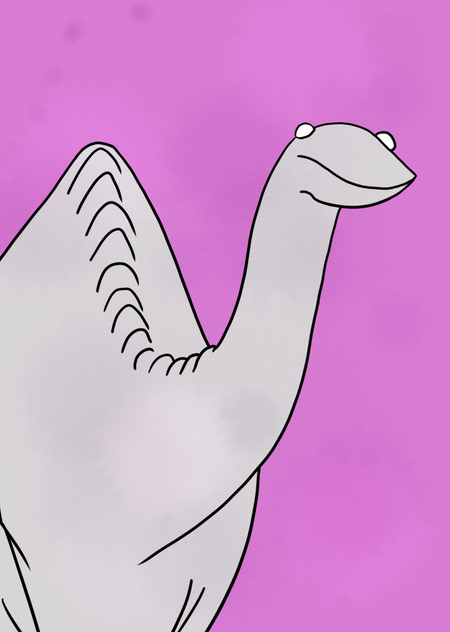
The works of Windsor Mackay, particularly «Little Nemo» and «Hertie the Dinosaur,» become a crucial focus of our research. Mackay transforms drawing into a world with its own space and time, where dream logic dictates the dramatic structure. His meticulous rendering and pursuit of illusionism demonstrate that animation can do more than merely caricature reality—it can create convincing forms of life previously existing only in imagination. Mackay reveals the idea that a drawn figure brought to life is not a reflection of the world, but its expansion.
Little Nemo (1911) Winsor McCay
Special attention is paid to the experimenters of the 1920s and 1930s—Oskar Fischinger, Walter Ruttmann, Lotte Reiniger, and others. Although Reiniger employs a silhouette technique rather than a drawn one, her approach is fundamentally close to the early drawn masters: worlds created on a flat plane attain a vibrant form. Her «Adventures of Prince Ahmad» demonstrates that animation is not limited by character form—it creates atmosphere, architecture, and the rhythm of a fictional space.
Fischinger and Ruttmann, in turn, finally liberate animation from narrative, transforming it into an autonomous system of visual signs. Their abstract rhythmic compositions show that animation can exist as pure form and pure movement—a world without a plot, but with its own inherent logic.
Gertie The Dinosaur (1914)
Thus, the research demonstrates that before 1940, drawn animation evolved from early graphical experiments to the creation of independent artistic worlds. These worlds exist outside of physics, outside of logic, and outside the constraints of real matter. Animation ceases to be merely a technique—it becomes a portal to spaces where imagination knows no bounds, where line transforms into form, stroke into emotion, and movement into the act of creating a new dimension.
Prerequisites: The Birth of Moving Illustration
The genesis of drawn animation cannot be understood outside the context of the visual and technological experiments that preceded the appearance of the complete animated frame. Before the line on paper achieved independent motion, nearly a century of research had passed, aimed at understanding the nature of visual perception, illusion, and movement. It was this very foundation that opened the door for the emergence of the first «animated worlds, ” where the drawing ceased to be a static image and became a dynamic object.
A key factor among these was the optical toys of the 19th century—Joseph Plateau’s phenakistoscope, William Horner’s zoetrope, and Émile Reynaud’s praxinoscope. These devices allowed the viewer to perceive short, cyclical sequences of drawings as a single movement. Although the images remained static, the change in frames created a new type of visual experience: motion constructed artificially and wholly dependent on the sequence of drawings. This represented the first step toward understanding that movement could be engineered, rather than merely observed in nature.
Joseph’s Illusion
Joseph’s Illusion
Emile Reynaud took a foundational step by creating the «Optical Theatre”—the first public projections of moving drawings. His pantomimes not only demonstrated fluid motion but also introduced narrative structure, characters, and emotional expressiveness. In essence, Reynaud was the first to show that a sequence of images could become an autonomous narrative space, and that an audience member could perceive them as a living, albeit stylized, world. This experience proved vital groundwork for the subsequent development of drawn animation.
Scientific research in the field of visual physiology also played a significant role. The study of persistence of vision—the phenomenon of an image lingering on the retina—helped explain why successive frames are perceived as continuous motion. Recognizing this mechanism solidified the confidence of artists and engineers that motion could be created from scratch, and that visual illusion could become an artistic tool.
Around a Cabin or Misadventures of a Couple at the Seaside (1894)
Thus, the birth of animated drawing was the result of a fusion between scientific curiosity, technical innovation, and artistic imagination. These foundations paved the way for drawn animation in the early 20th century to move beyond simple mechanical illusions and become a space for creating new worlds—flexible, transformable, and governed by their own rules.
Emil Kol: The Line That Comes Alive
Emile Cohl holds a special place in the history of early animation—he was the first to transform a drawn image into a fluid, malleable, independent reality. In his works, the line ceases to be a static outline and becomes an active participant in the action, capable of transformations, metamorphoses, and interaction with space. Cohl made a fundamentally important leap: he demonstrated that animation could not merely imitate motion but could create its own world, independent of the laws of physics.
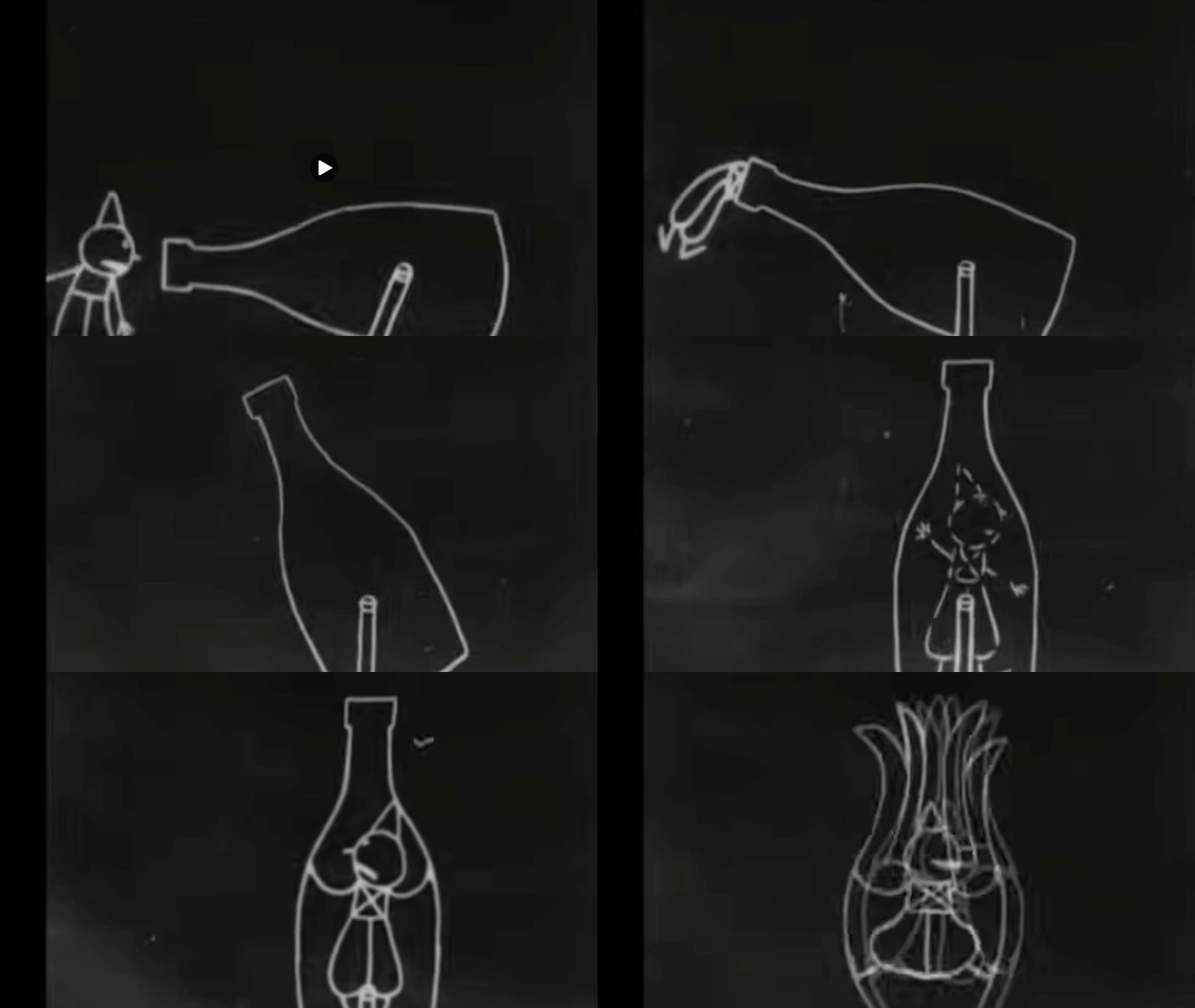
His «Phantasmagoria» (1908) was his major breakthrough—a film in which drawings literally come alive. Characters and objects seamlessly change shape, disappear and reappear, and slip through the boundaries of the frame. This visual language is based on the flexibility of the graphic line, which can be both tangible and abstract. Thanks to this, Cohl introduced the principle of animation transformation: the world created by the artist is constantly changing and responds to the gesture of the hand, to imagination, and to the rhythm of movement.
Le Cauchemar de Fantoche (1908) The Puppet’s Nightmare
A distinctive feature of Kolya’s work is the immediacy of the drawing. His characters seem to be aware of their own origins—as if they understand that they exist within an animated dimension, and they freely exploit this advantage. They stretch, fragment, and transition from one form to another. This reveals Kolya’s core discovery: animation should not imitate reality; it can construct its own logic of existence.
Le Cauchemar de Fantoche (1908) The Puppet’s Nightmare
Kolya’s technical experiments also established future animation standards. He rejected the use of volumetric constructs and opted for a purely drawn technique based on frame-by-frame graphical changes. This reinforced the understanding of animation as «the art of movement through drawing,» where every line becomes a carrier of dynamism and meaning. Kolya was among the first to realize that movement is not an addition to the drawing, but its essence.
The world Kolya created lacks rigid structure; it is pliable, elastic, and governed by the laws of fantasy. This is why his films are perceived as early examples of «animated worlds"—spaces that are not obligated to conform to physical reality. Kolya’s virtuosity lies not only in technique but also in the understanding that drawing can exist on its own, that a line can be an actor, and that the screen can be a stage for unexpected wonders.
The Happy Microbes (Émile Cohl, 1909)
Émile Cohl’s contribution lies not only in inventing the first drawn films but also in forging the fundamental principle of animated thinking. Through his creative work, he proved that animation is a space where anything impossible in reality becomes possible. His living line became a symbol of the birth of a new visual art, opening a door to «another world» where only the artist’s imagination sets the limits.
Winsor McCay: The Reality of Dreams and Worlds Created by the Artist’s Hand
Winsor McCay was one of the first artists to realize that drawn animation could create not merely movement, but entire worlds possessing their own logic and atmosphere. His work is built upon a deep understanding of drawing as a space of fantasy, and of motion as a tool for animating those fantasies. McCay transformed animation from a technical exercise into an artistic act, where every frame becomes an extension of the imagination.
One of McCay’s key contributions is the film «Little Nemo» (1911). Here, he develops the ideas from his original comic strip, translating them into the dynamic space of motion. McCay demonstrates that animation can replicate the structure of a dream: worlds are fluid, forms change, space expands and contracts, and characters undergo transformations unbound by the laws of reality. This was the first serious exploration of the dream dimension in animation history—a world where absolutely everything is possible, and it is motion that underscores this impossibility.
Little Nemo (1911) Winsor McCay