Freshwater clam—a bivalve that lives on the bottom of rivers and lakes, right where people fish. Anglers have known it since childhood: near the shore, they find empty shells, dark on the outside and pearlescent on the inside.
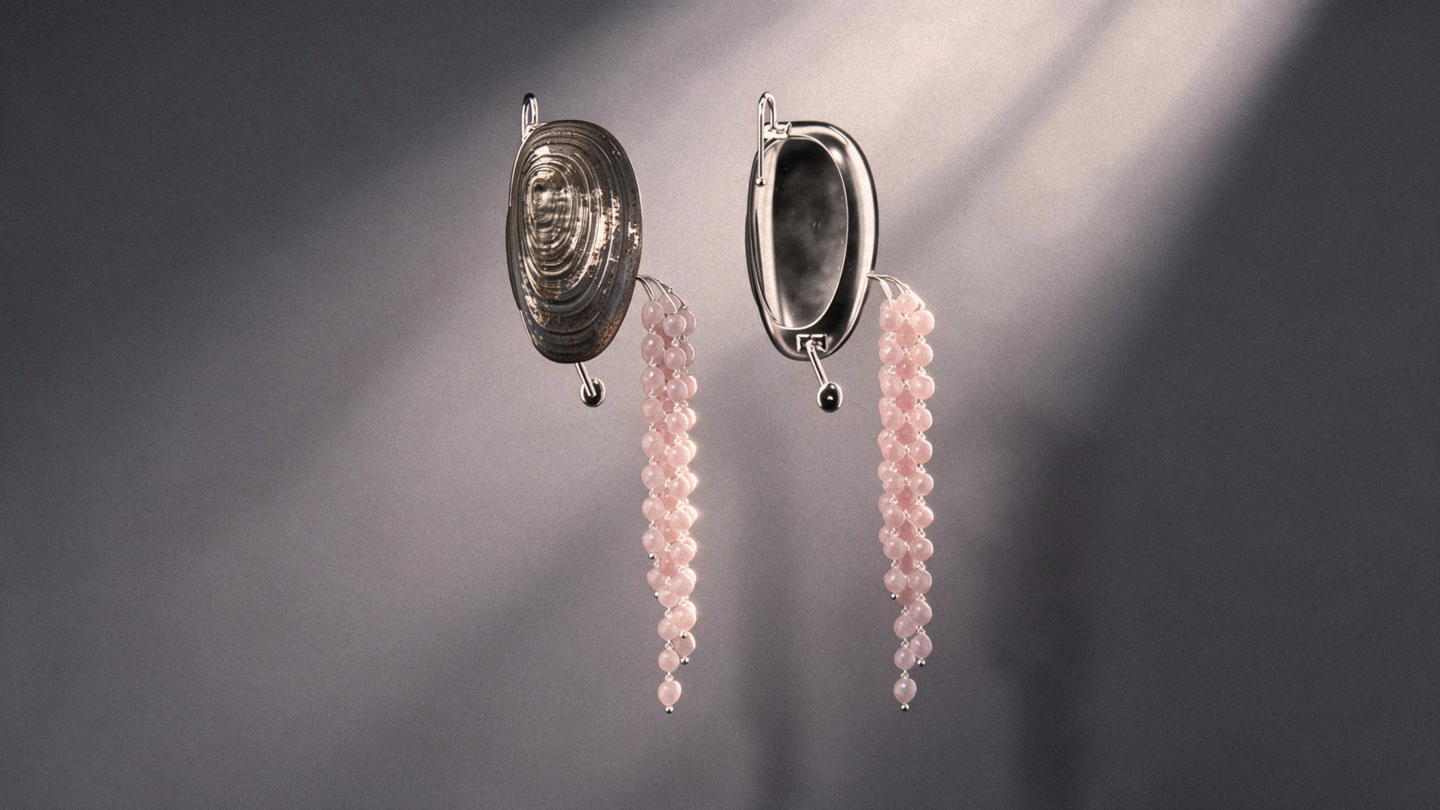
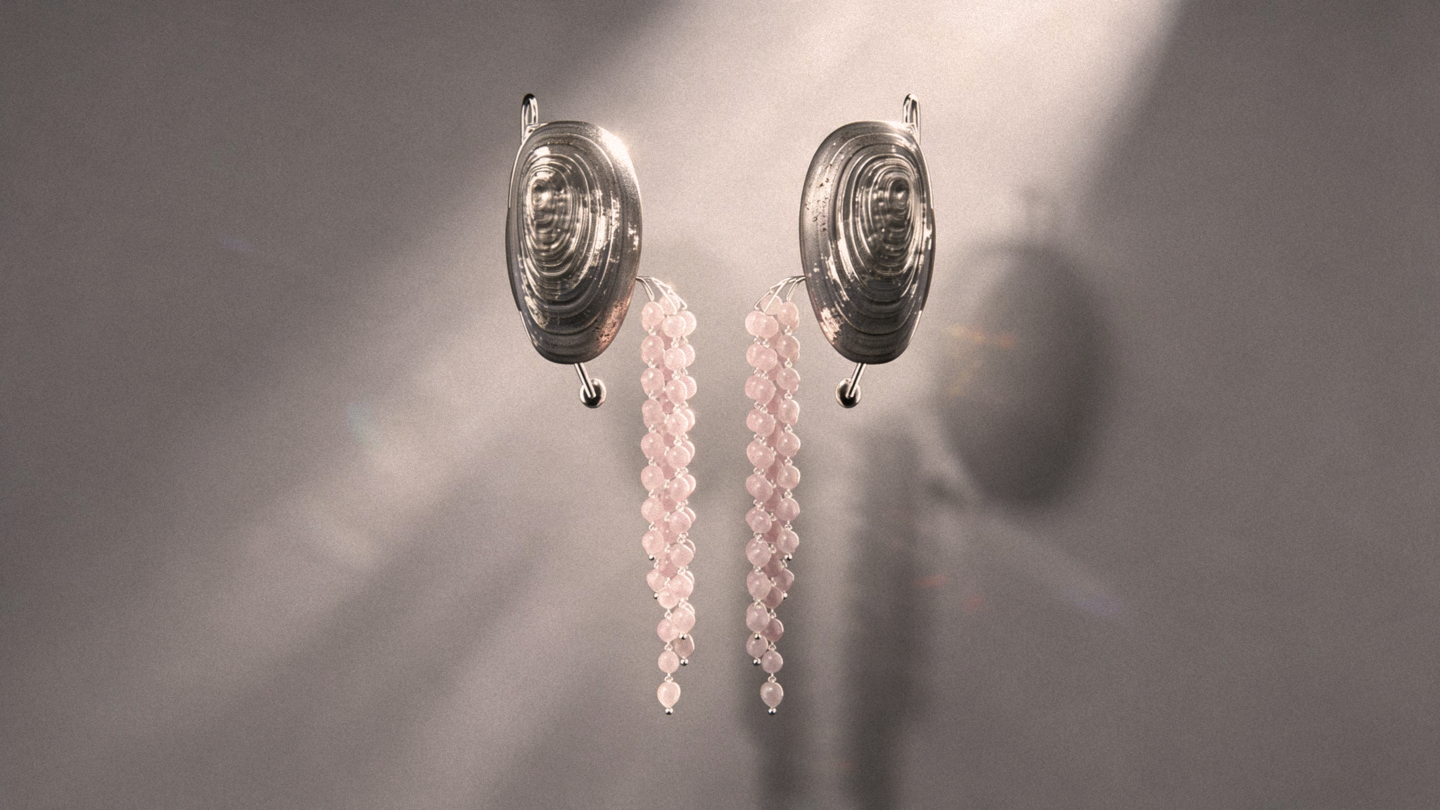
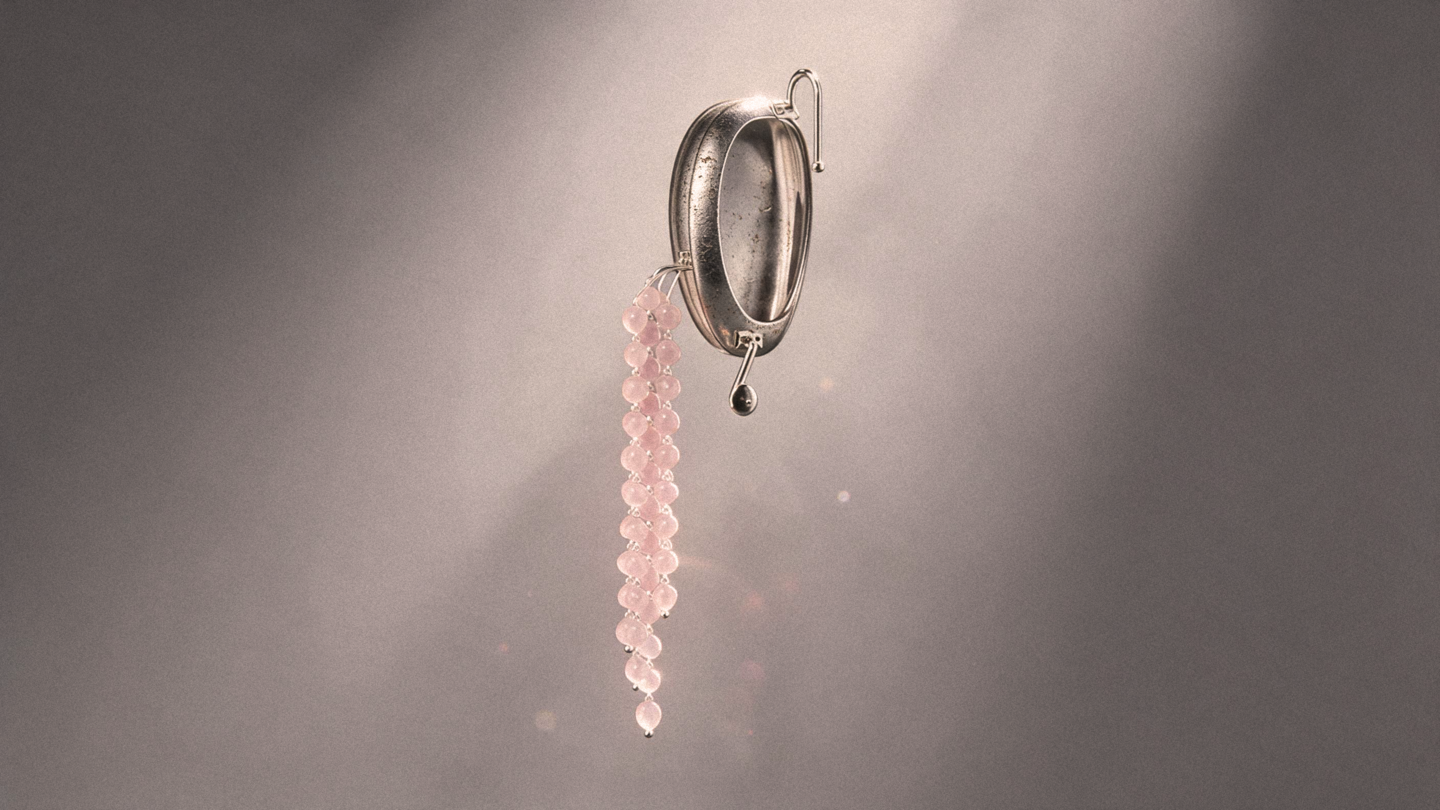
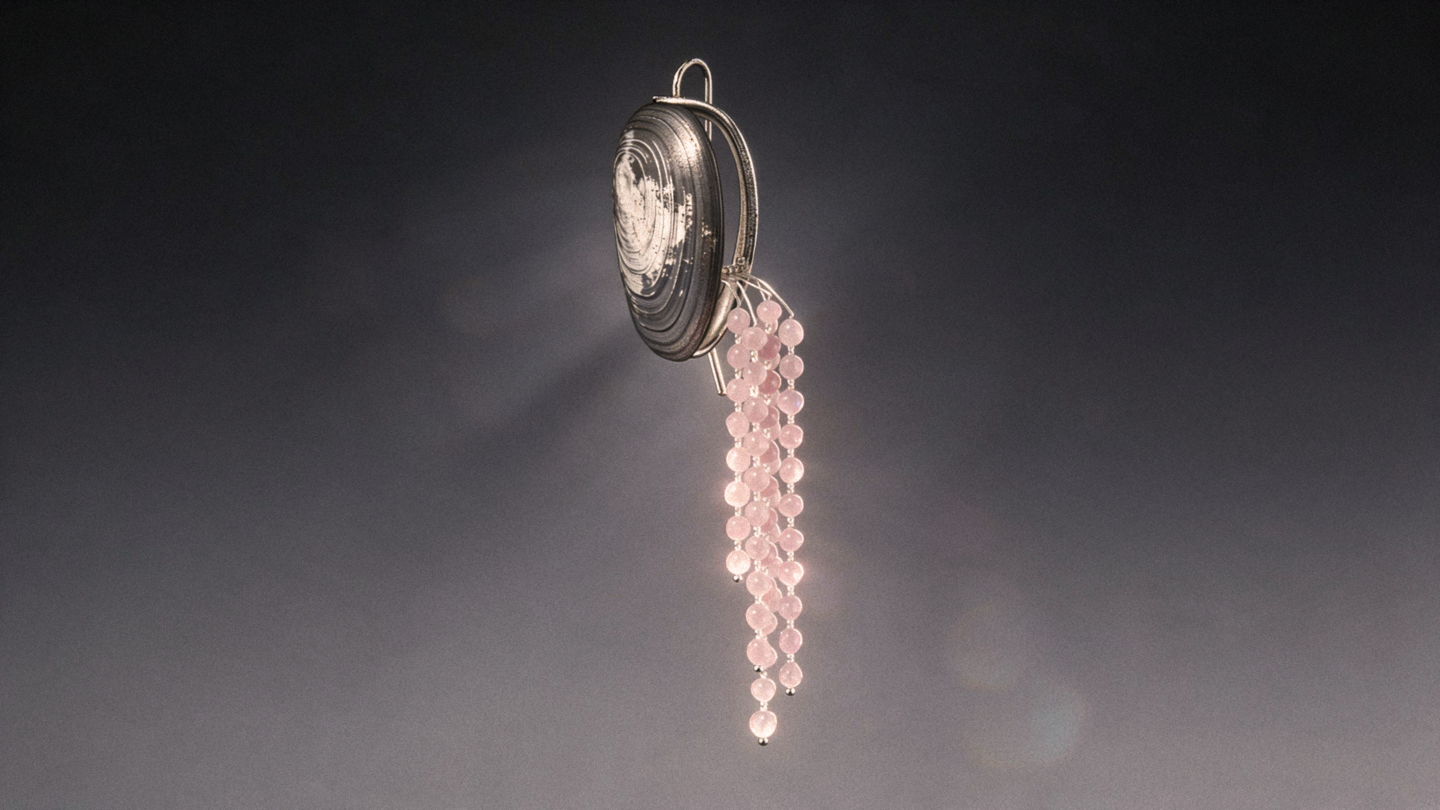
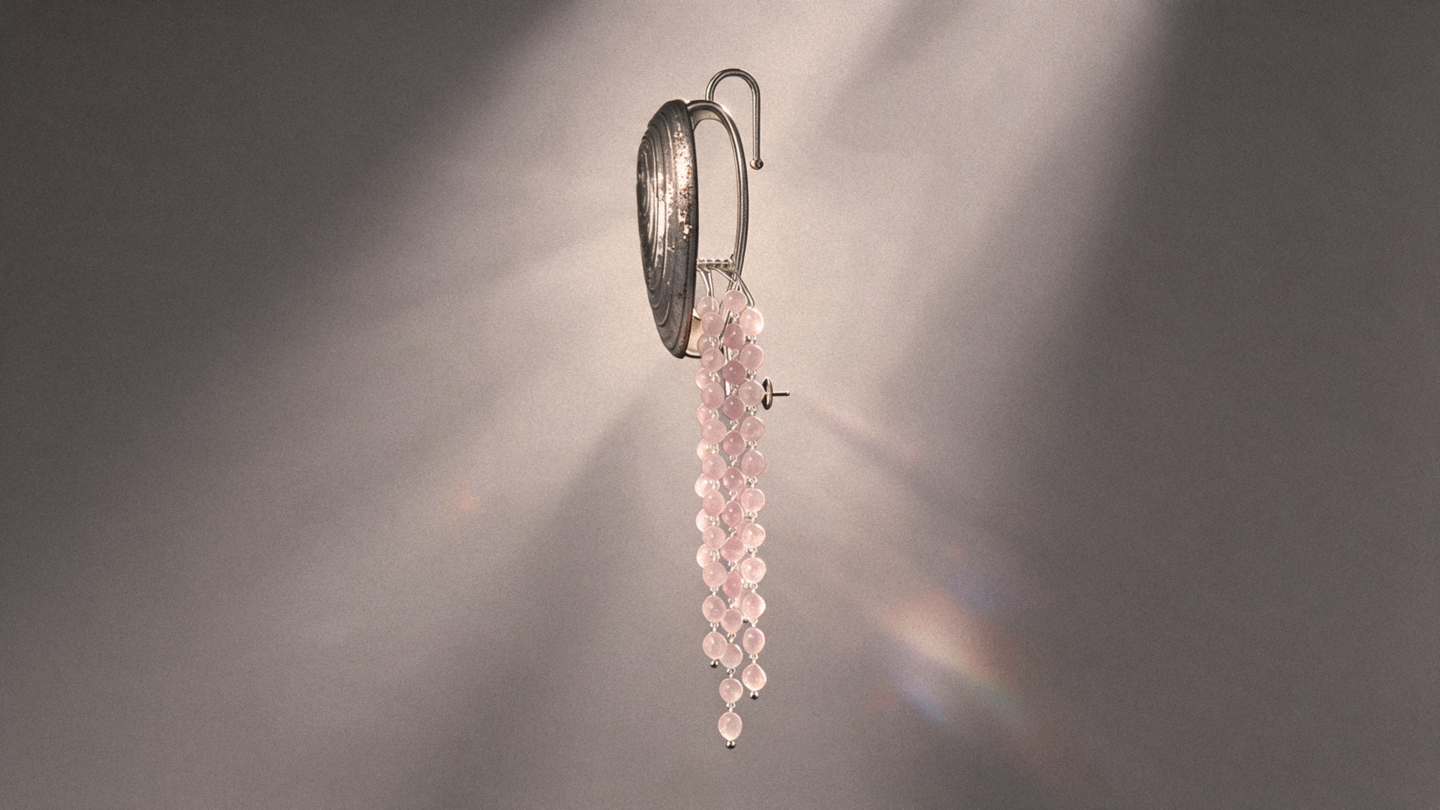
The «Perlovitsa» cuff mimics the shape of a seashell. On the exterior, it is blackened silver with growth lines, and the interior features polishing. Five strands of pink pearls dangle from the slightly ajar hinge. The earring is held by an ear wire and secured by a lever on the lobe.
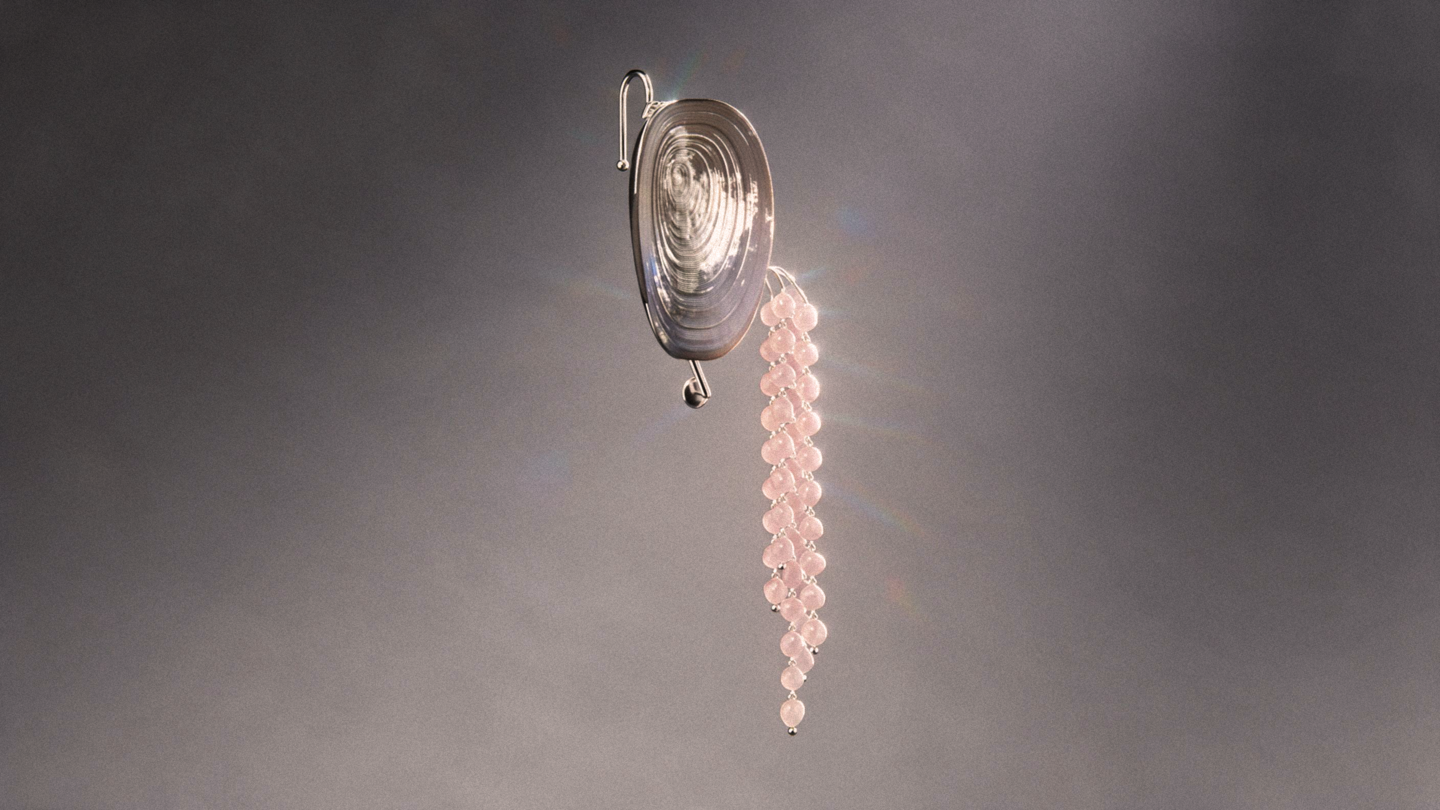
Parameters:
Type: cuff (monostuff earring) for the right ear, mirrored for the left.
Overall Dimensions: 124 mm length, 33 mm width, 26 mm thickness.
Shell: 48 × 26 mm, hinged opening at 20°.
Weight: ≈ 20 g.
Body: 999 silver, electroplating, hollow, 0.25 mm wall thickness. This large form remains lightweight.
Body Finish: Oxidized exterior with a highlighted relief pattern of growth lines; polished interior.
Fittings: 925 silver, polished.
Pearls: Freshwater, soft pink, 4–5 mm. Five strands of 8 / 10 / 13 / 11 / 9 pearls, totaling 51.
Attachment:
Ear hook Ø 1.2 mm passes through the top of the ear;
Lever Ø 1.6 mm with a Ø 0.8 mm pin and a butterfly stopper;
Three-length levers (6 / 10 / 14 mm) for different ears;
Option with a clip for unpierced ears.
How to make it?
The body is made using electroplating: silver is plated onto a wax model, and the wax is then cast off. This results in a thin-walled, lightweight shell with precise relief.
Master Model: Printed using an SLA printer from the mandril’s 3D model, and a silicone mold is taken from it.
Wax Mandrils: These are cast into the mold, and silver setting plates for hardware are installed inside them.
Electroplating: A conductive layer is applied, and 999 silver is plated up to 0.25 mm, followed by the casting off of the wax.
Fittings: Ear hooks, levers, and wire platings are bent from 925 wire and laser-welded to the anchors.
Finishing: Oxidation, relief lightening, and internal edge polishing.
Pearls: Are assembled onto pins with loops and attached to the plating last, after all chemical treatments, to preserve the luster.
The production technologist sets the electroplating parameters and the wax shrinkage. Before a batch, a sample is required—2–3 casings, one of which is cut open to control wall thickness.
Status: 3D model, blueprints, and technological route are ready; images are visualizations. Next steps: printing the master model and prototype shell.
The complete set is provided in the PRL-01_Perlovitsa folder:
Blueprints: 10 A3 sheets (assembly, shell and cross-sections, mandrel, fittings, threads, finishing, technical route, specification, and QC);
STL 3D models for printing and inspection: mandrel, shell, receiver, levers S/M/L, version with clip, plank, anchors, assembly;
GLB 3D assembly for viewing; references: views from all sides, mounting assembly, table of calculated values.