1. Research Hypothesis
1. Research Hypothesis
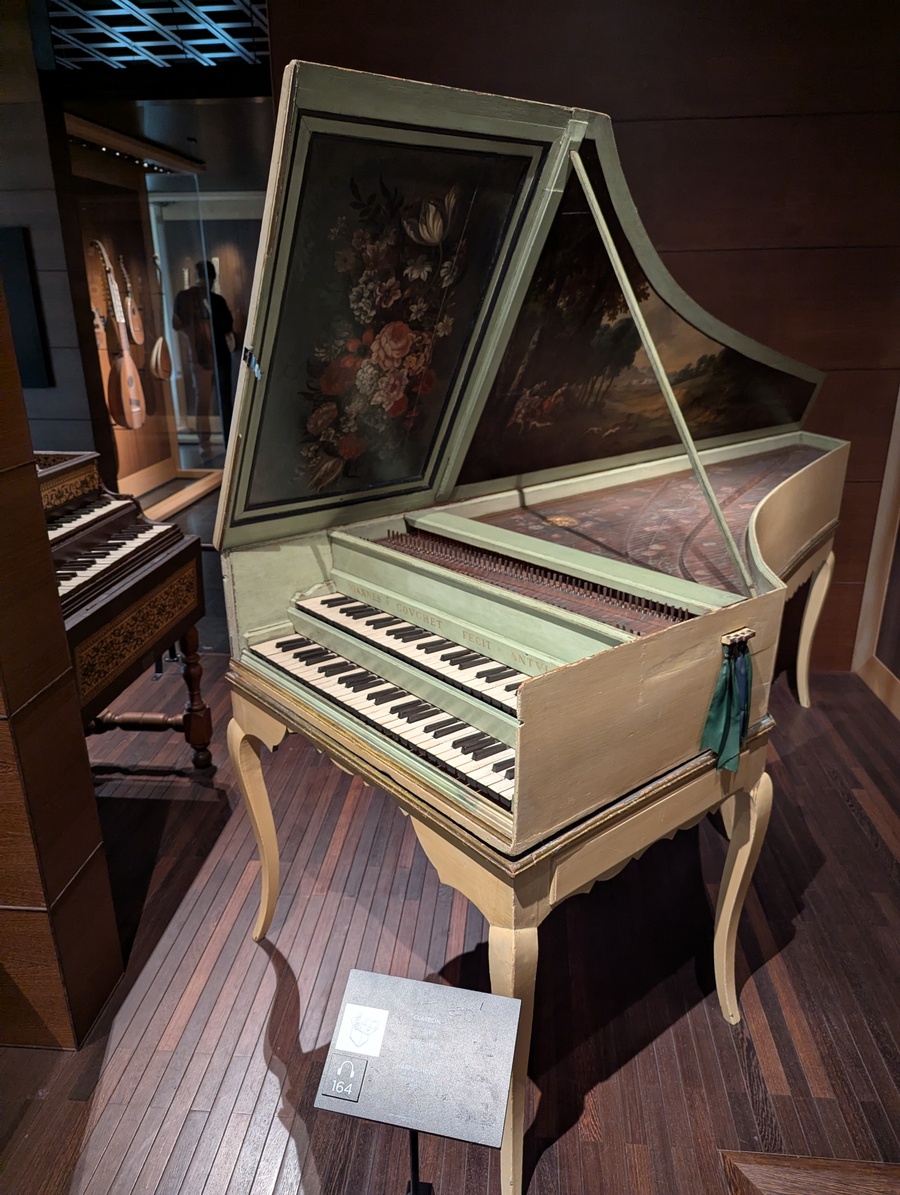
Harpsichord by Johannes Couche, Antwerp, 1646.
The development of digital technologies has not led to the disappearance of the traditional piano form, but it has significantly changed the approach to its design. If the appearance of the instrument was initially determined by the characteristics of the acoustic mechanism, the advent of electronics has allowed manufacturers to experiment with dimensions, materials, and functionality.
The research is based on the premise that technological progress does not necessarily lead to abandoning the familiar external appearance of an object.
The history of the piano shows an inverse trend: as technical limitations lessen, manufacturers increasingly revert to traditional forms, proportions, and materials.
The hypothesis will be tested by comparing historical and contemporary models. Primary attention is paid to identifying which elements of the original design have disappeared, which have been preserved, and which have taken on new functions.
Concept
The piano has remained one of the most recognizable musical instruments for several centuries. Over this time, it has evolved from small, mechanically operated keyboard devices to large concert grand pianos, and subsequently, to electronic and digital models.
The changes were not limited to how sound was extracted. Along with technological advancements, the instrument’s construction, materials, dimensions, external appearance, and the nature of its interaction with humans have all evolved.
The advent of digital technologies has significantly expanded the perception of the piano’s capabilities. The construction of an acoustic instrument has always depended on the arrangement of strings, the resonant soundboard, the hammer mechanism, and other internal components. Electronics allowed us to move beyond some of these limitations and rethink the conventional approach to shaping the instrument. Massive casings have been replaced by compact keyboard devices, and later by digital models capable of reproducing the sound and feel of playing a concert grand piano.
The selection of this topic stems from an interest in how technological progress is transforming industrial design. The piano serves as a clear example of the relationship between an object’s internal structure and its external form. Its history allows us to trace which design solutions define the product’s appearance and why certain elements persist even after significant changes in manufacturing and sound production technology.
The contradiction between two directions of digital piano development is particularly interesting. On one hand, manufacturers aim to reduce the instrument’s size, making it more functional and user-friendly. On the other, many modern models continue to reproduce the aesthetics of a traditional acoustic piano.
The study covers the main stages of the instrument’s development: early keyboard models, 19th and 20th-century acoustic grand pianos and upright pianos, electric pianos, the first digital pianos, and modern hybrid instruments. The focus is on models that particularly illustrate the influence of new technologies on design and appearance.
When selecting visual materials, we consider the instrument’s design features, its proportions, the materials used, the organization of the controls, and the relationship between its external form and its technical specifications. The scope of work will include photographs of real instruments, archival materials, technical illustrations, blueprints, and contemporary product photography. Juxtaposing these materials will allow us to see not only the sequence of changes but also the reasons why certain design solutions have endured while others have vanished.
The research structure integrates both chronological and comparative approaches.
The first section examines the formation of the acoustic piano and the specifics of its construction. Next, it investigates the influence of industrialization and mass production on the instrument’s materials, form, and accessibility. The subsequent stage is dedicated to the emergence of electric and digital technologies, which have transformed conventional design solutions. The final part covers contemporary development trends: hybrid instruments, digital interfaces, and manufacturers' return to classical aesthetics. The research is based on historical materials from instrument museums, manufacturer publications, and works dedicated to the history of musical instruments and industrial design. These sources help to understand which technical changes impacted piano design and why manufacturers chose specific materials, forms, and construction methods.
The central research question: How has the shift from the acoustic principle of sound production to digital technologies influenced the construction, form, and visual identity of the piano?
The central hypothesis posits that digital technologies have not replaced the traditional piano form, but rather have transformed its design principles. Where the instrument’s exterior appearance was previously dictated primarily by its acoustic mechanism, the development of electronics has afforded manufacturers greater freedom in working with dimensions, materials, and functionality. Nevertheless, the classic visual image of the piano has retained its significance and continues to serve as a benchmark for contemporary designers.
The hypothesis test will be based on comparing models from different periods. The analysis examines proportions, chassis construction, keyboard placement, controls, materials, and the spatial arrangement of the instrument.
The main objective of this work is to trace how technological changes have influenced the industrial design of the piano and which features of its original appearance have been preserved in modern models.
1.1 Precursors to the Piano.
Before the invention of the piano, several types of keyboard instruments existed, among which the harpsichord and the clavichord held particular significance. Despite their external similarities, their mechanisms and sound production methods differed considerably. In the harpsichord, sound was produced by a plectrum plucking the string when a key was pressed. This design yielded a relatively loud and clear tone, but the performer had virtually no control over its intensity via the force of the key press.
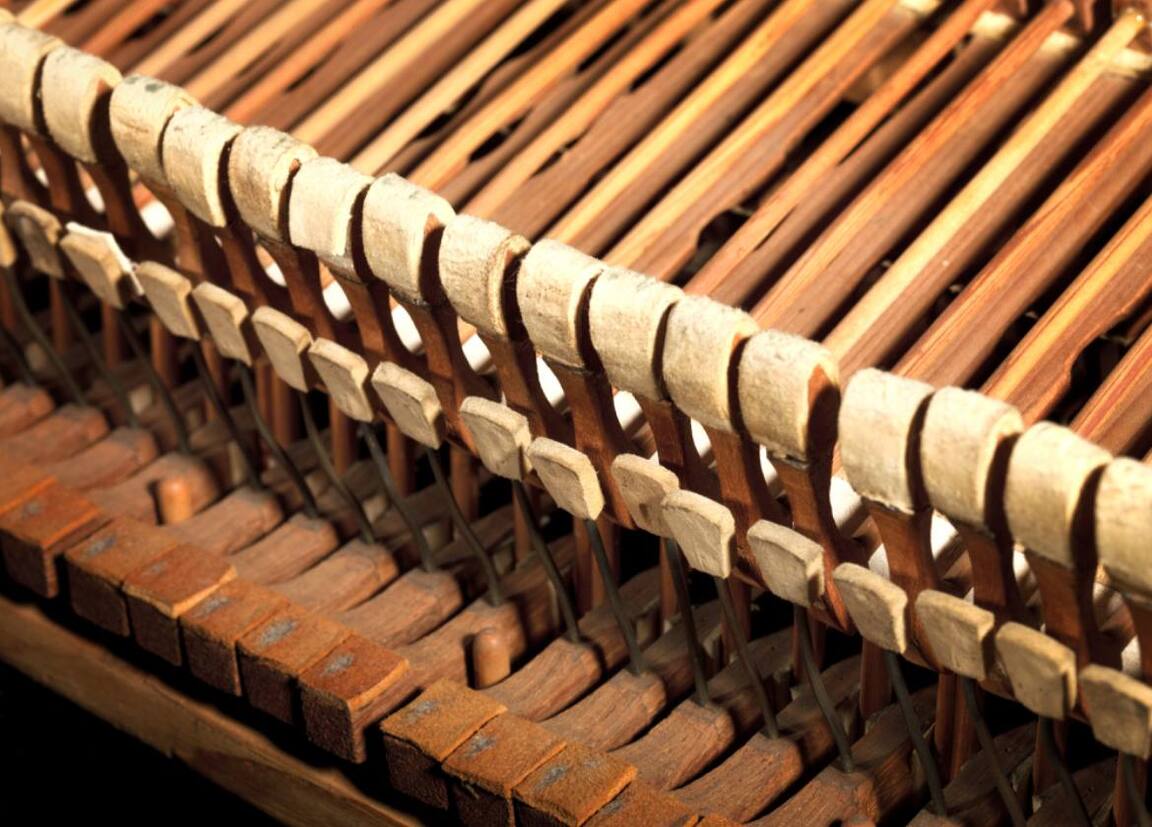
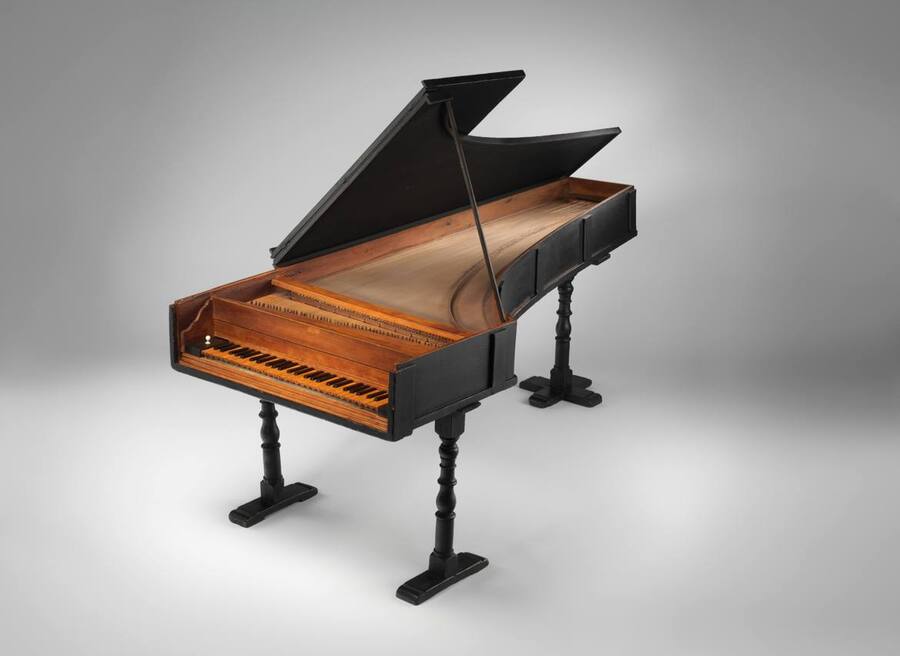
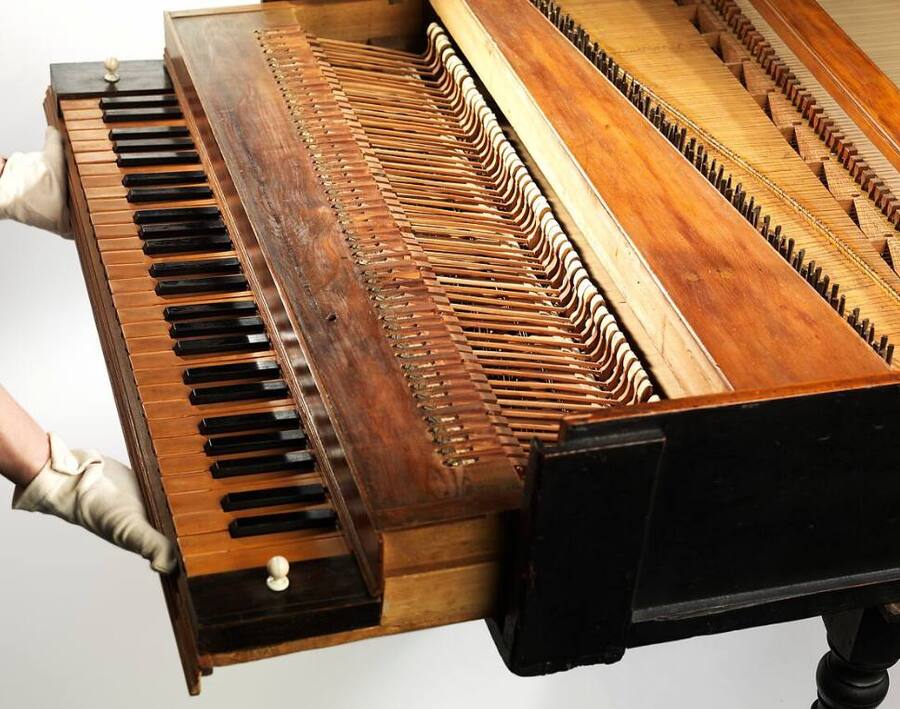
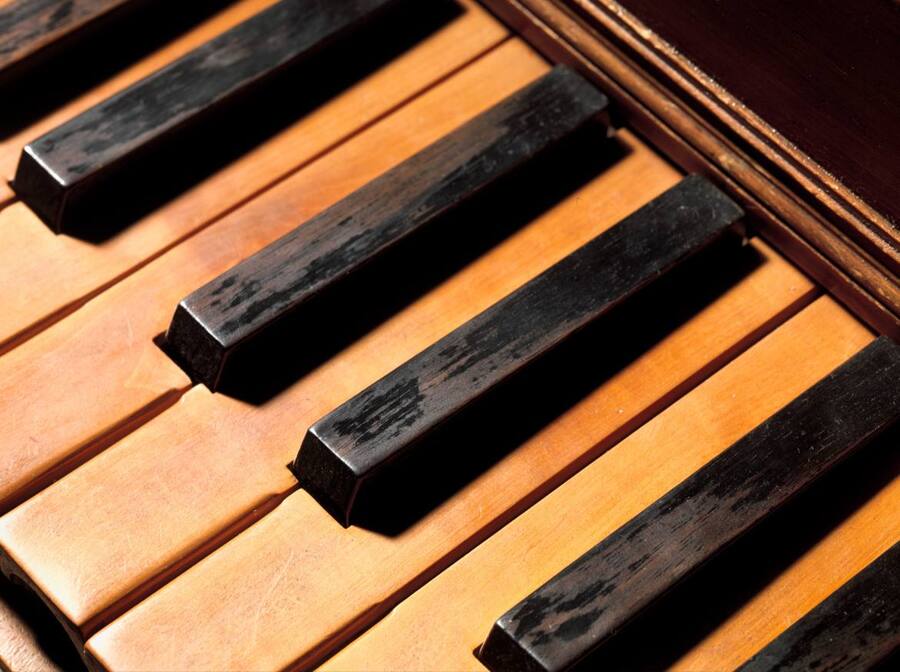
Harpsichord. Museum piece from the Metropolitan Museum of Art collection
The clavichord operated differently: the metal tangent struck the string when the key was pressed and simultaneously determined its working length. The instrument allowed for finer dynamic nuances but possessed a relatively low volume. Both instruments featured body designs characteristic of their era, primarily crafted from wood. Their construction dictated the placement of the keyboard, strings, and internal mechanisms, while the external appearance was largely influenced by furniture manufacturing traditions.
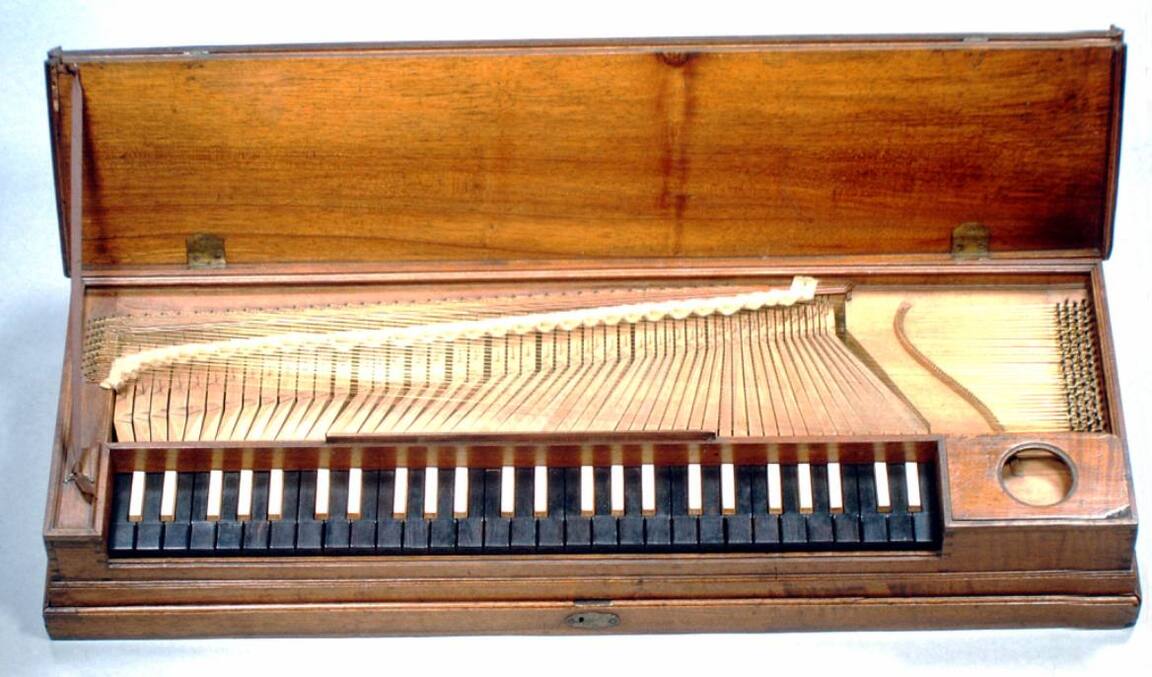
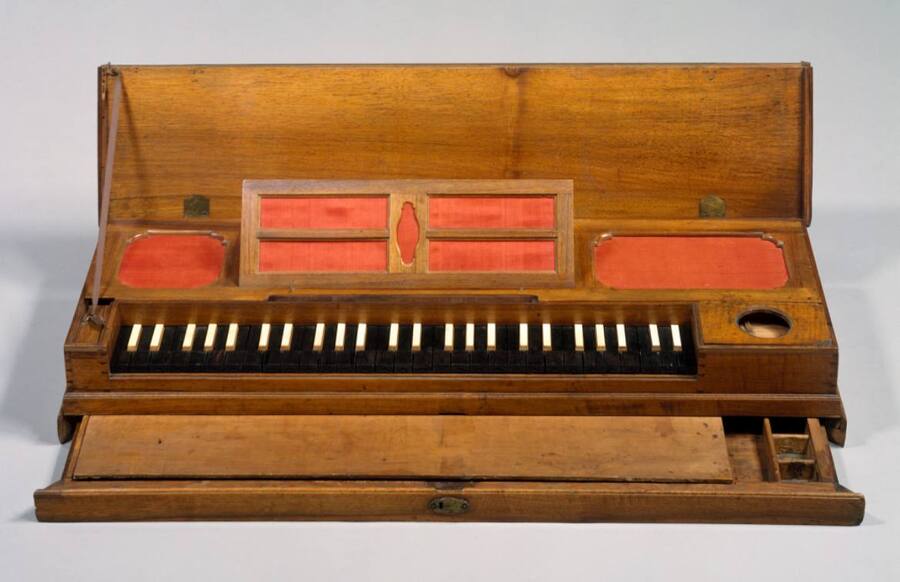
Clavichord. A historic keyboard instrument; a museum piece from the Metropolitan Museum of Art collection.
It was the desire to combine the expressive capabilities of the clavichord with the more powerful sound of the harpsichord that led to the appearance of a new instrument.