
Navigation Menu
- Concept
- There is no single, overarching solution
- High budgets and expectations. Promoting «Cyberpunk 2077»
- Only one will remain. Promoting «Battlefield 1»
- Dark horse. Promoting «Dark Souls»
- High art from failures. Promoting «Disco Elysium»
- Surprise box. Promoting «Inscryption»
- Conclusion
- Bibliography
- Image Sources
Research Concept
Promoting video game projects might seem like a straightforward task at first glance due to their superficial similarity to other forms of digital media. However, a deeper analysis reveals that their diversity makes it impossible to standardize approaches.
Interactivity encompasses a vast array of subgenres, including atypical, obscure, and innovative ones. These projects are developed by both solo creators and massive teams numbering in the tens of thousands—including writers, designers, artists, composers, psychologists, consultants, and more. Game studios hire a wide variety of specialists, including individuals without traditional relevant experience, provided they possess non-trite thinking or unexpected unique skills, although the barrier to entry remains quite high.
The content of video games is boundless, and the industry itself is still relatively young, creating fertile ground for all sorts of experiments and research. Furthermore, the underlying technologies are evolving, opening up new avenues for creators to realize their visions or for commercial publishers to optimize their profits. Consequently, when planning an advertising campaign, marketing specialists face an impressive number of influencing factors. Even here, they have significant room for experimentation, yet there is still a limited amount of analytical material available. The industry still lacks established guidelines, even for training the professionals who create these games. This applies to promotion as well; analysts only recently became deeply engaged with the field—coinciding with the point when video games began handling massive budgets and even influencing the economic indicators of entire nations.
Moreover, there is a widespread perception that the gamer audience is unusually fickle and even aggressive. Numerous scandals in the gaming information sphere erupt almost daily, spawning a distinct genre of news that seems destined never to cease. Gamers consume a large volume of supplementary content and are particularly communicative online. The gaming community is exceptionally niche, a factor that cannot be ignored in marketing efforts.
In this study, I examine several cases of promoting unique gaming products, which demonstrate differences in approach but highlight a fundamental principle common to all projects, one that inextricably links them.
This principle is the use of community as a marketing tool—not as a secondary element, but as a foundational and indispensable one.
During my research, I relied on a method of analyzing and comparing textual and visual sources. I frequently referred to interviews with project creators, as well as analytical materials from relevant organizations. The promotion cases were selected based on uniqueness and were examined not only at the time of launch but also in the context of comparing outcomes and success metrics.
There is no single solution.
Discussions persist regarding the emergence of the first video game, but it is recorded that Spacewar! was the first project developed specifically for stationary computers in 1962. Furthermore, the interface for command input in the form of a connected gamepad was created for this video game for the first time.
The gameplay was quite primitive due to computational limitations, as well as inexperience with the world’s still-novel concept of interactive media. However, the project’s novelty attracted considerable public attention, sparking a wave of enthusiasm among future developers and gamers.
Meanwhile, arcade video game machines began to spread in the West, so the advancement of video games occurred, but rather as a niche community that invited people to join their small social group. Users had to visit specialized venues, which greatly hindered the proliferation of this form of recreation. Naturally, people did not yet possess a large number of personal computers.
Gameplay demonstration. Museum of Computer History. Archival footage from 2007.
A massive surge in the audience occurred with the introduction of home stationary consoles. These devices were specifically designed for gaming, which made them significantly more accessible compared to personal computers of that era. Nevertheless, the cost still classified this form of entertainment as a luxury. During this time, early publishers and enthusiasts began investing substantial resources into development, meaning that to recoup their investments, they needed to work on expanding the audience and lowering the barrier to entry.
The very first video game console. Magnavox Odyssey. 1972.
Over several generations of console releases, the industry expanded and evolved, yet it remained a niche market. The situation was partially shifted by the historically significant video game, DOOM. In it, the creators mimicked the volumetric space within the game world, drawing inspiration from their previous creation, but it was this project that achieved record-breaking sales and interest. This interest was, incidentally, partly driven by its controversial nature. One of the first major scandals concerning violence in games occurred, leading games to appear on national television networks. Publishers and enthusiasts could not ignore how this impacted the game’s popularity. The resulting resonance in political circles led to the creation of the ESRB video game rating system. Since then, the heightened attention from public figures toward video games has never ceased.
Screenshot of the updated version of DOOM. Bethesda Software. 2023.
With the release of the sixth generation of game consoles, which supported full 3D graphics, the conversation began that video games were art. Narratives became more complex, and increasingly prominent figures from other established media began to be involved in project creation.
By the time the seventh generation arrived, the gaming industry had reached $10.5 billion in device and accessory sales alone. For comparison, the total global box office revenue for cinema that same year was approximately $9.5 billion.
Platform holders who failed to adapt to the new realities disappeared, and a dominant trio of manufacturers—Sony, Nintendo, and Microsoft—formed the market. Naturally, by this point, a core publishing business had emerged in virtually every region.
This tremendous growth in budgets gave marketers free rein, and the serious competition brought forth a wide array of advertising campaigns. The gaming industry is rebellious, young, and audacious, so it entered the world of massive promotion quite sensationally. For example, many still remember Sony’s experimental, provocative advertising during the PlayStation 2 era, which would cause considerable offense today. In 2003, the marketing strategy changed. Andrew House, Vice President of Sony America, explained that the console had already been on the market for quite some time, and there was a need to attract a broader audience, including parents who purchase gifts for their children.
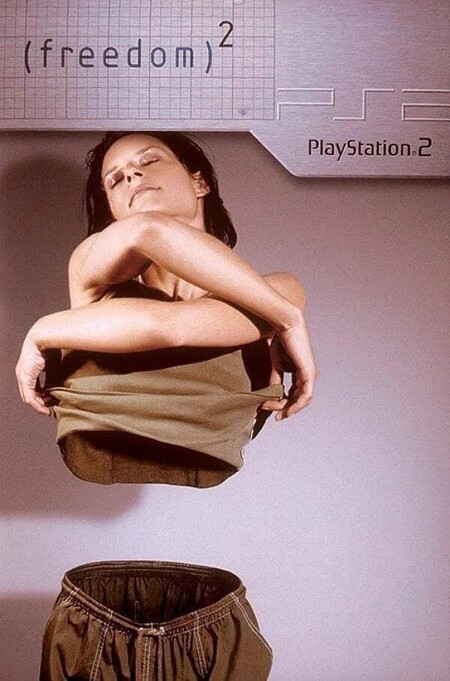

TBWA Conceptual Print Ad. Sony. 2000.


TBWA advertising campaign with the slogan, «Fun, Anyone?» («Who wants to have fun?»). Sony. 2003.
The numbers speak for themselves. The PlayStation 2 sold 160 million units, a figure that represented an absolute historical record for nearly two decades.
The so-called console war has practically fizzled out to this day.
Modern studios and publishers have yet to settle on a unified industry standard for development, although over time, there has been a massive shift from proprietary game engines toward the relevant Unreal Engine. Despite the fact that the question of video games belonging to the «high arts» remains debatable, many people have already come to view them as an integral part of daily life. We now have large-budget projects—blockbusters—that are expected not only to recoup production costs but also to generate profit to continue working on future titles. The mass appeal and accessibility have led to an interesting cognitive bias: at some point, games began to actively emulate cinema, causing their promotion strategies to adopt familiar characteristics.
A peak example of this type of promotion in Russia was the localized cinematic trailer for Uncharted 4: Thief’s End, which was broadcast during television commercial breaks in 2016.
Games are still difficult to classify as a media genre due to their vast diversity and, most importantly, their entirely different approaches to interactivity. New subgenres appear nearly every year, and trends are rapidly reshaping the industry and its audience.
Therefore, there is no single approach to promoting them. Major publishers are increasingly hesitant to take risks in every aspect of video game creation, turning production into a polished content assembly line. Yet, while something new continues to emerge, space for experimentation remains constant—such as the «stealth release,» where a project launches simultaneously with its announcement, creating buzz through surprise. Or consider the «friendly pass» system, which allows a user who purchases one digital copy of a cooperative game to grant access to a partner completely free of charge. In short, advertising can be seen in the most unconventional places, and promotion methods continue to be reinvented to this day.
High budgets and expectations. Promoting «Cyberpunk 2077»
Even people far removed from video games had heard of the Cyberpunk 2077 phenomenon. The long-awaited project from the Polish studio—a team that had already gifted us classic role-playing games—became the most anticipated title in the AAA segment at the time. While the developers were struggling through production hell behind the scenes, suddenly, on the bright stage of the world’s largest event for gamers—the Electronic Entertainment Expo 2019—a global movie star and long-time audience favorite announced that they would be one of the main characters in the work. That day, one of the most expensive marketing campaigns in the industry’s history was born.
Keanu Reeves on stage at E3 during the Cyberpunk 2077 presentation. Microsoft. 2019.
«You are amazing!» declared an audience member. «No, you are amazing, ” replied the actor.
The volume of memes from this broadcast moment was impressive. It quickly flooded social media and transcended gaming, becoming a template for internet humor across various spheres for a time. Furthermore, viewers thoroughly enjoyed the demonstration of the gameplay. Industry media immediately began reproducing interviews with the developers, exclusive details, and materials. Collaborations with other gaming companies were launched without delay, and souvenir products were released. Famous musicians recorded music videos to songs they composed specifically for the game.
It is worth noting that the publisher targeted the widest possible audience, launching unique advertising campaigns for different regions. For example, influencers participated in the Russian voice acting, and the inclusion of strong language in the Russian localization was presented as a distinct marketing move.
Analysts from the Polish company DM BOŚ speculated that the budget for Cyberpunk 2077 exceeds $314 million.
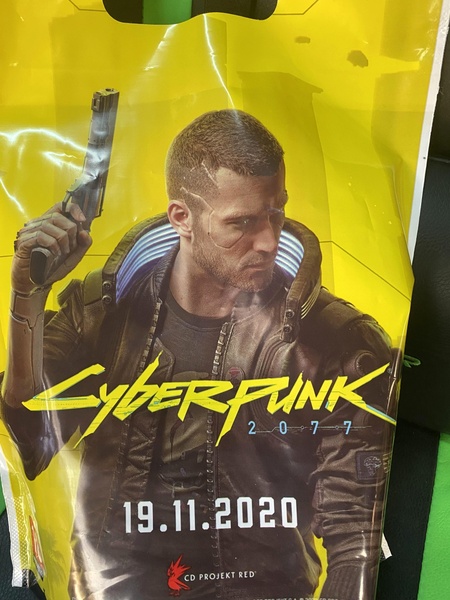

Promotional materials with a release date in Warsaw. Playground. 2020.
Singer GRIMES performs the Cyberpunk 2077 soundtrack. The Game Awards. 2020.
Limited Edition Xbox One X Console. CD PROJECT RED. 2020.
The advertising campaign had to be extended due to several project delays. It later turned out that much of the material was staged, and the game itself launched in abysmal technical condition because of the extremely tight development schedule.
The gaming community had such high expectations that after the release, they did what they do best—they became furious and began to destroy the creators' long-standing reputation. The game’s promotion once again became a meme, but this time the text on the yellow background was ridiculed. The audience realized that behind the beautiful image was a deception designed to prevent investor flight—at that time, the publisher was facing serious financial difficulties, and the game was supposed to rescue them. The project sold over 20 million copies in the first week, which was a huge success, but the company spent several more years repairing the reputational damage.
A message from the studio’s management offering apologies to the community after the release. CD PROJECT RED. 2020.
Only one remains. Battlefield 1 Advancement
Looking ahead, Battlefield 1 became an extremely successful installment in the franchise. This shooter didn’t just gently reboot the entire series—even though it is the fifteenth game in it—it virtually crushed the marketing efforts of its main competitor, Call of Duty. Even if it remains untouchable, in 2016, the gaming community dramatically buried the industry’s biggest shooter, primarily due to the remarkably successful promotion of Battlefield 1.
It all began with the reveal trailer set to the song «Seven Nation Army,» which dropped close to the announcement of the competitor, making direct comparison difficult to avoid. The gamers' reaction was enthusiastic, especially given the fatigue surrounding futuristic settings in shooters and the overall decline in quality. The developer took a risk by choosing the battlefields of World War I as the setting—a setting that appears extremely rarely, not only in video games. Fortunately for them, the audience received it as a breath of fresh air.
Gamers enjoy politicizing gaming itself, and the aggressive confrontation between the two shooters likely became an unexpected advantage, even for Electronic Arts.
A still from the Battlefield announcement trailer. Electronic Arts. 2016.