Navigator
1. Malevich’s Suprematist Concept
2. Data Asset Assembly
3. Notebook Preparation
4. Initial Generations
5. Best Results
6. Malevich’s Square
Project Goal — to train the Stable Diffusion neural network to generate various chair concepts based on the visual language of Kazimir Malevich’s Suprematism.
«Art should not move toward simplification or reduction, but toward complexity.»
Malevich’s Suprematist Concept
I chose this artistic direction for its interplay with simple geometric forms, color, and composition. Suprematism rejects realism and reduces the visual language to basic semantic elements—lines, planes, circles, and rectangles.
I spend most of my time working and studying remotely. At home, in a coffee shop, in the park, on the veranda, in the courtyard… Therefore, I decided to use non-objective geometric compositions as the basis for creating a chair. It is a simple and recognizable structure, whose form allows for many interpretations.
Data Asset Compilation
For this training, I compiled 30 Suprematist works by Kazimir Malevich from the Wikimedia Commons site. The digital reproductions used are marked as Public Domain on the file pages—meaning the works are in the public domain in the jurisdictions indicated there. I resized the images to a square format using Adobe Photoshop for further study. Based on this prepared selection, I assembled a data asset on Kaggle.
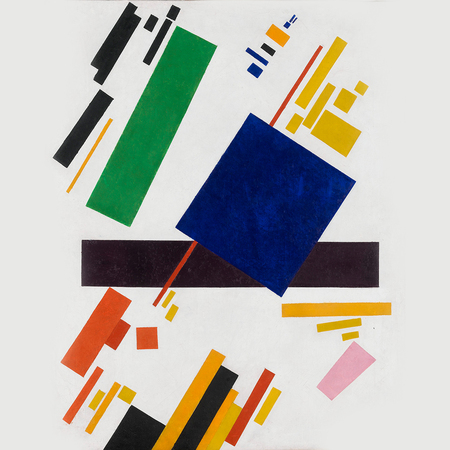
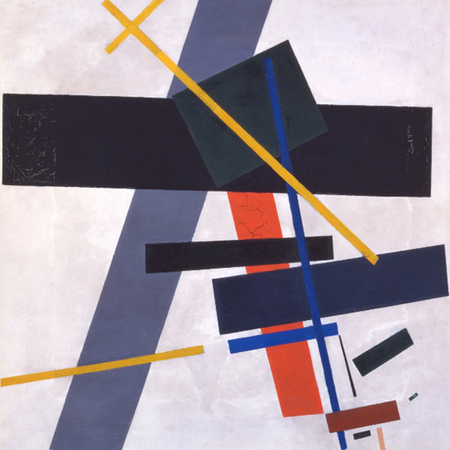
Suprematist Composition (Kazimir Malevich, c. 1915), Magnetic Construction (Kazimir Malevich, Spring to Summer 1916)
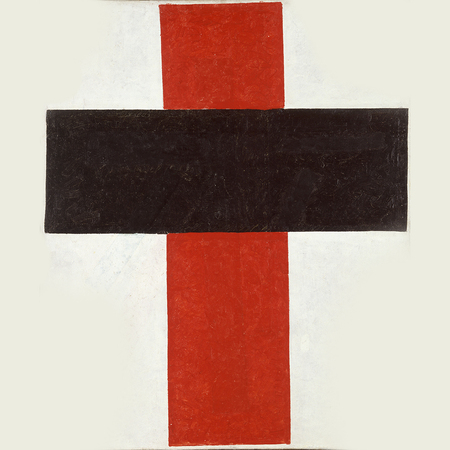
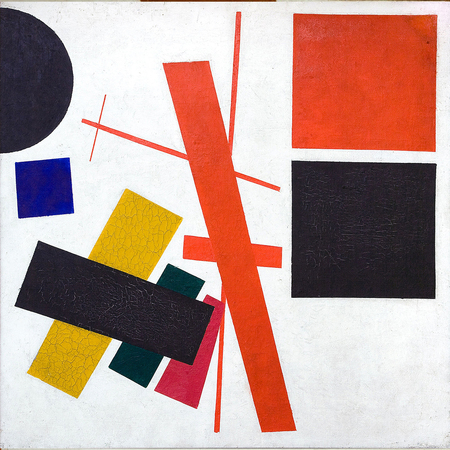
Hieratic Suprematist Cross Kazimir Malevich (1920), Abstract Composition Kazimir Malevich (1915)
Link to Data Asset
Notebook Preparation
As a generative model, I used Stable Diffusion XL. I initiated the training within the Kaggle environment using the Hugging Face Diffusers library. For fine-tuning, I employed the DreamBooth LoRA method, which allows adaptation of an existing model to a new visual sample set without the need for training from scratch. The model was trained on a prepared dataset of 30 works over 500 steps. The trigger phrase used was «MLVCHX suprematist composition, ” which links the trained LoRA to the visual characteristics of the selected Suprematist compositions.
Link to Notebook
Image generation with chairs
After training, I tested several prompt variations featuring a chair with different levels of abstraction. The most expressive results emerged using the simple prompt: «photo collage in MALEVICH style, a simple wooden chair, clearly recognizable, centered composition, white background.» More detailed prompts overly constrained the model with specific geometric forms and compositional characteristics. Therefore, for the final series, I opted for the simple prompt, which only fixes the recognizable object—a wooden chair. The subsequent form of the object and its visual interpretation are generated by the model based on the patterns learned from Suprematist works.
Initial experiments
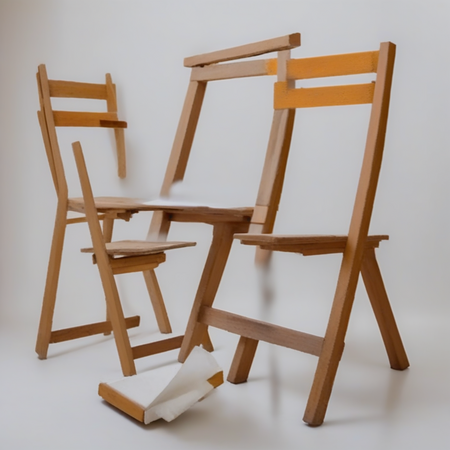
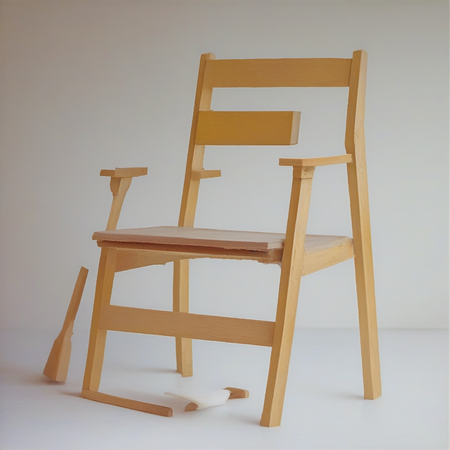
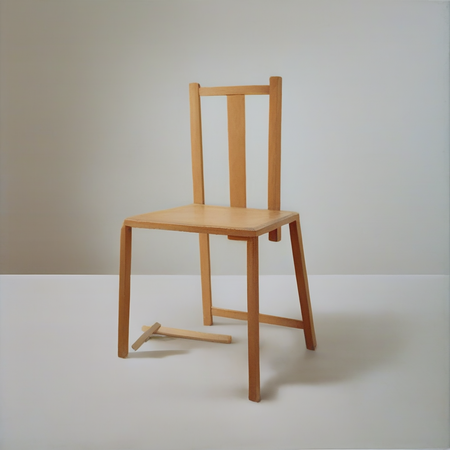
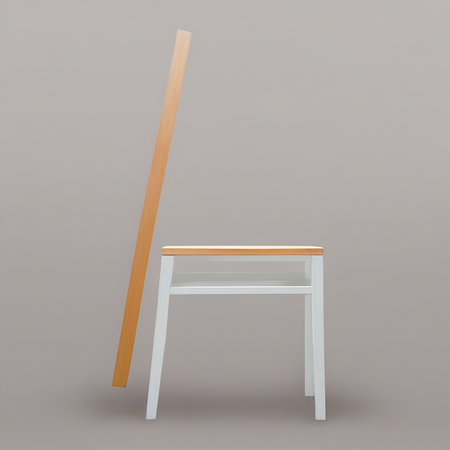
Initially, the neural network generated disjointed, chaotic, and mixed images. It is clear that the AI currently struggles to understand how to transform paintings into interior design objects. The chairs came out broken, amalgamated, and lacked detail—as if they were erased.
The challenge with such generations lies in the fact that the neural network must essentially retain the comfort and functionality of a chair while simultaneously incorporating asymmetric, geometric forms, which often conflict with these requirements. Consequently, even after numerous attempts, the generations were not always suitable.
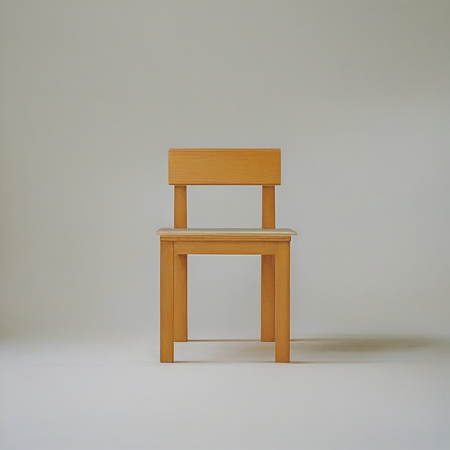
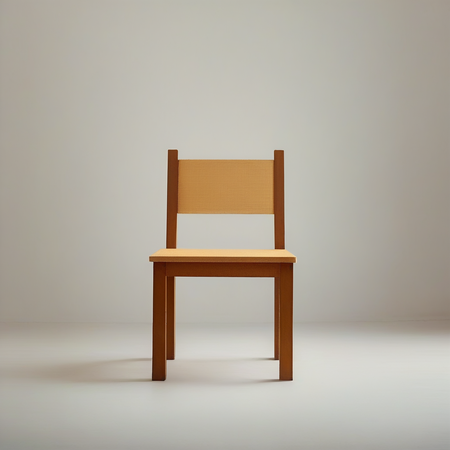
Then came more stable generations. The neural network learned to create chairs, but Malevich’s style was still absent from the works. These were very simple objects, lacking the asymmetric geometric forms characteristic of Suprematism in a color palette.
Best Results
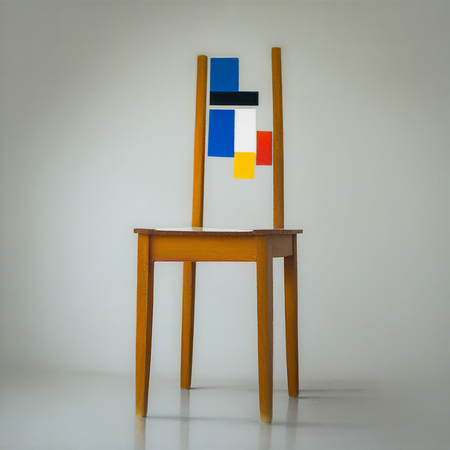
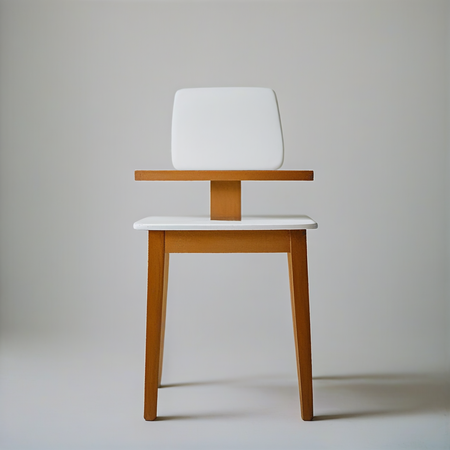
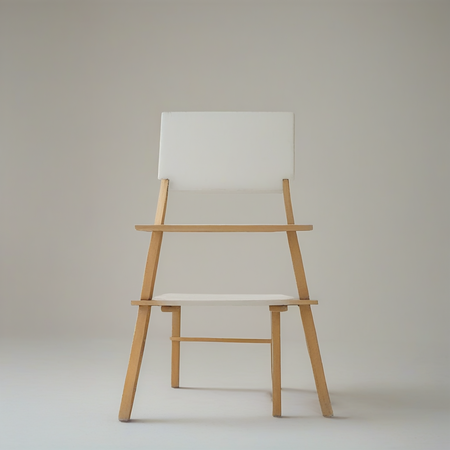
Subsequent generations began to improve. The chairs started incorporating elements of Suprematism.
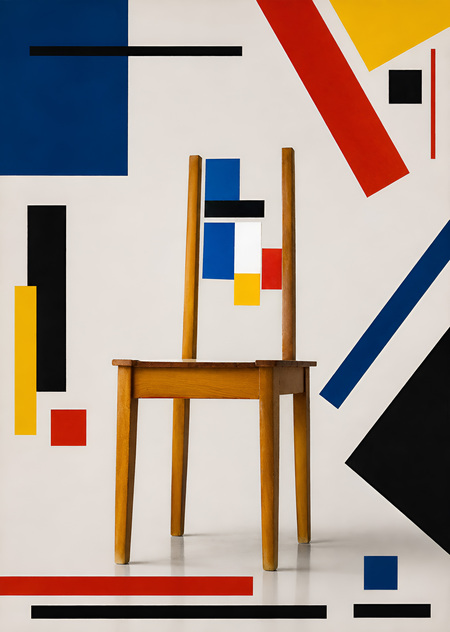
For instance, in the first photograph, the backrest of the chair was composed of primitive geometric forms.
In the second photograph, this same part of the chair was diversified with an intersecting straight detail, reminiscent of Malevich’s Hieratic Suprematist Cross from 1920.
All subsequent works were generated using the prompt: «photo collage in MALEVICH style, a simple wooden chair, clearly recognizable, centered composition, white background.»
Example of code being executed on Kaggle to generate chairs
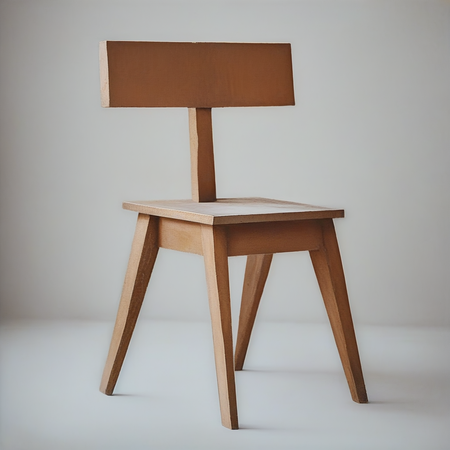
Through extensive experimentation, we also managed to develop chair forms in the shape of pyramids.
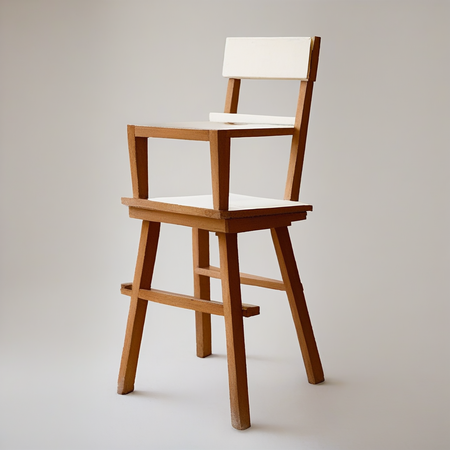
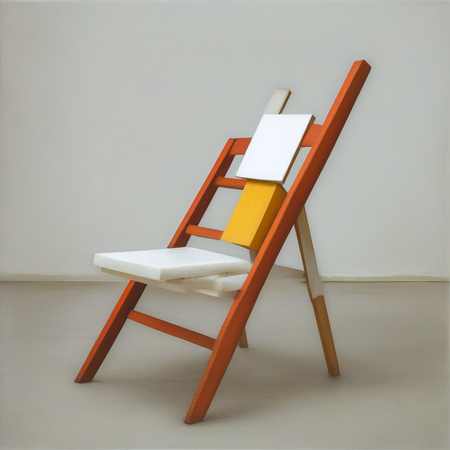
I found these generated options particularly interesting. The first chair took me back to my childhood, when I tried to construct something like a «car» out of stools at my grandmother’s house. This strange composition also reminds me of a bar stool. If I had my own themed bar, I would call such a chair the «Grandma’s Stool.» Even so, it is noticeable that the chair retains elements of Suprematism: asymmetry, geometric forms, squares, rectangles…
The second composition was also very pleasing to me. This kind of chair would be wonderful to place in a courtyard and enjoy the summer sky. The color palette perfectly matches that mood.