About the Project
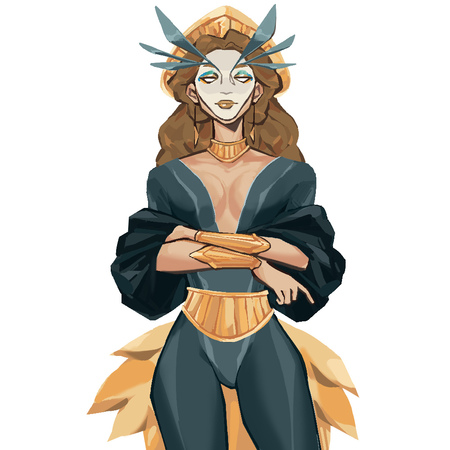
«Olympus Crush» — a 2D platformer with dating simulator elements about a satyr searching for a partner among the divine pantheon.
In this project, I serve as the character artist. My responsibilities include designing the gods and goddesses, creating concept art, and developing the final in-game sprites.
— Final sprite of Hera, «Olympus Crush»
The core idea of the project is to train the Stable Diffusion neural network in the «Olympus Crush» style. I often have difficulty creating characters, and frequently, I don’t even have the energy to start working. I would like to have a tool that could make the process easier.
I use the neural network not as a replacement for my creativity, but as an idea generator that can inspire me to create something of my own or rework «ready-made» assets for the game’s needs.
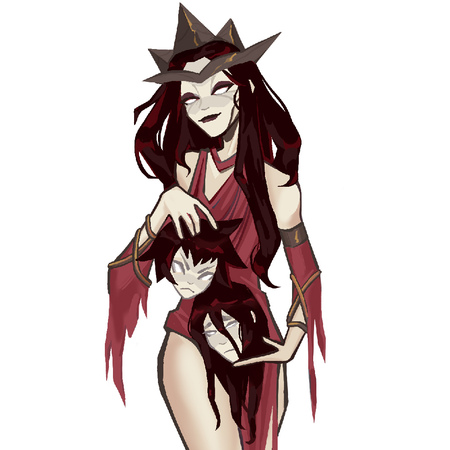
I chose the character drawing style myself, but there are several important rules I follow during the creative process:
- There are two palettes for outfits: burgundy and turquoise;
- All characters wear white theatrical masks that can be decorated with makeup or other details;
- A combination of soft and flat shading;
- Varying line thickness for outlines.
— Final Gekatē Sprite, «Olympus Crush»
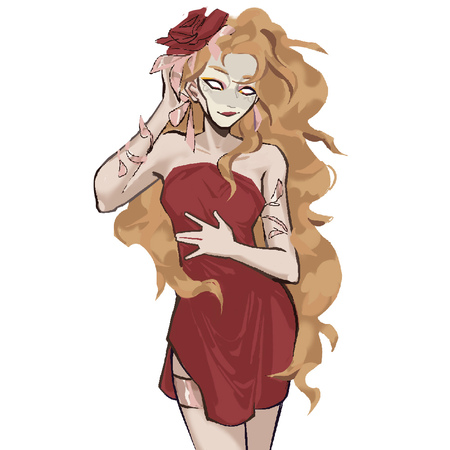
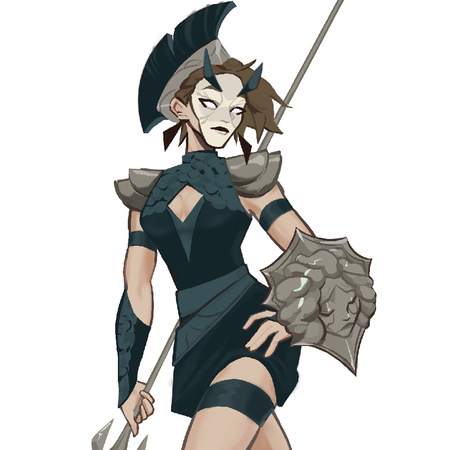
Aphrodite and Athena sprites
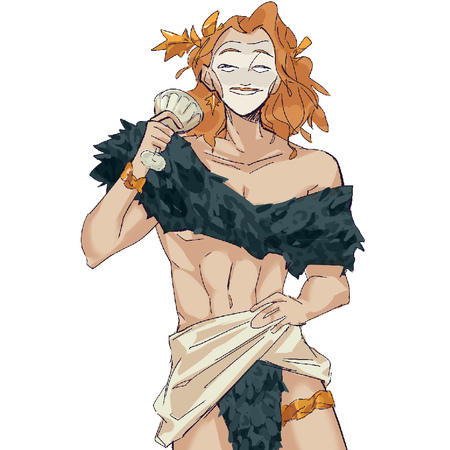
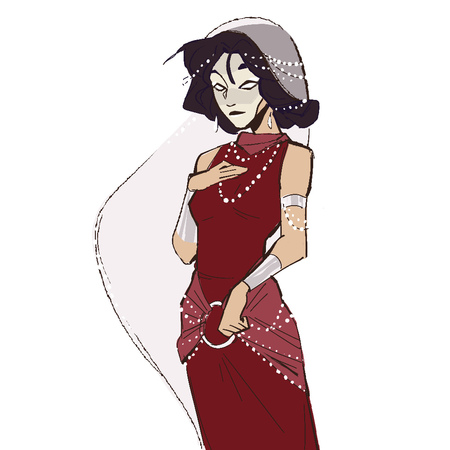
Sketches of Dionysus and Iridis sprites
The Learning Process
For this project, I decided to create designs for seven gods: Artemis, Eris, Persephone, Ares, Hephaestus, Morpheus, and Zeus.
I worked with the provided source code. First, I had to set everything up—this involved loading the necessary libraries, and then importing a dataset of 12 of my illustrations.
Image upload preview
It was possible that I wrote an overly long and detailed prefix by mistake and should have stopped at «art in OlympusCrush style».
However, during the generation process, I excluded extraneous information from the prompts, and the results were still quite good.
prefix and metadata
Next, I created a Hugging Face key and began training the neural network.
On the first run, my parameters were set too high, which would have made the training take about six hours. I reached out to ChatGPT for help to find the right values that would balance high generation quality with a short time commitment.
This allowed me to speed up the training to just one hour.
settings for training a neural network
Results
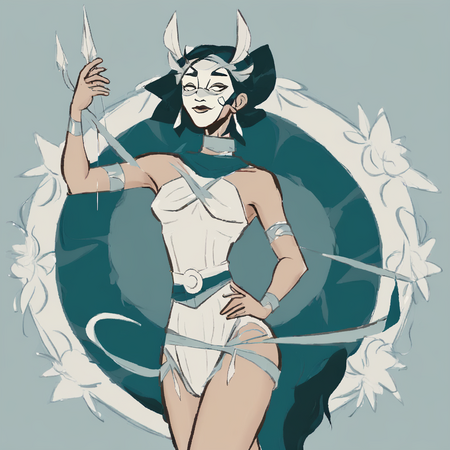
For the first image, I included the specified prefix in full and mentioned the crucial element—the white mask.
It is evident that the neural network has learned the color palette and proportions of my characters. The mask itself looks similar—there is light makeup on the eyelids and lower lip, the upper lip is darkened, and shadows are visible on the forehead and cheeks.
Prompt: «goddess Artemis in OlympusCrush style, stylized, flat shading, greek design, clean shapes, white mask, turquoise outfit, short black hair»
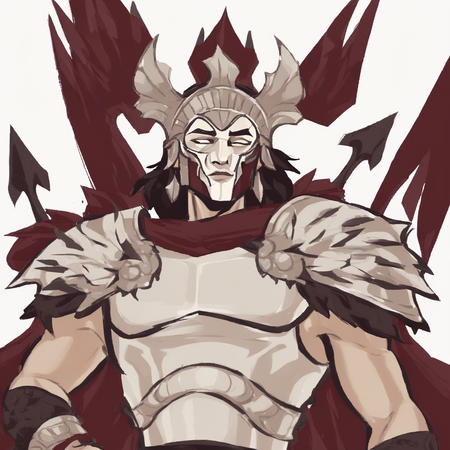
The next generation is dedicated to Ares—conceptually, the game has no male characters besides Dionysus and the main character, Satyr, but I was curious to see what the other gods would look like in this style.
The neural network cropped the character at the waist here, but it applied subtle shadows that I missed in the last piece.
Prompt: «male god Ares in OlympusCrush style, stylized, flat shading, greek design, clean shapes, white mask, vinous outfit, brutal black armor, spiked ornaments, war aesthetic»
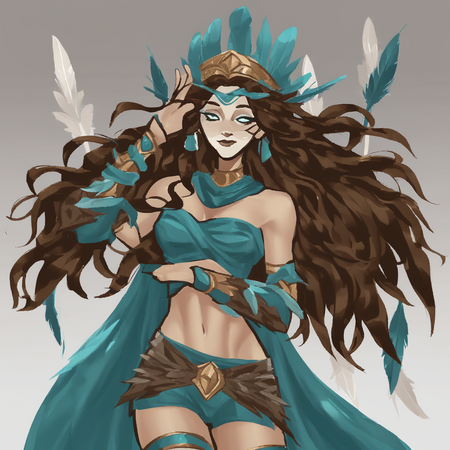
On Eris, the blurred shadows on the skin—the ones I use in my final sprites—are already quite similar. The rendering of the hair stands out especially; I try to strike a balance between the simplicity of the hairstyle’s shape and the detail of the light and shadow, which the neural network handled quite well.
I also managed to add the eyebrow ornamentation, which can also be seen in my work.
I have already removed unnecessary information from the prompt here, leaving only the style indication and the description of the goddess’s appearance.
Prompt: «goddes Eris in OlympusCrush style, brown long wavy floating hair, turquoise outfit, knives feathers»
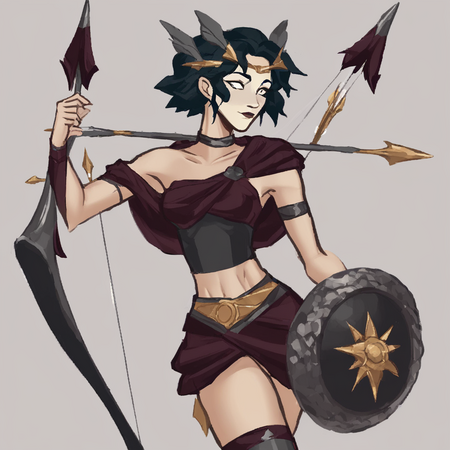
The first design of Artemis can be considered unsuccessful, so another was created.
The second time, the goddess turned out more visually appealing and more developed—there are still soft shadows on the body and mask, and flat areas on the clothing and hair, but quite neat combat attributes from the prompt have also appeared. The hairstyle became neater and more similar to what I could draw.
Prompt: «goddes Artemis in OlympusCrush style, black short hair, vinous outfit, bow and arrows»
Comparison of Artemis’s first and re-generation with Athena’s sprite
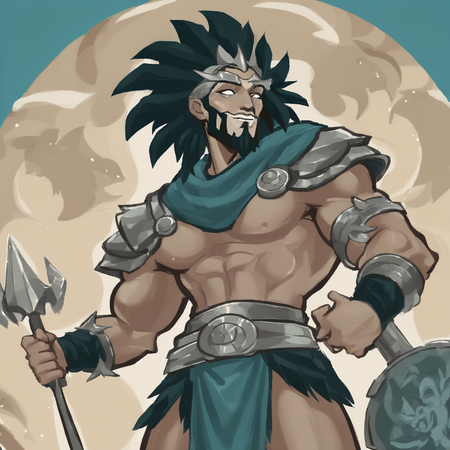
I had to generate Hephaestus three times to achieve the hair structure and the desired weapon—the hammer and dreadlocks were not achieved, but I was satisfied with the volume and shape of the hairstyle.
Also, the mask disappeared in the first two generations; in the final image, its outline is visible on his forehead, though it blends in color with his skin.
Prompt: «god male Hephaestus in OlympusCrush style, black dreadlocks in hair, turquoise outfit, large bodybuild, metal armour, hammer»
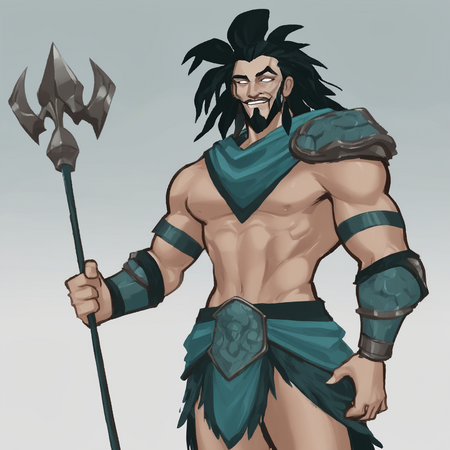
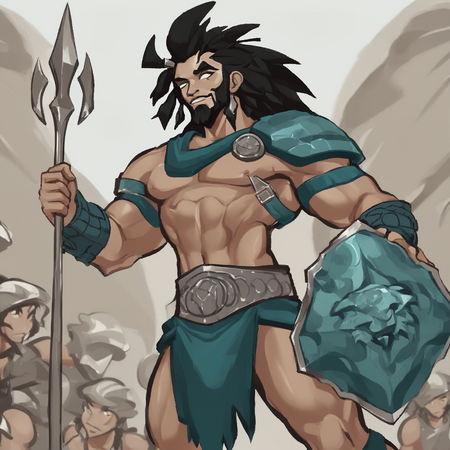
Hephaestus Generation Variations
It is also worth noting the refinement of the torso. In the sprite with Dionysus, the shading on the abs is flat because the design is not yet complete—it was a pleasure to see how the neural network refined this element.
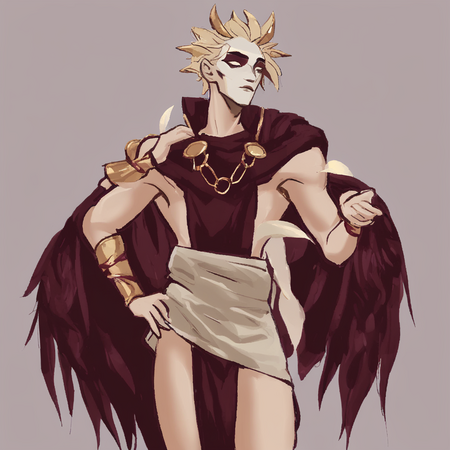
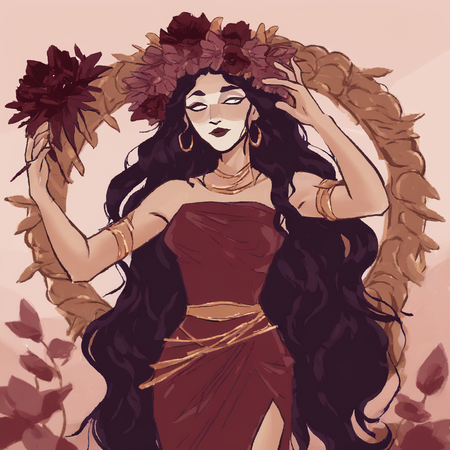
generation of Morpheus and Persephone
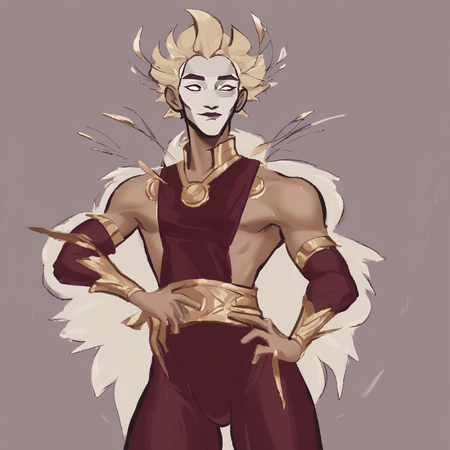
Morpheus’s hair came out less detailed, and Persephone’s shadows started disappearing with each new image. The designs for these two gods weren’t as successful as the previous works generated by the neural network.
I suspect that minor inconsistencies in the illustration dataset played a role—some of those sprites weren’t finished yet—which led to stylistic discrepancies here as well.
Prompt: «male god Morpheus in OlympusCrush style, short blonde hair, vinous outfit, feather brows, floating clothes»
Variations of Persephone generations compared to Hecate’s sprite
Prompt: «goddess Persephone in OlympusCrush style, long dark hair, vinous dress, dark makeup, flower crown, copper accents»
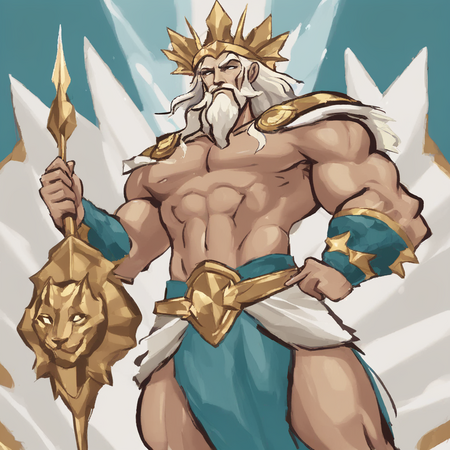
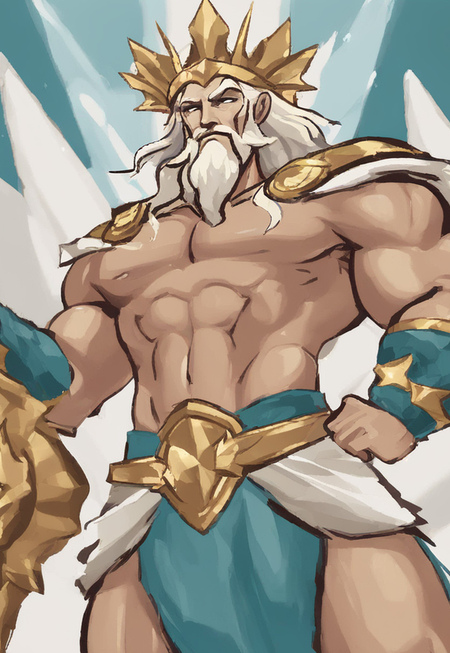
The situation with the missing mask of Hephaestus has repeated itself with Zeus, but in this case, it is unnecessary—in the game’s concept, only gods participating in the contest for the satyr’s heart or friendship wear masks. This is irrelevant to the ruler of Olympus.
The shadow structure has largely stabilized—the soft shadows are gone, but flat shadows have returned. The lion on the shield is also rendered excellently, serving as a reference to Medusa’s head on Athena’s sprite.
Prompt: «male god Zeus in OlympusCrush style, long white hair and beard, turquoise outfit, muscular build, golden crown, thunderbolts in hands»
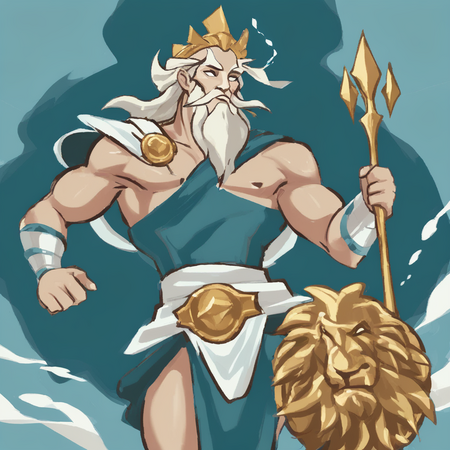
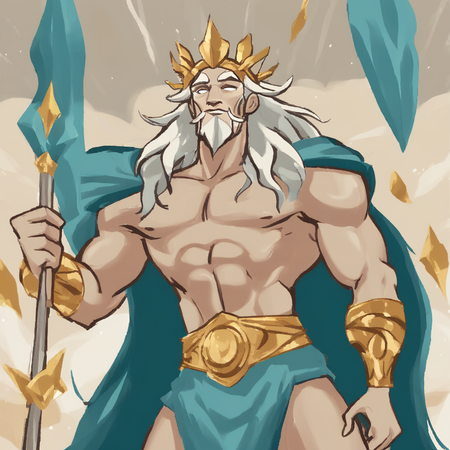
Zeus Generation Variations
Summary