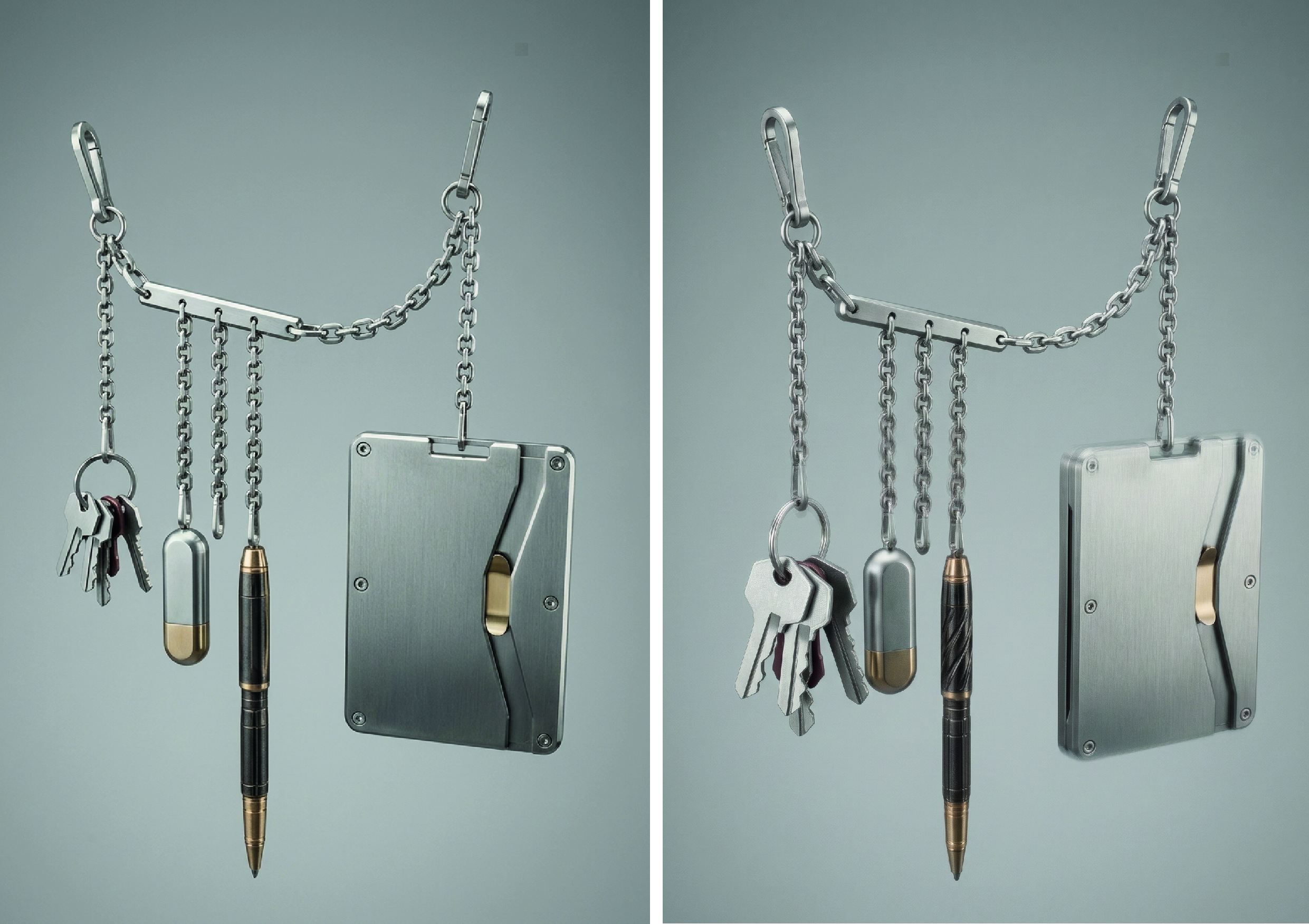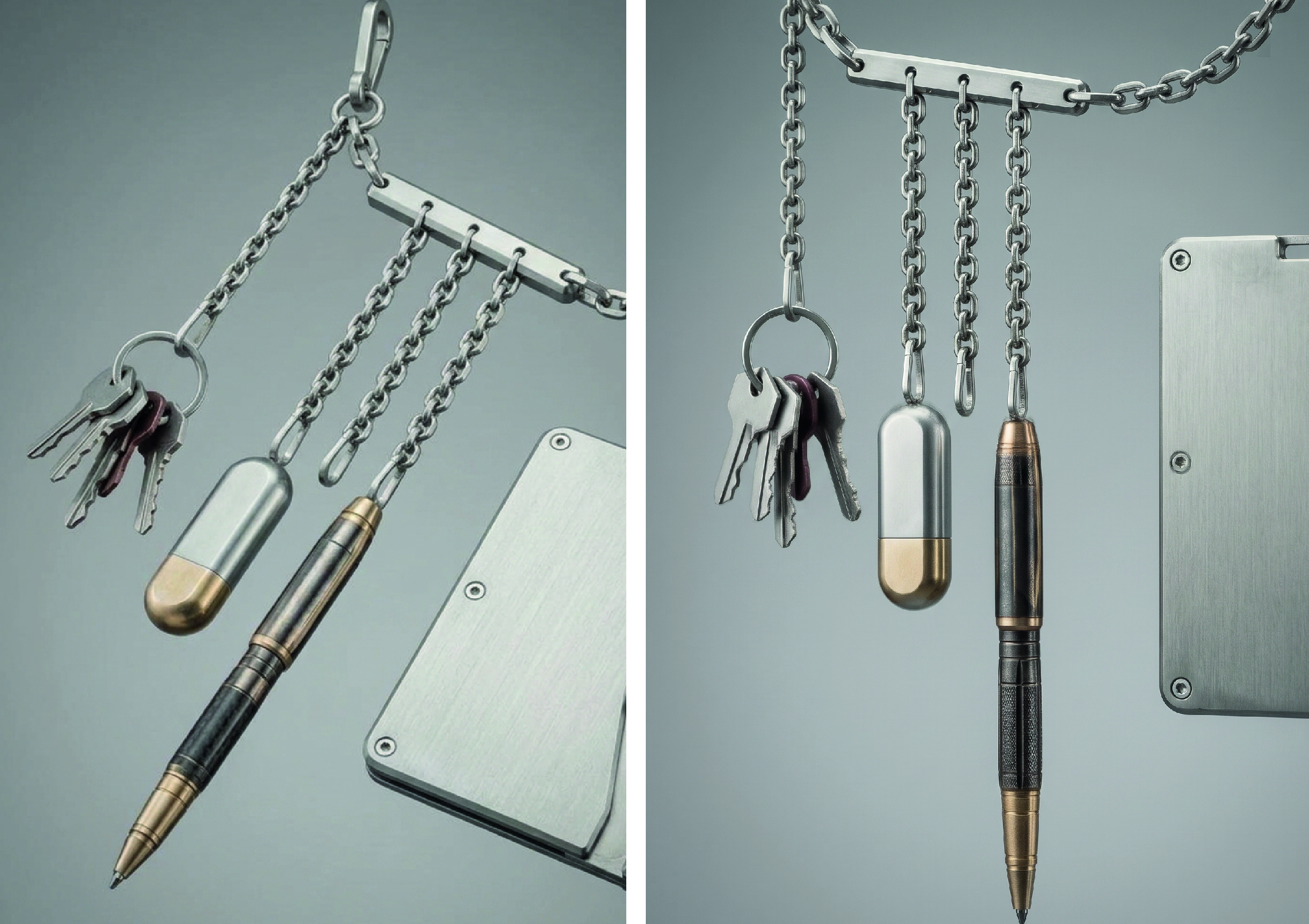
Concept
A chatelaine (from French châtelaine—"castle mistress») is an accessory fastened to the belt or clothing used to carry small, essential items. Today, it is often perceived as a vintage adornment, but it was originally a highly practical item, replacing pockets and women’s handbags.By the end of the 19th century, it evolved from a utilitarian object (the mistress’s key fob) into a piece of jewelry: the design became more complex, and the mechanisms—fastenings, hinges, pendants, locks—were concealed by the ornamentation. The Victorian chatelaine is beautiful, but «opaque»: it is unclear how it stays in place, how the elements detach, or why they do not fall off.
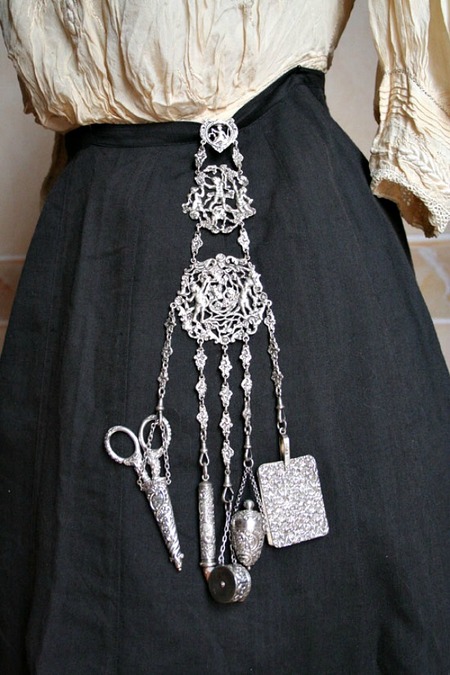
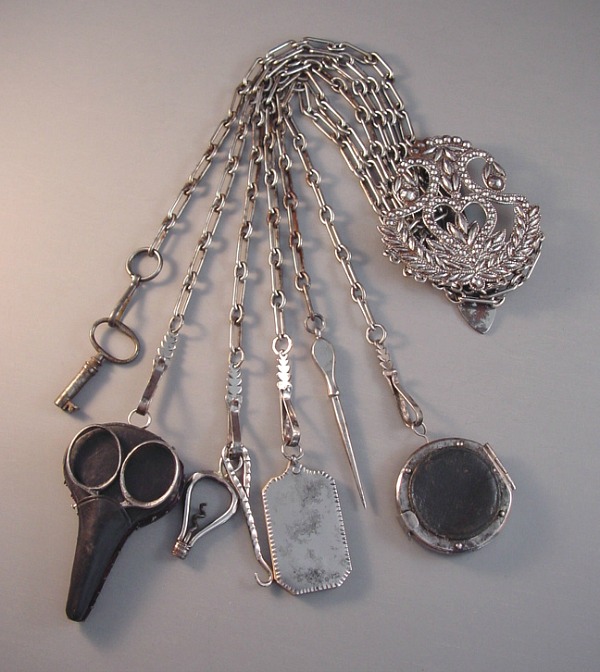
By the turn of the 20th century, with the Industrial Revolution bringing forth pockets, wristwatches, and capacious bags, the satchel loses its utilitarian function and becomes purely an ornament—meaning its construction is no longer honest.During this period, Constructivism emerged—a movement that proclaimed function as primary, rejected «useless» decorative elements, and demanded the revelation of an object’s structural basis. Constructivists opposed the ostentatious luxury of bourgeois life with the «simplicity and pronounced utilitarianism of new object forms, ” making expediency the measure of aesthetic value for them. Their method was „functional“: form was dictated by the work of the construction, not the other way around. Constructivism provides us with a language for a reverse trajectory: we take the idea of the satchel (a modular, body-worn organizer) and restore its utility, but on a contemporary level—through honest, legible mechanics.
Reinterpretation
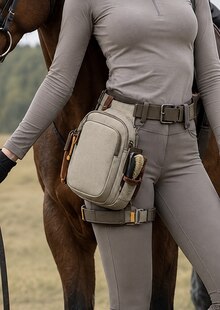
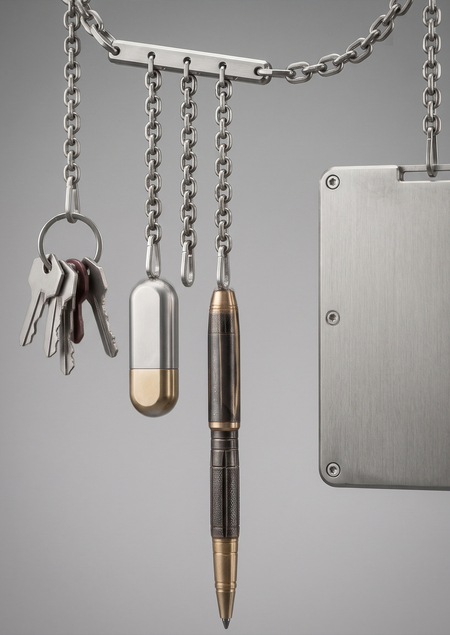
The Satchel is designed for the contemporary urban dweller. In the morning, the user assembles their «kit» for the day. They attach the base to their belt or the strap of their messenger bag. On the distribution bar, they hang the modules needed for the day: studio keys, a cardholder, a flash drive with projects, and a slim pencil case. Throughout the day, they can change the configuration with one hand—the open buckles allow blocks to be easily removed and added. In the evening, they unclip the excess, leaving only their house keys and card, transforming the utilitarian organizer into an elegant accessory.