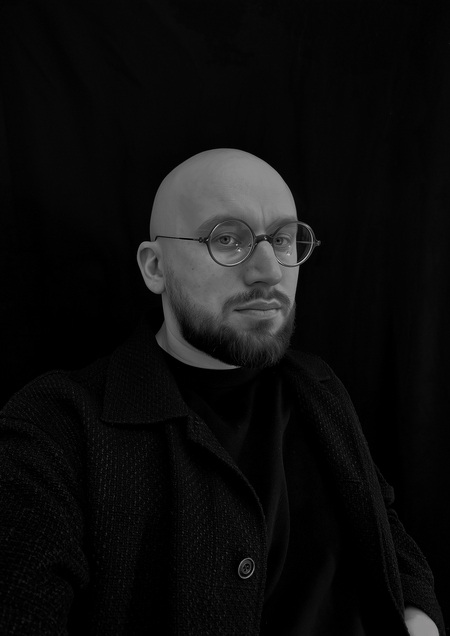
Video interview material on the school ' s social media (can be viewed below at the end of the Longrid). Neyroste processed my direct speech and gathered it in the text, as well as the creation of illustrations and the processing of photos were carried out with the help of I.I.
What is unique about design school, and how is it different from other educational programs?
First, our specialty is the basic course system.
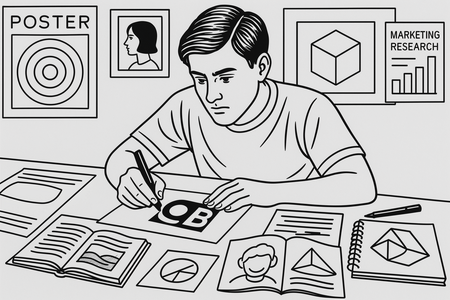
From the beginning of the study, the student is not part of the abstract exercise, but is immediately involved in work on real projects. In the first module, a brand style is created, followed by posters, books, animations, 3D, marketing research. And it’s all in the first year. We later extended this experience to other profiles as well, and now we have a whole set of courses that aim at professional practice from the beginning. There’s a teacher, of course. But it is embedded in specific tasks — learning about tools, programs, history and practice of art is not an abstract theory, but a part of the work process. Students start thinking like artists, creating art objects that can go to exhibitions and even to the school store. From the outset, they act as authors, not as «future specialists».
The second is a digital portfolio.
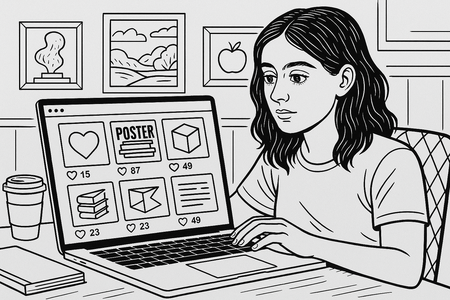
Since the early years of the school, we’ve been thinking, how do we make sure the student results are not lost? And they created a system where every project is preserved, visible and accessible. It is a base from which future flows can work — to see what has come to pass, to appreciate what has been wrong, and to learn not only from teachers, but also from other students. Today, the system has become a full-fledged social portfolio. Projects receive likes, participate in competitions, and are discussed. And that’s a powerful incentive. We organize many competitions ourselves, sometimes with sponsors, sometimes with our own resources — to motivate students to develop, to try more, to do better. It’s not just a window. It’s a digital ecosystem that combines learning, evaluation, communication, career paths. You can sell your work through it, get an offer from a handler or an employer, go to an exhibition, a publication, a new collaboration. We’re developing this platform all the time — it’s our digital point of support, the digital cone.
The third is our collective.
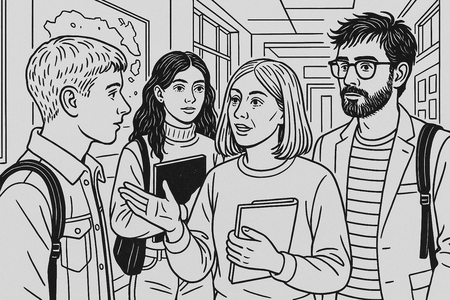
Since the foundation of the school, we’ve been trying to bring together the strongest people in the industry. There are both masters, young practitioners, researchers, and artists. And the most interesting thing starts at the moment of the meeting: generations, visions, aesthetics. Synergy is emerging, the one that gives birth to real discoveries. It is in spaces like our school that future design trends are emerging.
The fourth is results-oriented.
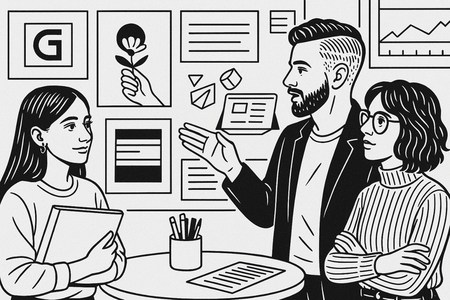
On the way out, the student is not just a folder of exercise, but complete projects that may be needed by the industry. And they’re really needed. We’ve got clients, partners, studios and agencies coming in because they want to see a fresh look, a new generation of designers. Through these contacts, the school is becoming not just an educational institution, but an entry point to the profession. Art business incubator where new stars are born. And all we do is organize competitions, exhibitions, marketplays so that students can not just show their jobs, but also sell them, get real feedback, start a career while they’re still studying.
Finally, it is important that we are part of the larger ecosystem of the Higher School of Economics.
It gives us infrastructure, communications, access to different fields and professions. Students have more opportunities — internships, job placements, collaborations. We are regularly approached with suggestions: who to recommend, who to call, who to propose a project.
All of this makes the Design School a living organism that is constantly evolving. And that’s her main difference.
How does teaching at the Design School benefit a practical designer, an artist, a creative person?
First, it’s development.
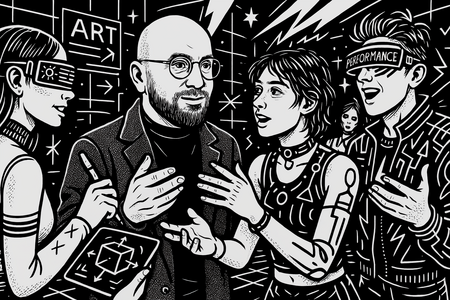
Teaching gives me, and any professional, a chance to go beyond the usual challenges you face in a studio or a freelance. When you work for a company or with clients, you gradually narrow down to the formats that are needed here and now. And teaching forces you, along with your students, to dive into very different fields, ranging from brand style to 3D, from animation to exhibition projects, interactive designs, museum exhibitions, and anything else. You go with them as a handler, you accompany the project, you help figure out what you’re not sure about, and you’re doing it yourself. Sometimes, to explain something in simple terms, you really have to figure it out. And as a result, when a request like that comes up in life — you’re no longer standing in front of a blank sheet, you’re ready, you’re in. So teaching doesn’t slow down, but rather expands professional horizons, makes you feel where you can go. Moreover, the learning environment is often not limited to rigid budget frameworks, timelines and client expectations. It’s freedom. The possibility of jumping above your head. I even say to the students at the diploma: «Show up, because that chance may not happen again — to make a massive, complex, multi-level project without market pressure.» And the teacher is also a participant in this process, and he is also a student. He either confirms his skills, or he finds the strength to come up with a new one, to go beyond what he used to do. Yes, of course, in high school courses, moving to more applied tasks, we add limits, bring the process closer to reality. But at the beginning of the journey, freedom. And it’s important not only for the students, but also for us teachers. Sometimes invented limitations — such as making a project in a very limited budget — give rise to the brightest ideas. And when you have a space for reflection that isn’t clouded by routine, there’s an inspiration.
The second is people.
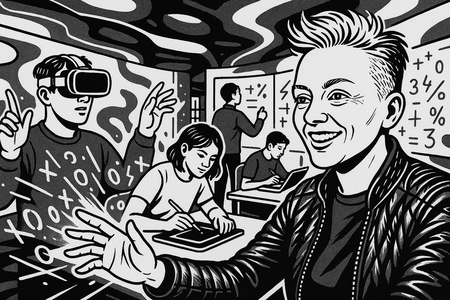
You’re surrounded by strong, bright, amazing. Teachers and students. And you constantly infect them with ideas, curiosity, desire to try. You watch colleagues teach what students they have, what solutions they find, and you get confirmation of your own intuition. Or vice versa, you see things you didn’t think of. It develops. It allows you to trust yourself more. It’s like a living book you read every day, and every time you find something new in it.
The third is healthy competition.
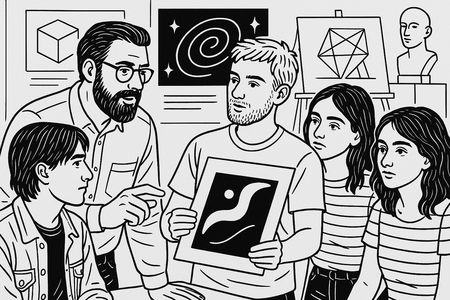
There are neighbouring groups, there are other teachers, and I want your students not to be worse, but better. So that you’re not just normal, but interesting, relevant. It’s very inspiring. We look at each other without envy — with interest and respect. If someone came up with something cool, you take it, you adapt it, you try it. It’s a live exchange.
The fourth is the inability to boil.
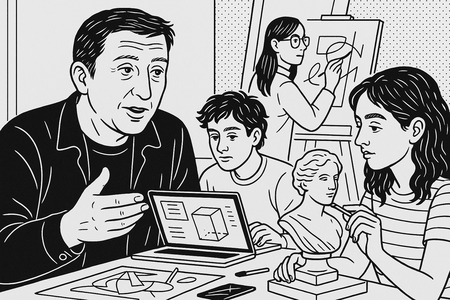
The educational system is changing all the time: the student level is rising, the digital portfolio is developing, new requests, tools, ideas are emerging. Renewals, introductions, tests, transformations are taking place all the time. And you’re on the move all the time. This isn’t an inertia job, where you’re smart-looking and you’re out of the department, and then you’re out for lunch. It’s a big living body that’s always pulsating. And you’re inside this body, in good, inspiring tension. You’re always looking for a better way.
The fifth is the opportunity to help others and, in parallel, to help themselves.

When you make a student’s advice, you try it on yourself. You learn to be clear, supportive, structural. The same approaches can be applied in our own practice — not to get caught up in creative stagnation, but rather to flow. When you help someone else figure it out, you better know you need attention. You begin to see others — in their weaknesses and powers — as reflecting themselves. You’ll know what you’re really interested in. It’s not always obvious, especially for a creative person. But when you watch students pull in, get carried away, start burning, it can’t help but charge. And you remember why you’re doing this again.
Wrap-up video