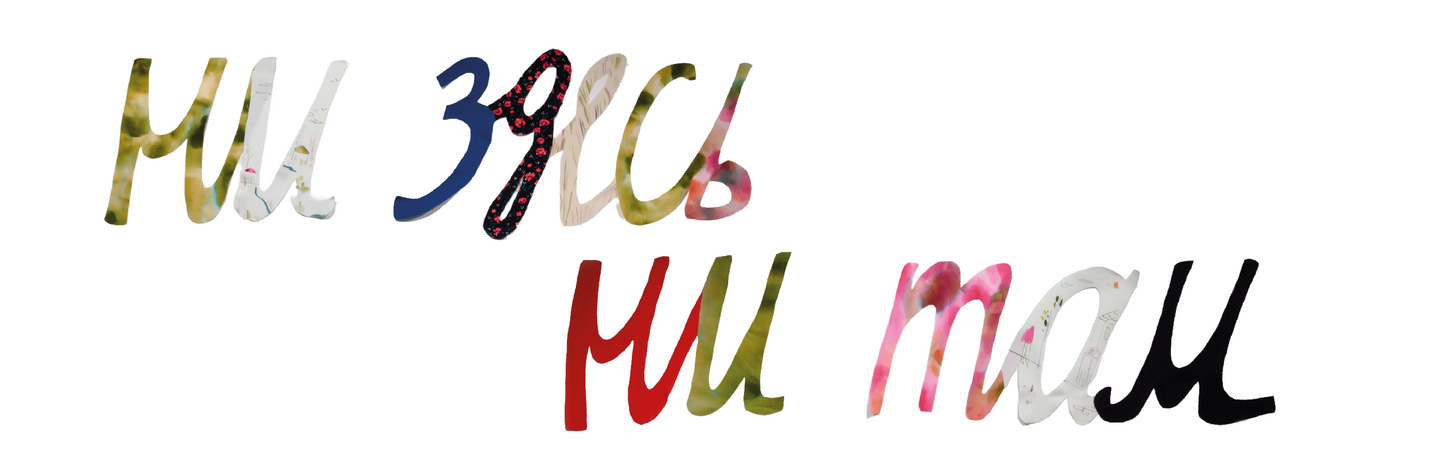
The «Neither Here Nor There» project was realized in Gallery A–B. The exhibition was curated by Sasha Kuznetsova. Exhibition Dates: May 7–May 21, 2026.
Additionally, part of the exhibition was presented at the HSE ART GALLERY in Vinzavod. The exhibition was curated by Vassa Pyrkova. Exhibition Dates: May 26–June 30, 2026.
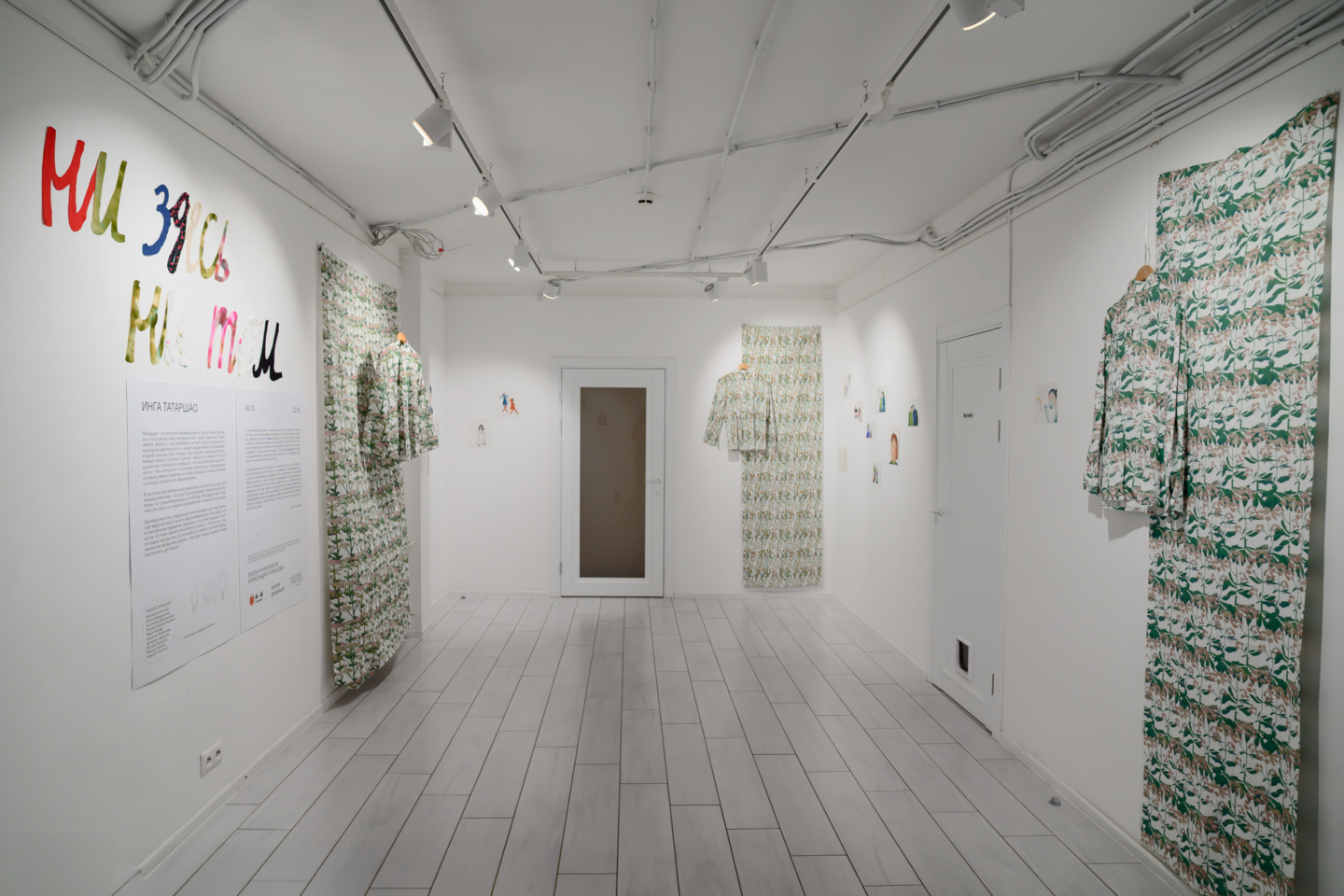
General view of the «Displaced Views» studio
Migration is not just moving from one place to another; it is the constant act of reassembling oneself—one’s habits, language, and memory. Along with this, the question of national and cultural identity inevitably arises: to which nation does a person belong, and to which culture do they relate? These questions fuel endless debates and attempts to separate the «insiders» from the «outsiders.» But upon closer thought, it becomes clear that national identity is not a monolith, but a complex construction assembled from language, memory, family histories, the cities where we lived, and the cultures that have shaped us.
I grew up within Abaza, Circassian, and Russian cultures. All my relatives are from the village of Psizh in the Karachay-Cherkess Republic, but I socialized in Moscow, which caused me to lose the ability to speak Abaza and Circassian.
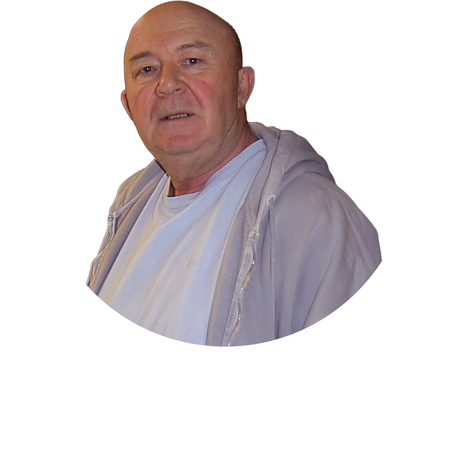
One day, my father, who has spoken these languages since childhood, watched a video from my project, «Abazin Lessons.» He said that I could pronounce things correctly, but there were slight inaccuracies; the way I spoke sounded a little different—not like those who grew up speaking it natively. In that moment, he noticed a certain mismatch in me, a gap—as if there was a distance between the language and my lived experience.
And he is undoubtedly right. He pointed out this state of «neither here nor there, ” which I have been actively exploring in my recent work. This is precisely why I decided to engage with my own liminal space between multiple cultures. This state of hybrid national-cultural identity often results from migration. Furthermore, the attempt to categorize people by nationality and find „purity“ ruthlessly oversimplifies the complex human experience.
Entrance Area
In my exhibition project, I deliberately showcase the very rift my father noticed. I explore the inconsistencies—in speech, gesture, memory, and in myself—and make this assemblage visible through hybridity and through an incomplete belonging to any of the cultures in which I grew up.
I focus on situations where the attempt to «fit into» a national identity does not lead to belonging, but merely emphasizes the gap. Ultimately, this forms the core image of the project—a house constructed from fragments, much like my national and cultural identity. In Moscow, I am labeled as «not one of us, ” and in my homeland, I no longer entirely belong to that environment either. This state of lacking a cohesive home has accompanied me throughout my life, and it is particularly acute in moments when I try to connect with what was lost during the migration process.
The gallery space is divided into three halls: «Displaced Views, ” „The Home, ” and „Abazin Language Lessons.“
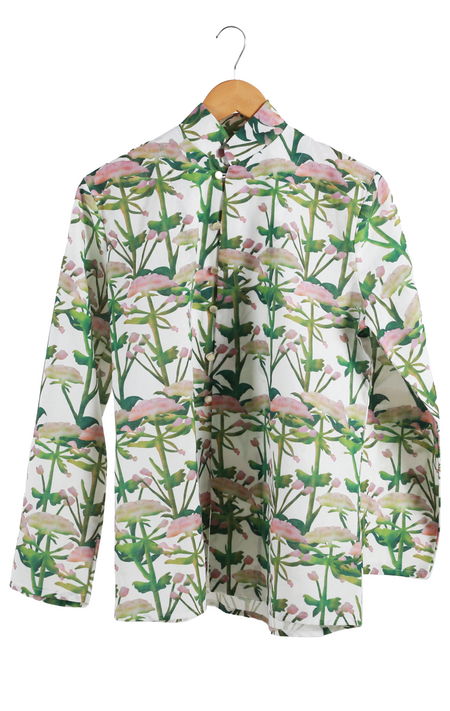
I decided to begin my discussion of migration as a change of place of life with the work, «Displaced Species,» which uses imagery of weeds and invasive plants. In this piece, I draw on the rhetorical similarities used to describe both migrants and plants. There is a myth that newcomers displace the «locals,» much like displaced plants are supposedly threatening native species. However, these plants more often colonize disturbed spaces created by humans, filling in voids. In a similar manner, people in a new city gradually adapt but never find support among the local population.
After discovering parallels between the migratory paths of my family members and those of plants, I created fabrics and shirts featuring their images. The cut of each shirt references the traditions of the region of origin of one of my loved ones.
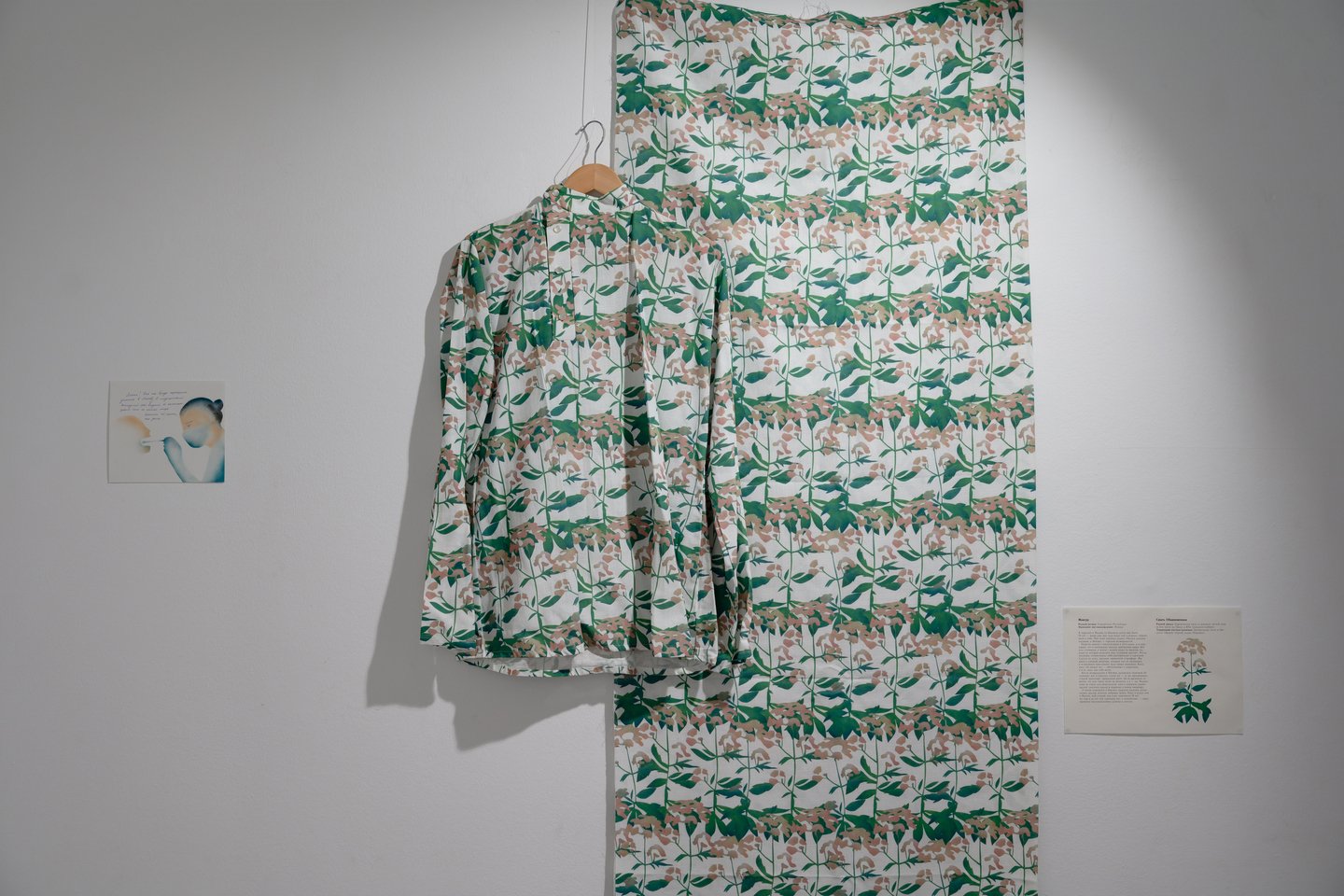
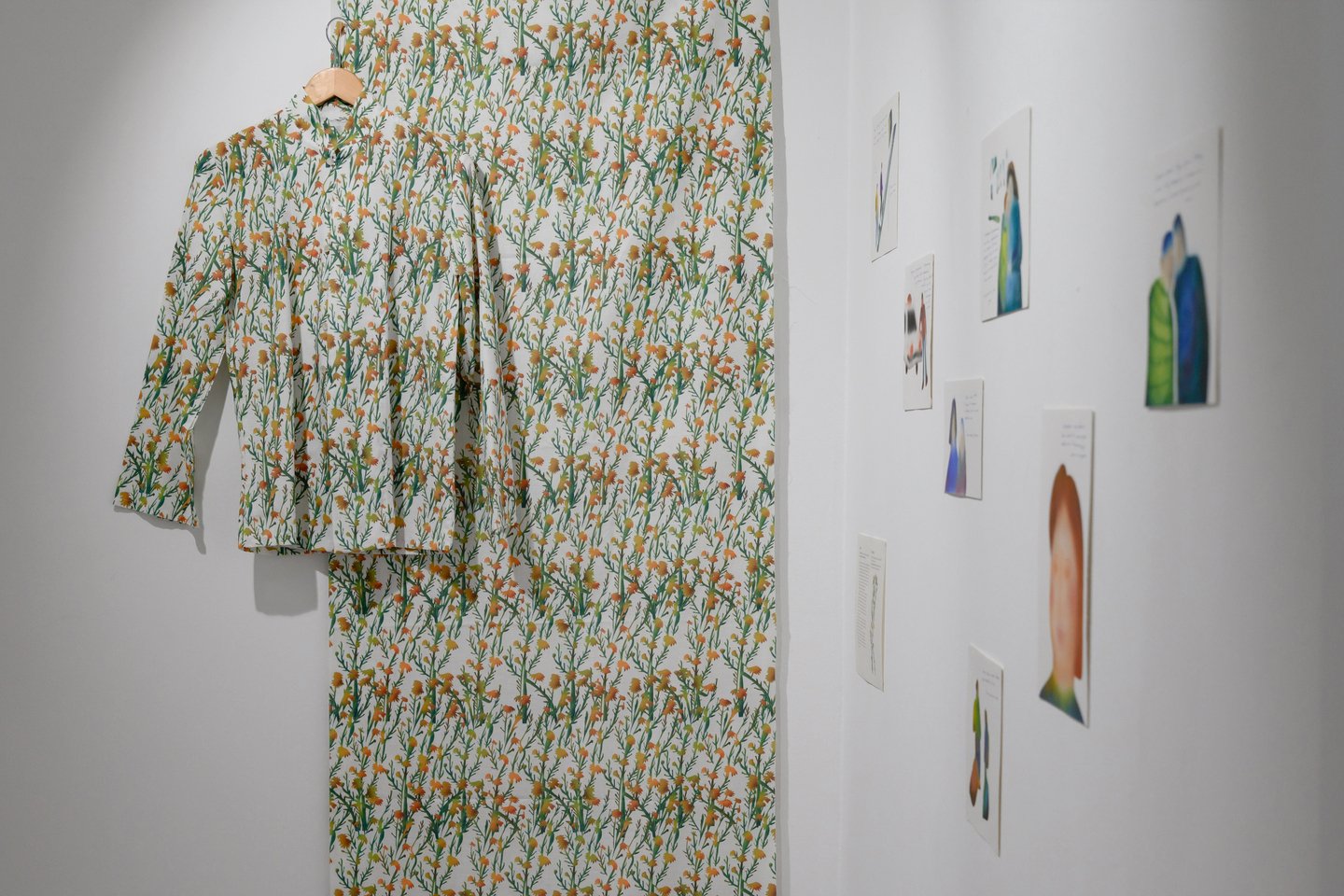
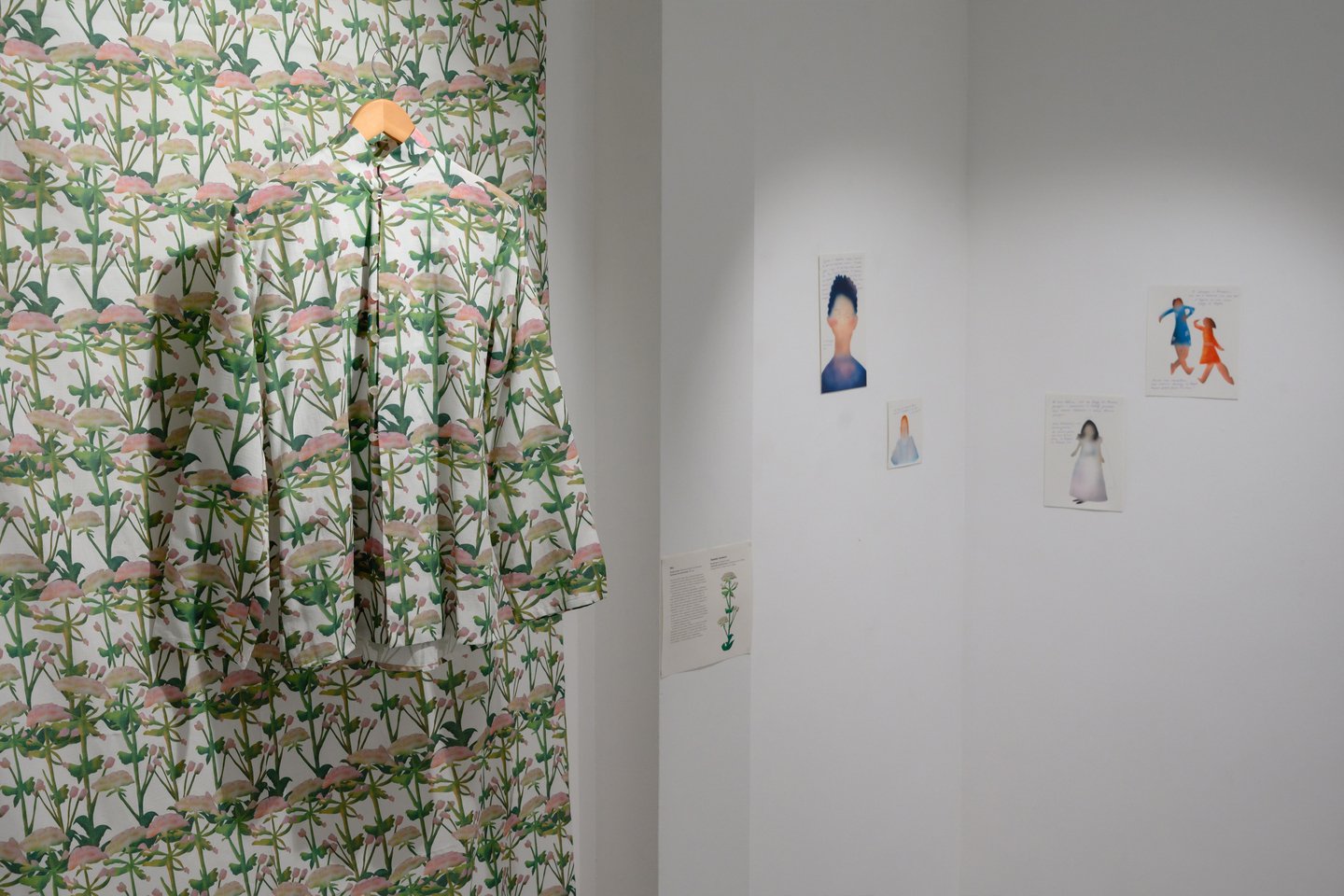
Fragments from the «Displaced Views» gallery
The second work in this hall is the graphic series, «Family Tree of Movements.» It also addresses the theme of family migration stories. It takes the form of an imagined «photo album» whose protagonists are relatives living in different cities and countries, whose connection has nearly been lost.
Excerpts from the «Displaced Views» hall
They are drawn from the stories of my parents and fragments of my own memories, which makes the ruptures in relationships and connections visible.
Fragments of the «Displaced Views» hall
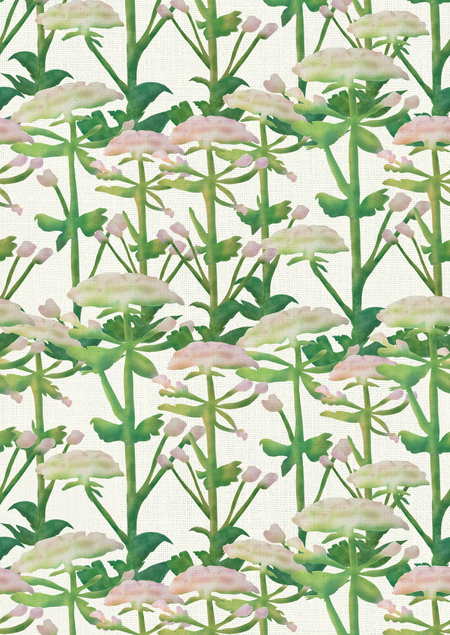
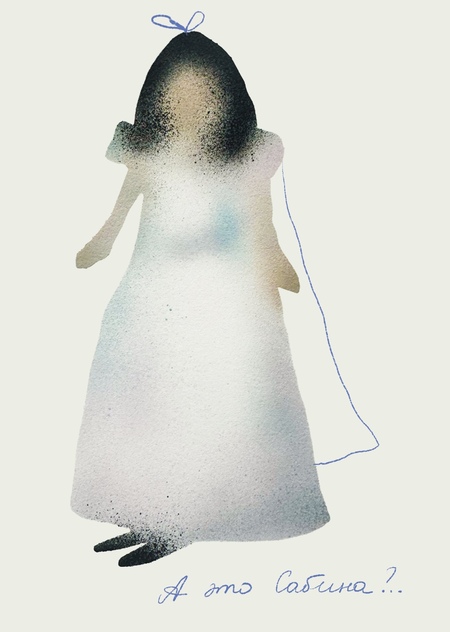
The projects «Displaced Species» and «Kinship Tree of Movements»
This part of the project approaches the home as a hybrid, mosaic space—assembled from disparate elements—fragments of stories, memories, and everyday practices. It is in the home that the gap between myself and the national identities ascribed to me becomes palpable.
In the video manifesto «I have one nationality. I am more than one national identity. Sara is bilingual. She speaks in two languages,» I create a situation where the same story is spoken by me simultaneously in several languages, describing several non-congruent versions of myself that exist concurrently and contradict each other. The work addresses hybrid identity and language as the structure that defines our experience.
The space is constructed through a system of boundary lines that simultaneously divide and connect its constituent parts. These boundaries run throughout the house, marking joints, mismatches, and ruptures. On them are placed phrases about migration, rules, and traditions in different languages. These phrases function as a dispersed voice—one that does not strive for unity, but rather emphasizes the multiplicity and fractured nature of the experience from which both the conceptual home and my identity are composed.
Overall view of the «Dom» studio
The installation begins with a «feast» featuring dishes commonly found in our family: Abazin, Circassian, Russian, and others. This table, like the other elements of the project, is composed of fragments—of various cultural and culinary traditions that coexist over time at one table, forming a hybrid family identity.
«Dom» Hall fragments
A situation of language misunderstanding is unfolding nearby. In the video, my father gives a toast in Abazin. For those who do not understand these languages, it sounds like a traditional toast—words about happiness, prosperity, and respect. However, the toast actually contains criticism of the attitude toward migrants and newcomers in Moscow. Thus, the meaning of the statement is hidden behind a linguistic barrier and is perceived differently depending on who is listening.
Excerpt from the «Home» hall
fragments from the «Home» hall
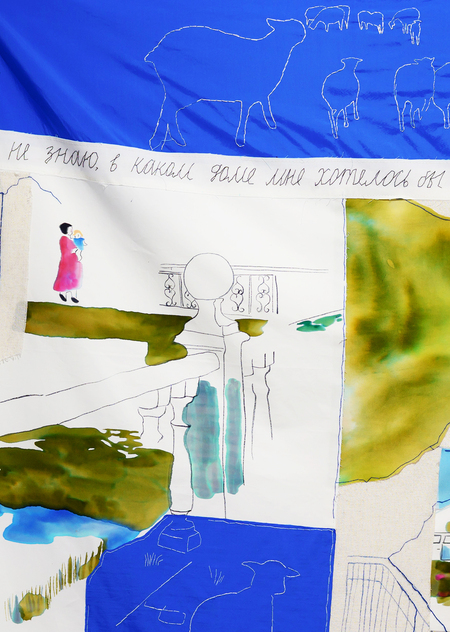
I am also working on a series of textile pieces, drawing inspiration from the windows and fragments of landscapes I have lived in. These snippets of scenery penetrate the space and disrupt it.
«Home» Hall Fragment