The run—the time when fish surface and their scales shimmer in the sun. Anglers know that at this moment, the water begins to sparkle before the fish itself is visible.
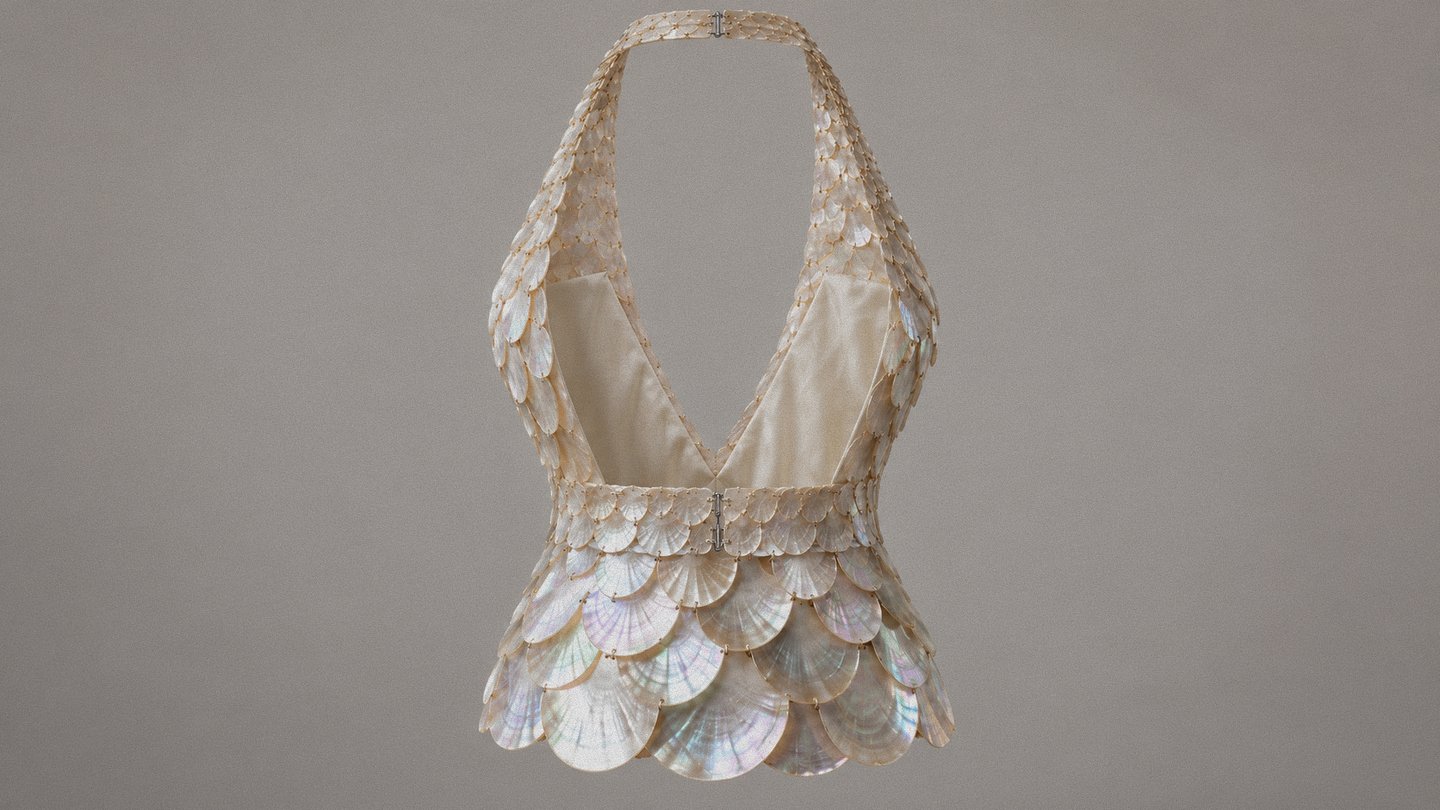
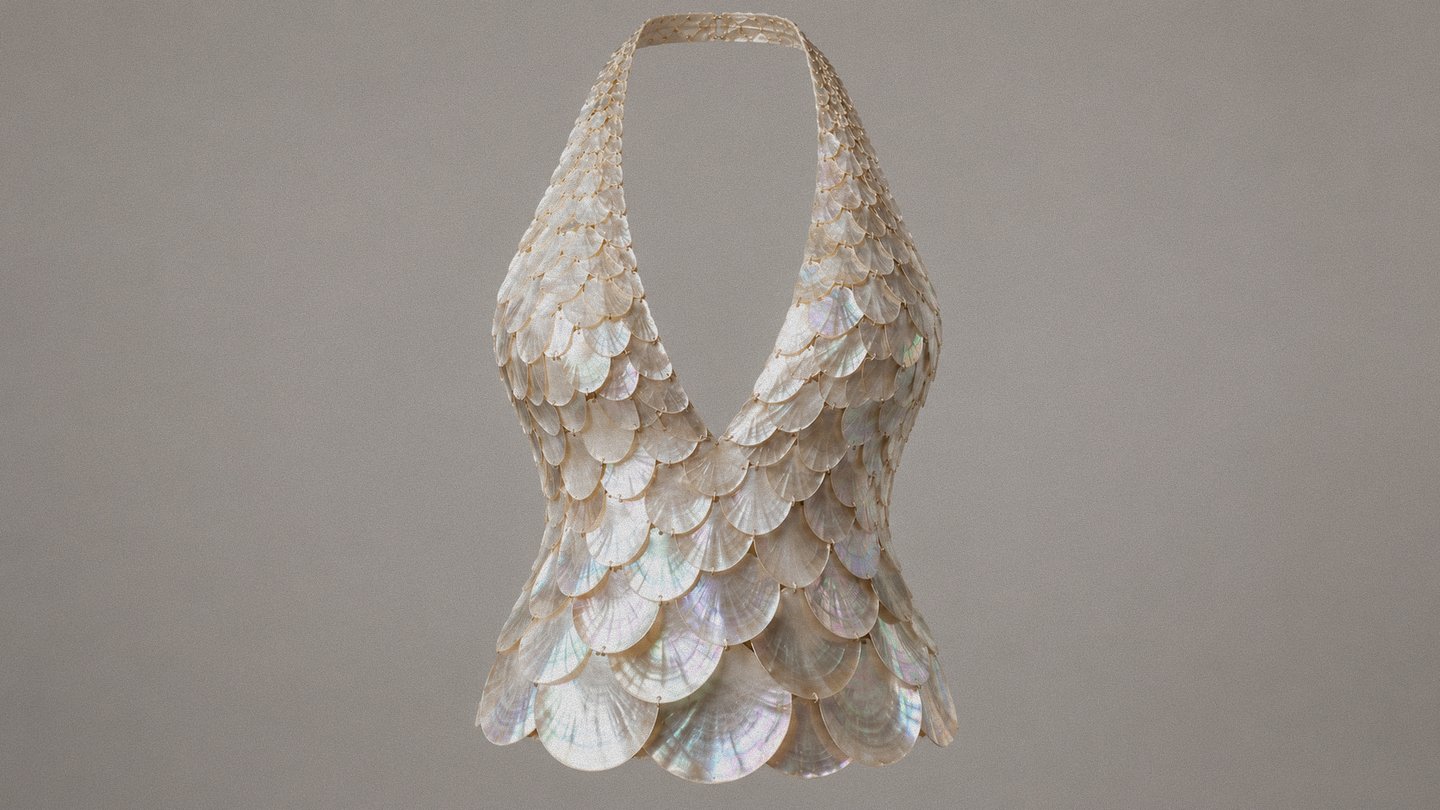
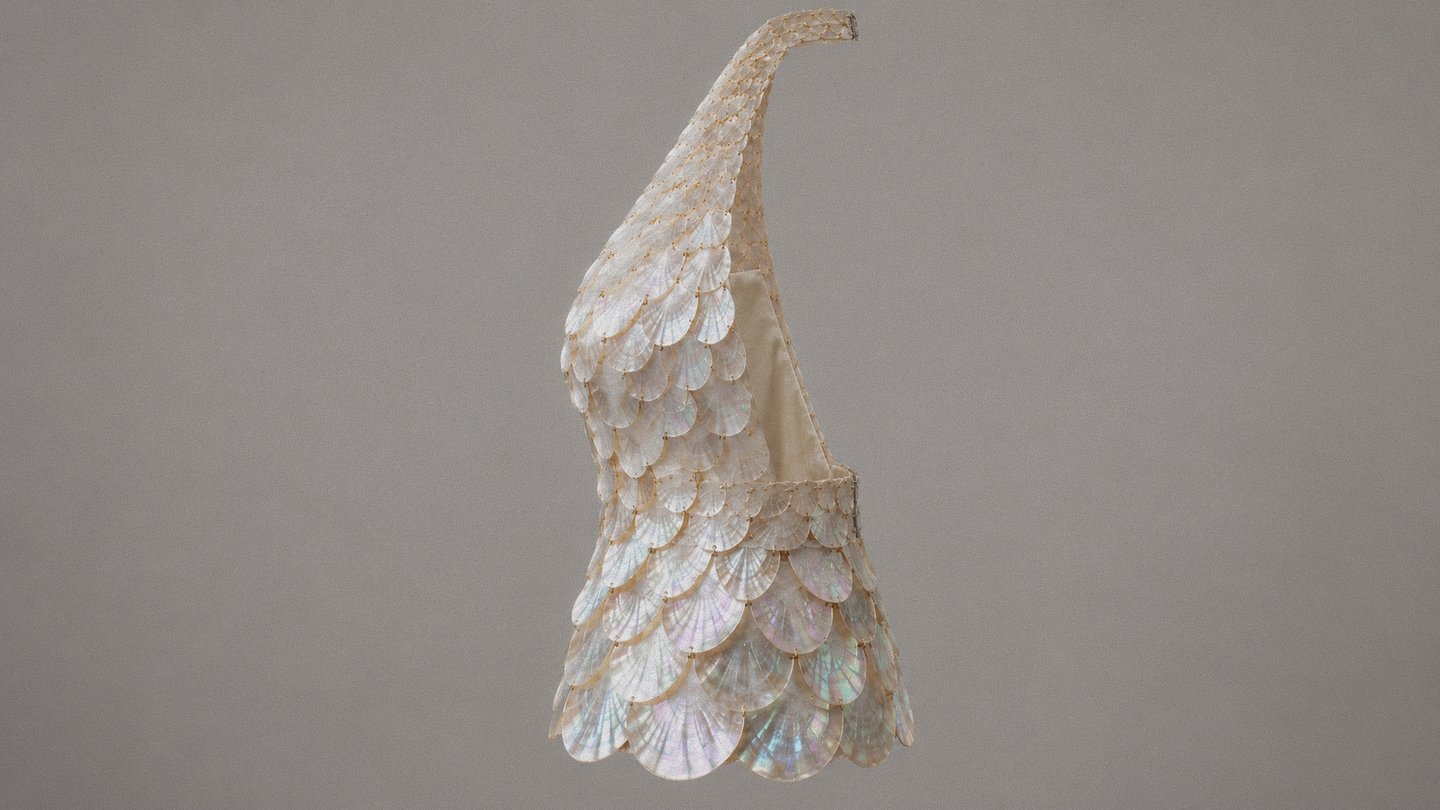
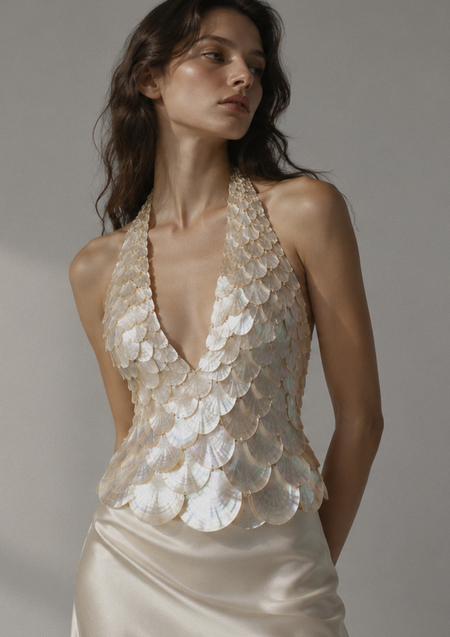
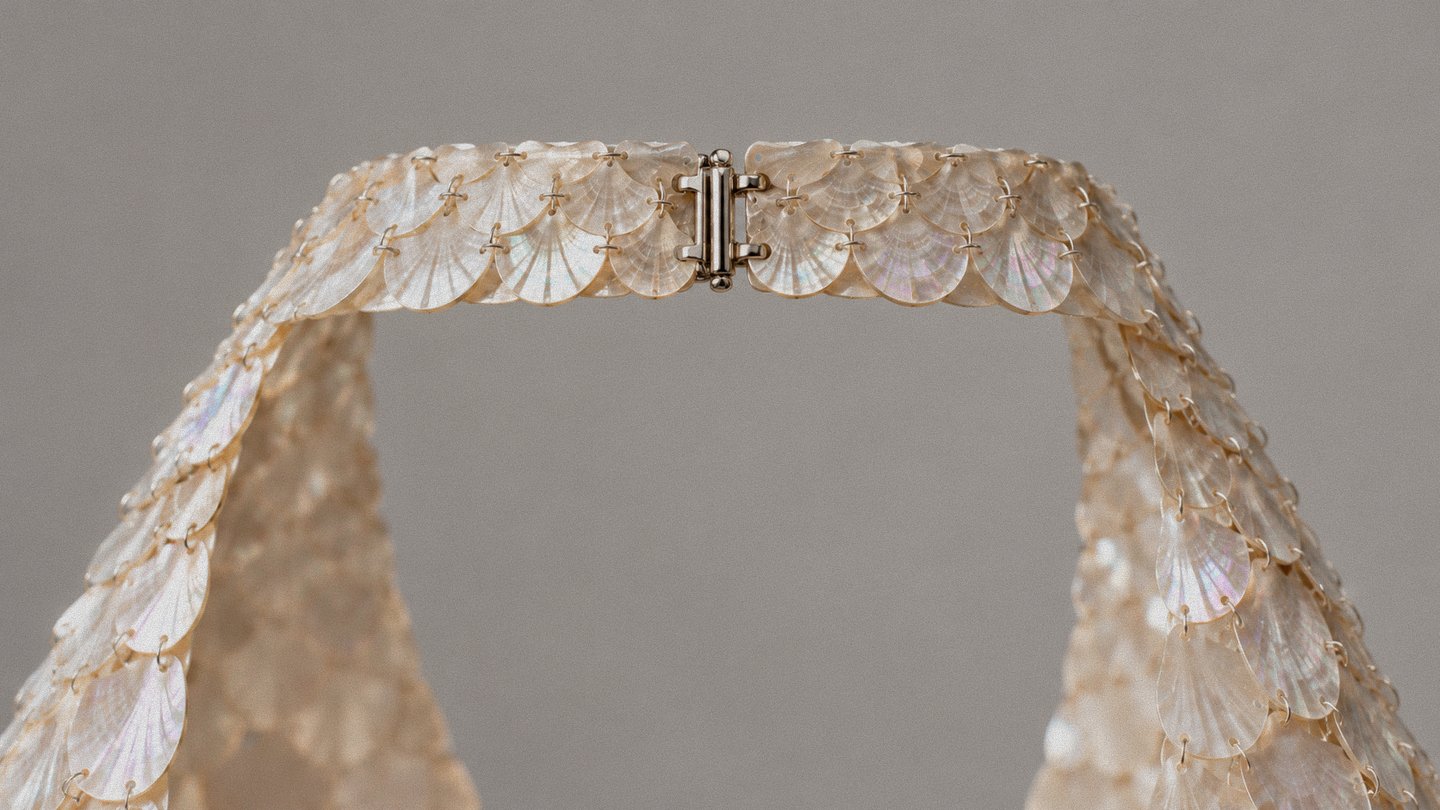
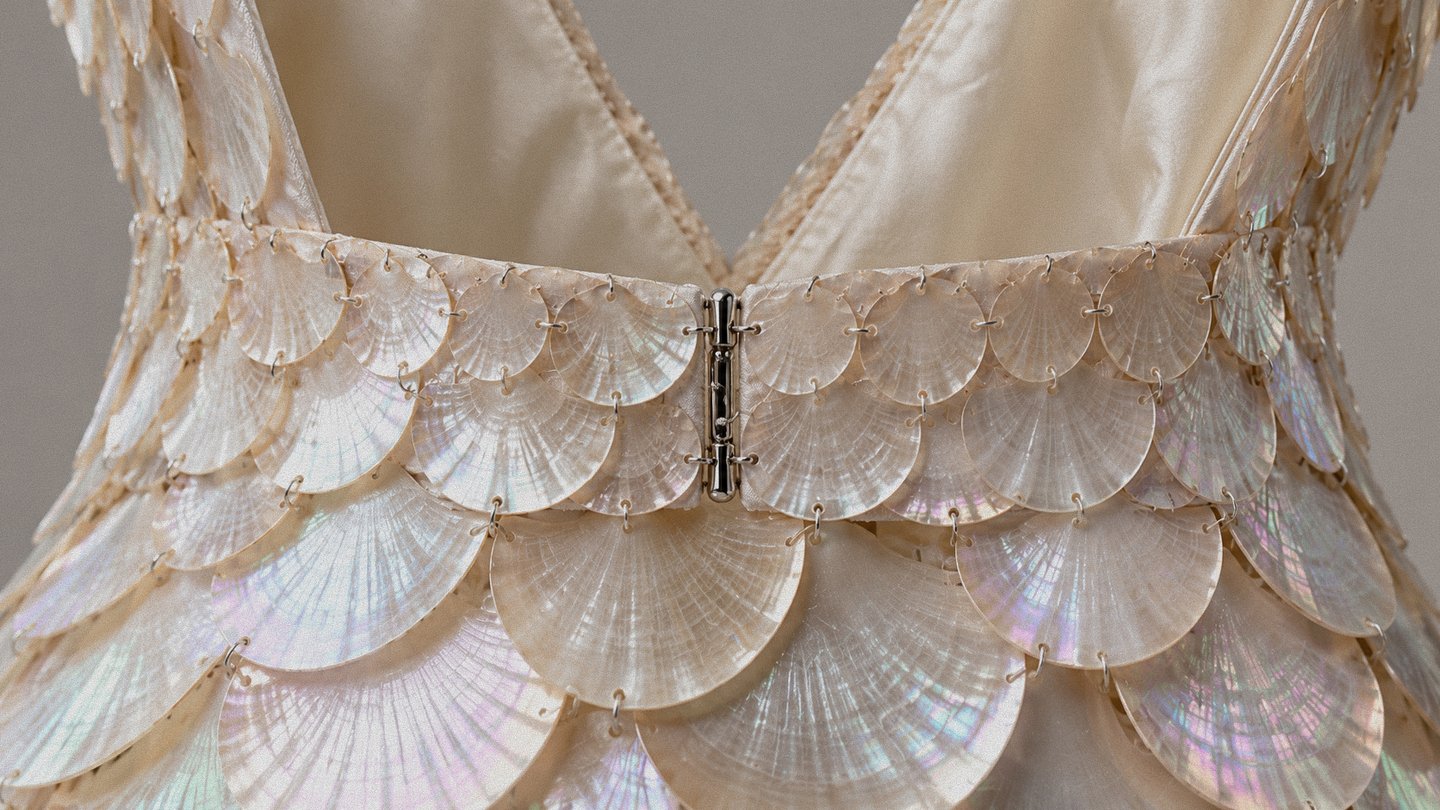
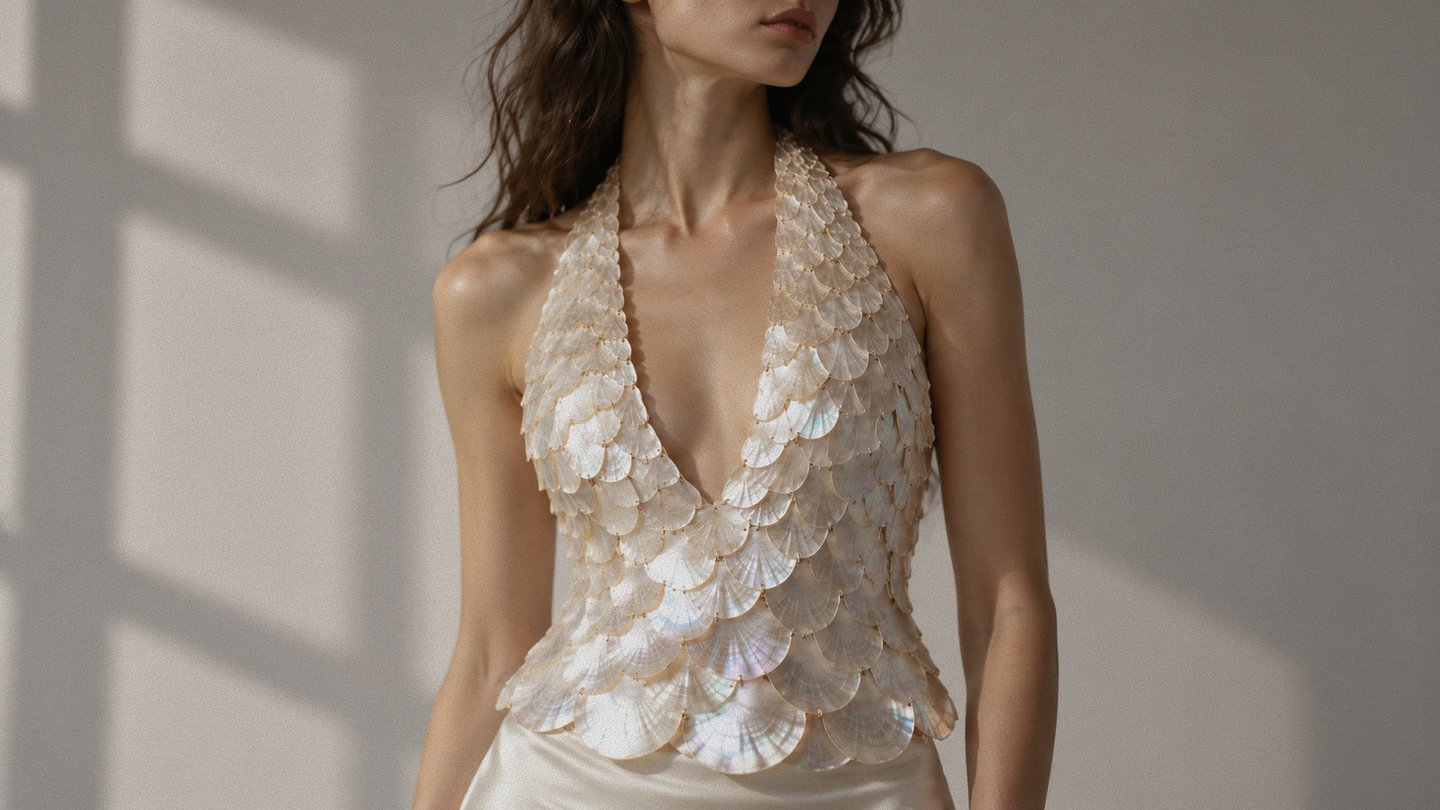
The «Nerest» top is covered in scales made of natural capiz—thin plates of mother-of-pearl shell. The scales are small around the neckline and become larger toward the bottom; the bottom row drapes in a festoon. The back is open to the waist, and the top is supported by a halter strap and a belt.
Parameters:
Type: lined halter top, size S (RU 42–44).
Length from collar base to hem: 54 cm, V-neck depth 30 cm.
Waist circumference: 67 / 70 cm (two loops), bottom edge 88 cm.
Strap width: 3 cm, back waistband width: 6 cm.
Weight: ≈ 680 g.
Scales: natural capiz shell, 6 sizes from 15 to 45 mm, total 539 scales.
Scale attachment: Ø 5 mm ring through an opening in the scale, sewn onto the base.
Base: cotton corset twill with interfacing.
Lining: ivory silk satin.
Structure: spiral boning along the contours, sides, and center back. The weight of the scales is distributed at the waist, not the neck.
Fastenings: two hooks on the waistband, one on the strap.
How to Make It?
Pattern: Sewn from muselin with boning and tried on, with adjustments transferred to the templates. Scales: Cut from Kapiz using a CO₂ laser according to vector contours, and the edges are dulled. Cutting: The base, interlining, and lining are cut according to the 1:1 templates. Base: The base is interfaced and stitched along the contours; boned elastic casings are sewn in. Scales: Attachment points are transferred from the templates; the scales are sewn onto rings in rows from bottom to top, with each row overlapping the rings below it. Assembly: The top is connected to the lining; hooks are sewn onto the waistband and straps.



Status: Technical drawings for the product, 1:1 patterns with scale points for the scales, and files for the laser cutting of the capiz are ready. The next step is creating a muslin mockup to check the fit and conducting a trial cut of the scales.