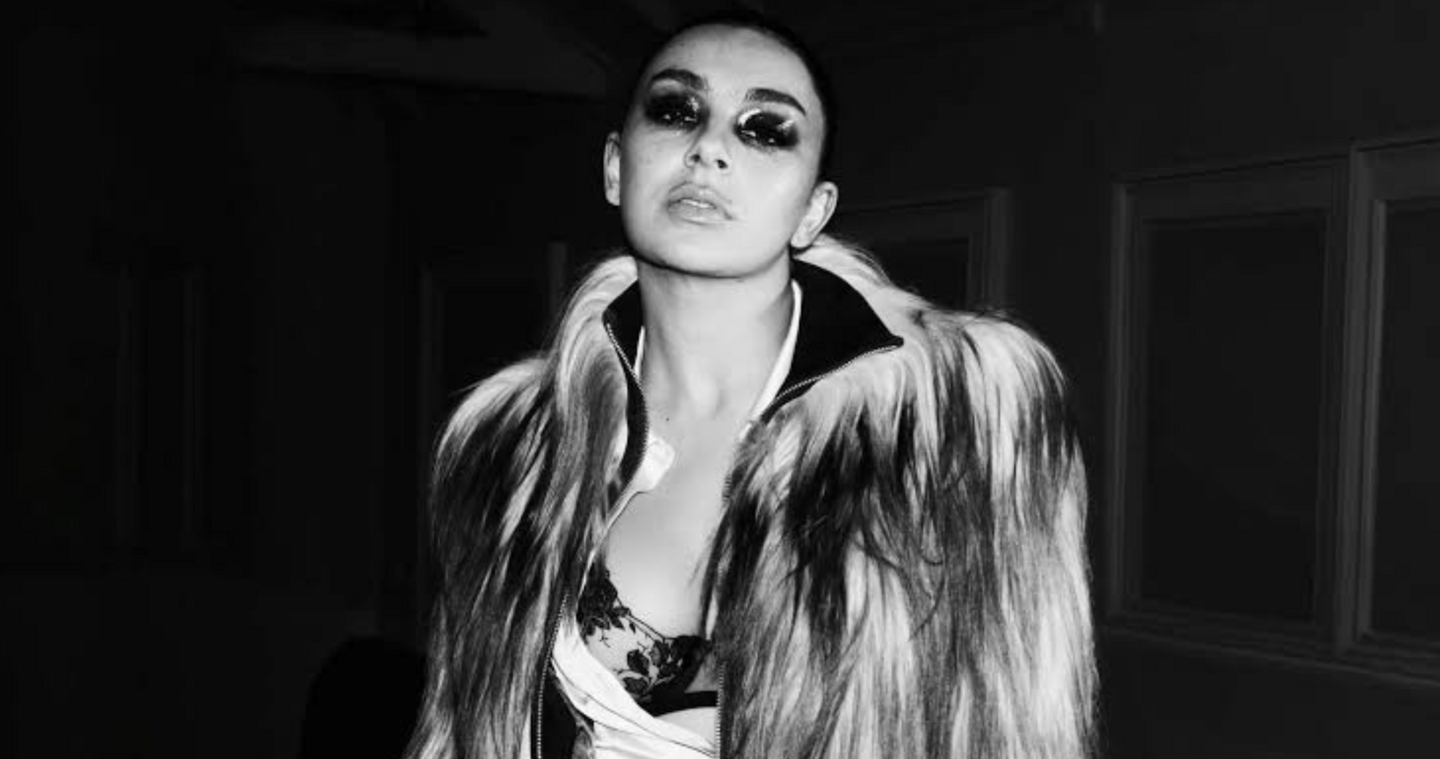
Не брат ты мне. Жизнь Charlie XCX после глобального успеха
Как после феноменального «Brat» найти себя и сохранить искренность
Following the triumph of Charlie XCX’s «Brat,» she could have solidified her success, but instead, she decided to reinvent everything once again—around a new album, anxiety, and freedom from her own image.
Following the phenomenal success of Charli XCX’s «Brat,» she could have taken the most obvious route—recording another album in the same vein. But that is not what she wanted. «All my albums work through contrasts,» she says. «They repel each other.» Recreating «Brat» would have meant turning her own success into a creative trap.
Charli discusses this in a new, extensive interview with Rolling Stone, which takes place against a rather symbolic backdrop: the singer meets with the journalist at Hollywood Forever Cemetery in Los Angeles. Judy Garland, Cecil B. DeMille, and Ди Ди Рамон are buried here, and Charli herself admits that she doesn’t actually believe in ghosts. «In death, everyone is the same, right?» she says. «I think that’s pretty cool.»
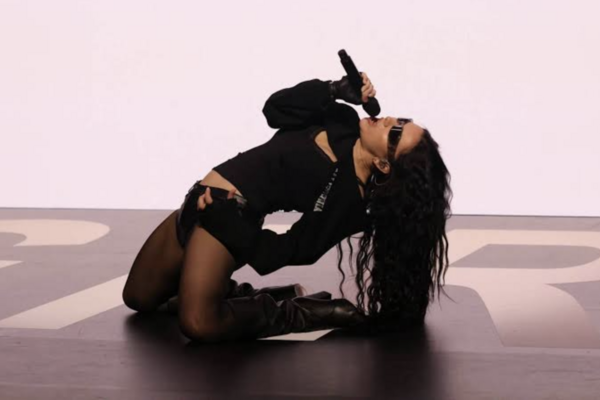

Just days after the release of «Rock Music”—the first single from the new album, „Music, Fashion, Film”—the interview took place. The song confused listeners: after the dance track „Brat, ” Charlie sings over distorted guitars, declares that „the dance floor is dead, ” and promises to make „rockkkkkkkkkkk music.“ The internet immediately decided the next album would be rock.
Charlie herself disagrees with this assessment. „I never said I was making a rock album, ” she remarks. According to her, she doesn’t view genres as strict categories at all. On Music, Fashion, Film, she is simply working alongside A. G. Cook and Finn Keane, without trying to fit the outcome into any musical tradition.

How did Brat influence popular culture?
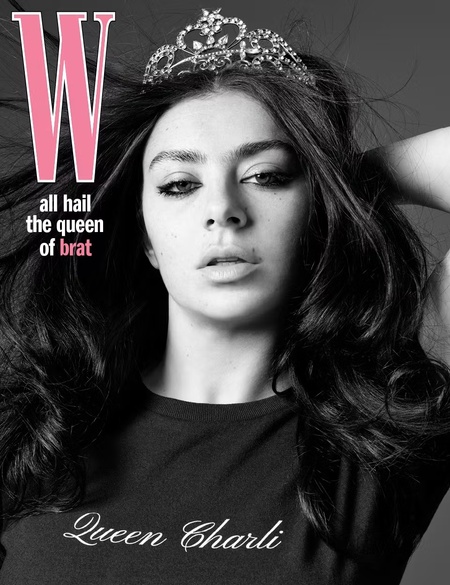
In 2024, «Brat» transcended the boundaries of even the most trend-forward pop album. The lime-green cover morphed into a visual meme, and the album title became a universal cultural code. The phrase «Brat Summer» began to signify an entire lifestyle—a lifestyle that was somewhat chaotic, self-centered, imperfect, yet undeniably confident. Collins Dictionary named «brat» Word of the Year.
The phenomenon quickly extended beyond music. The aesthetic of «Brat» permeated fashion, advertising, and social media. Furthermore, Charlie became involved in an American political campaign: after Charlie posted about Kamala Harris, her image and the lime-green color became adopted by supporters of the then-presidential candidate.
«Brat» also transformed Charlie from a cult figure of the music internet into a mainstream pop star. The album topped charts and numerous year-end best-of lists, earning eight Grammy nominations and three awards. Its influence was so pronounced that even two years later, Charlie must explain that she does not plan on releasing «Brat 2.»
Even the famous line about the dance floor’s death has a more personal meaning. Charlie explains that it speaks primarily to her own experience with «Brat.» She emphasizes that electronic and dance music are currently going through a wonderful period. What frustrates her is not the scene itself, but the attempt to turn every new release into a continuation of the last one.
After «Brat,» Charlie has increasingly faced the consequences of her own popularity. The album transformed from a musical release into a cultural phenomenon: «Brat Summer» emerged, lime green became a meme and a fashion code, the word «brat» entered the dictionaries, and the singer herself became part of an American political campaign. The album was followed by a massive tour, a remix single with Billie Eilish and Lorde, and three Grammy Awards.
Charlie is now trying to move away from that image. She says that her new material is even more personal than Brat, but she wants to explain it to journalists less and less. At one point, the interviewer asks about the meaning of the song «No One Lasts Forever, ” and the singer halts the discussion: she no longer wants to discuss the meaning of her own songs.
This is not just due to irritation. Charlie shares that she has been experiencing serious mental health struggles lately. She is spending less time on social media, trying to see a psychotherapist regularly, and wants to spend more time with her husband, George Daniel, and friends. „To be honest, I am in the worst psychological state of my life right now, ” she admits.
Publicity, once a crucial element of her artistic method, is now a source of anxiety. Consequently, Charlie plans to give fewer lengthy interviews and instead hold small meet-and-greets with fans. She prefers to connect with them in person rather than through the endless stream of social media posts and comments.
Nevertheless, music remains the primary way she processes what is happening. This is especially evident in her discussion of Sophie—a Scottish producer with whom Charlie worked extensively, whose death in 2021 continues to affect her deeply. «I lost a person who completely changed my life, ” she says, struggling to hold back tears. According to her, music helps her navigate the emotions surrounding that loss.
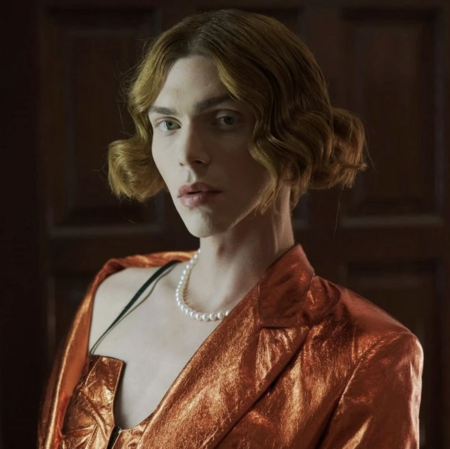
Who is Sophie?
Sophie is a Scottish producer and musician, one of the most influential figures in experimental pop music of the 2010s. She worked with Charli XCX, Madonna, Kim Petras, and other artists, blending deliberately artificial synthesizers, hyper-processed vocals, and an extremely vibrant pop aesthetic. Her tracks helped shape what would later be called hyperpop—though Sophie herself never particularly sought to fit into genre boundaries.
For Charli XCX, collaborating with Sophie became a pivotal moment in her career: together they created «Vroom Vroom, ” a 2016 release that is now considered one of the foundational works of early hyperpop. Sophie passed away in January 2021 after accidentally falling from a cliff in Athens. She was 34. After her death, it became especially clear just how profoundly her ideas influenced contemporary pop music—from the sound of Charli XCX and Kim Petras to an entire generation of internet pop. For Charli, Sophie was not just a collaborator, but a close friend who „completely changed her life.“
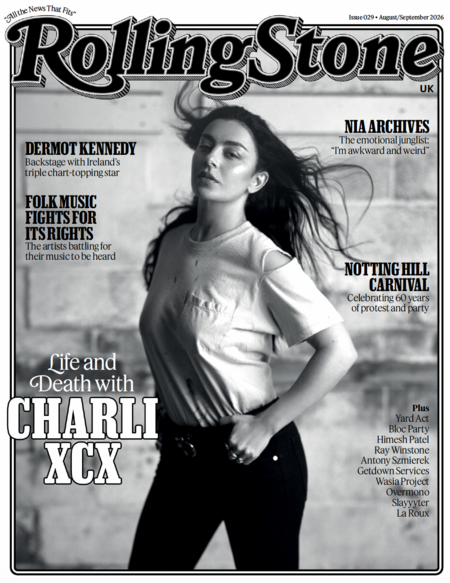
Beyond music, Charlie is becoming increasingly interested in film. She actively maintains a Letterboxd account, writing about the films of Antonioni, Lynch, and Jean Rollin, has appeared in the independent film Erupcja, and is working on several new projects. For the Rolling Stone cover, she personally suggested photographer and director Gus Van Sant—she wanted something more simple and honest, rather than just another glossy fashion shoot.
Her cultural interests lack any specific system: Velvet Underground, mainstream cinema, electronic music, and Hollywood blockbusters coexist. Charlie has long expressed a desire to record a «Lou Reed album, ” and John Cale appears on her new release. Yet, even here, she does not want journalists to draw overly obvious connections: when asked if she hears the influence of Velvet Underground in the new music, she replies that during the recording process, she tries not to think about other musicians at all.
In the interview’s conclusion, Charlie returns to the theme that runs through the entire conversation—the end of life. „My life will end, as the life of every one of us will, ” she says. „I want to live it exactly as I want, because there will be no second chance.“