I. Project Concept
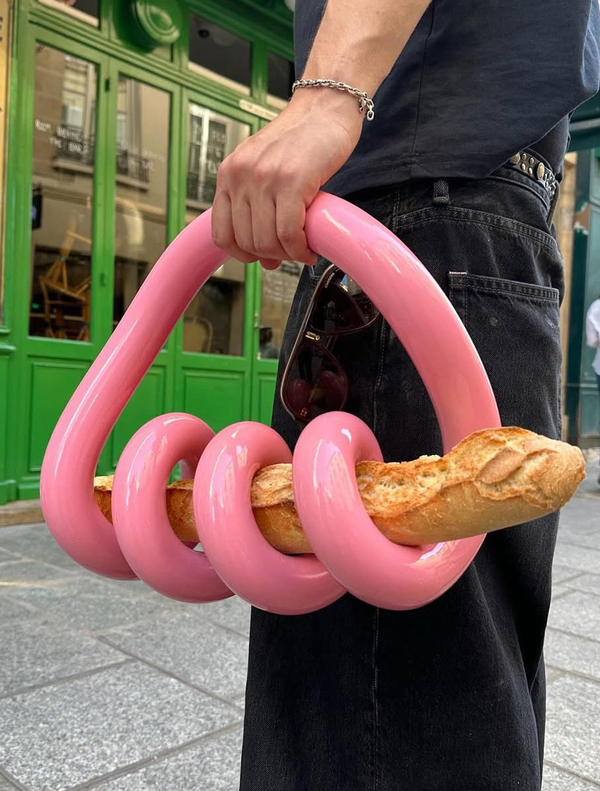
NEEDLESS—a brand of dopamine objects at the intersection of design, absurdity, and art. It creates items with «illogical» mechanics that are grasped in a second and trigger an instant urge to buy. These are not utilitarian objects; they are impulse luxury—a status gesture for those who already have everything. NEEDLESS constructs a recognizable visual language by not solving problems, but by generating desire without reason.
Potential Market Volume
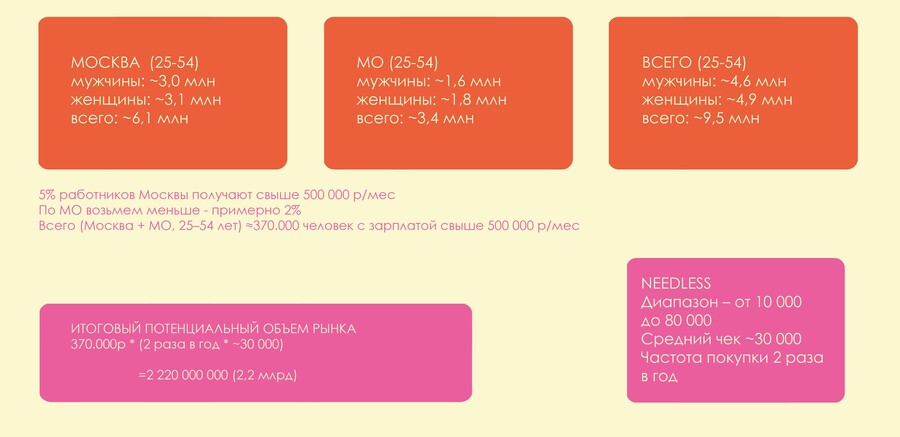
The total potential market size is 2.2 billion rubles.
The data was compiled using statistics on the number of men and women in Moscow and the Moscow region earning over 500,000 rubles and aged between 25 and 54.
Industry Analysis
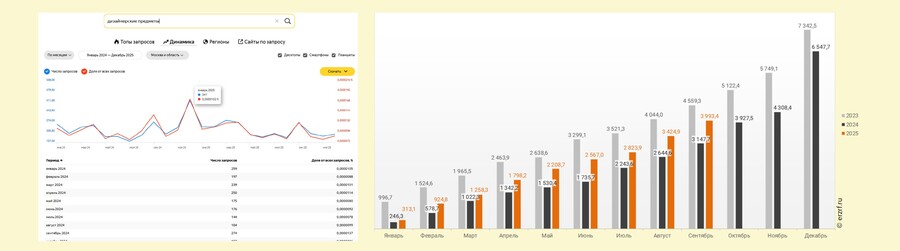
Statistics on relevant Yandex Wordstat queries and housing input dynamics in Moscow, cumulative total, in thousands of square meters.
The home decor market was valued at $216.291 million in 2023 and is projected to reach $394.715 million by 2033. The global market is expected to grow at a rate of 6,2% during the forecast period.
The global interior design market was estimated at $136.12 billion in 2023. It is also projected to grow at a CAGR (Compound Annual Growth Rate) of 5,29% from 2023 to 2033. The global interior design market is expected to reach $228.01 billion by 2033. The real estate market is also growing, indicating the relevance of this project.
Competitive Landscape
The brand of non-functional dopamine design objects, NEEDLESS, has no direct competitors because no other brand holds a similar positioning. However, the brand has numerous indirect and tangential competitors, as other goods and services represent factors to which our potential customer might respond.
A detailed analysis of indirect and tangential competitors was conducted, which allowed for the most accurate definition of the project’s positioning and USP.
Thus, the main competitors include design item brands, interior design agencies, designer apparel and accessories, ceramics and home goods stores, concierge services, contemporary art galleries, collectors, and artists.
User Scenario
The user journey describes the key touchpoints between the potential buyer and the brand.
Target Audience
The primary target audience for the NEEDLESS brand includes people who: — are visual learners — crave the feeling of «I saw it first» — purchase dopamine — love strangeness without explanation — value inappropriateness as a style — are people who have everything
Future expansion of the target audience includes two more segments: collectors and corporate professionals who are tired of the «proper» and dull life and want to add some color to it.
Empathy Map
I conducted an analysis using the «empathy map» method, which allowed me to identify the main pain points and needs of the audience so I could most accurately adjust the product to the brand’s target audience.
Brand audience—people from creative fields for whom consumption is a form of self-expression, emotional regulation, and the formation of a micro-community. It is important for them to stand out and demonstrate taste; they are tired of generic and repetitive items. They live in constant visual noise and fast-changing trends, so they seek objects that provide a sense of uniqueness, personal discovery, and a «wow» reaction.
The key motivation is dopamine, aesthetic pleasure, and the right to «useless» beauty. They make impulse purchases, share their finds on social media, and affirm their identity through their belongings.
Empathy Map
Consumption Trends
OEP, Taxes, OKVED
The organizational and legal form chosen was Individual Entrepreneurship. Future plans include transitioning to an LLC.