From the Avant-Garde to Digital: The Visual Evolution of Murzilka.
Concept

The research concept, «Murzilka: A Visual Biography of Soviet Childhood, ” aims to study and analyze the transformation of the visual image of the character Murzilka within the context of historical, cultural, and artistic shifts across the Soviet and post-Soviet eras.
Particular attention is paid to the relationship between the artist’s identity and the magazine’s artistic language, the continuity of visual decisions, and the influence of the historical context on the character’s formation. The study examines the magazine covers as the primary point of visual analysis, alongside the interior illustrations where Murzilka interacts with the reader, shaping perceptions of childhood, the surrounding world, and the values of its era.
A dedicated part of the research involves analyzing how the contemporary generation perceives the image of Murzilka: whether the character retains its connection to the Soviet era, whether it is still recognizable today, and whether it can still function as a visual symbol of childhood.
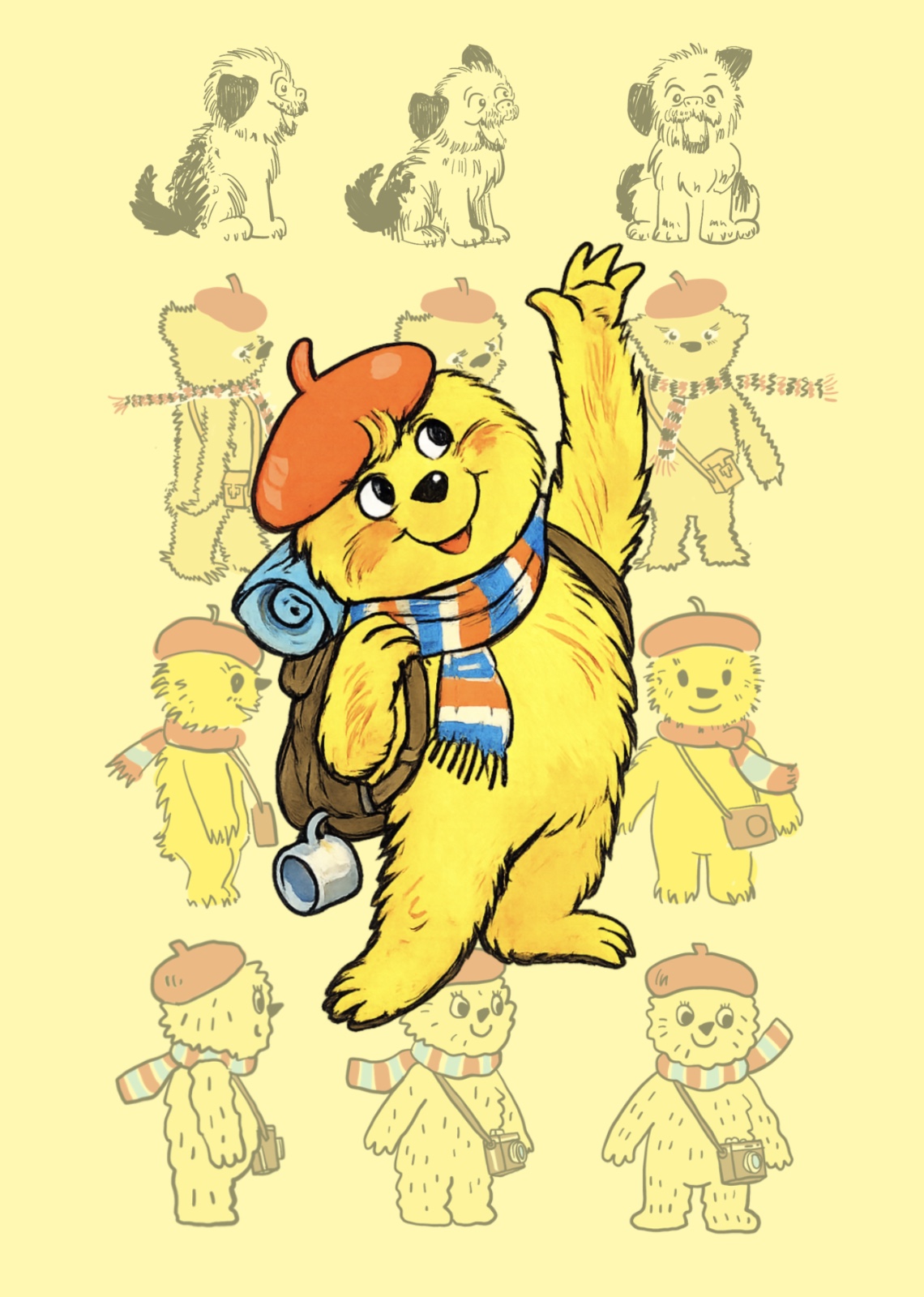
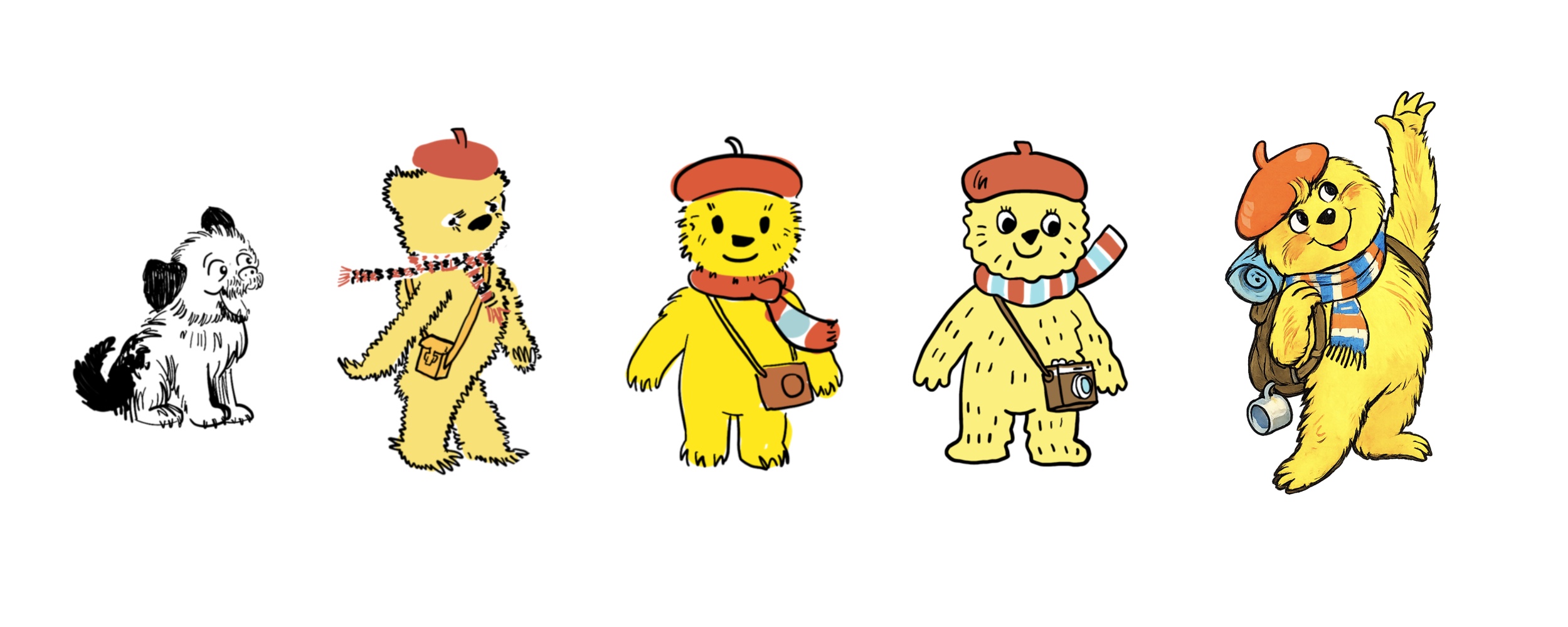
The study also utilizes original illustrations created based on an analysis of the artistic techniques and stylistic features of the „Murzilka“ magazine’s artists. These works serve as a visual reconstruction of the character’s various evolutionary stages, helping to clearly trace the changes in the magazine’s artistic language throughout its history.
Key Research Elements
In the journal’s history, it is divided into several key periods that reflect shifts in Soviet visual culture:
1924–1930 — the birth of Murzilka and the influence of the avant-garde; 1931–1936 — a period of the character’s temporary disappearance and the search for a new visual language; 1937–1955 — the creation of Murzilka’s canonical image as a Soviet character; 1956–1970 — the era of the Thaw and the humanization of childhood; 1971–1991 — Murzilka’s transformation into part of late-Soviet mass culture; 1992–present — the reinterpretation of the character in the post-Soviet and digital landscape.
Through the image of Murzilka, the study examines not only the history of a single character but also the visual evolution of Soviet childhood as a cultural phenomenon.
The Birth of Murzilk: Avant-Garde and the New Soviet Child (1924–1930)
Fedorov-Davydov, A. A. Murzilka’s Adventures, a Remarkably Sprightly Little Dog: A Novella / A. A. Fedorov-Davydov; Illustrations by K. P. Rotov. — 2nd ed. — Moscow: Rabochaya Gazeta, 1929.
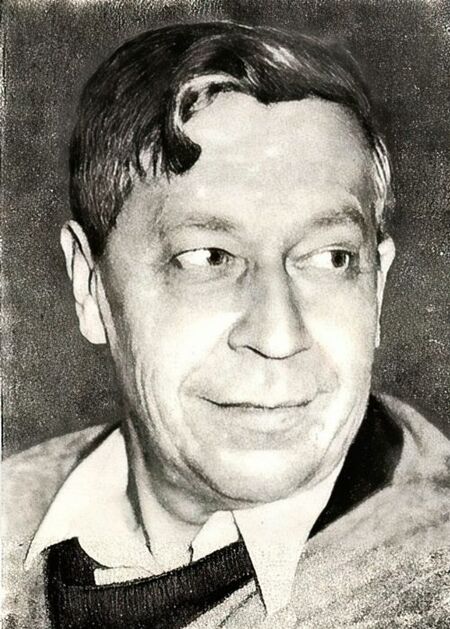
Konstantin Rotov established the early visual language of «Murzilki, ” rooted in the aesthetics of Soviet avant-garde and magazine caricature. His works were characterized by Constructivist composition, the integration of typography into the image, dynamic line work, and grotesque character modeling. Unlike the later, stabilized version of Murzilki as a fixed character, Rotov’s early Murzilki was more chaotic, vibrant, and experimental—a reflection of the cultural atmosphere of the early 1920s USSR.
(on the left—a photographic portrait of Konstantin Rotov)
Murzilka. 1924. No. 01: Monthly magazine for young children.
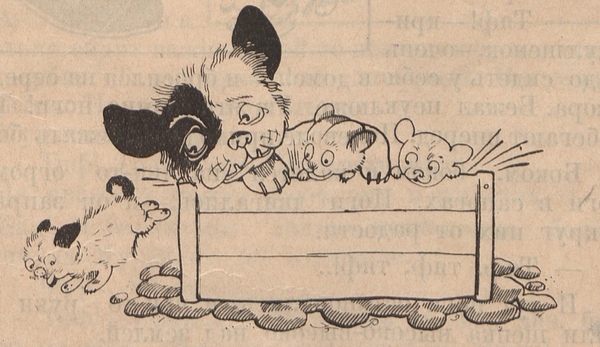
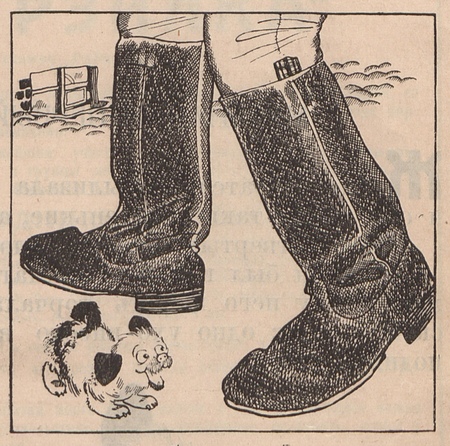
Murzilka. 1924. No. 01: Monthly Magazine for Young Children (page fragments).
Murzilka. 1924. No. 01: Monthly Magazine for Young Children (Page Fragment).

Murzilka by Konstantin Rotov is depicted as a small, fluffy puppy with an elongated body, short legs, and tousled fur. The character is characterized by asymmetrical ears, a large snout, expressive round eyes, and a lively, slightly clumsy gait. The drawing’s contour is uneven and quick, and the forms are deliberately simplified and grotesque. The puppy is often shown in motion, with vivid poses and active expression, which creates a sense of chaotic energy and naturalness in the character. This is the most realistic version of Murzilka—essentially a regular puppy, almost completely devoid of anthropomorphic traits.
Murzilka. 1931. No. 04-05: The monthly children’s magazine of the «Worker’s Newspaper.»
The Disappearance of the Hero: The Search for the «Right» Image (1931–1936)
The period from 1931–1936 marks a transitional phase in the history of the magazine «Murzilka.» During this time, the early image of Murzilka, created by Konstantin Rotov, gradually fades from the magazine’s pages. The shaggy puppy with its caricatured plasticity and chaotic expressiveness no longer meets the new artistic demands of the era.
The early 1930s are tied to Soviet culture’s rejection of the avant-garde experimentation of the 1920s. Constructivist graphics and grotesque give way to socialist realism, which focuses on visual clarity, discipline, and the creation of «correct» images of Soviet childhood. Illustration becomes more realistic and ideologically precise.
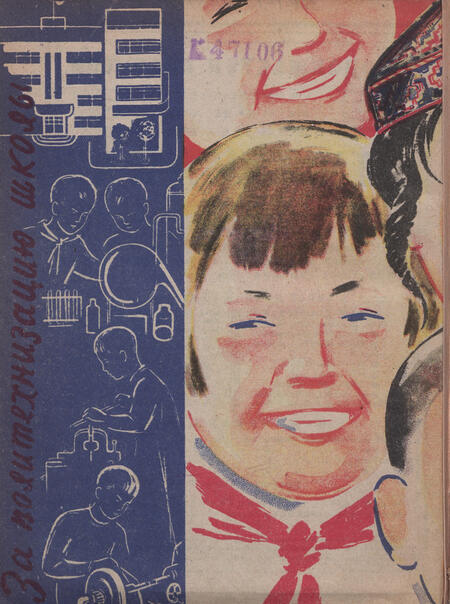
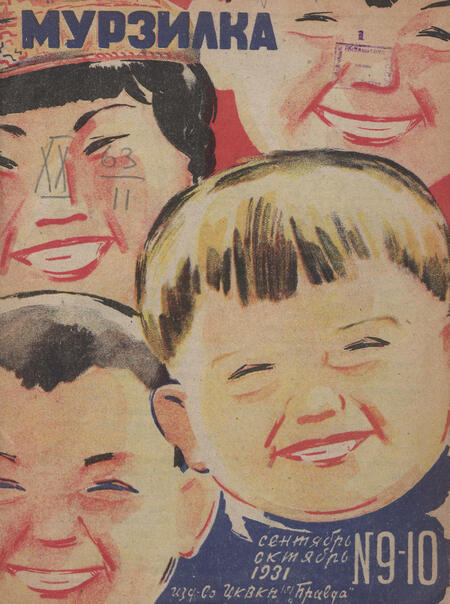
Murzilka. 1931. No. 09–10: The monthly children’s magazine of the «Workers' Newspaper.»
Murzilka. 1934. No. 01: Monthly magazine for young schoolchildren.
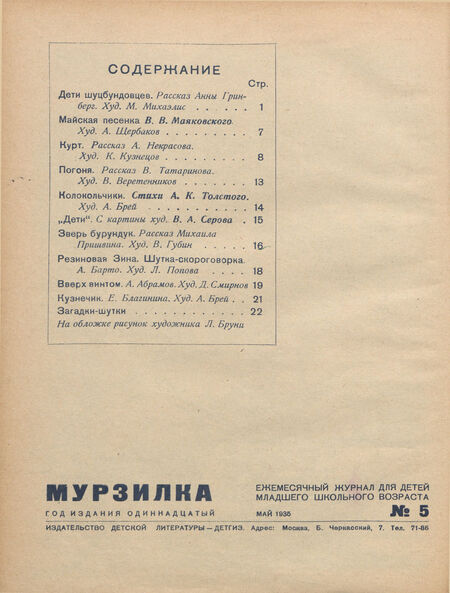
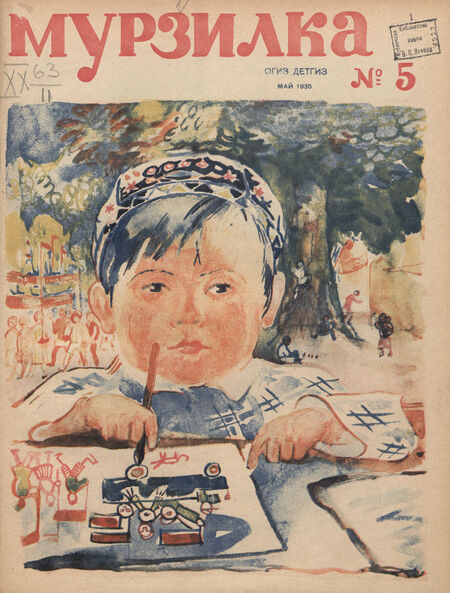
Murzilka. 1935. No. 05: A monthly magazine for young elementary school children.
Murzilka. 1936. No. 06: Monthly magazine for younger school-aged children.
Canonical Murzilka: The Stalinist Mascot of the USSR (1937–1955)
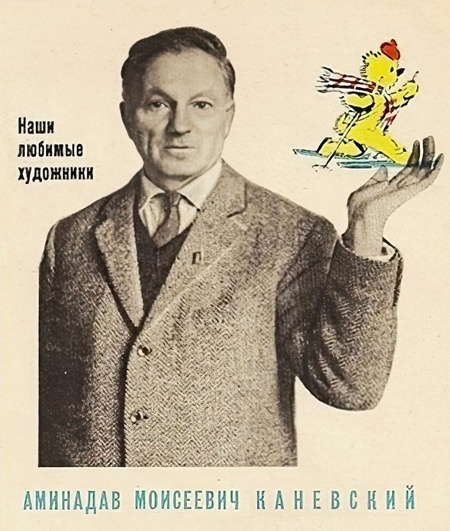
Aminadav Kanevsky became the artist who established the canonical image of Murzilka, which subsequently became the journal’s primary visual symbol. In 1937, he created the new character—a yellow, fluffy creature wearing a red beret and scarf with a camera slung over its shoulder. Unlike the early Murzilka by Konstantin Rotov, Kanevsky’s image was more stable, recognizable, and oriented toward mass appeal.
Kanevsky’s Murzilka evolved beyond being merely a journal character; it became a conduit for Soviet childhood—a friendly observer of the surrounding world and a participant in the events of its era.
It was precisely Kanevsky’s visual solution that forged the image of Murzilka that persists in the journal to this day, remaining one of the most recognizable characters of Soviet children’s culture.
(Left—a photographic collage depicting Aminadav Kanevsky and the Murzilka character he created)
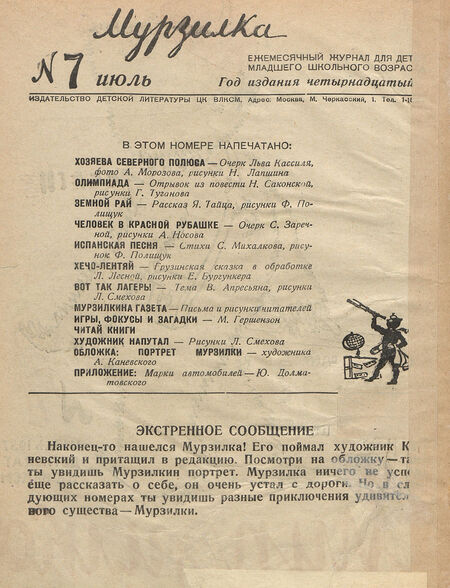
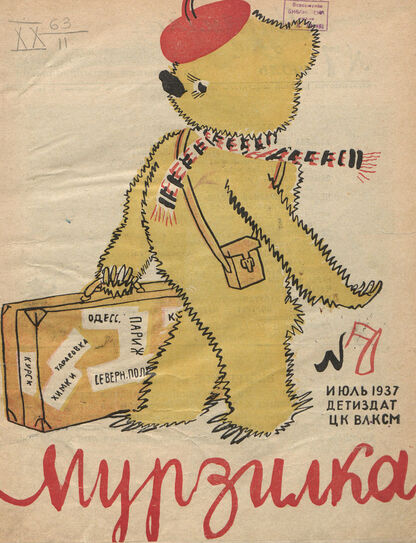
Murzilka. 1937. No. 07: Monthly Magazine for Young Elementary School Children.
Murzilka. 1938. No. 12: A monthly magazine for primary school children.
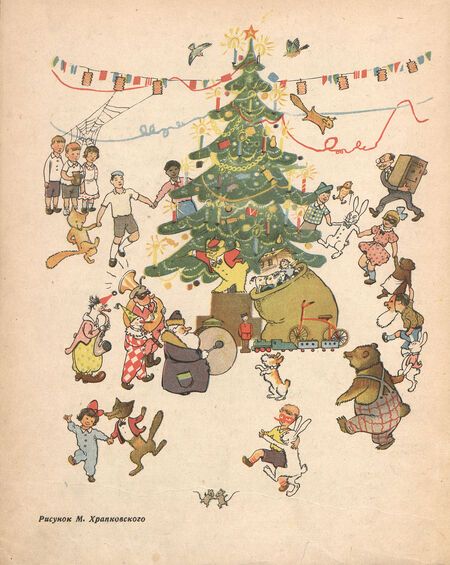
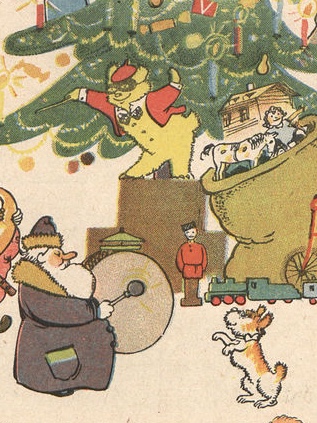
Murzilka. 1938. No. 12: Monthly Magazine for Young Schoolchildren (page fragment).
Murzilka. 1938. No. 12: Monthly Journal for Young Schoolchildren (page fragment).

Murzilka Aminadava Kanevsky is depicted as a small, fluffy yellow creature with a rounded body, large expressive eyes, and soft anthropomorphic features. His visual identity is primarily shaped by a red beret, a striped scarf, and a camera slung over his shoulder. The character possesses a simple, instantly recognizable silhouette and is perceived as a friendly, fairytale hero.
Unlike the earlier Murzilka Rotov, he no longer resembles a typical animal. Kanevsky creates the image of an anthropomorphic, semi-animal being with human traits, devoid of any specific biological affiliation. This ambiguity allows the character to become universal and emotionally accessible to a young audience.