It is often assumed that the algorithm is impartial. It has no fatigue, mood, or prejudice—it simply looks at the face and names who is before us. The technology seems objective and novel.
An algorithm doesn’t deliver a verdict on its own—it learns from humans. It is trained on human judgments and merely repeats them, lending the appearance of precise calculation to bias.
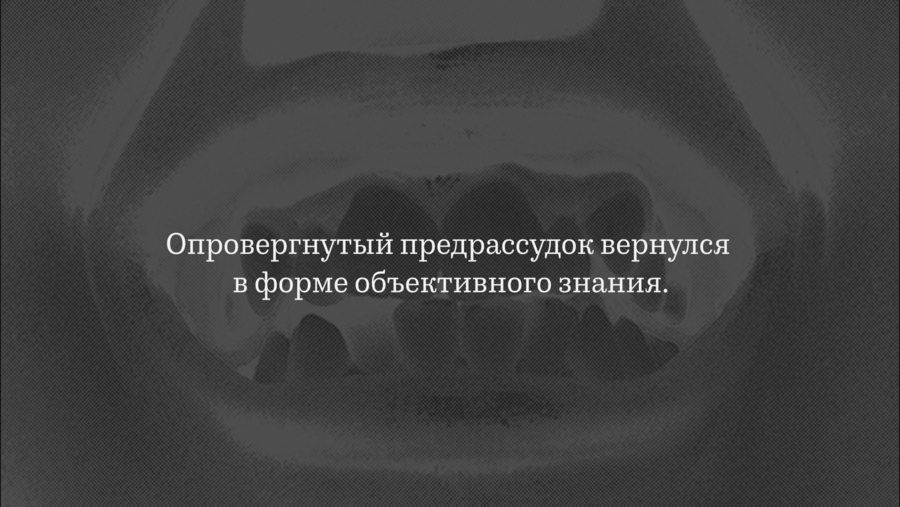
And the very idea of reading a person’s face is not new. This is physiognomy—a «science» that was refuted a century ago. The same logic that measured faces and delivered judgment for centuries has simply changed its packaging.
Step 3. Breakage
Показать ограничения, ошибки или неполноту стереотипа
Show where and why the conventional understanding breaks down or proves insufficient. Use facts, examples, and logical contradictions. Don’t transition to a new perspective too quickly—let the audience experience the moment the paradigm shatters.










Step 4. A New Perspective
Предложить более точную, широкую или глубокую интерпретацию
Propose a new framework for understanding that explains both the stereotype and its limitations. The new perspective should feel more encompassing and explanatory, rather than simply oppositional. A model or diagram that reconstructs the whole picture works well.









Step 5. Final
Закрепить изменение взгляда и новую интерпретацию
Capture a fresh perspective in a concise and clear statement. You may return to the original stereotype and show how it is now read differently. The conclusion must solidify the intellectual shift and leave a sense of clarity.