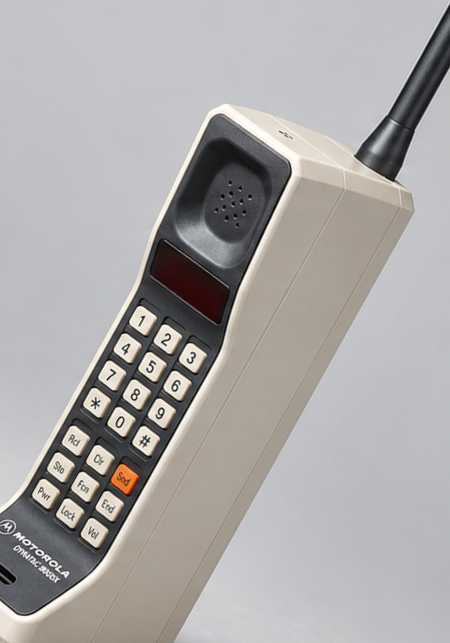
Motorola—an American company founded in 1928. It produced radio receivers and radio communication equipment, and later became one of the pioneers of mobile telephony. Its experience in creating radios and car phones helped the company develop the DynaTAC 8000X portable cellular phone.
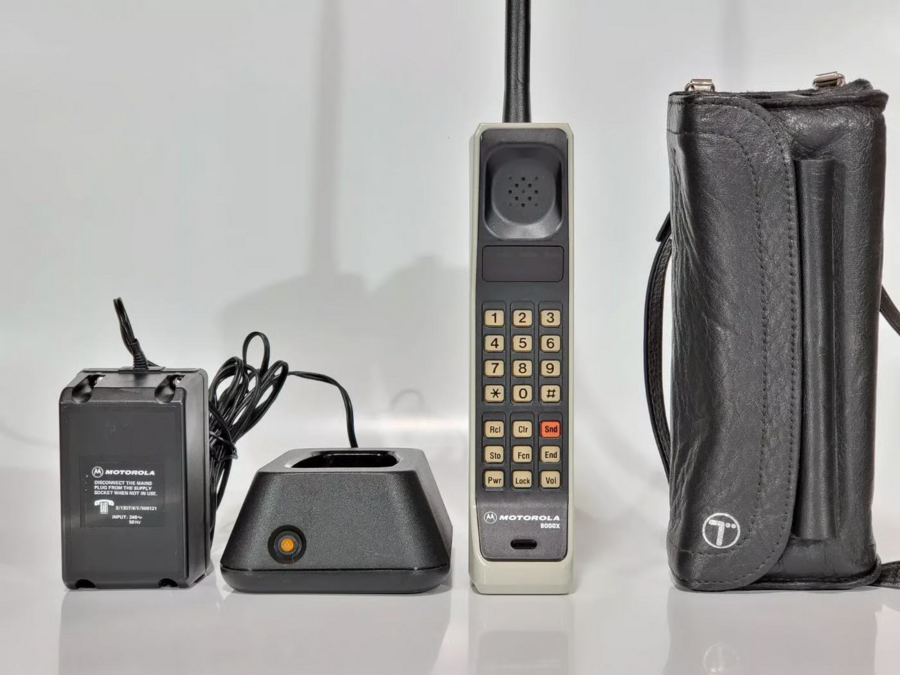
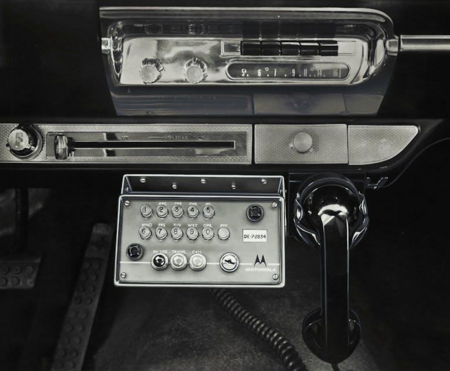
Fixed and mobile devices tethered conversations to a specific location. Motorola proposed a different scenario: the person takes the phone with them.
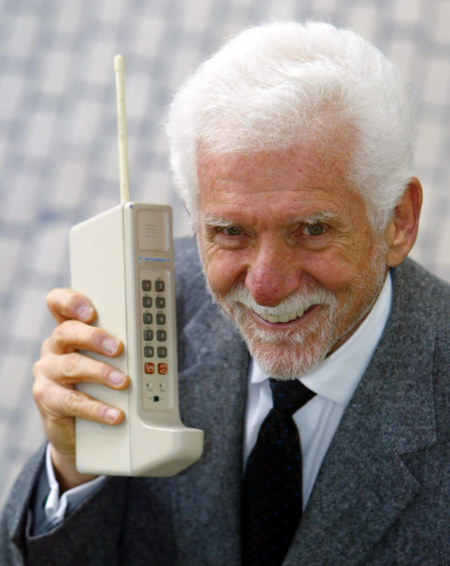
Martin Cooper headed the development team. Rudolf Krollop created the design, while Donald Linder managed the engineering aspects.
From Prototype to Market
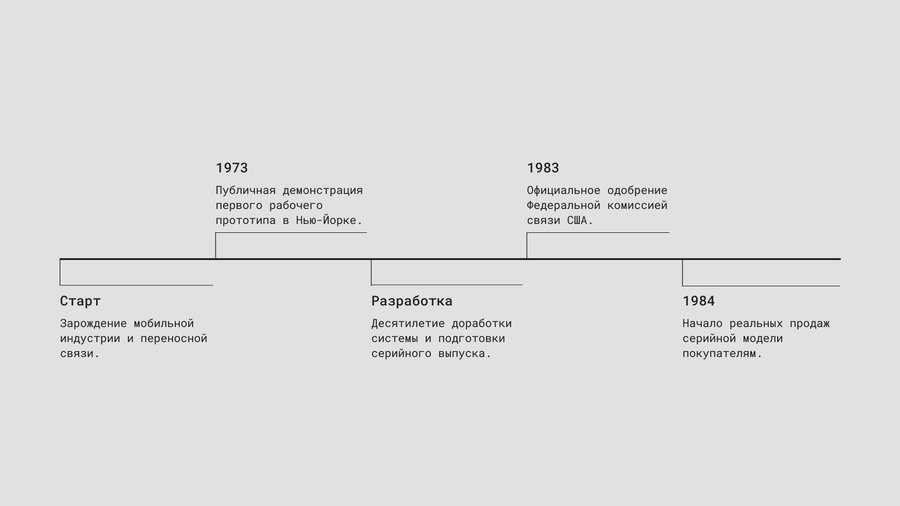
Motorola Philosophy: Connection Follows the Person
In the 1970s and early 1980s, Motorola developed the concept of communication accessible to people on the move. Experience gained from creating radios and car phones allowed for the transfer of professional technology into a personal, portable device. Developing this required collaboration between designers and engineers: the casing had to fit comfortably in the hand, and the electronics had to be housed inside it. The DynaTAC embodied this approach; its main advantage was the ability to stay connected outside of a car or office.
Origins of Form
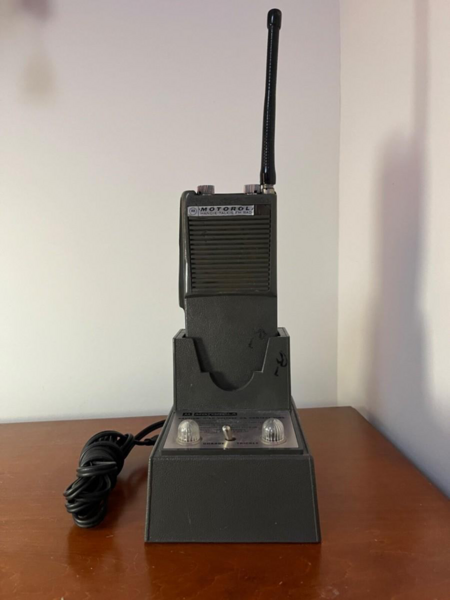
Wired Devices: The conventional separation of the speaker and microphone established the device’s overall vertical logic. Radio Stations: The portable format with an external antenna dictated its autonomy and one-handed grip.
The elongated rectangular body with softened ridges mirrored the shape of a face and concealed the battery.
Construction
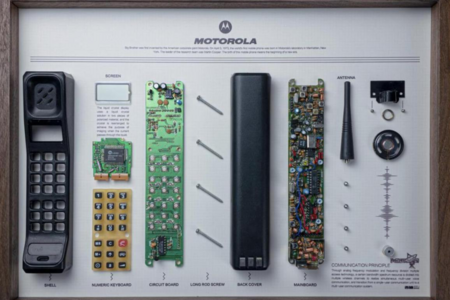
Construction and Manufacturing Plastic housings of this type are typically made using injection molding: molten plastic fills a metal mold and solidifies upon cooling. This method allows for the creation of repeatable components featuring holes, ribs for structural support, and internal mounts. The DynaTAC housing integrates the radio unit, battery, and controls. Its large size is related to the dimensions of these components.Additionally, the device weighed 794 grams. It was portable, but holding it to the ear for extended periods was difficult.
Motorola Design DNA: From Radio to Phone
Simple geometry, contrasting control surfaces, and minimal ornamentation create the image of a professional instrument. The DynaTAC retains this character while combining it with the familiar handset form and digital keypad that users expect.
Space and Perception
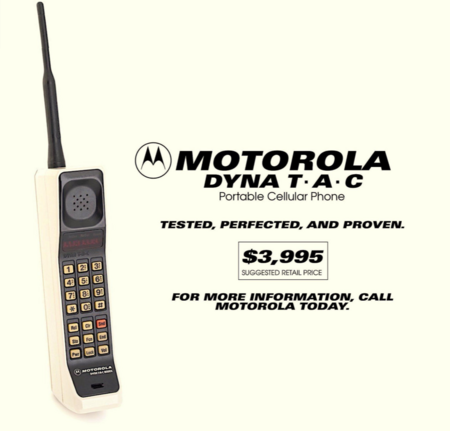
The high price point positioned early mobile phones toward corporate executives and affluent professionals.Today, the DynaTAC looks bulky, but its contemporaries compared it to car phones and their specialized equipment. The ability to hold the entire device in one hand was a significant milestone in miniaturization. The large, conspicuous phone also emphasized both the novelty of the technology and the device’s high cost.
In popular culture and film


The bulky silhouette led to the DynaTAC being nicknamed «The Brick.» In 1980s popular culture, large mobile phones became a recognizable accessory for business and affluent individuals. This image appears in the film Wall Street, and the series Saved by the Bell depicts a similar device in everyday situations.
Model Significance
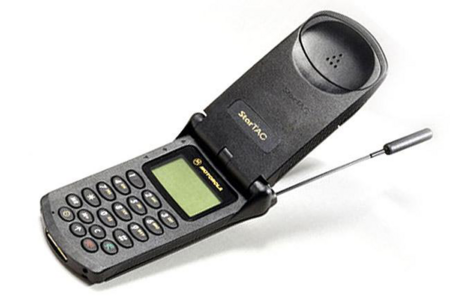
The DynaTAC 8000X was the first commercial handheld cellular phone, establishing the concept of personal communication independent of a fixed location. Subsequent models developed this scenario—becoming smaller and lighter. Nevertheless, the layout featuring a speaker at the top, screen, and keypad on the front panel persisted for a long time in feature phones.
Analysis Summary
The DynaTAC 8000X design emerged from the new need for personal mobile communication and the technological limitations of its era. The elongated body supported the conventional way of speaking, the familiar keypad made it easy to use, and the large volume allowed for the necessary components.
The main achievement was integrating the entire handheld system into a single object. Despite some inconveniences, the DynaTAC demonstrated the value of a portable telephone. Its recognizable form was a direct consequence of this requirement.
Screenshots from Moi 3d