Movement is one of the most expressive elements in photography, particularly in dance. However, a static frame cannot always convey the plasticity, energy, and dynamics of the human body. Non-standard methods of capturing movement allow images to become more emotional and can be utilized in dance photography, music projects, and advertising.
Project Concept — to create an unconventional style of processing that emphasizes blur and smear to highlight the trajectory of movement, convey rhythm, and show dance as a continuous process.
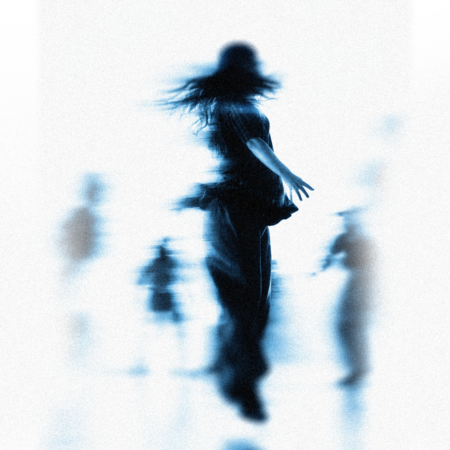
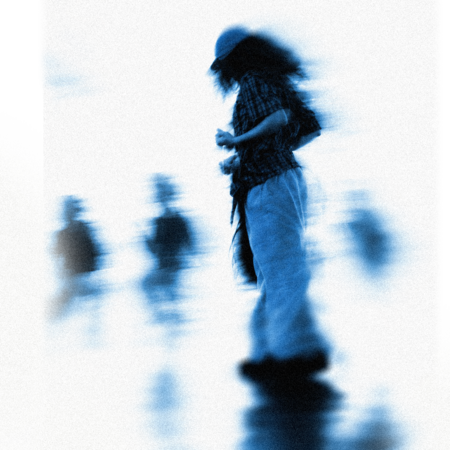
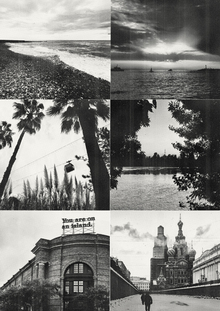
Examples of images from the proprietary dataset used to train the neural network and convey characteristic human body movements: silhouette blurring, motion blur, and dynamics.
Project Goal
The project goal is to train a neural network to process photographs of objects in this relevant style with maximum accuracy.
Image Generation
The Stable Diffusion XL neural network model was selected for image generation; this model needed fine-tuning to reproduce the chosen motion blur aesthetic. A dataset comprising 25 original photographs taken during dance classes and sports sessions was compiled to train the model. All images were pre-processed to enhance the smear and blur effect, subsequently cropped to a 1:1 square format, and then used to train the neural network.
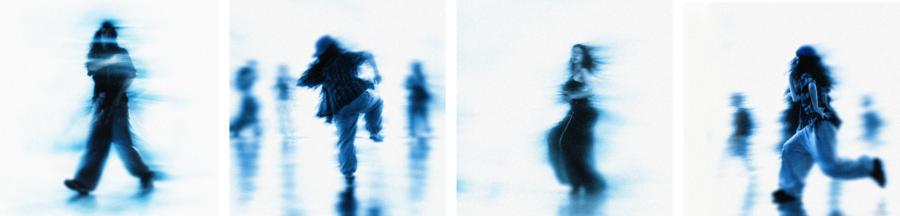
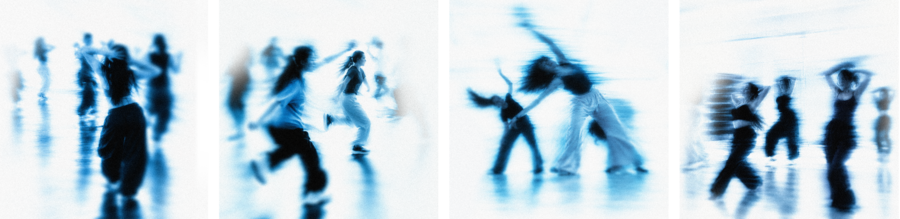
Since the project primarily focused on the plasticity and dynamics of a single body in motion, most photographs featured one person at the center of the composition. This approach allowed for more precise training of the model in working with a solitary figure, its silhouette, movement trajectory, and the nature of motion blur. However, there are also photographs that include groups of people.
Intermediate Result and Optimization
The initial generations were produced during an intermediate stage of model training (250 steps) with a LoRA strength of 0.5. The neural network was already reproducing characteristic motion blur, but generating groups of dancers resulted in distortions of proportion and anatomy.
At this stage, the model has already correctly captured one of the key characteristics of the chosen style: a more pronounced blur in moving limbs alongside comparatively greater legibility of the face and upper body. This demonstrates that the neural network has begun to recognize the logic of motion blur distribution within the image and the nuances of conveying movement in the frame.
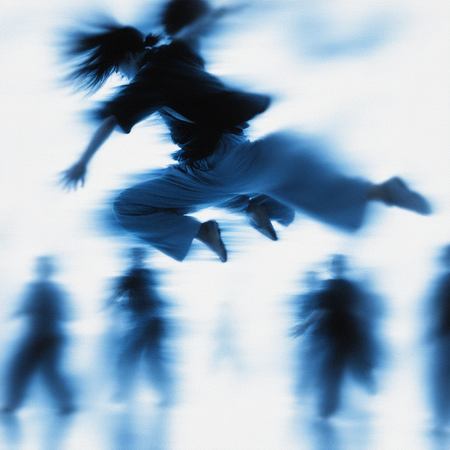
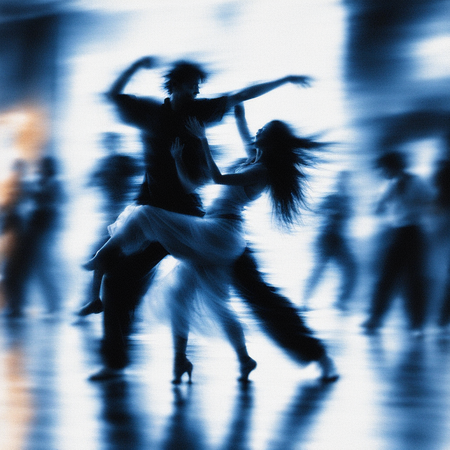
1. a blur of a person jumping in the air 2. a blur of two people dancing in the rain
To improve the result, the final model weights (500 steps) were utilized, the LoRA strength was increased to 0.8, and the number of generation steps was extended to 35. A negative prompt was also added to reduce anatomical distortions.
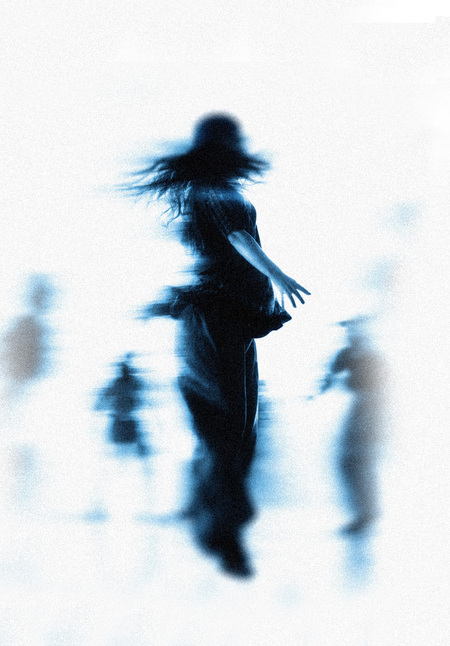
The model was able to reproduce the main features of the chosen style: a cool color palette, a light, blurred background, and the characteristic motion blur of moving figures. The blur is most pronounced in the areas of the arms, legs, and hair, while the body silhouette remains discernible. It was successful in achieving more natural proportions, conveying the plasticity and dynamism of the dance, and maintaining visual unity across different poses and compositions.
How the code works
Library Installation