Navigation
Concept
Perceptions of beauty are traditionally associated with harmony, proportion, and formal integrity. However, the aesthetic value of a work of art is not always determined by these qualities. In contemporary art, one finds works where conventional forms of people, animals, and objects are intentionally distorted, natural proportions are violated, and incompatible elements are combined into a single image. Such techniques are characteristic of the grotesque—a mode of artistic representation based on exaggeration, distortion, and unconventional combination of forms.Grotesque works can evoke contradictory aesthetic experiences. Distorted bodies, disproportionate figures, and unfamiliar combinations of various forms can seem repellent, yet simultaneously capture attention with their unusual plasticity.In the «Critique of Judgment, ” Immanuel Kant examines the beautiful through the characteristics of aesthetic judgment and also addresses the possibility of depicting the ugly artistically. In this regard, he singles out the repulsive as a special case that impedes aesthetic pleasure [1]. Thus, a contradiction arises between the potentially repulsive nature of grotesque images and their capacity to possess aesthetic expressiveness.
Key research question: By what visual characteristics can grotesque works of contemporary art, containing signs of the ugly, attain aesthetic expressiveness?
Research Hypothesis: The aesthetic expressiveness of grotesque works is shaped not only by violating conventional notions of beauty but also by retaining certain appealing characteristics—harmonious composition, expressive plasticity, texture, recognizable features of living beings, and storylines that evoke emotional empathy. The combination of these opposing qualities allows the ugly to become a source of aesthetic interest.To test this hypothesis, we will examine theoretical approaches to the grotesque and conduct a visual analysis of contemporary sculptures. The main criteria for this analysis will include scale, proportion, degree of deformation, combination of anatomical features, composition, materials, texture, color, and narrative content.This visual analysis will allow us to explore how intentional formal distortions interact with elements that maintain aesthetic appeal in individual works, as well as the role the narrative plays in this interaction.
Between the beautiful and the ugly
To study the aesthetics of the grotesque, one must first examine the concepts of the beautiful and the ugly within aesthetic philosophy.In the «Critique of Judgment, ” Immanuel Kant explores the beautiful through the characteristics of the aesthetic judgment. According to his concept, pleasure derived from the beautiful is not tied to the object’s practical utility, the desire to possess it, or its moral evaluation. The aesthetic judgment is based on disinterested pleasure in contemplation, rather than on pre-established objective criteria of beauty [1].
PHOTO
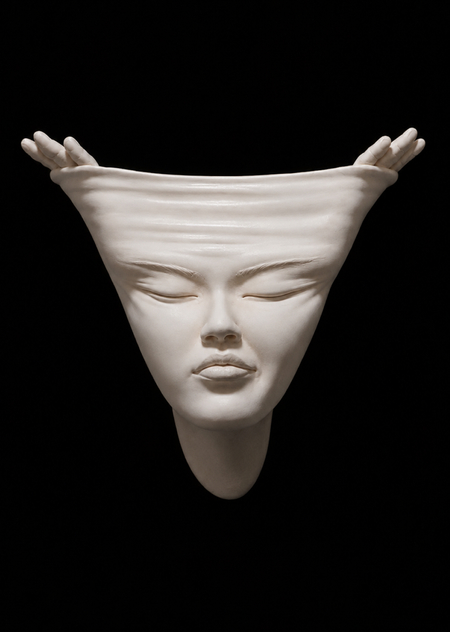
Kant notes that fine art is capable of beautifully depicting things that are perceived as ugly or unpleasant in nature. As examples, the philosopher cites the calamities of war, illness, and desolation [1]. Thus, the subject of depiction may possess negative qualities without stripping the work of its potential for beauty. Something ugly in reality can become the subject of beautiful artistic representation.Kant pays special attention to the repulsive, which he views as an exception to the possibility of beautiful artistic depiction. In his view, repulsion arises when an object is perceived as being imposed upon immediate sensory perception, even though the individual strives to reject it. In the naturalistic portrayal of the repulsive, the distinction between the artistic representation and the object itself proves insufficient to generate aesthetic pleasure [1].
PHOTO
Consequently, in Kant’s reasoning, the unsightly and the repulsive are not equivalent concepts. Unsightly phenomena can become the subject of beautiful artistic depiction, whereas the repulsive denotes a specific limit to that possibility. Moreover, the philosopher does not offer an exhaustive classification of the unsightly, nor does he assert that all unpleasant or frightening images necessarily evoke repulsion.This distinction is fundamentally important for further research. It allows us to view the grotesque not as a direct negation of the beautiful, but as an artistic means of engaging with forms that may be perceived as unappealing, unsettling, or repellent. The question of which specific artistic solutions allow such images to gain aesthetic expressiveness requires further examination through specific works.
Ornamental Grotesque
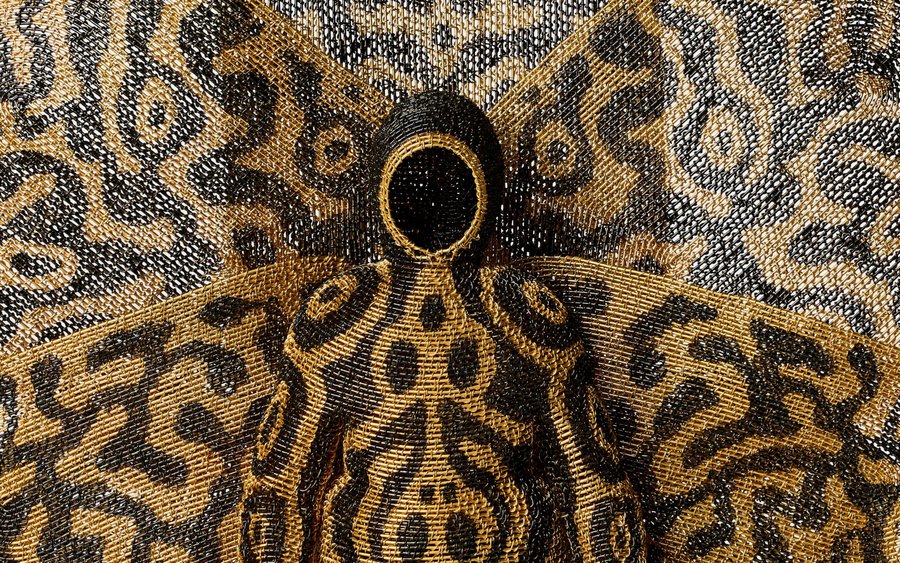
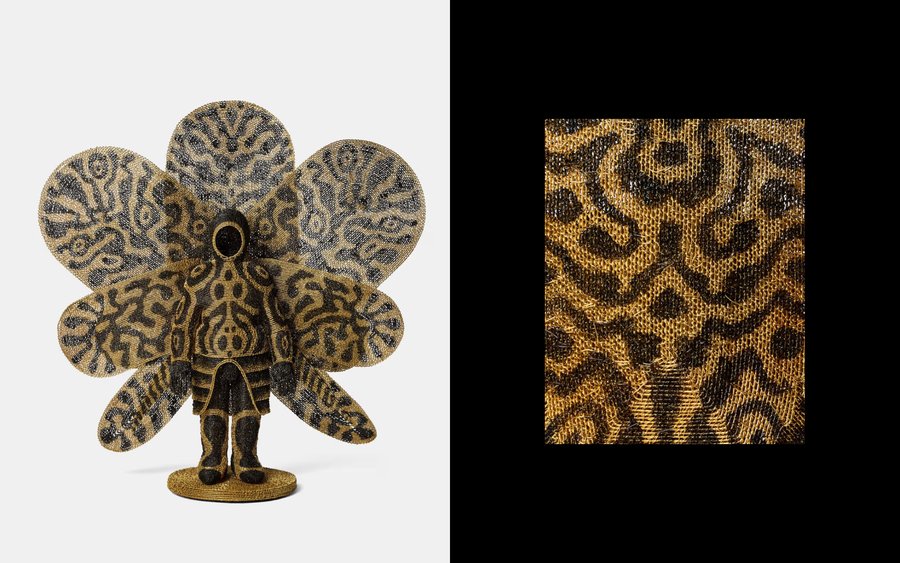
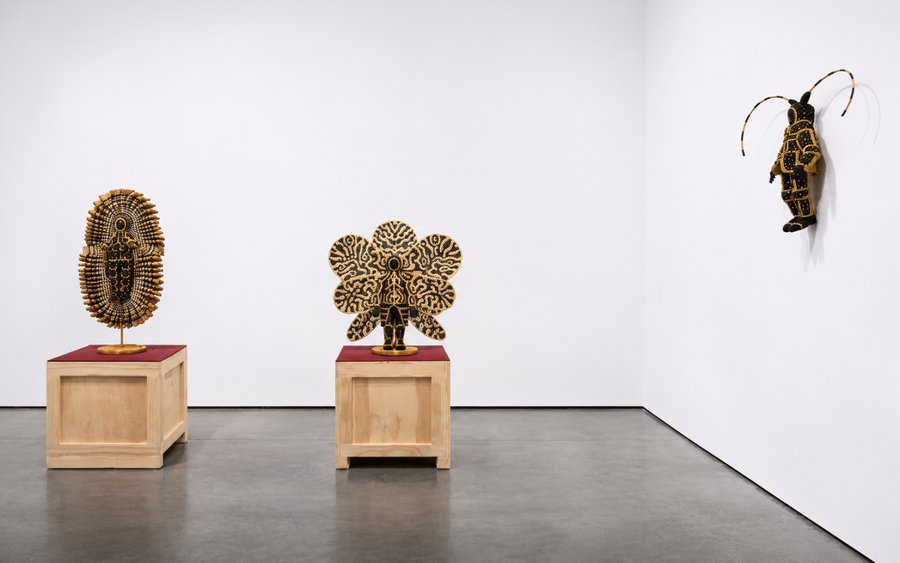
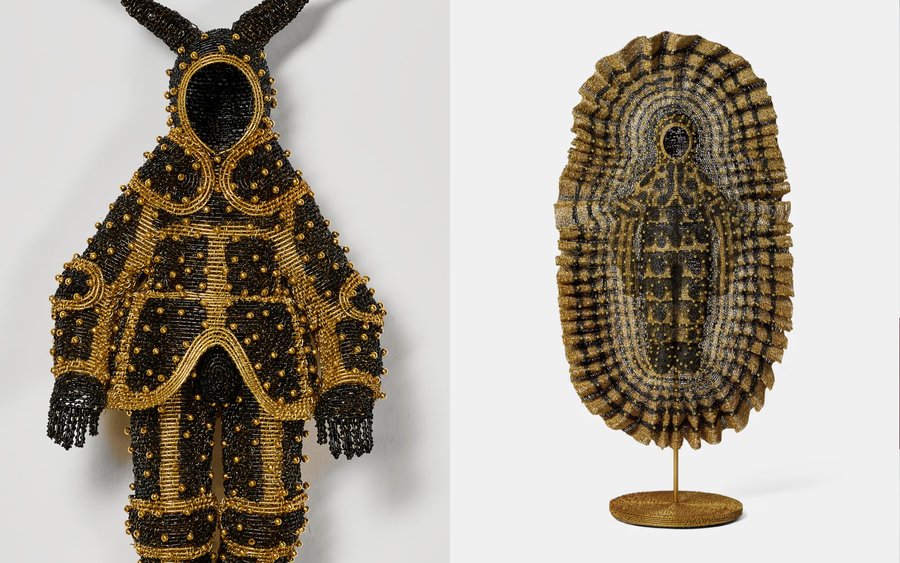
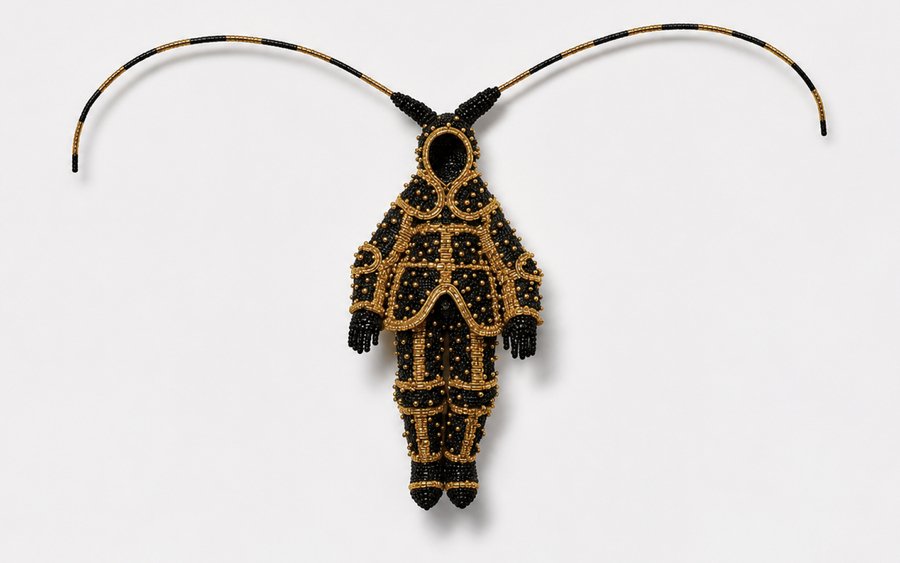
In the sculpture by Aslla Walter Olthmann, the human figure is combined with forms reminiscent of insect wings and flower petals. Despite the fantastical nature of the image, the composition maintains strict symmetry and visual order. Large, rounded elements form a rhythmic structure, and their surface is covered with an intricate ornament of sinuous lines and repeating motifs. The combination of black and gold colors, the expressive woven texture, and the meticulous detail work create the work’s aesthetic appeal.
However, the figure itself possesses elements of the grotesque. The human body loses its natural proportions, its silhouette is supplemented with non-human elements, and a dark opening replaces the face. The absence of familiar features strips the image of individuality and intensifies a feeling of strangeness. The ornament, which is initially perceived as decorative, takes on an unsettling quality upon closer inspection. The image’s anxiety arises not only from the distortion of the human form but also from the contradiction between the external orderliness of the shape and its unfamiliar content: what attracts with its decorative beauty simultaneously generates anxiety and a sense of hidden threat.