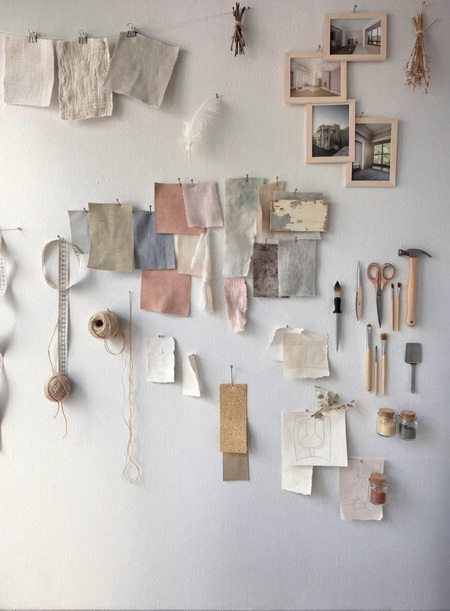

MEDIA «set-craftsmenship» is an online resource for creatives in the fields of set design, prop-making, and set dressing, as well as for independent artists who experiment with and utilize new materials.
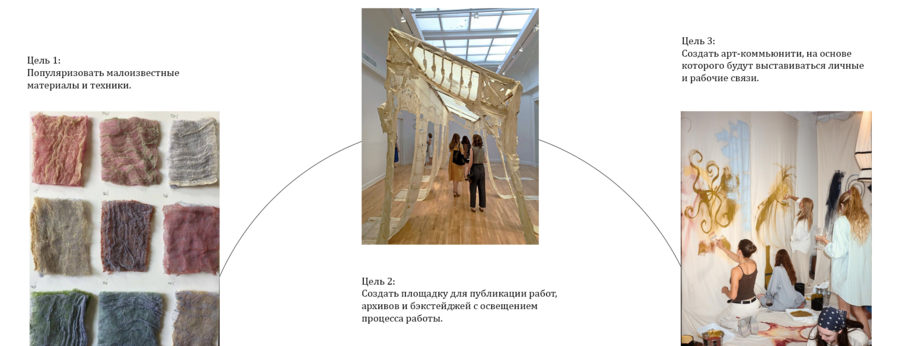
GOAL #1
To popularize little-known materials and techniques used in the creative field. To draw the industry’s attention to new material combinations, «recipes, ” and techniques.GOAL #2
To create a platform for publishing works, archives, and behind-the-scenes content related to experimental techniques, and unusual methods of creating objects and spaces.GOAL #3
To form an art community, which will serve as the basis for developing both personal and professional connections. Additionally, this community will be a space where issues related to set design, props, and so forth can be jointly developed and discussed.

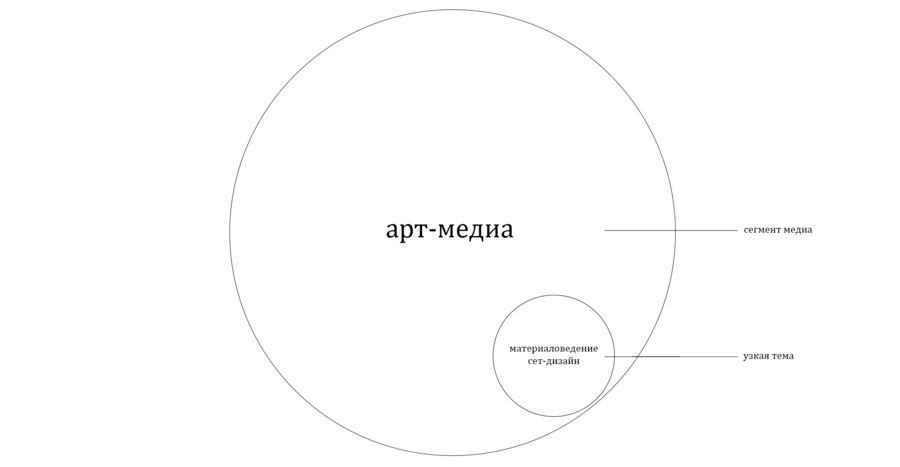
A broad segment—which encompasses «set-craftsmanship» media—is the artistic field or field of creativity and art.A narrow focus—material science and set design—is creative educational content.
Something else
set materials study is an online school that offers courses in various areas related to set design and specialized techniques. Among its offerings is a course on working with metal, biomaterials, and creating silicone molds.
set materials study is a direct competitor.
The school’s visual style is based on workshop aesthetics. Photos from classes, excerpts from experiments, and final results are posted across various media. The content emphasizes the skill-building process. Set materials study primarily publishes image compilations on its Instagram feed or website.
Advantages: There is a high-quality knowledge base; a close-knit community has been formed; it does not need advertising because the commercial side is supported by course sales.
Disadvantages: There is no free, openly available content; content release is irregular; the community is private.
*belongs to Meta, which is recognized as an extremist organization and is banned in Russia
Thematic channels or blogs most often create content on niche subjects related to props and artistic design elements.Thematic channels and blogs serve as an indirect competitor.The visual style of these channels lacks a unified language; their uniqueness lies in the multitude of aesthetic variations and approaches—every viewer can find something to their taste. Material is published on services like YouTube or Instagram* in the form of in-depth, short videos and photographs of the final results.Advantages—diversity of directions and styles; unique authorial approaches and techniques.Disadvantages—narrow focus of content; occasional lack of competence.*owned by Meta, which is recognized as an extremist organization
Major film studios are indirect competitors to set-craftsmanship because they regularly publish making-of and backstage materials detailing the creation of films, sets, props, and the visual world. Netflix, Disney, Marvel, Universal, and Sony utilize websites, YouTube, and social media; the primary content includes interviews with creators, backstage footage, making-of features, analyses of production design, and technical solutions.Visual Style is built upon cinematic footage of the process, clips from the finished film, interviews, and close-ups of details. The Tone of Voice is predominantly friendly, fan-oriented, and inspiring, though Sony maintains a more technical and professional tone.
Advantages include a high volume of visual content, access to major productions and renowned specialists, a diversity of video formats, and strong engagement from the fan audience.Disadvantages are that backstage content is almost always tied to a specific film or franchise; the materials are geared toward the spectator rather than systematic study of techniques. A comprehensive, open archive where one can separately search for materials, tools, recipes, and technologies is rarely found.
Thematic magazines covering cosplay, floristry, and crafting are direct competitors in how they approach the creative process. These publications feature tutorials, DIY projects, author interviews, and costume breakdowns. The main platforms are websites and digital magazines, augmented by social media and video.
The visual style centers around the beautiful final product, the creation process, and close-ups of materials and tools.
The Tone of Voice is predominantly friendly, inspiring, and accessible, shifting to a more professional tone in educational materials.
The advantages include clear specialization, strong visual design, a wealth of practical resources, and established communities centered around a specific hobby. Their content effectively answers the question, «how to do this?» and often becomes saved instructions, templates, and recipes.
The disadvantages are that each publication is largely limited to its specific theme—costumes, flowers, or traditional handmade items. Materials and techniques are rarely explored as a universal subject of study that can be applied across different creative industries.
Manufacturers and distributors of creative materials are indirect competitors to set-craftsmenship because they already generate content around the materials, technologies, and methods of their application. Companies frequently publish detailed videos and case studies on working with specific materials, developing their own base of tutorials and educational resources. The primary platforms include their own websites and stores, YouTube, social media, blogs, and educational sections.Visual style is predominantly applied: the material, the tool, the process, step-by-step photography, and a demonstration of the finished result.Tone of Voice — expert, practical, and simultaneously commercial: the content must showcase the material’s potential and lead the user toward a purchase.Advantages — direct access to materials, technical expertise, detailed instructions, and the ability to purchase the product immediately after viewing the content.Disadvantages — the content is primarily tied to a specific brand or assortment: the objective is to demonstrate how to use the material and why one should choose it specifically.
CONCLUSION (Rewrite)The competitive field of set-craftsmanship is quite broad, yet highly fragmented. Individual players are already addressing key elements of the project: film companies offer behind-the-scenes looks and making-of features; thematic magazines create tutorials and unite communities around specific forms of creation; material producers supply technical information and instructions; educational projects investigate material properties; and YouTube creators detail their own creation process. However, this knowledge primarily exists within discrete films, material sets, disciplines, individual channels, or educational curricula, rarely being consolidated into a single, independent system.This creates an opportunity for set-craftsmanship to function as an interdisciplinary media platform and a database of practical knowledge for creating objects and spaces. Its distinction lies not merely in showcasing beautiful objects again or providing tutorials, but in connecting material, technique, process, the creator, and the final result. Unlike a material producer, the project does not sell a product; unlike a magazine, it is not limited to a single discipline; unlike a YouTube channel, it is not centered on one creator; and unlike an educational course, it extends beyond mere instruction. The core potential value of set-craftsmanship is to systematize disparate practical knowledge and make it accessible to people across various creative industries.
A Telegram channel format was selected as the distribution channel for «set-craftsmanship,» as this social network and its functions maximally address media objectives.
REWRITE
Telegram as a «Journal of Practical Knowledge» The main content shouldn’t just be beautiful projects; it should be analyses of how they were created.
Telegram as a Visual Archive It is very important to utilize the ability to systematize content through hashtags and pinned posts.
Telegram as a Community Hub You can use the channel plus a separate community chat.
Telegram as a People Discovery Platform This can become a very strong feature specifically for your niche.
Telegram as an Engagement Channel Your content is perfectly suited for interactive formats.
REWRITE 6 permanent features
Material — introduction to unusual materials Technique — explaining methods of work Recipe — showing the creation process Behind the Scenes — demonstrating real production Artist — publishing the works of a single creator and introducing them to the community Experiment — publishing new combinations
REWRITEThe core audience—prop makers, set decorators, set designers, production designers, costume artists
«How do I do this? What is it made of? Where can I source the material? How can I replicate or adapt this technique?»The professional audience surrounding the core
Art Directors
Designers
Scenographers
Directors
Photographers
Stylists
Producers
«I need an unusual material for a shoot → I go to set craftsmanship → I find a technique → I find an artist → I find a material → the project comes to life.»Artists and experimenters—contemporary artists
Sculptors
Object artists
Ceramists
mixed-media artists
«What happens if I use this material for an unexpected purpose?»