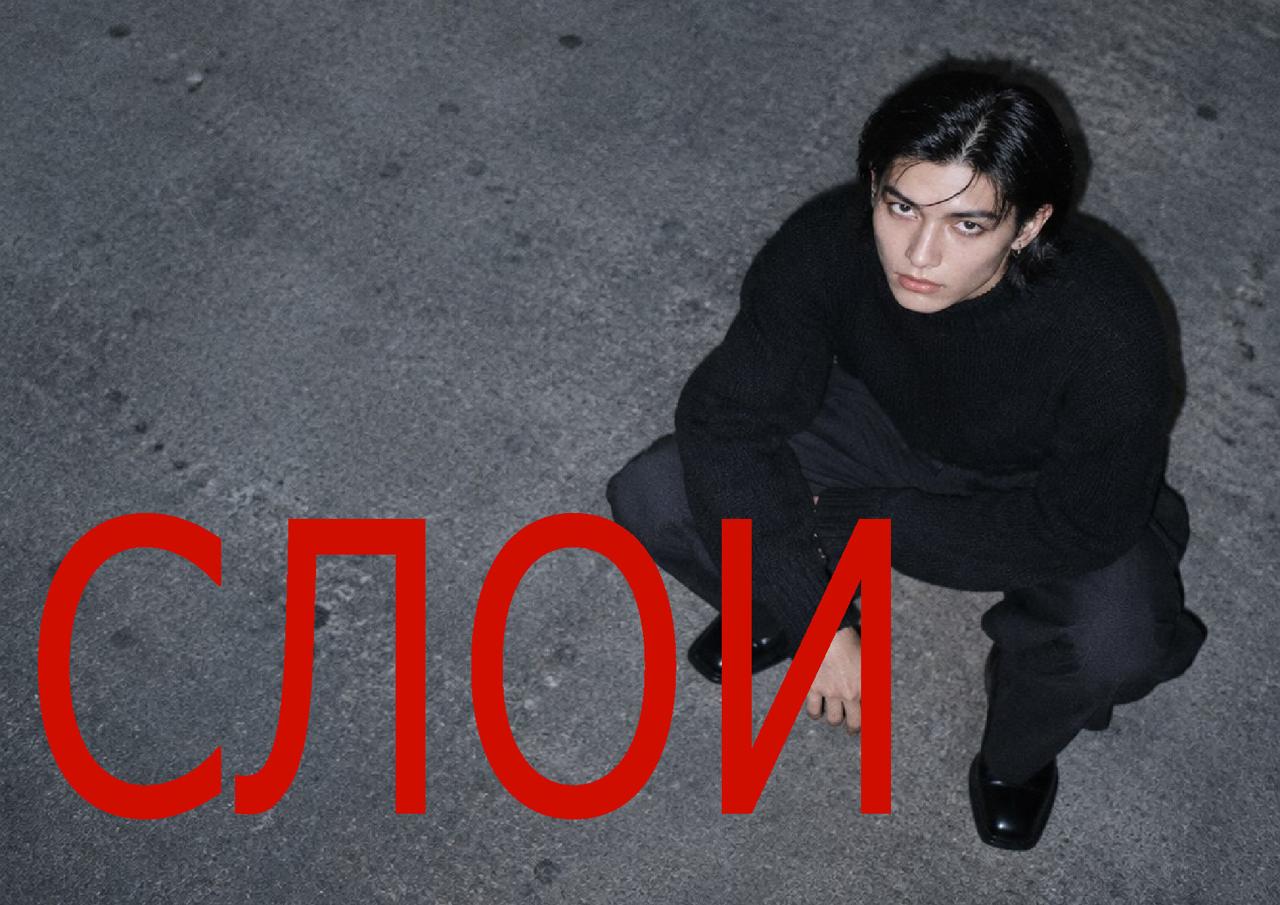
MEDIA CONCEPT
«Sloi» is an independent media platform dedicated to fashion culture and conscious consumption, created for young urban professionals aged 22–35. Our audience desires to look stylish and appropriate but is tired of trend dictatorship, endless sales, and glossy snobbery. We address the problem of overconsumption and impulsive buying by offering an alternative system: we teach people how to build a practical capsule wardrobe, how to discern garment quality, and how to utilize resale and secondary markets.Unlike our competitors, «Sloi» is not about selling clothes or chasing new arrivals. We focus on the items people wear every day, broadcasting the ethos of «less, but better.» Our tone is an honest, expert conversation, free from snobbery or native marketing tactics.Our community’s main hub will be a Telegram channel where we publish long-form articles, in-depth analyses, and guides. To attract a new audience, we use short, visual formats (Reels and TikTok) featuring practical life hacks, and we will launch a podcast for deeper conversations with stylists and designers. The «Sloi» media helps redefine one’s relationship with clothing—stopping wasteful spending, extending the life of beloved pieces, and finding joy in what is already in the closet.
SEMESTER TOPIC PLAN
In this edition, we divide the content into four main sections:
Analysis: A detailed breakdown of a single item (how to choose it, what it’s made of, what to pair it with). Capsule Wardrobe: Creating wardrobes tailored for different occasions (work, vacation, weekends). Resale: The secondary market—how to buy and sell, and how to care for your garments. People: Interviews with stylists, designers, and vintage shop owners.
Thematic Plan (Months 1–6):
Month 1: «Where to Begin»
Topics: Capsule Wardrobe: Myths vs. Reality. How to Stop Impulse Buying. Analysis: The White Shirt (finding the perfect one). Getting Started with Resale. Formats: Long-form posts in TG, infographics, short «Before/After» videos.
Month 2: «Spring Refresh»
Topics: The Spring Capsule (10 must-haves). How to care for outerwear after winter. The trend of transparent fabrics: how to wear them in real life. An interview with a second-hand store owner.
Formats: Curated lists, checklists, try-on Reels.
Month 3: «Conscious Consumption»
Topics: What is «green» fashion, and is it just marketing? Swap parties in Moscow/St. Petersburg (guide). Analysis: jeans (how to choose quality ones). A stylist on how to stop chasing trends and brands.
Formats: Swap event report (video), podcast episode, written reviews.
Month 4: «Work and Style»Topics: Office Dress Code: How to look expensive in mass-market fashion. The Business Travel Capsule Wardrobe. How to Dress for an Interview (Breakdown by Industry: IT, Creative, Finance). Shoe Care.
Formats: Guides, «Packing for Travel» videos, curated selections.
Month 5: «Summer Essentials»
Topics: Summer wardrobe staples: 5 pieces for every occasion. How to style resale in the summer (vintage dresses). Deep dive: quality cotton and linen. Where to donate clothes for recycling. Formats: Reels reviews, infographics, posts with links to trusted locations.
Month 6: «Review and Plans»
Topics: Six months with «Layer»: what we’ve learned. Autumn Capsule. How to store items to prevent decay. Interview with a local brand designer.
Formats: Special Project (long-read), podcast, audience surveys.
10 CONTENT SAMPLES
Example 1. Telegram Post (Column: «Critique»)
Title:
What Should a Good T-shirt Cost?
Text:
«Every time we see a t-shirt for 500 rubles, we think, 'Oh, great, I’ll save money.' But let’s look at the facts:Fabric density is the key indicator. If it’s 120 g/m², it will stretch after the second wash. A quality basic t-shirt starts at 180–200 g/m² (dense cotton or cotton with elastane).What to look for when buying:
— Neckline seam: it must be double-stitched, otherwise, it will stretch out.
— Side seams: if they are missing (this is called tube cut), the t-shirt will quickly warp.
— Composition: 95% cotton, 5% elastane—perfect.How much does quality cost? In mass-market, that’s about 2–3 thousand rubles. Yes, more than 500 rubles. But it will last you 3–4 years, not 2 months.
Agree? Drop a 🔥»
Example 2. Short Video Script (Reels/TikTok)
Topic: «Assembling a Capsule Wardrobe in 15 Minutes from What You Already Own.»— Shot 1 (0-3 sec): The host, dressed in casual home wear (hoodie, joggers), stands in front of a closet. On-screen text: «Don’t have anything to wear?»
— Shot 2 (3-6 sec): The host pulls out 5 basic items (a white shirt, straight jeans, a black blazer, a long-sleeve tee, leather loafers). Quick cuts.
— Shot 3 (6-10 sec): She layers them on (shirt under the blazer). On-screen text: «The secret is layering.»
— Shot 4 (10-14 sec): The final look, spinning in front of the camera. Text: «No new purchases needed. You’re ready to go.»
Voiceover: «You already have everything you need. You just have to rearrange the layers.»
Example 3. Podcast Script (Audio)
— Episode Title: «Why Resale Isn’t About Poverty—It’s About Intelligence.»
— Guests: Founder of a vintage shop and stylist.Script (Excerpt):
«Host: Hello, this is the ‘Layer’ podcast. Today we are discussing why buying secondhand clothes is no longer something to be ashamed of. With us is [Name], the owner of the thrift store… [Name], tell us how the buyer has changed over the past five years?
Guest: Before, only people without money came. Now, people with money come, but they don’t want to support fast fashion. They are looking for uniqueness. They know the brands better than the sales associates in the flagship department store…»
Example 4. Telegram Post (Info Cards)
Title: «3 Signs It’s Time to Toss Something (Even If It’s Expensive)» Text (broken down into cards):
Card 1: You just don’t like it anymore. You put it on, look in the mirror, and take it off. This has been happening for a year. It’s time to let it go.
Card 2: The fabric looks worn. Pilling that won’t come out, stretched elbows, or fuzziness on wool. Restoration costs more than a new item.
Card 3: It doesn’t fit your lifestyle. A beautiful leather dress that you can’t sit (or walk) in because it feels too tight.
Call to Action: «Decluttering isn’t a loss; it’s freeing up space for what you actually need.»
Sample 5. Telegram Post (Resale Section)
«Where to find quality resale items if you aren’t ready to spend hours scrolling through Avito?— Telegram thrift groups. Look for niche channels dedicated to specific brands—for example, „COS/Uniqlo Marketplace.“ Items are listed quickly there, and they are often sold for less.
— Secondhand stores in residential neighborhoods. Not the ones downtown, but those near major housing complexes. This is where good basic pieces accumulate from people who are moving.
— Swaps (item exchanges). Keep an eye on announcements at cultural centers. You give away your unwanted items and take others for free.The main rule: always check the seams and the label composition before you buy.»
Sample 6. Telegram Post (Opinion)
«We are tired of the ‘ten-piece-for-a-million’ approach. A capsule wardrobe isn’t about buying ten items from The Row. It’s about ensuring your clothes work together. If you have three T-shirts, two pairs of jeans, and one blazer—that’s already a capsule. You can put it together in five minutes. Styling is about what you already own. You don’t need to chase the perfect Pinterest ideal. Start with what’s in your closet.»
Sample 7. Reels Scenario (People Segment)
Topic: «What Does a Stylist Think About Your Clothes?»
Frame 1: A stylist stands in a showroom surrounded by racks of clothing. On-screen text: «What’s Killing Your Look?»
Frame 2 (pointing at a hanger): Picks up an item with a logo. «Buying something just for the logo is a mistake. Look at the cut first.»
Frame 3: Picks up another item. «Clothing that’s too tight. It doesn’t always accentuate your figure—sometimes it just restricts you.»
Frame 4: «So, what should I do?» — «Look for balance. If the top is oversized, the bottom should be tailored. And vice versa. And yes, layer your clothes.»
Sample 8. Podcast (Script Sketch)
Episode Title: «The Story of One Object: My Grandfather’s Coat.»
Script Excerpt: Host (Voiceover): Each of us has an object with a story. Today, the heroine of our episode, Anya, will talk about a coat she found in her grandmother’s village.
Guest: This coat is from the 1980s. It’s heavy, made of pure wool. I took it to the dry cleaner, replaced the buttons, and now it’s my favorite thing. It looks like it’s two years old, not forty. And that answers the question of why old things are often better than new things. The quality of fabrics was different back then.
Example 9. Telegram Post (Error)