Mount Walker
In the future, rising temperatures, air pollution, and the destruction of ecosystems render much of the Earth uninhabitable. People begin migrating to mountainous regions where temperatures are lower and the air remains relatively clean. In one such area, a small settlement emerges, which grows over time along with its population. The complex mountainous terrain and limited space force it to develop differently from typical cities, and it gradually transforms into Mount Walker.
2190–2230. The Earth is Changing
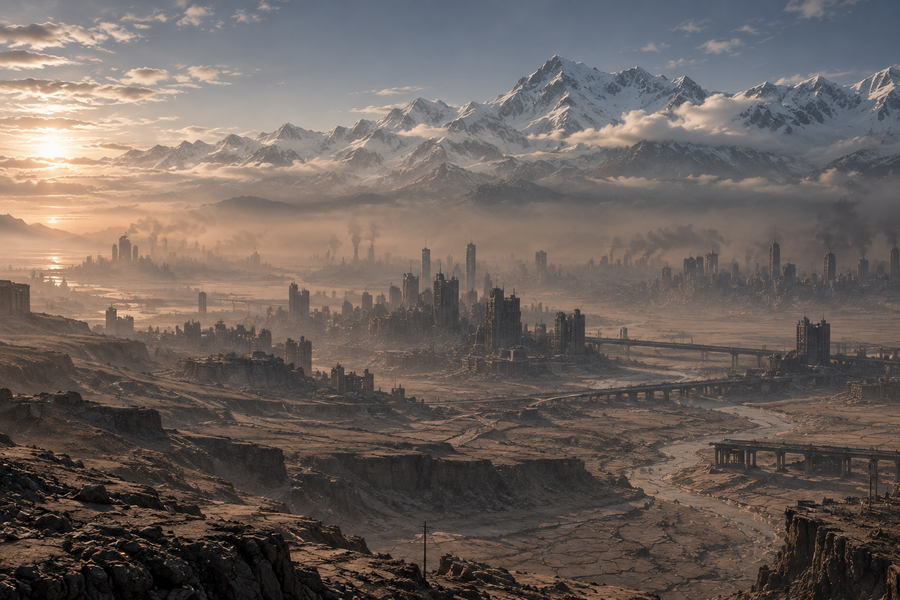
From 2190 to 2230, rising temperatures, air pollution, water scarcity, and ecosystem destruction render most of the Earth uninhabitable for permanent residence. Major cities begin to evacuate, forcing people to seek territories where new settlements can still be established. Research indicates that large mountain ranges remain among the last relatively livable regions. At high altitudes, temperatures are lower, and the air is less polluted. A gradual migration of people into the mountains begins.
The Last Habitable Mountains
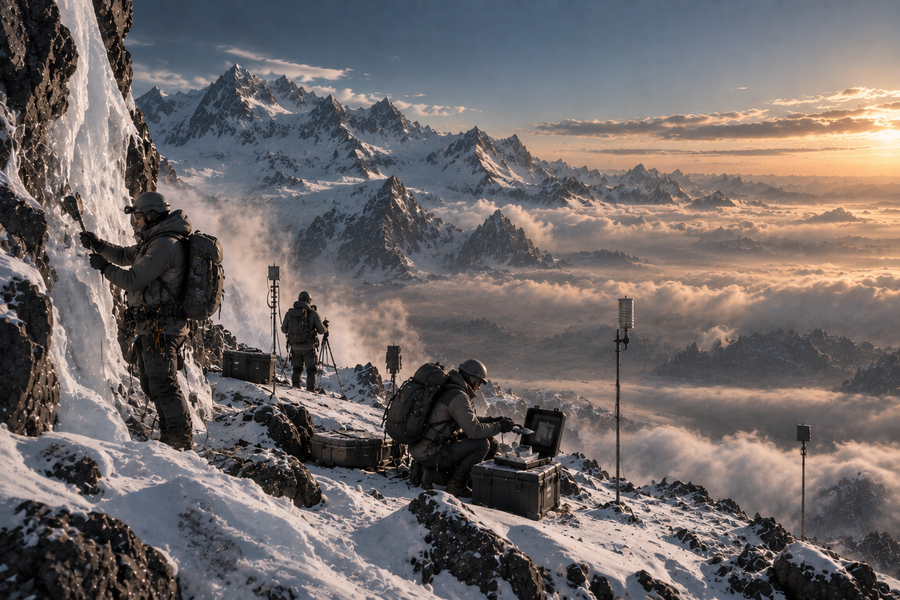
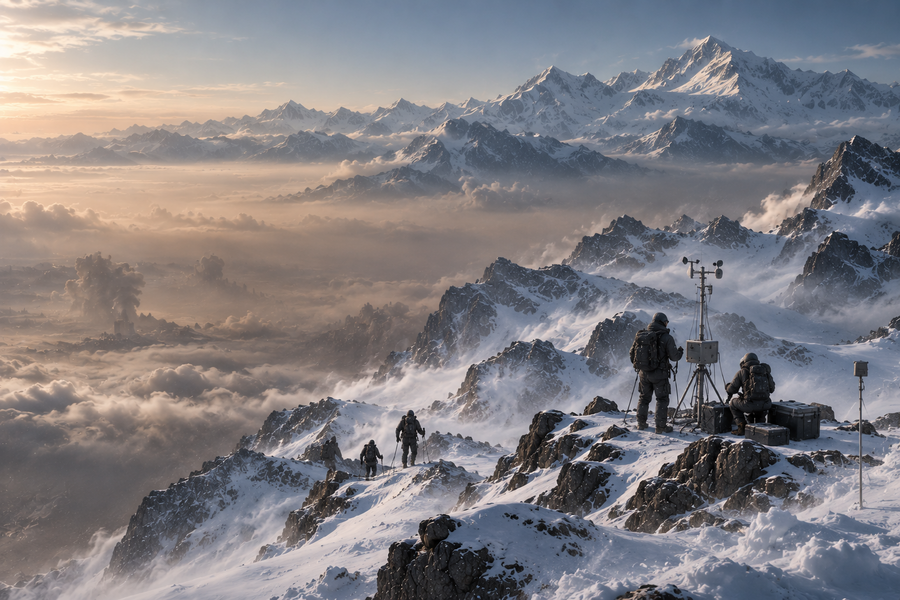
Moving to the mountains only solves part of the problem. High-altitude regions offer more suitable climatic conditions, but they simultaneously create entirely new constraints. There is almost no flat land here. Transporting water, food, and building materials is difficult. Different areas are separated by significant changes in elevation, and the higher the settlements are located, the less oxygen is in the air. It becomes clear that the standard urban model cannot simply be transplanted to the mountains. Living in such conditions requires a completely new type of city.
First Research Station
In the year 2235, English scientist and engineer James Walker establishes the first permanent research station near a remote mountain. His goal is to study the possibility of permanent human habitation at high altitudes and to determine whether this territory can support more people in the future. Initially, the site only features a small station with research and living quarters. However, as conditions worsen in other regions of the Earth, more and more people begin to arrive at the station.
2235–2260. From station to settlement
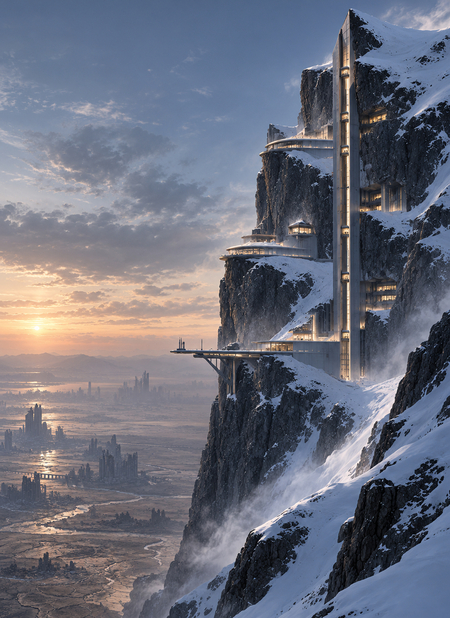
The research station is gradually transforming into a small, permanent settlement. New living spaces, technical zones, and resource storage areas are emerging. The complex mountain terrain begins to directly influence the architecture. Buildings cannot be arranged in conventional horizontal blocks, so they appear at various levels: along slopes, on rock faces, and inside the mountain itself. In honor of the founder, the mountain and the developing settlement are named Mount Walker.
The Birth of Mount Walker
By 2260, a small settlement transforms into a permanent city. Residential, public, and industrial zones are situated at different levels. Some buildings are on the mountain’s surface, others are built into the slope, and some spaces delve entirely underground. Bridges, tunnels, and vertical routes emerge between the different parts of the city. Mount Walker no longer develops solely horizontally—the city begins to grow upward and inward into the mountain.
New Type of City
The typical structure of streets and urban blocks in Mount Walker is virtually nonexistent.
Instead, the city is composed of multiple layers stacked one above the other.
Since each new district must connect to other parts of the city, transportation becomes a primary factor in Mount Walker’s development.
As the city grows, it becomes increasingly complex to move people and resources between different elevations.
The problem of relocation
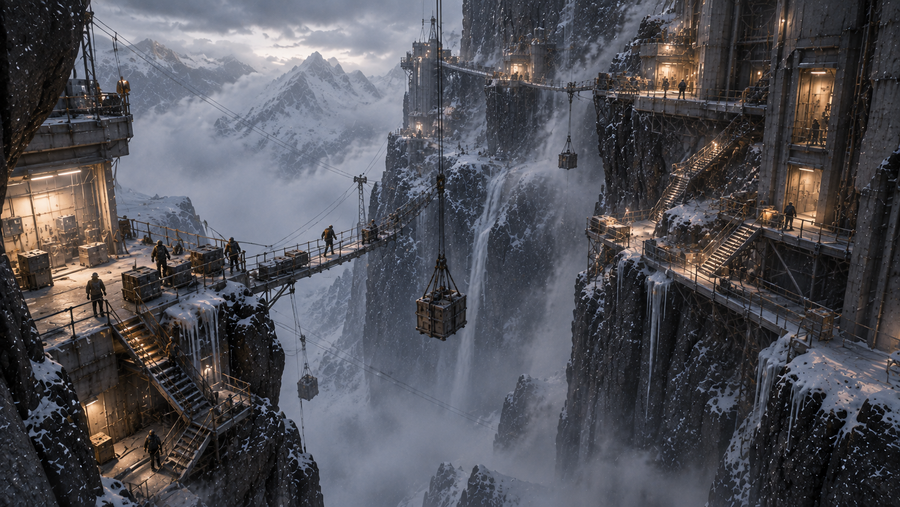
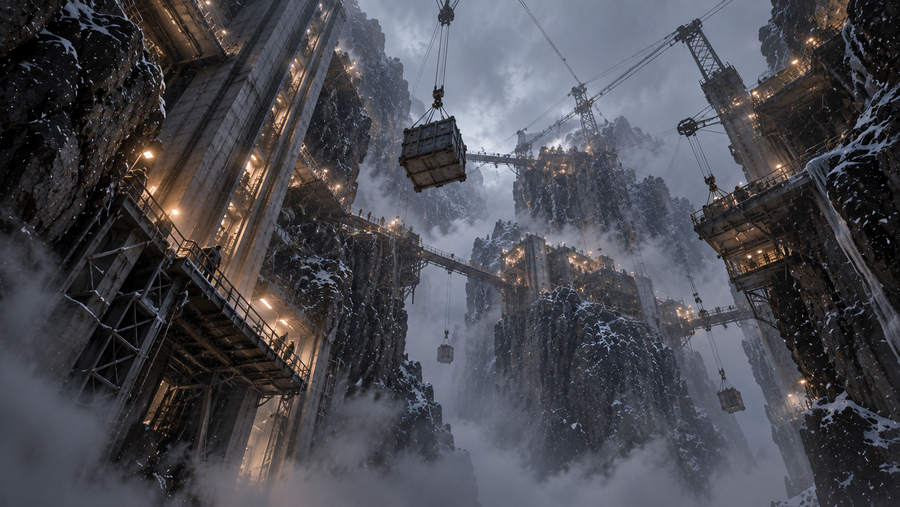
By the year 2270, movement between different parts of Mount Walker becomes one of the city’s primary challenges. Conventional roads are virtually unusable due to sharp elevation changes and limited space. Yet, residents, goods, equipment, and other resources must move daily between the lower and upper levels. For the city’s further development, an independent transportation system is necessary.
Vertical Transportation
A vertical transport system is introduced in Mount Walker. Large elevators connect the city’s various levels, while separate cargo platforms are used to transport equipment and resources. Tunnels are created inside the mountain, allowing movement regardless of weather conditions. The outer parts of the city are connected by bridges and suspended routes. Gradually, the transport network becomes the main framework of Mount Walker.
The city rises higher
With the advent of the new Mount Walker transit system, the area continues to expand. New districts are appearing at ever-greater altitudes, while a portion of the city is developing deeper within the mountain simultaneously. However, increased altitude presents a new challenge. The air becomes more rarefied, making prolonged stays at the upper levels increasingly difficult.
Oxygen Deficiency
By the year 2280, oxygen scarcity becomes a serious problem. This is felt particularly strongly in the upper districts and on open areas of the city. For Mount Walker to develop further, infrastructure is needed that can supply the necessary amount of air to different parts of the city.
Oxygen Infrastructure
Oxygen stations and air supply systems are appearing in various parts of the city. They provide the necessary amount of oxygen to residential spaces, public areas, and other indoor zones. On open grounds, residents utilize specialized breathing equipment. The oxygen infrastructure is gradually becoming a permanent part of the urban system and is influencing the further development of the upper levels of Mount Walker.
How does a city provide for its food?