
Манифест дипломного проекта
Исследование рынка Eyewear и возможностей для создания нового независимого бренда.
EYEWEAR MARKET
Eyewear — a market that encompasses products for vision correction, eye protection, and self-expression (optics, lenses, frames, sunglasses, accessories + a range of medical services).In this project, I will analyze the international Eyewear market across three levels (TAM, SAM, SOM), identify global and regional trends, and examine the dominant business models of key players. This analysis will form the foundation for a new brand entering the market as a result of the project.
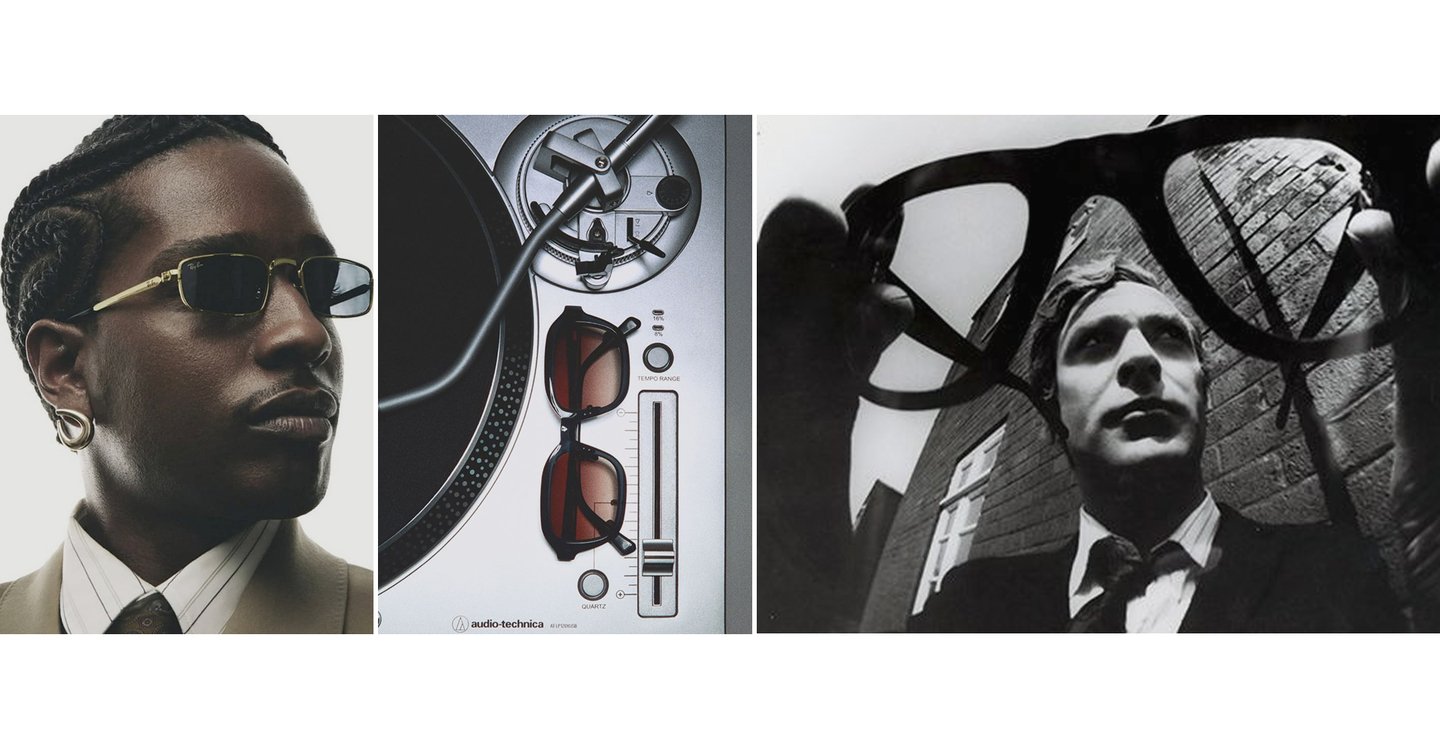
THE GLOBAL EYEWEAR MARKET
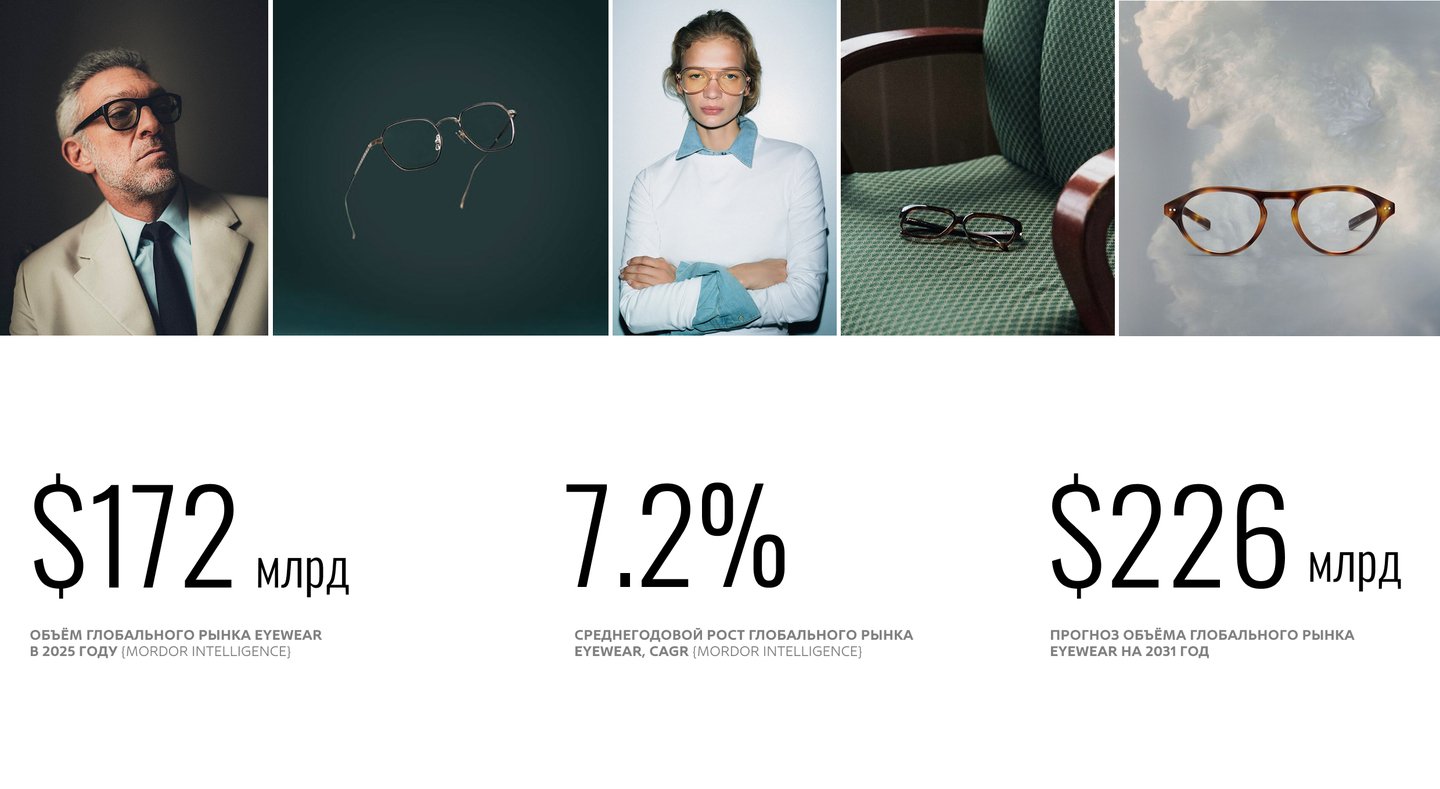
The global eyewear market, valued at $172 billion, is growing steadily at a rate of 7–8% annually and is projected by experts to reach $226 billion by 2031. This market is vast and stable due to continuous and increasing demand. Global market growth is not uniform; for example, the Asia-Pacific region became the fastest-growing market in 2026. Asian countries have risen to leading positions thanks to technological capabilities and consumer demand, though North America remains the leader in terms of nominal market value.
According to Mordor Intelligence, favorable growth conditions are set to continue expanding. In the 2030s, market growth, driven by several global factors, is expected to reach 10–12% per year, encouraging new players to enter this ripe market now.


Market evolution is driven by global trends that encourage people to buy eyewear not just for medical purposes, but purely as an accessory. The most influential current factor is the rise in vision problems and increased awareness of eye health. Increased screen time, urbanization, high exposure to radiation, and an aging population are causing more vision impairments—which are being countered by new lens technologies and greater accessibility to eyewear.In turn, global technological progress has reached the eyewear market. Companies are actively integrating AI and augmented reality technologies. For example, in 2025, Meta successfully launched a hugely popular collaboration with Ray-Ban. This partnership not only showcased advanced technology but also perfectly aligned with the global trend of treating glasses as a fashion statement. Now, eyewear is not just a single pair to last for several years—it’s an accessory that can include dozens in one’s wardrobe.
Key players in the global market have become companies that successfully combine manufacturing capabilities with extensive distribution networks. Market consolidation is at a moderate level: major players manage large conglomerates, but local, independent manufacturers are also finding their place in the market. Market realities allow businesses to occupy their niche without the overwhelming, chaotic competition of low consolidation or the intense pressure of leaders in highly consolidated markets.
The business models of key players are built on the principle of integrating owned production capabilities and umbrella brands within a corporate group through which finished products are distributed. A significant portion of revenue is generated through product licensing. By acquiring a license, a company manufactures products under other brands at its facilities (for example, Luxottica produces licensed Prada products at its own manufacturing sites) and sells them through distribution networks. This model is highly popular and equally advantageous for both parties involved in such a partnership.
FEDERAL MARKET
Due to the economic and social characteristics, the Russian market differs considerably from the global market. Here, we will not see such diversity, but rather the most classic and stable business models. The size of the federal market reaches 105–110 billion rubles according to expert estimates; however, it should be noted that there are very few such studies, and their results vary significantly from the standard calculation based on Russia’s share of the global economy. In this study, I rely on available data, which can be considered a «minimal» but factually confirmed threshold. The Russian market is growing at a rate of 8–10% per year, which is higher than the global rate and is leading to growth in local businesses, which will be examined in detail below. According to expert forecasts, the market volume will reach 190 billion rubles by 2031.
The Russian market is dominated by «classic» medical optics and ophthalmology. The largest players are retail optical chains that handle the distribution of finished products and provide medical services.
These models are too far removed from my proposed project, so I will focus on the segment of the local market where players who are building their business model around a strong proprietary brand are currently growing.
YOUNG LOCAL MARKET
In 2020, an increasing number of independent design brands began appearing in the Moscow and St. Petersburg markets. These brands were rapidly growing thanks to the D2C model, targeted audience segmentation, and a new approach to the Russian market.
Although major independent eyewear brands have long existed in the global market, conditions for their emergence have only recently formed in the Russian market.
These brands are small, but their business model is already built around strong branding, clear target audience segmentation, and control over their own sales channels. It should also be noted that well-known players like Cultura, Fakoshima, and Eyerepublic are still registered as sole proprietorships (IP), making it impossible to provide precise financial metrics—so analysis must rely solely on the brands' public statements and comparative analysis.
Growing Russian brands create their merchandise in contract manufacturing facilities (primarily in Asia and Italy) and distribute it through their own channels, leveraging their established brand. As their revenue grows, these brands seek to expand their sales channels by entering platforms where they encounter less competition from low-cost goods and can boost brand recognition (such as Yandex Ultima and Lamoda).
THEME OF THE GRADUATE PROJECT