Object in 3 modes in the interior Viewpoint 2
Project Idea
What if you skated down a dam?
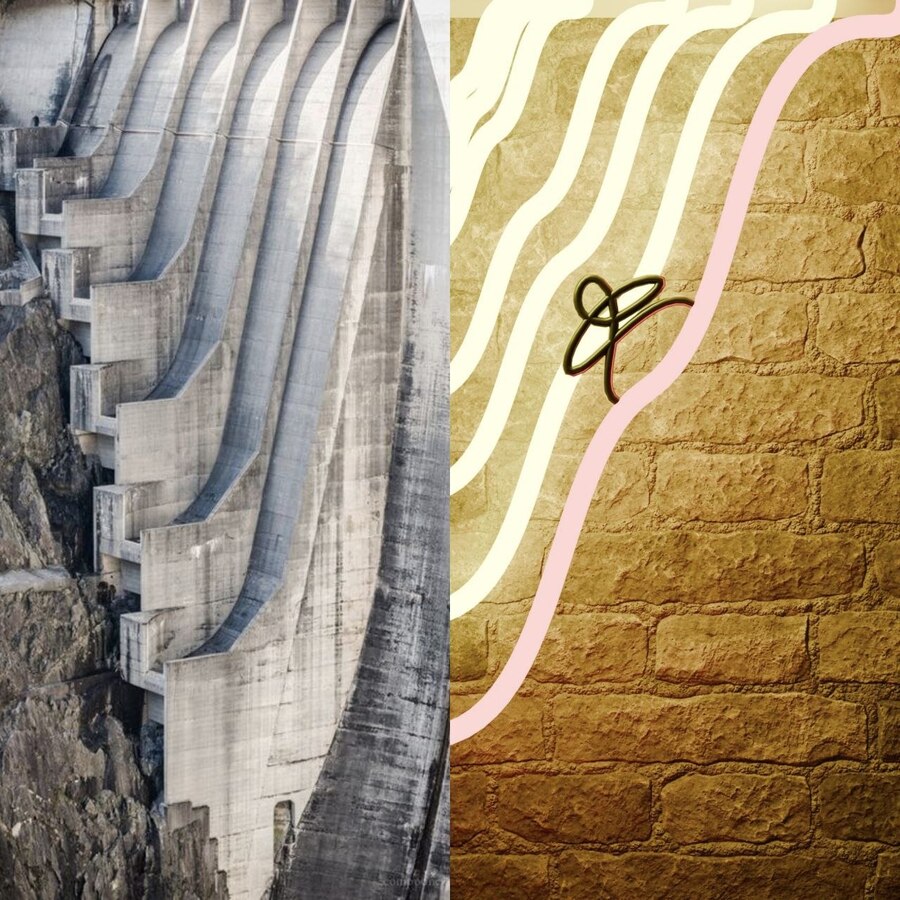
This question became the starting point for my major project, in which large-scale concrete structures are reinterpreted as a skate park. Monumental engineering architecture transforms into a space for movement, experimentation, and interaction with form.
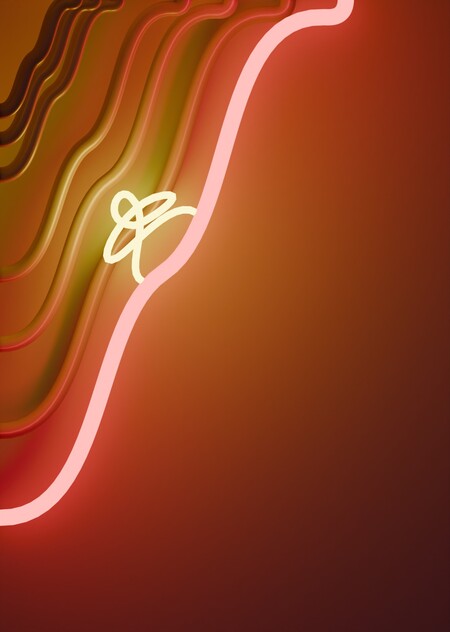
The neon installation, «Ramp Line,» continues this idea on a different scale. It translates the characteristic geometry of concrete structures into an interior space, complementing the abstract architectural composition with the figure of a person gliding across an inclined surface.
Architecture as Form
The composition is fundamentally based on a form inspired by the projecting elements of concrete dam structures. Its character is defined by massiveness, the rhythm of repeating lines, and the smooth transitions between directions.
Curved glass tubes create a spatial pattern that references the architectural geometry of dams. The lines depart from the wall plane, change direction, and interact with one another, generating a sense of movement within a static structure.
Object in 3 modes in the interior View 1
Trajectory of Movement
The red light line serves as the visual focal point of the composition. Against this background is a small figure of a skateboarder, rendered in a thinner yellow tube. The person is represented schematically—as a concise symbol of motion. Their posture gives the impression that they are gliding along the highlighted trajectory, using the architectural structure as a surface for the descent.The contrast between the large, curved lines and the small figure establishes a sense of scale and helps the viewer interpret the composition as a narrative of human interaction with architecture. The static object thereby conveys dynamism: the light line denotes the route, and the figure becomes its primary participant.
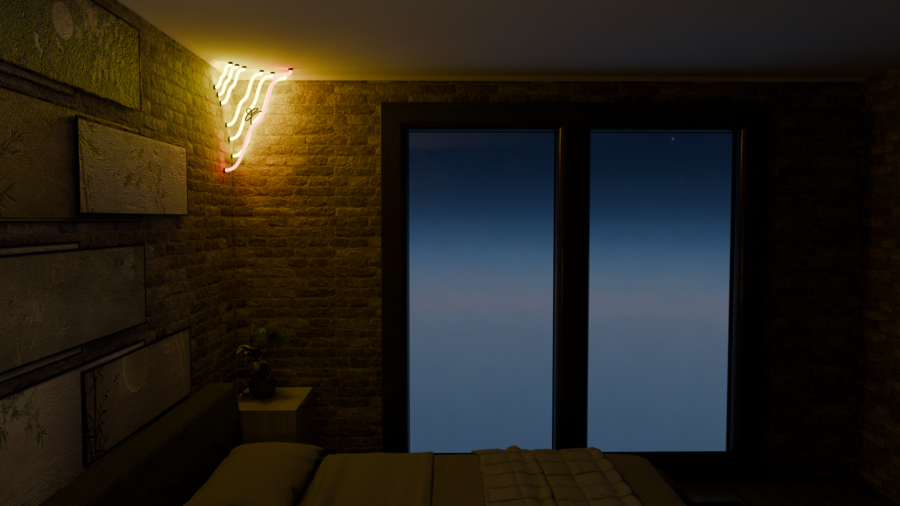
Object under daylight in the interior
Two lighting modes
Переключение между режимами меняет количество света и то, как воспринимается композиция.
Light
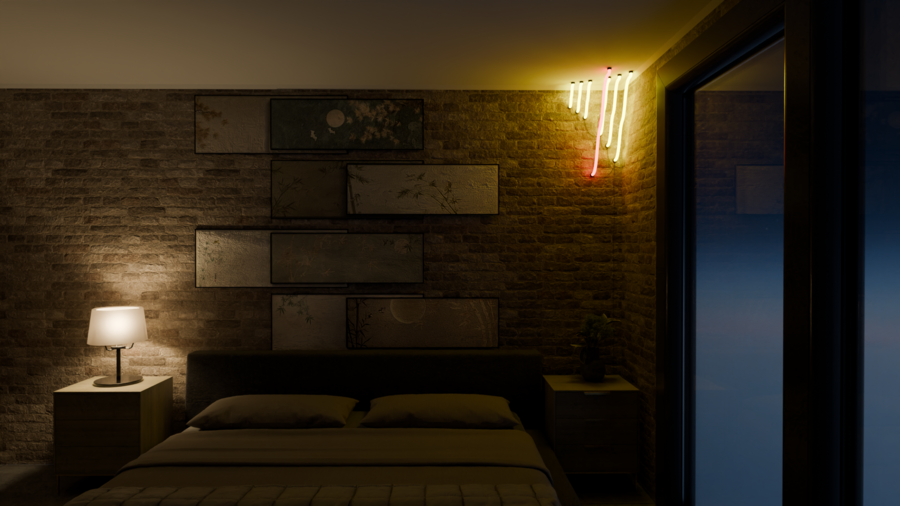
Mode 1. Luminaire
In the first mode, all 12 mm glass tubes are illuminated: the yellow lines and one red line. The thin 8 mm yellow tube, which forms the skater figure, remains off, creating a silhouette against the light.
The light is distributed throughout the composition, creating a rhythm of lines, spatial structure, and the relative arrangement of elements. The object is perceived as a standalone light sculpture, and its architectural drawing becomes the primary visual content.
In this mode, light functions as a tool for shaping space: it illuminates the wall surface and defines the volume of the structure.
Scenography
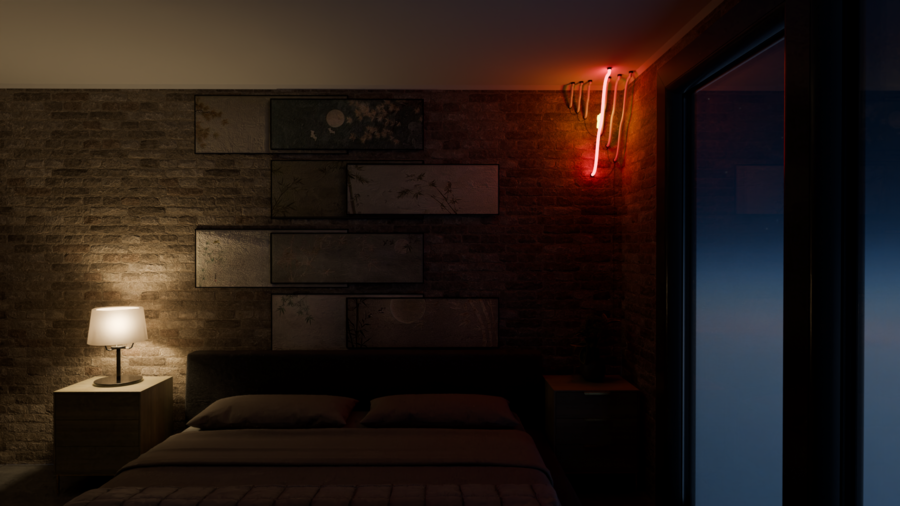
Mode 2. Decoration
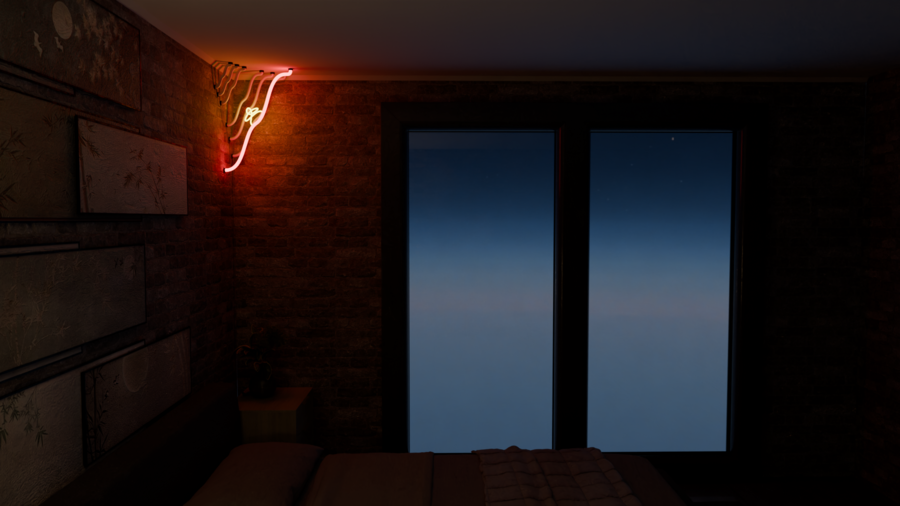
In the second mode, only the 12 mm red tube and the 8 mm yellow tube, depicting a skater, are illuminated. All other tubes remain unlit.
The composition becomes more streamlined, focusing attention on the two key elements: the trajectory and the figure. The theme of motion takes precedence—the figure appears to continue gliding along the red line. Meanwhile, the light reflections in the unlit tubes maintain the composition and establish the primary direction.
If the object reveals itself as a graphic symbol in the first mode, where human, route, and architecture interact.
Material and Technology
For this piece, we selected a classic glass neon stack.
Unlike lighting solutions fixed to a solid base, this construction retains a visual lightness: individual lines exist in space, and light and shadow become part of the composition.
The piece utilizes two diameters of glass tubing. The main system of lines is made from 12 mm tubes. Most of these glow yellow, while the largest and most expressive line is red. The skater figure is crafted from an 8 mm yellow tube.
The difference in tube thickness helps to differentiate the elements by their visual role. The more massive lines form the architectural structure, while the thinner tube denotes the human figure, allowing it to stand out against the main composition.
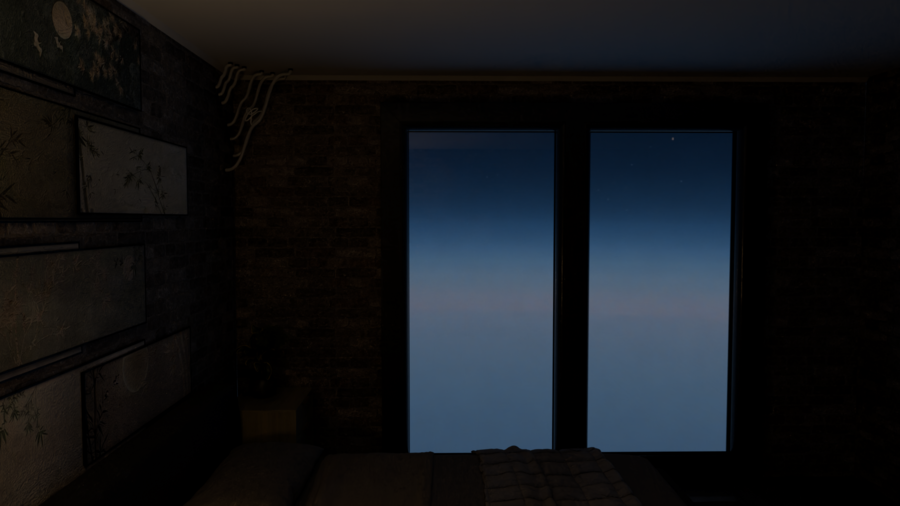
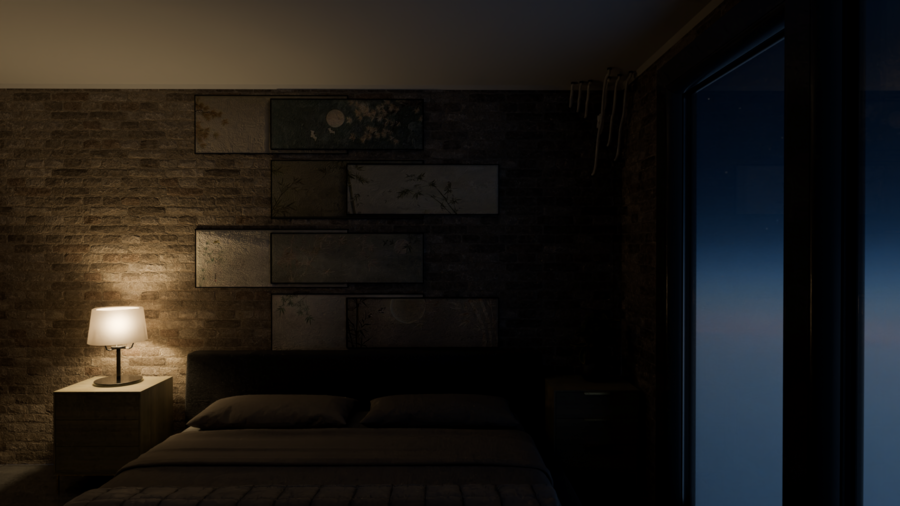
Object without glow
Spatial Placement
The piece is primarily designed for wall mounting.
The composition can appear most striking in a room’s upper corner. In this position, the lines interact with the room’s architecture, and the transition between the walls and the ceiling enhances the sense of depth. However, having a corner is not mandatory; the object can also be placed in the space between just two walls.
By projecting individual elements away from the wall, the neon forms a freestanding volume that changes based on the viewpoint and interacts with the surrounding surface through light, shadow, and reflection.
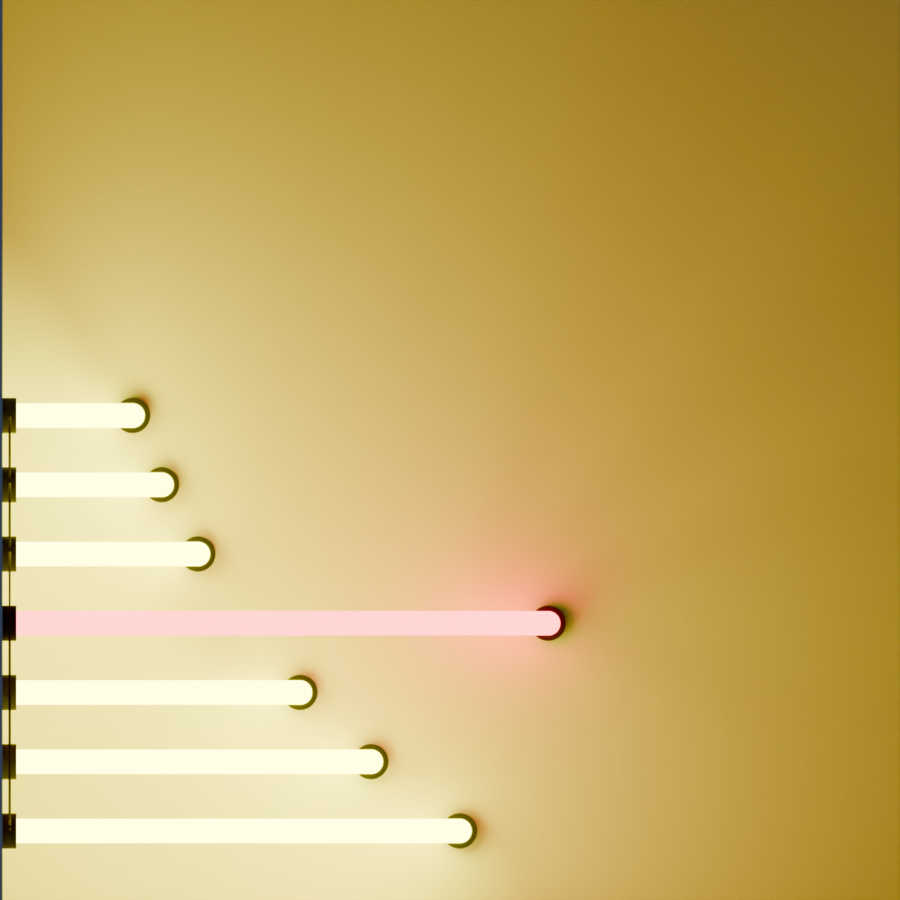
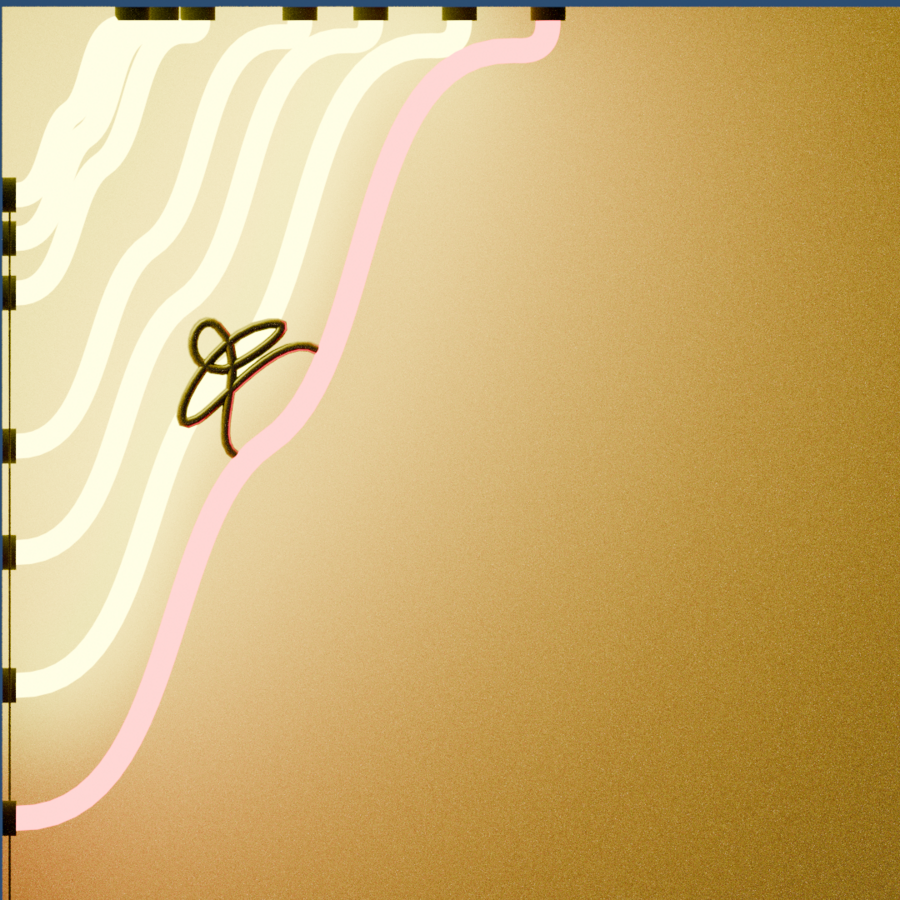
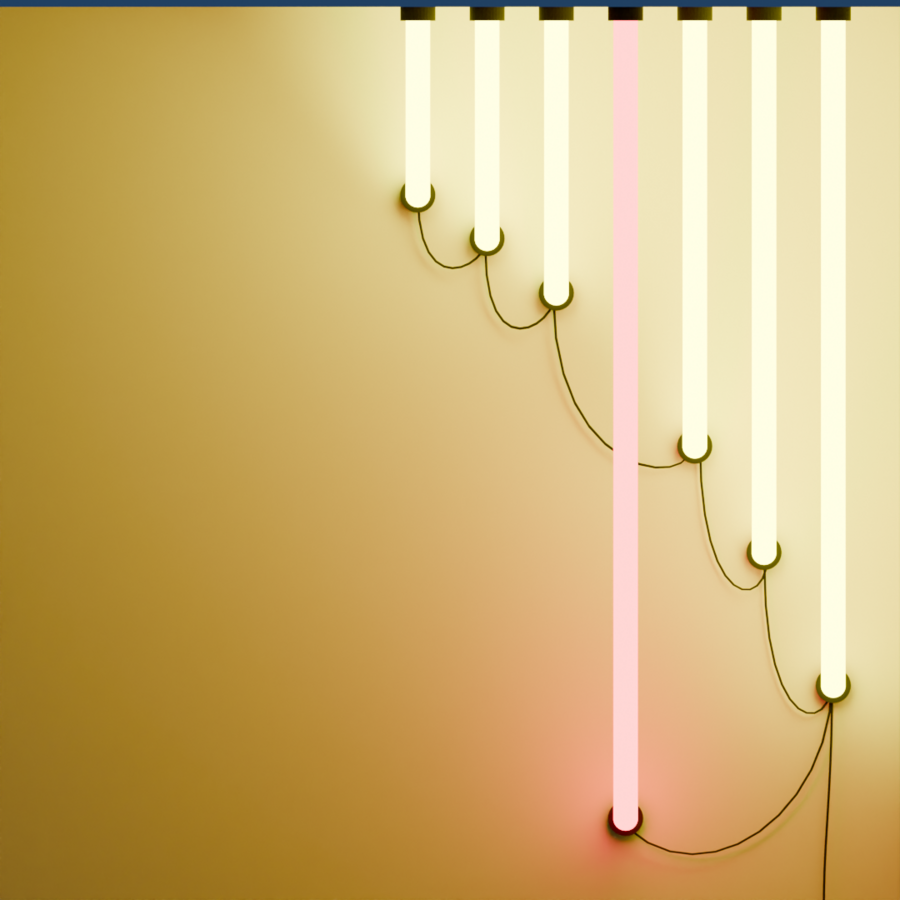
Object view from three sides
Technical Specifications
Object Type: Spatial light sculpture.
Technology: Glass tubular neon.
Placement: Primarily wall-mounted; ceiling mounting is a possibility for consideration.
Dimensions: Height — 60 cm, Width — 40 cm, Depth — 30 cm.
Main Tubes: 12 mm diameter.
Skater Figure Tube: 8 mm diameter.
Illumination Colors: Yellow and red.
Operating Modes: Illumination and decorative mode.
Final design solutions, mounting hardware, electrical connections, and power supply system will be specified during the technical adaptation phase for production.