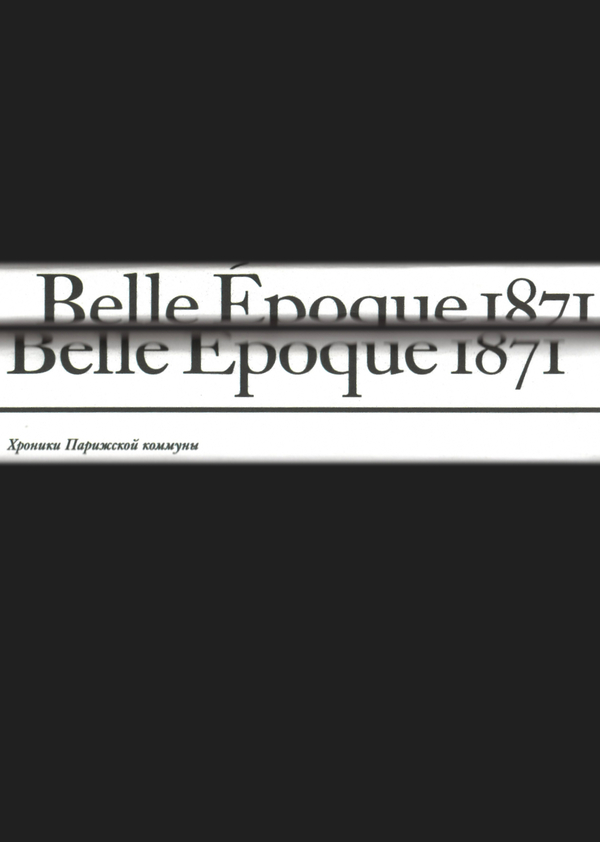
In the ruins of what was once the parliamentary chamber, How joyful the cry of free children will sound, How fun it will be to smash the remains of statues And build bonfires from endless books.
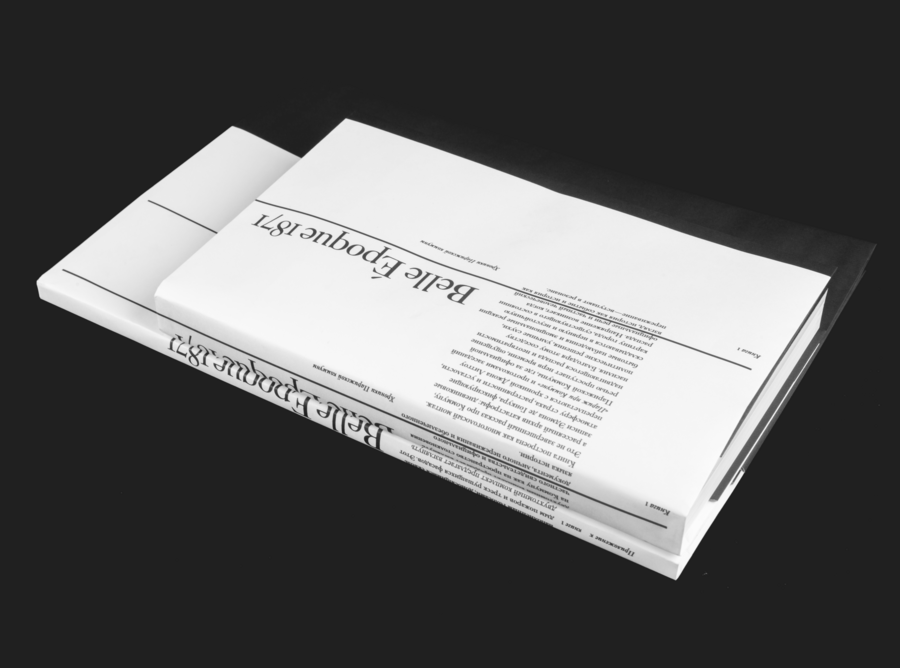
The events of the Paris Commune of 1871 emerge as a cascade of anxious, fragmented echoes seeping through the smoke of fires and the crackle of collapsing facades. This two-volume set offers a way to view the Commune through the space where private testimony meets official documentation—where personal experience collides with the impersonal language of history.
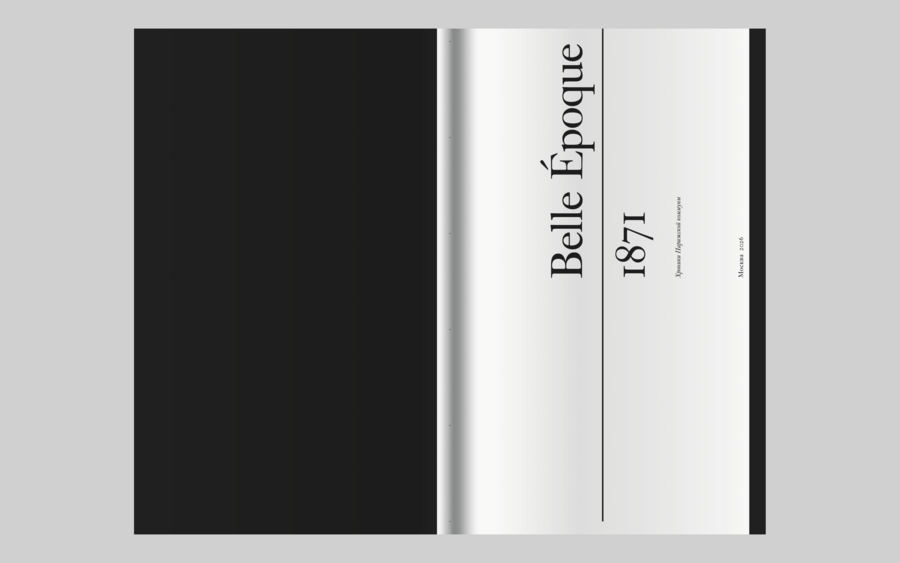
Title Page of the Main Book
The book is constructed as a polyphonic montage. It is not a finished narrative about the Commune, but a scattered archive of catastrophe: Edmund de Goncourt’s diary entries, capturing the atmosphere of fear, confusion, and exhaustion, intertwine with John Lightfoot’s chronicle, «Paris in the Commune, ” and the protocols of the Paris Commune sessions—where beneath the official rhetoric, the nerve of the age emerges—a sense of impending collapse and the inevitability of violence.
The Goncourt diaries cover the period from January 1 to March 5, 1871.
I am tired of being French…
The events of the Paris Commune are counted from March 18th. From this point on, the book mixes fragments of diaries with John Litgoe’s chronicle.
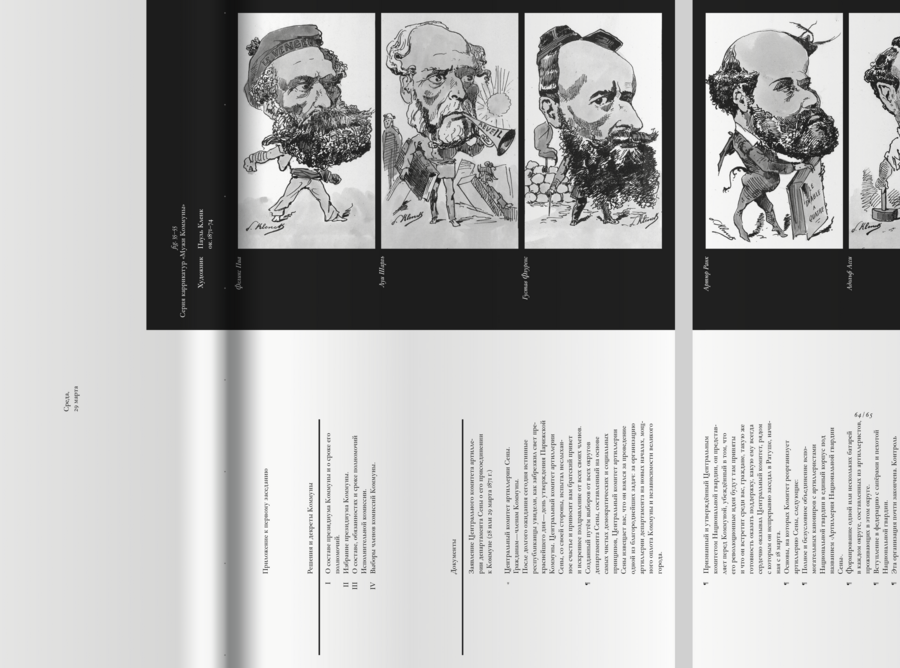
The first protocol of the meetings of the Paris Commune from March 28, 1871. Starting from this date, each day is opened by a protocol and continued with a chronicle of diaries.
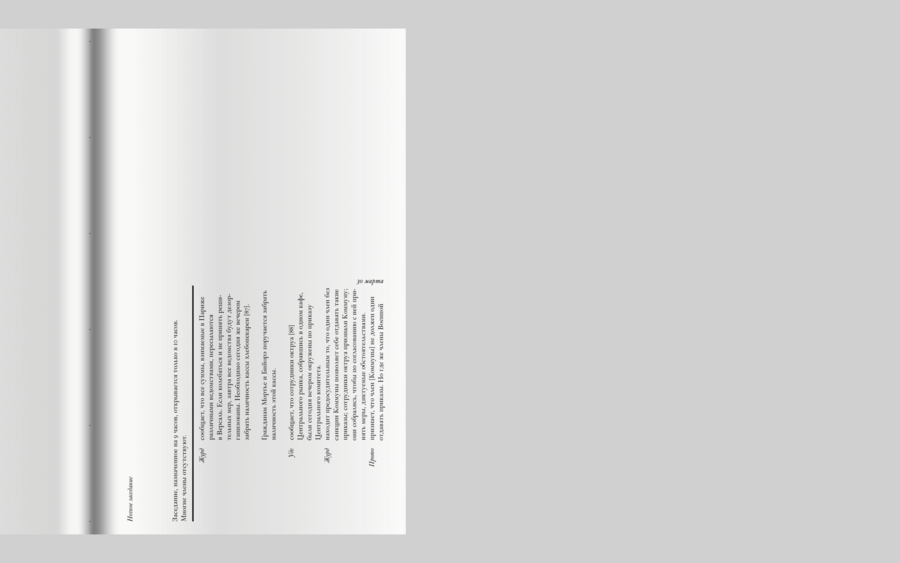
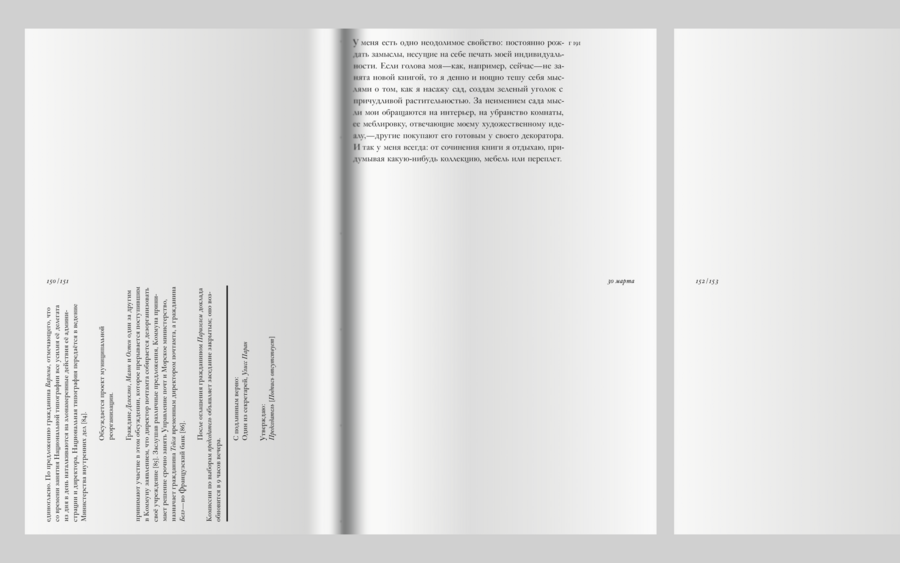
Where protocol and diary intersect. For some dates, records of nighttime meetings have been preserved—these are presented after the diaries.
At the end of each day, a black banner previews the title for the following day.
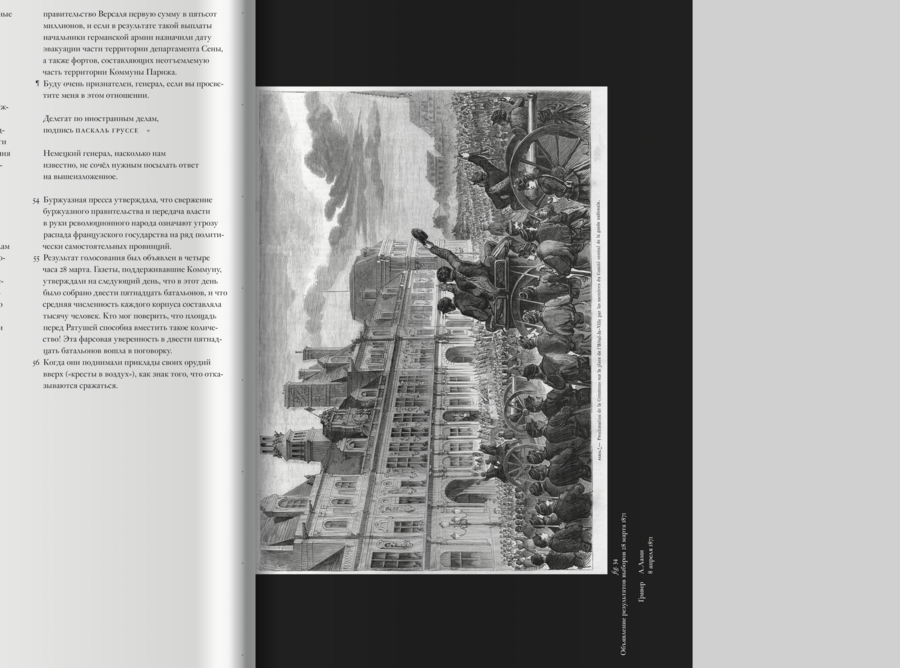
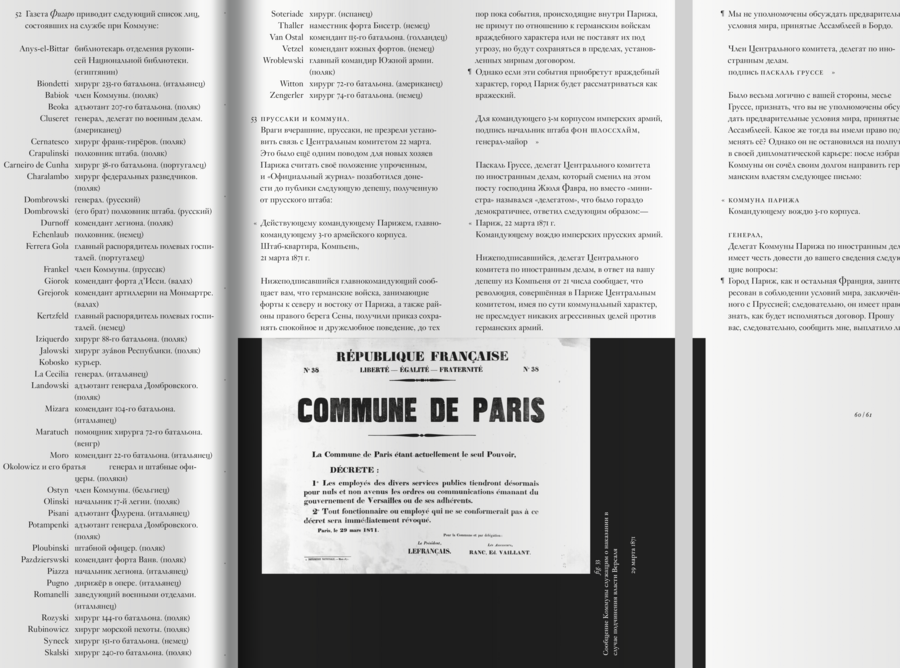
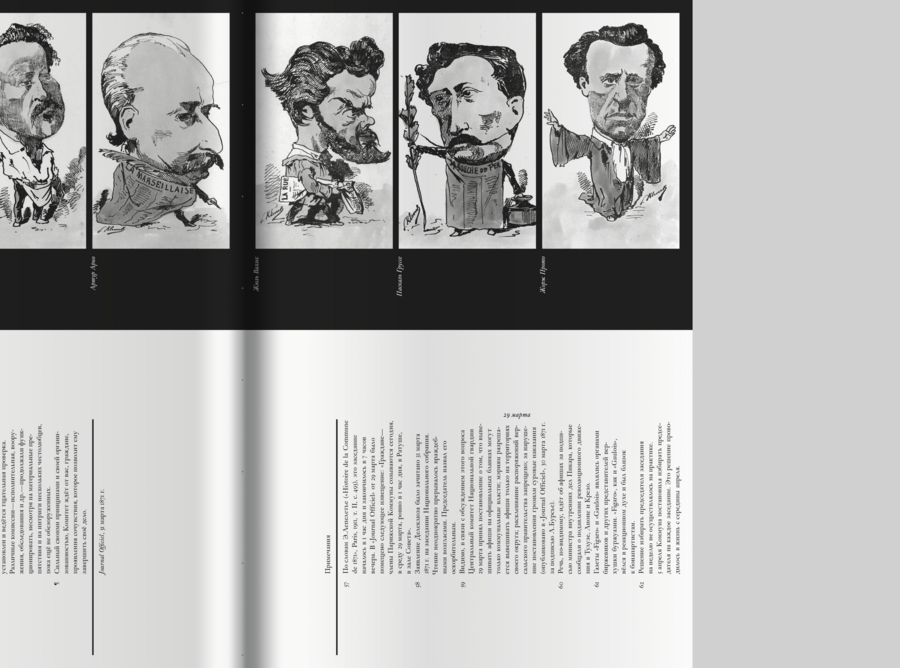
Appendix not only supplements the picture with notes for each text but also reveals the material dimension of this memory. Photographs, manuscripts, newspaper clippings, ephemera, and archival documents form a peculiar ruin museum—melancholic and unsettling.
Title Page Appendices
A running number has been implemented for notes accompanying all texts.
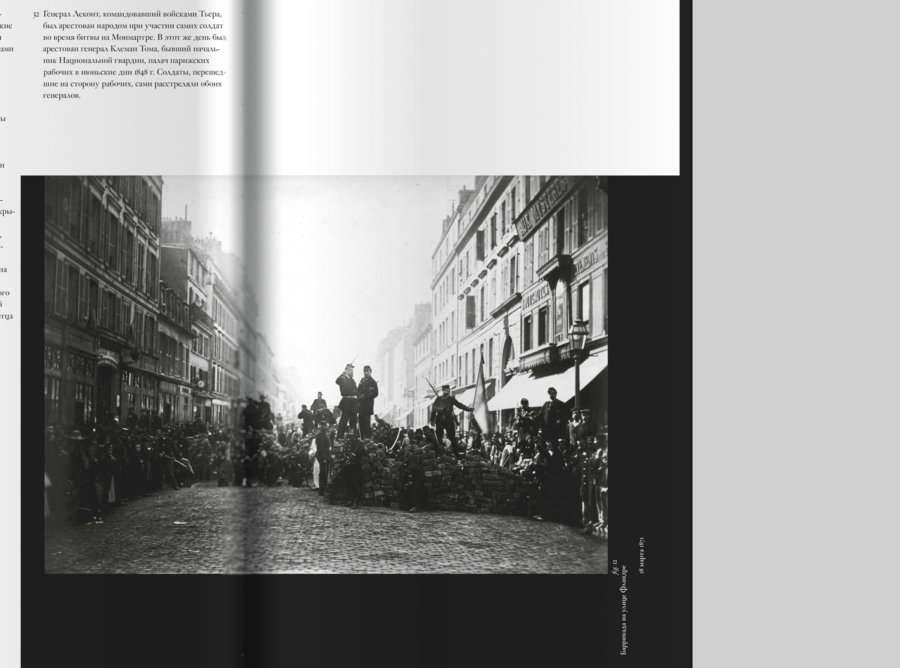
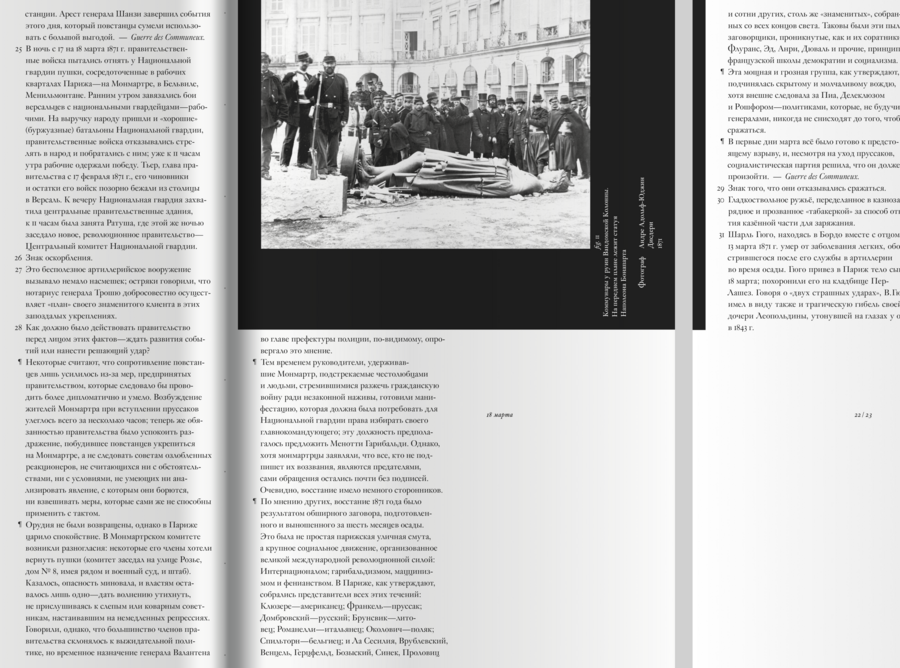
The logic of flow to the next spread is retained for illustration layouts.