Concept
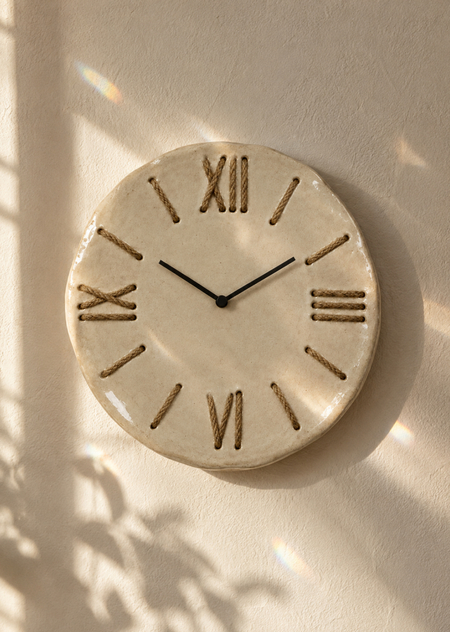
Clocks reflecting the distortions of time perceptionTime is a resource that always feels different. Sometimes it is a strict deadline you fear you won’t meet, and sometimes it is an evening spent with loved ones, when the hours fly by easily and unnoticed.These clocks reflect the dual nature of time through the contrast of materials—hard ceramic and pliable jute thread—reminding us that the nature of time depends solely on our perception.
Original size 1920x1002
Schedule of Classes
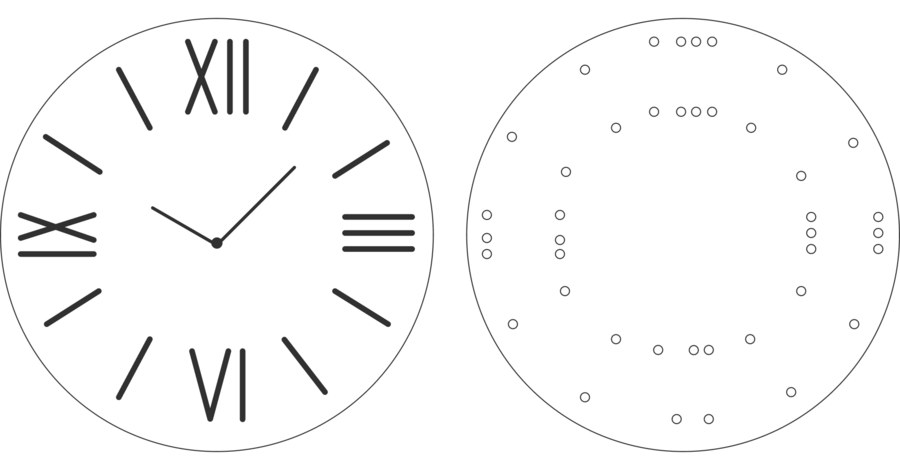
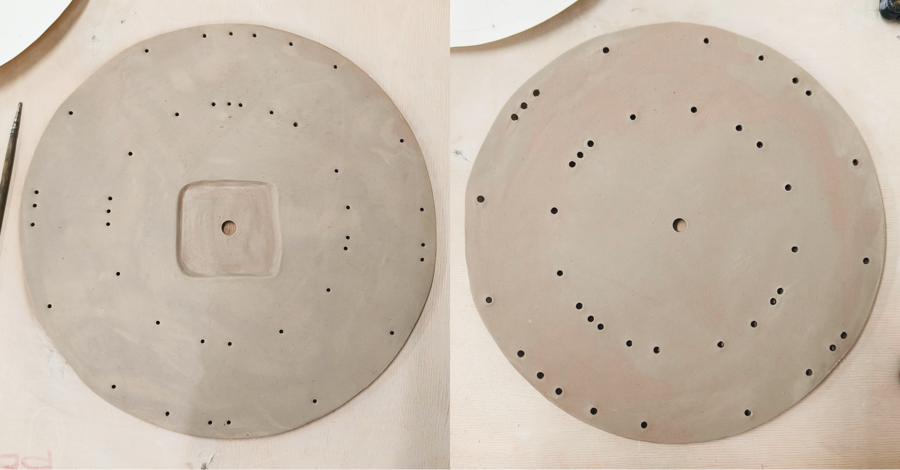
Numbers for the clock will be made from jute twine—the twine will be passed through holes in the ceramic base (on the left of the diagram are the finished clock, with jute twine indicated by thick black lines; on the right of the diagram is the ceramic base with holes).
Original size 1920x1002
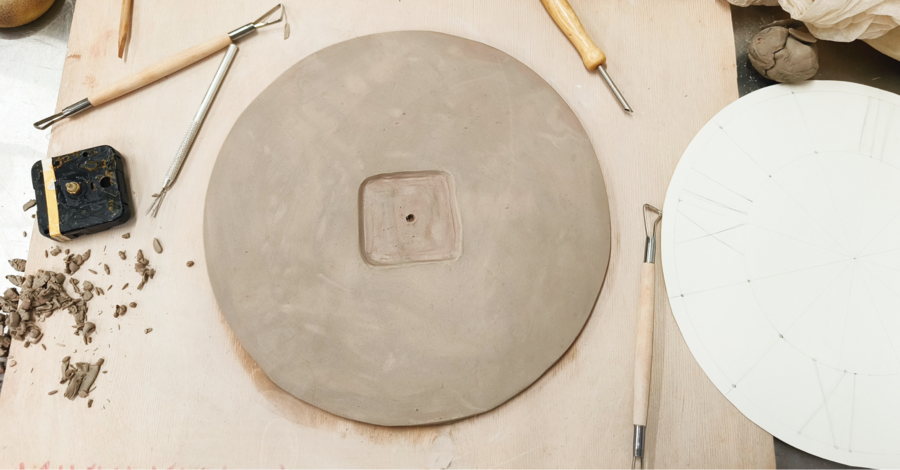
On the back, there is a recess on the ceramic base designed for the movement mechanism.
Original size 1920x1002
Dimensions and Material
Diameter of the clock before firing: 28 cmThickness of the clock before firing: 0.7 cmLength of the recess for the clock mechanism: 8 cm
Width of the recess for the clock mechanism: 8 cm
Height of the recess for the clock mechanism: 0.3 cmMaterial—white clay (firing temperature: 950°C)
How to Replicate the Work
Roll out the slab of clay. Cut a circle from the slab (the edge can be left slightly uneven). Create a recessed loop in the center for the mechanism (from the back side). Drill a hole in the center for the axle onto which the hands will attach. Drill holes around the circle for the jute cord: a pair of holes for each Roman numeral.