Prokhorovskoye Field is a place where history exists not only in museum exhibits but also in the landscape itself. The memorial complex and museum displays tell the story of the Great Patriotic War, including the battle of July 1943. Visitors come here to learn the history of the site, witness its material evidence, and preserve the memory of their visit. But what happens to this connection after leaving the museum?
The impression of visiting a museum can be preserved in several ways: through a photograph, a postcard, a book, or a souvenir.
However, the object that continues to exist in the visitor’s daily life is particularly interesting. It can be worn, used, or gifted to someone else.
Thus, the souvenir becomes another point of interaction with the museum, extending beyond the exhibition itself.
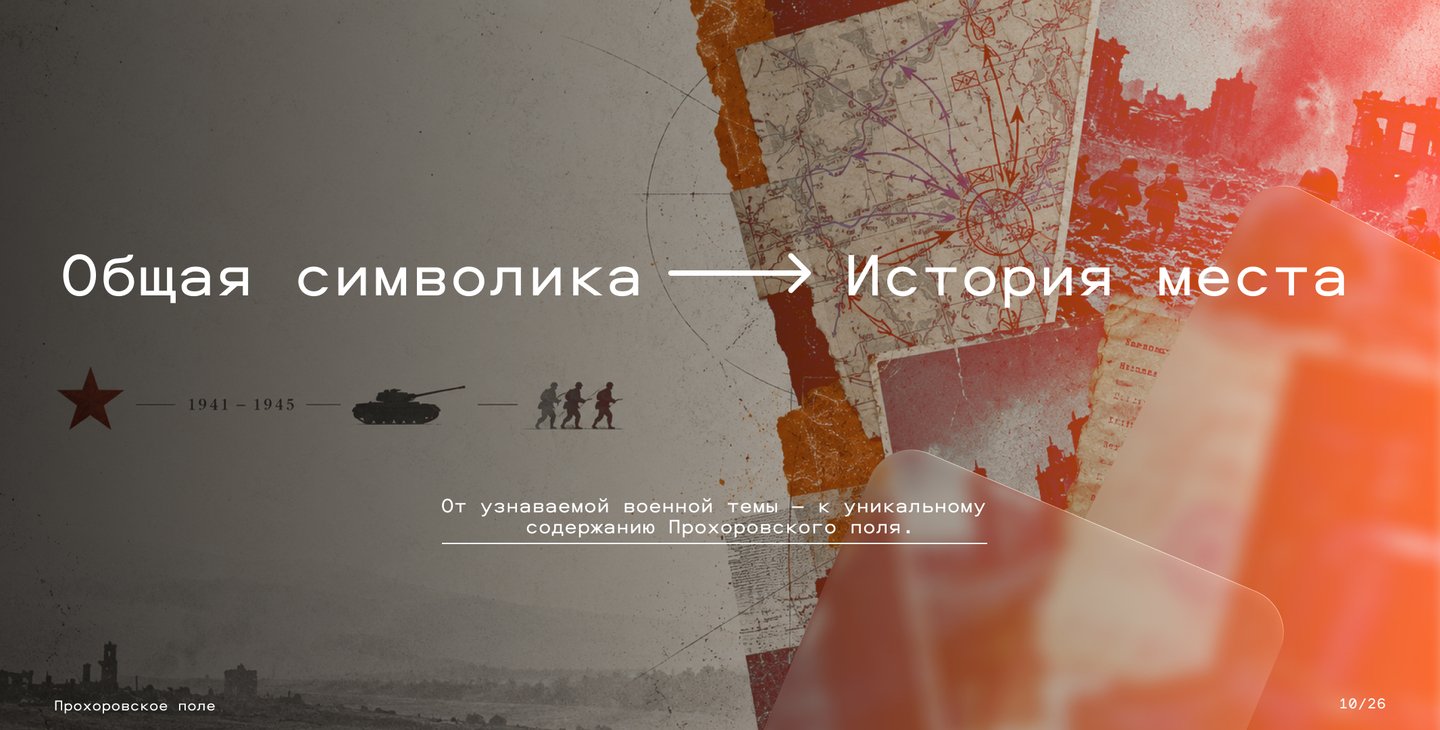
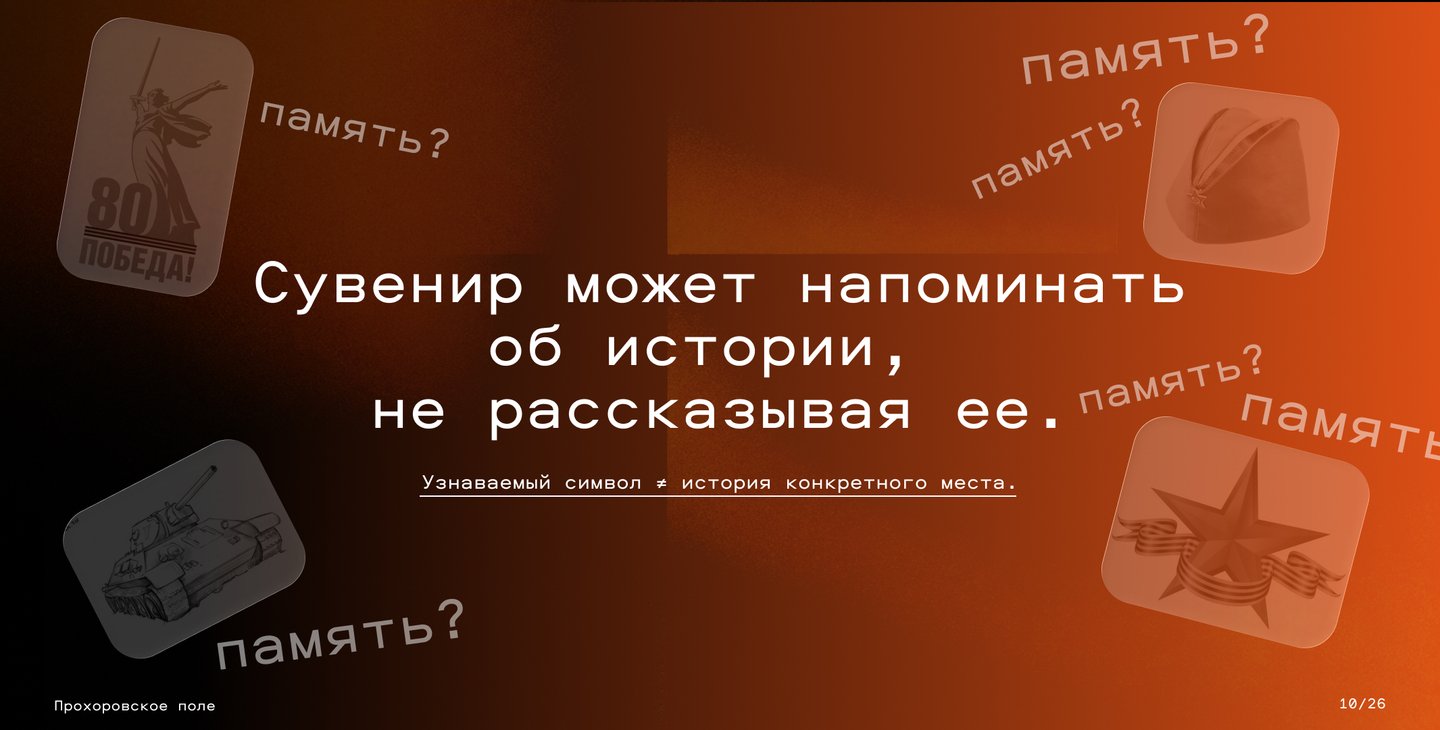
Military symbolism helps quickly identify the theme. However, a star, date, or tank silhouette on its own does not explain what event occurred in a specific place or why it is significant.In the examined examples of museum products from military-historical museums, there are both general commemorative images and items linked to specific storylines.The Prokhorovskoe Field possesses its own historical material that can form the basis of a recognizable collection.This raises the question: how can a souvenir be both a contemporary object and a carrier of a specific history?
The souvenir collection might include several studios. Tourists value keeping a memento of their trip. Young visitors seek a contemporary item they’ll want to use. For a local resident, a souvenir can serve as a symbol connecting them to the region. Furthermore, all three groups can be offered not random, disparate items, but products from a single visual system.
The solution is a capsule souvenir collection built upon visual materials associated with Prokhorovsky Field. These materials could include archival maps, historical photographs, documents, museum artifacts, and local narratives. These materials serve as the starting point for graphic design development. With their help, it is possible to create objects that possess their own aesthetic while simultaneously maintaining a connection to history.
The collection should not be limited to the direct reproduction of archival images. Historical material can be explored as a graphic system: by isolating characteristic lines, compositions, typography, and textures. These elements can then be reinterpreted into new imagery. However, the connection to the source must be maintained. Therefore, alongside a contemporary piece, the visitor will be provided with a brief explanation regarding the origin of the material used.
The developed graphic system can be applied to various product categories. Apparel and accessories integrate it into daily wear. Print collateral allows for a more detailed narrative about a specific theme. Small souvenirs become accessible keepsakes. A unified visual language allows these categories to be consolidated into a single collection while preserving the potential to create new thematic series.
The uniqueness of this collection lies not only in the graphics but also in the content. Visitors receive an item connected to a specific museum narrative. Information about it can be featured on a label, packaging, or accompanying card. In this way, the museum souvenir continues the educational function of the exhibit—it does not replace it, but provides a reason to return to the history and learn more.
To launch a collection, it is not necessary to produce the entire assortment immediately. You can start the project with a small pilot series that includes several items from different categories. This will allow you to test the graphic system, evaluate production solutions, and gather visitor feedback. A crucial part of the preparation will be collaboration with the museum: coordinating historical themes, verifying materials, and selecting items for the initial release.
After the pilot launch, we can assess how well the proposed system suits the museum audience. For this, it is important not only to consider interest in the products themselves but also to determine whether visitors recognize the connection between the merchandise and Prokhorovsky Square, whether they grasp the historical content, and whether they want to use the items outside of the museum. These results will help us decide which categories are worth further developing.
The souvenir collection could offer a fresh way for Prokhorovskoye Pole to engage with its audience. Historical materials a visitor encounters during a tour find a continuation in everyday objects, all while maintaining a connection to their origins. The core idea behind this proposal is that contemporary design can help not only preserve memory but also transmit it to future generations.