Why It’s Important
When you create a sculpture, you put a lot of work into it and think about every detail, but bad photos can ruin the impression of your work.
It’s worth a lot of time to shoot.
It’s an important part of the creative process that helps you imagine your sculpture on the best side. Try to post pictures and process them for at least a day. It is also important to understand that for students' portfolio, we create clean, neutral photographs, where the main task is to show the shape and quality of performance. And already on the new portfolio, you can experiment with perspective, light, and delivery.
Technical components of the survey
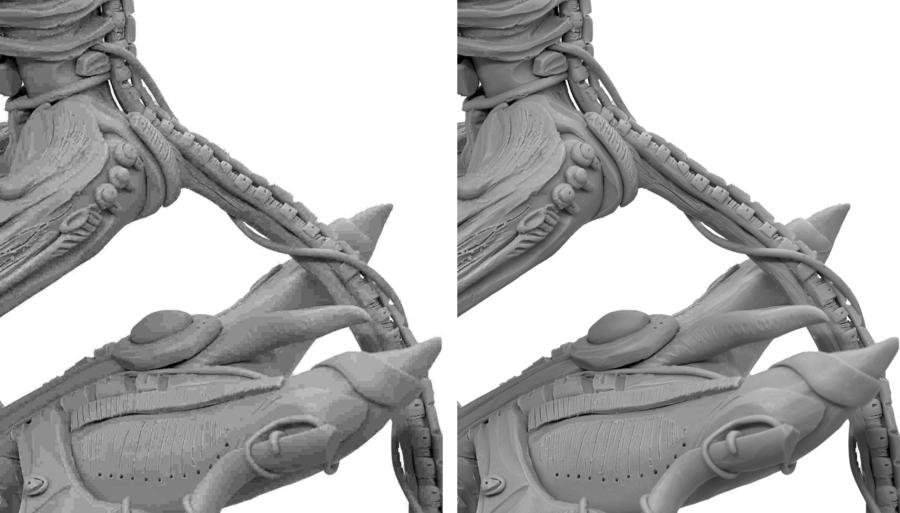
low quality / high quality
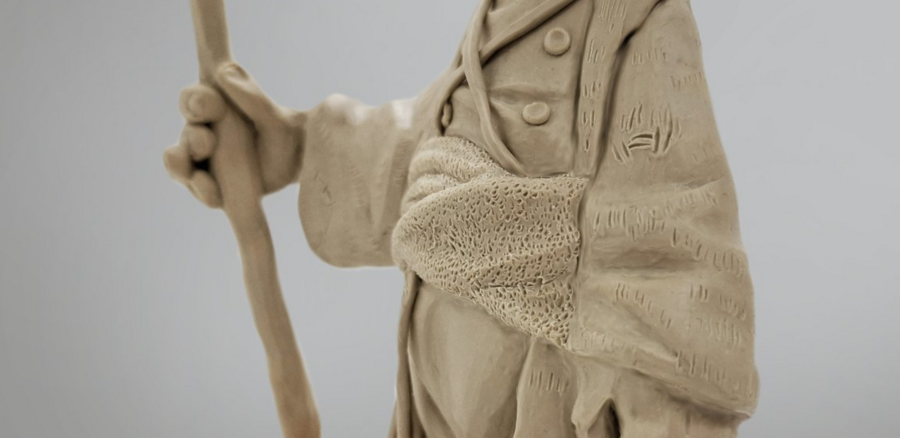
Right hand is in focus, so we’re paying more attention to the details of the clothes.
Examples of misdirected exposure
A good example of different perspectives and plans
This treatment is not very successful because the sculptures look painted and the photo does not remove the frame.
Lighting
The main task of lighting is to highlight the details and make the form expressive.
Good examples of directional light
A good example of a counterlight — notice how it goes with a thin stripe along the contour of the sculpture and highlights the details.
If the light falls wrong, the image becomes flat, and the sculpture loses its sense of volume. Experiment with different light patterns until you have the best result.
Colour lighting
If you have achieved a good result with neutral lighting, but you want to make the photos even more expository, add color accents. Such a light source must be properly picked up, its shade must not be disputed with the nature of the sculpture, distort it, conceal the details or turn the volume into a stain. The color light needs to be treated in the same way as the main light — its task is to supplement the light and increase the sense of depth.
blue highlights certain features of the sculpture, not fills it.
blue and red light sources are on different sides, but do not argue with each other because one of them is focused and the other is the main light source.
Background
The background affects the perception of the work as much as the light. He shouldn’t distract or argue with the sculpture. It is better if it is neutral and harmonious in color — it is often used to use a pure cyclone or to provide quality wrapping.
The bad example is that the yellow sculpture looks too sharp on a blue background.
Successful examples of neutral background
Another good example is the double glow as an artistic reception.