История развития материальной культуры: XIX–XXI век
Часть
Material Culture as Art Context: From the Industrial Revolution to the Digital Age
What is this course about?
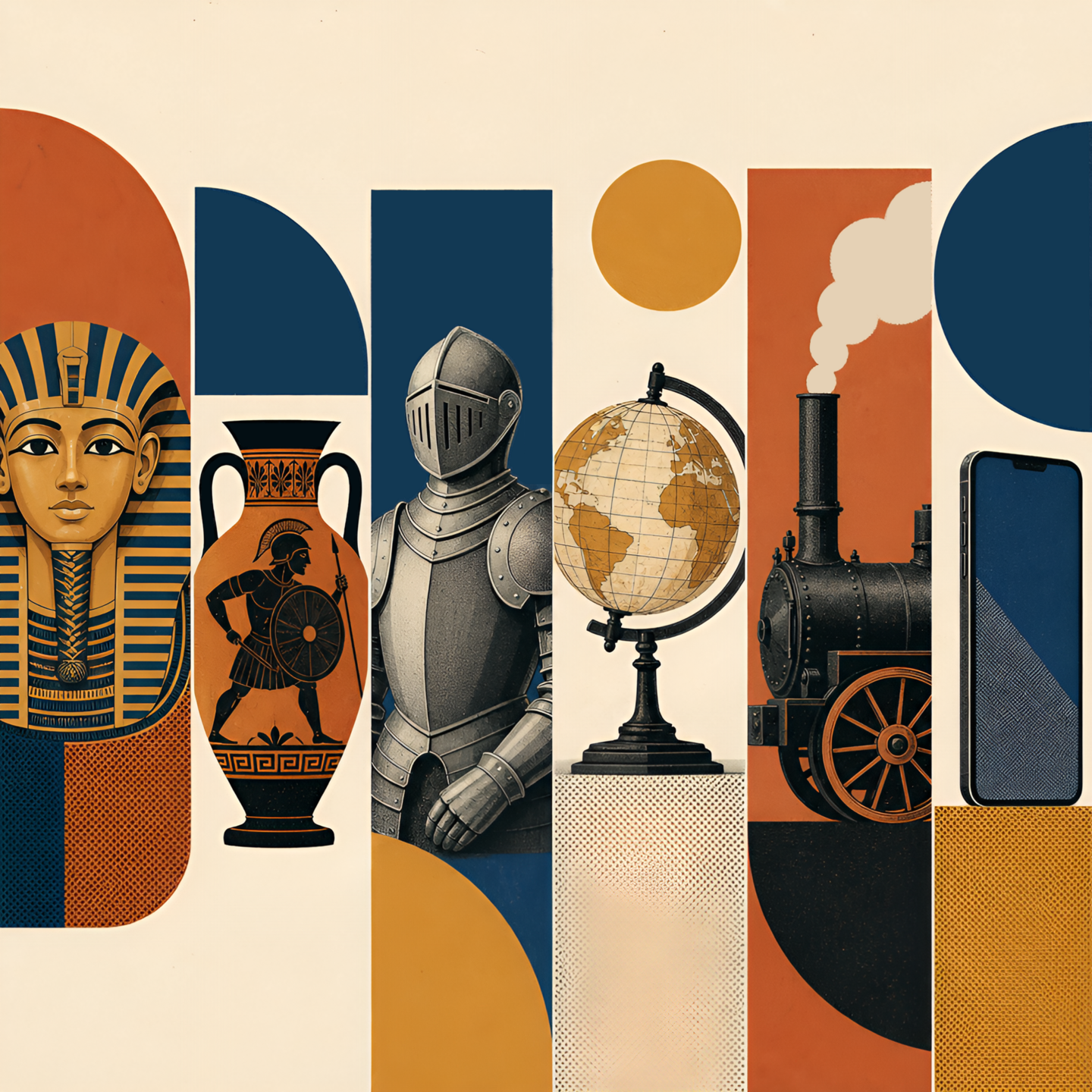
The nineteenth century began with the steam engine and the assembly line, and concluded with electricity and department stores. The twentieth century introduced plastic, synthetics, modernism, and postmodernism. The twenty-first century digitized objects, making everyday life virtual. Material culture has changed more over these two centuries than in the preceding millennia.Listeners will trace how mass production made goods accessible, how modernism altered conceptions of form and function, how advertising and brands began to shape taste, and how digital technologies restructured our relationship with the material world. Special attention is given to the links between everyday life and art: how advertising influenced painting and graphic design, how everyday objects became part of artistic statements, and how design reflected the spirit of the age.The course culminates in the ability to characterize the key stages in the development of material culture from the 19th to the 21st centuries and to explore how the material world influenced art. The final project will be a visual study dedicated to a chosen aspect of the material culture of this period.
Who is this course for?
This course is ideal for:— Undergraduate students in their 1st or 2nd Year at the HSE Art and Design School who are studying art history and wish to better grasp the surrounding context.
— Faculty members at the HSE Art and Design School and other creative programs seeking materials to integrate into their teaching.
— Anyone interested in understanding how the everyday lives of people were reflected in the art of different eras.
Course Duration: 6 weeks.
Contact Hours: 36 academic hours.
Classes are held in a blended format: in-person lectures and seminars with the option to connect online.
Course Prerequisites— Knowledge of the fundamentals of material culture (or completion of the first course, «History of the Development of Material Culture: From Antiquity to the 19th Century»).
— Interest in contemporary culture and design.
— Access to the internet for working with visual materials and the platform.
What will students learn in this course?
Throughout the course, students will learn to:
— Characterize the key developmental stages of material culture from the 19th to the 21st centuries. — Analyze objects and phenomena of contemporary material culture. — Uncover how advertising and media shape the meaning of objects. — Compare items from different decades to identify shifts in everyday life. — Create a visual study based on collected materials.
What practical assignments will the course students complete?
During the course, students will complete the following assignments:— Identification Challenge: defining an object and its context.
— Essay on paradigmatic shifts in 20th-century material culture.
— Case Study Analysis: the history of a single object—from material to meaning.
— Comparative analysis of two objects from different periods.
— Visual research conducted on the hsedesign.com platform.
Thematic Lesson Plan
The Industrial Revolution and Mass Production
— The Industrial Revolution: new materials and technologies.
— Department stores and the birth of consumer culture.
— Steam engines, sewing machines, advertising: things become mass-produced.Assessment Component: Identification Quiz (identifying an object and its context).
Modernism
— Modernism: functionalism and new forms.
— The Bauhaus and the design of daily life.
— Plastic, glass, metal: 20th-century materials.Assessment Component: Essay on paradigm shifts in 20th-century material culture.
Mass Consumption and Postmodernism
— Mass consumption and postmodernism.
— Advertising and brands: objects as status symbols.
— Pop Art and consumer goods.Assessment Component: Case Study Analysis (the history of a single object).
The Digital Age
— The Digital Age: from analog to digital.
— Virtual objects and the material world.
— Social media and new materiality.Assessment Component: Comparative analysis of two objects from different decades.
Contemporary Issues: Ecology and Sustainability
— Contemporary Issues: ecology and sustainability.
— Ethics of production and consumption.Assessment Component: Visual Research Project (preparation).
Final Project
— Compiling the visual research.
— Presentation and discussion.
— Assessment Component: Final Project Defense.
Capstone Project
A visual study on the hsedesign.com platform dedicated to a chosen aspect of material culture from the 19th–21st centuries. The study includes an analysis of 5–7 objects, their connection to the artistic processes of the era, and original conclusions.