The History of the Human Figure in Art
Concept
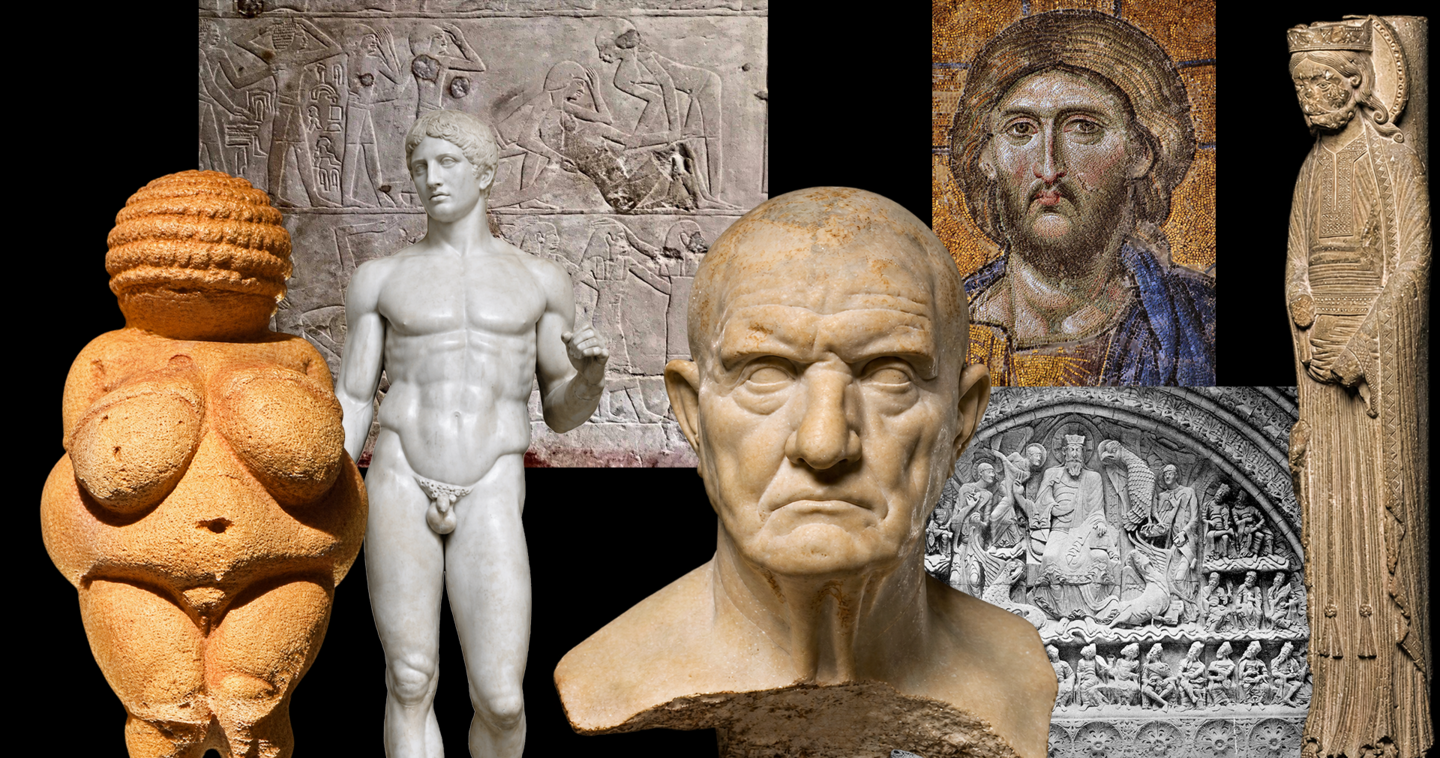
The human body is one of the enduring motifs in art history, yet the ways it is depicted have evolved with each era. In some works, the figure is rendered symbolically; in others, it adheres to established canons or embodies physical perfection. Artists might strive for naturalistic resemblance, emphasize individual characteristics, or forgo anatomical accuracy in favor of symbolic or spiritual meaning. These variations reflect societal perceptions of humanity, beauty, and one’s place in the world.
Key Question and Hypothesis:
How have perceptions of humanity, beauty, and the spiritual world influenced the depiction of the human body in art across different eras?
It is hypothesized that the body image was shaped not only by knowledge of anatomy and the artist’s skill but also by cultural, religious, and societal values. Therefore, conventionality, idealization, and realism are not sequential stages of mastery, but rather distinct modes of expressing artistic and cultural meaning.
Material Selection Principles:
The research covers the period from the prehistoric era to the 14th century CE. It will include selected artifacts of prehistoric art from Europe, Ancient Egypt, Greece, and Rome, as well as examples from the Byzantine and Western European medieval traditions. This selection will allow for a comparison of the artistic systems of the Mediterranean and Europe, without claiming to present a universal history of the depiction of the human form.
The visual sequence will be composed of sculpture, relief, painting, and mosaic. Works will be selected based on their significance to the era, the expressiveness of the imagery, and the possibility of comparative analysis. Priority will be given to artifacts with verifiable attribution and available data regarding dating, material, origin, and repository.
Principles of Structuring and Analysis: The material will be organized primarily chronologically. Works will be compared based on proportions, posture, movement, plasticity, facial depiction, degree of individualization, nudity, and dress. The analysis will demonstrate which features of the body the artists emphasized, altered, or omitted, and what role these choices played in the work. Convention will not automatically be considered a lack of skill; the monument’s purpose and cultural context will be taken into account.
Principles for Working with Textual Sources: Scientific publications on art history, research on specific artifacts, and museum catalogs will be utilized. Sources will be selected based on their reliability and relevance to the topic. They will help clarify the context, dating, attribution, materials, purpose of the works, and the characteristics of artistic traditions. Textual information will complement the independent analysis of visual material, not replace it. Borrowings and quotations will be formatted according to citation rules. Images will be sourced primarily from museum collections and scholarly catalogs. Captions will include the author or attribution, the title, and the date of creation; the source will be cited for every image. The bibliography and image source list will be presented separately.
Section I. Primitive Art
In prehistoric art, humans depicted themselves less frequently than animals. However, surviving figurines, engravings, and cave paintings show that the human figure was already capable of conveying various ideas back then. In some artifacts, the focus is on individual body parts, while in others, it is on posture, movement, or interaction with animals. Comparing these images reveals that there was no single way to represent the human form.
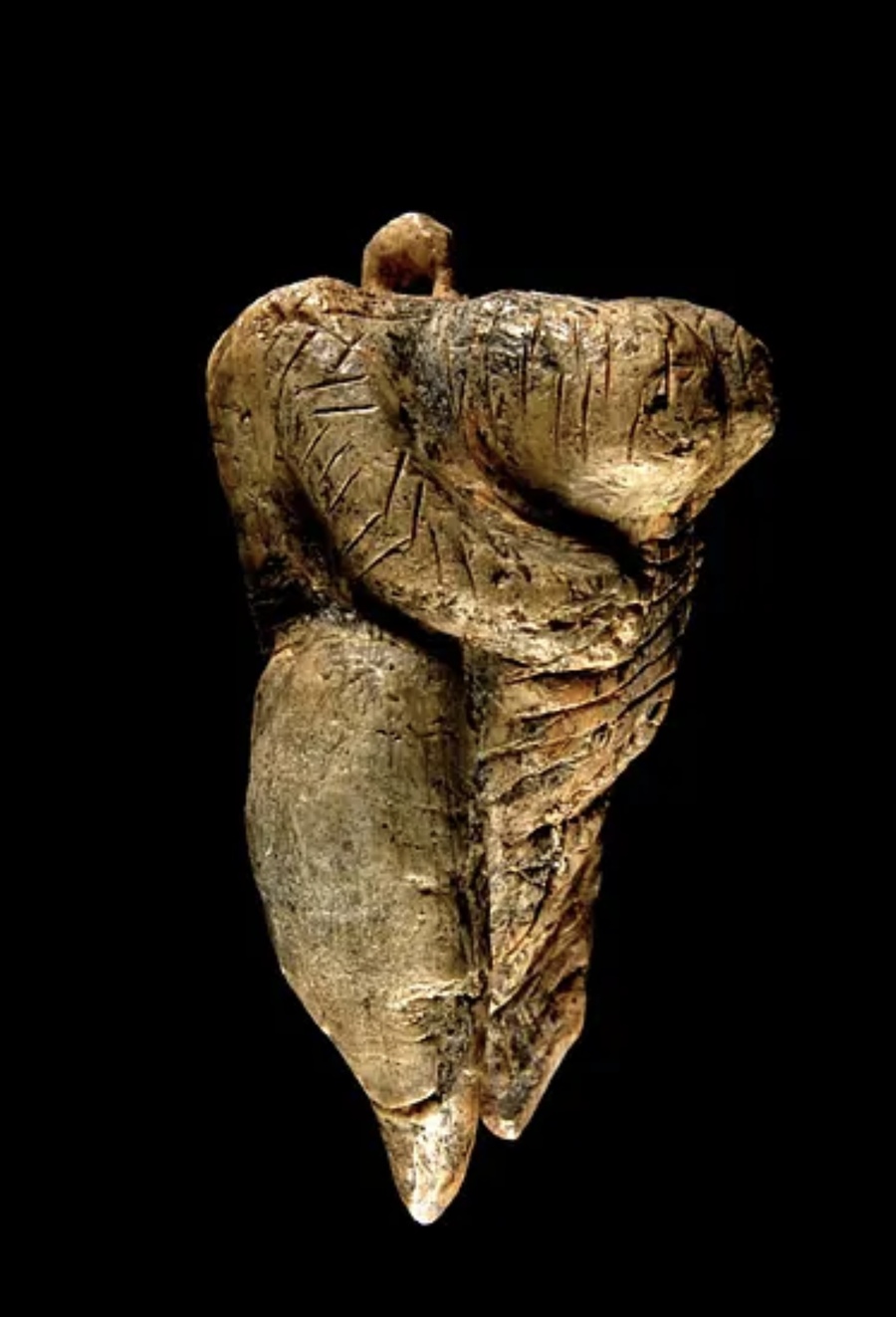
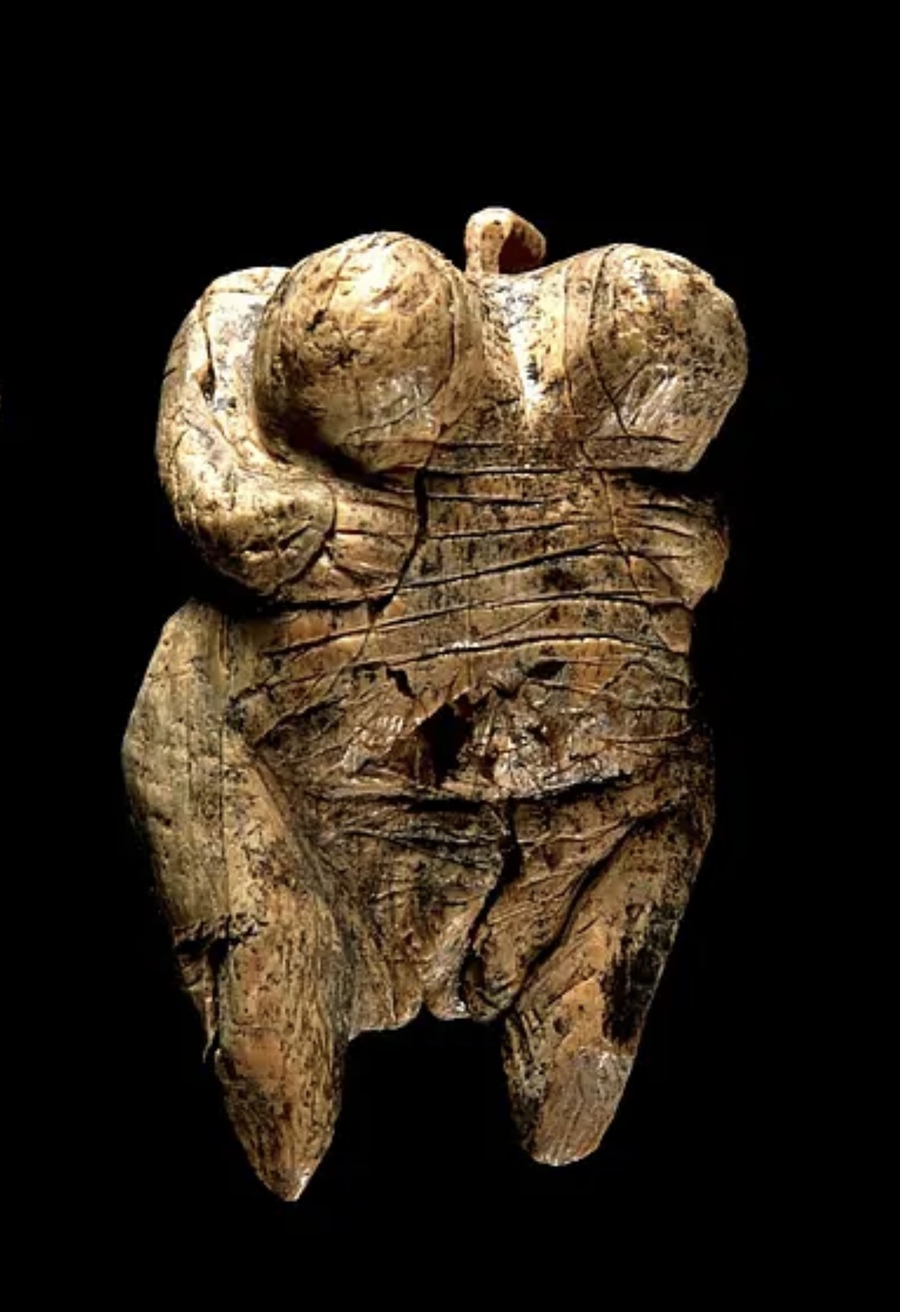
Unknown artist, «Venus from Hohle Fels, ” circa 40,000 years ago.
The figurine was discovered in 2008 in the Höhle Fels cave in southwestern Germany. Instead of a head, it has a small ring, which likely allowed the object to be worn as an amulet. The chest, abdomen, and pelvic area are rendered with particular care. The arms and other parts of the figure are conveyed more simply. This suggests that the artisan paid varied attention to different body parts, rather than striving to reproduce the entire figure with equal detail. The purpose of the figurine is unknown. Its significance cannot be reduced to a single, definite interpretation.
Unknown master, «Venus of Willendorf,» circa 29,500 years ago.
Venus of Willendorf was discovered in Austria in 1908. Her body is characterized by pronounced, rounded forms: the breasts, abdomen, hips, and buttocks are particularly emphasized. The arms are depicted schematically, the feet are absent, and the face is not rendered in detail. The head is covered with a repeating zigzag pattern, which researchers attribute to a hairstyle or headdress. The artist’s focus is primarily on the volume of the figure. The purpose of the figurine remains unknown. It is often associated with fertility, but this is only one possible interpretation, not an established fact.
Unknown artist, «Man and Bird, ” Lasco Cave mine, Upper Paleolithic.
In the Lascaux cave, human figures appear far less frequently than depictions of animals. One well-known example is located deep within the passage: next to a figure with a bird’s head are a bird and a large animal, typically identified as a bison.
The human figure is rendered using several simple lines. It lacks almost any anatomical detail, whereas the animal’s image is developed much more expressively.
Here, the human body becomes part of the overall scene. Its importance lies not in itself, but through its position and relationship with the other images. The meaning of the entire composition remains a subject of discussion.
Unknown masters, the «Circular Stage,» the end of the Epigravettian period—the Mesolithic.
In the Grotto of Addaura on Sicily, there is a frieze preserved depicting approximately 16 human figures and about 10 animals. Some of the figures are arranged in a circle; their arms and legs are in various positions, creating a sense of movement. Researcher Paola Budano views this group as a possible scene of a circle dance. She notes the recurring poses, limb positions, and arrangement of the figures. However, there are other interpretations of the composition, so the dance narrative cannot be considered definitively proven.
The earliest depictions of the human body did not adhere to a single rule. In small figurines, masters emphasized distinct anatomical features and volumes, while prehistoric rock art focused on posture, movement, and human interaction with the surrounding world. In early art, the human body could become a standalone plastic form or part of a more complex scene. This demonstrates that various methods of representing the human figure existed long before the emergence of the artistic canons of ancient civilizations. In Ancient Egyptian art, the depiction of the human figure gradually conforms to a stable system of proportions and rules—a system we will explore further.
Section II. Ancient Egypt
In this section, we transition from primal imagery to art where the human figure adheres to established conventions. The body becomes a means of conveying a person’s place in society—their age, profession, and connection to religious beliefs.
Unknown Master, Narmer Palette, c. 3100–3000 BCE
On one side of the palette, Narmer, the pharaoh, raises a mace over his defeated opponent; on the other, he leads a triumphant procession. His figure is significantly larger than the others. This scale emphasized the pharaoh’s position: the character’s size depended not on his actual height, but on his social significance. The victor’s gesture also carried special meaning—it became an established icon of royal power in Egyptian art. Here, the body conveys not the ruler’s individual appearance, but his power, status, and authority to rule.
Unknown master, Stela Nefertariabet, circa 2636–2573 BCE
The stele depicts Nefertari, seated at a table adorned with offerings. Her figure is presented in a manner characteristic of Egyptian art: different body parts are combined within a single image yet remain distinctly discernible. Typically, the head and legs were shown in profile, the shoulders frontally, and the eye was depicted completely. The artist would select the most recognizable view of each body part so as not to obscure its features. This principle is called aspectual representation. It allowed the figure to be portrayed not as it might appear from a single vantage point, but in a way that allowed the viewer to examine its fundamental characteristics.
Unknown master, Head of an old man’s statue, circa 2550–2460 BCE.
The sculpture depicts an elderly man. His age is emphasized by the wrinkles on his face, narrow eyes, wide lips, and prominent nose. Instead of an idealized youthful image, this piece captures the features of an aging human being. Such representations were rare during the Old Kingdom; artists more often created generalized and standardized figure types. This head reveals that the Egyptian canon was not exclusionary toward the realistic depiction of appearance. Artistic conventions could coexist with attention to age and individual characteristics. The identity of the depicted man remains unknown.
Unknown master, Nikare as a scribe, circa 2420–2389 BCE or later.
Nicare is depicted sitting with crossed legs. On his lap rests a papyrus, which he is unrolling, tilting his head slightly forward.
The position of his hands and body is connected to writing. The figure of the scribe is conveyed not only through the object in his hands but also through his very posture—calm and focused.
The inscription on the sculpture states Nicare’s name and his title: «steward of the granary.» Thus, the image connects the person’s appearance with his occupation and social standing.
Unknown Master, Relief with Three Bearers of Gifts, circa 2311–2281 BCE.