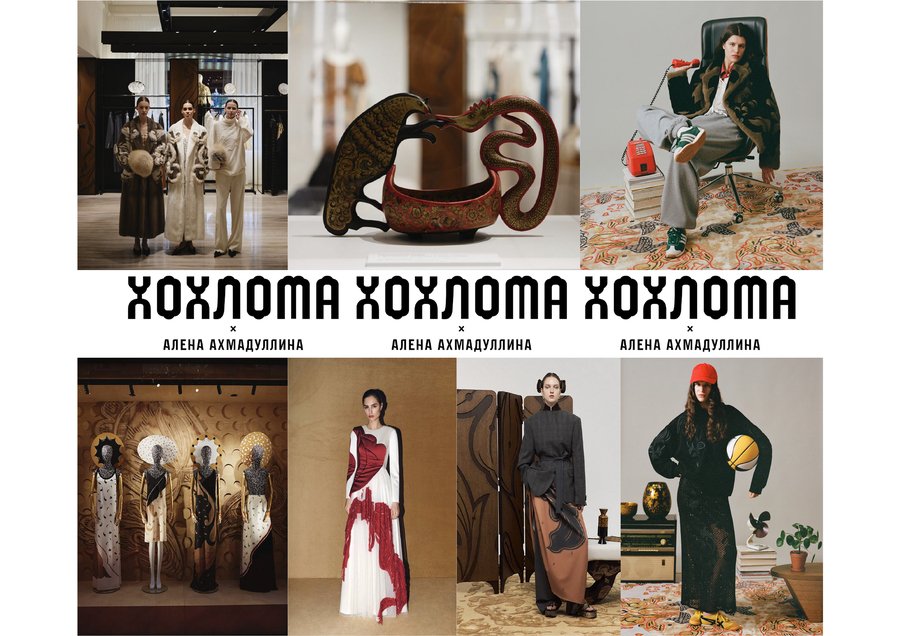
«Khokhloma x Alena Akhmadullina» is a new phenomenon in the world of high fashion. Alena Akhmadullina, a leading Russian designer, serves as its Creative Director.
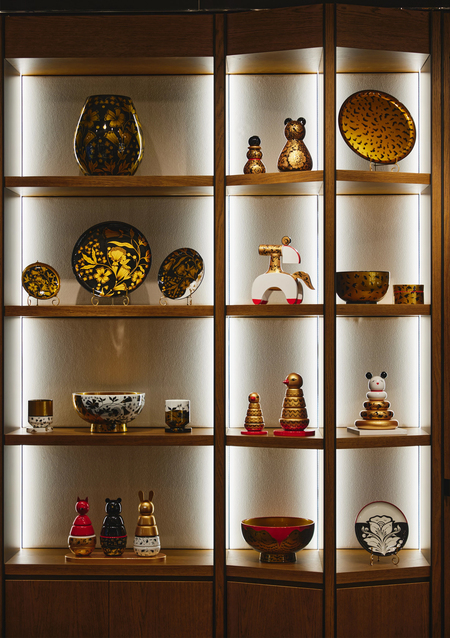
«Khokhloma x Alena Akhmadullina» offers an original interpretation of Khokhloma, embodied in exquisite luxury. When creating the collection, Alena Akhmadullina synthesized traditional, highly artistic Khokhloma patterns from 19th-century archives with modern design. This collaborative collection features unique pieces of clothing, furniture, interior design, and jewelry, cultivating a distinctive lifestyle.
Showcases
Dana Matsyunskaya
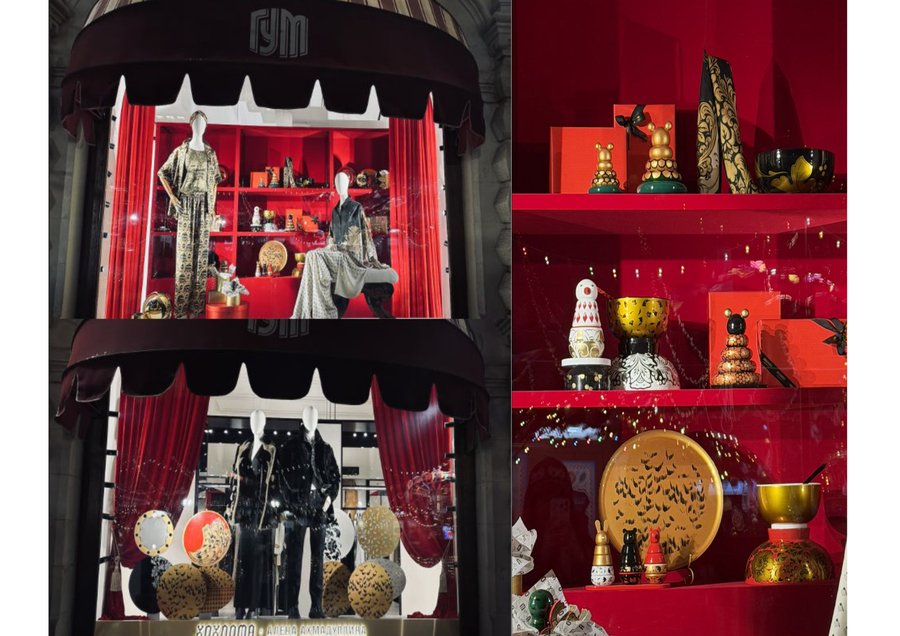
The window displays themselves already beckon, much like a theater (a red curtain). They are very noticeable and vibrant when viewed from the street, enhancing the New Year’s atmosphere. In the branding, it is taken into account that Alena is here as a guest; her name is written in small print. Overall, the collaboration is successful and distinctive. There are many toys in the windows. What is noteworthy is that toys are more frequently purchased by Russians than by foreigners, although even for them, this could have become a memorable souvenir in a department store. Overall, tradition is being honored. Alena is the creative director. The toys were made based on her sketches. Overall, this is not a collaboration, but a creative union between Alena and Russian DNA—with the brand, with our cultural code. It is a very successful pairing.
Anastasia Gorlach
The store has many window displays. From the street, we can observe three displays. On the first, there are two female mannequins in pajama sets with gold ornaments, surrounded by dishes and gift boxes. On the second, there are female and male mannequins dressed in street wear, and on the third, there are three female mannequins—one in a dress, the second in a skirt and jacket set, and the third in a coat. Two displays are located on the first and second floors of GUM. On the first floor, there are also three female looks presented: an elegant one, a more businesslike one, and one for going out. On the second floor, the displays feature only dinnerware: one display features a shape of a Christmas tree made from plates, and the second features dishes in niches against a red background. The displays, decorated for the New Year, feature a lot of red color: red curtains, red backdrops, red gift dresses on some, and one red dress on another. They create a festive feeling, even though there are no obvious New Year motifs. Only on some displays is artificial snow sprinkled, and on one display, there are a subtle amount of fir branches, the image of the tree itself is composed only of plates, gift boxes, and gold ornaments. In our view, moving away from cliché imagery is a successful idea for the brand, as it emphasizes its luxury status.
Polina Lim
The brand windows present a true anthem to Russian aesthetics, where every detail is a deeply considered statement. I was impressed by how the unified concept and flawless visual execution serve as conduits for the brand’s values: respect for folk crafts, traditions, and national culture. Familiar codes from childhood come to life here—matryoshka dolls, tableware adorned with vibrant Khokhloma painting, theatrical velvet curtains in bright reds, and textured wooden elements featuring skillful carving. The New Year’s theme is discernible primarily through the use of traditional codes; I would have liked to see some other, more timely interpretations. I would suggest a bolder differentiation in the color palette between the windows so that each one retains its individuality without getting lost in the overall, undoubtedly beautiful mass.
Interior
Dana Matsyunskaite
The space is vast and expansive, with high ceilings and two floors. Overall, there is a lot of wood, a lot of lacquer, and many recognizable colors and motifs from Khokhloma. The fitting room is very spacious. It is bright, with generous lighting and many accent lights. Screens are hanging up, and there are many mirrors. Ads from the brand’s collection are running on the screens.
Anastasia Gorlach
Inside the store, light walls harmonize with carved wooden moldings and arches featuring natural ornamentation, which reminded me of a fairy-tale forest or a traditional Russian izba. Contemporary elements, such as mirrors, a sofa, and a screen displaying fashion videos, integrate seamlessly. The floors, with different coverings in separate rooms, feature carpets in some areas. The lighting feels pleasant and organic—it is thoughtfully arranged.
Lym Polina
The spacious two-story shop immediately captivates with the atmosphere of a cozy, welcoming home, filled with warm light and décor carefully curated in the style of Khokhloma and folk crafts. Authenticity is felt in every detail: elegant carving with traditional patterns adorns wooden panels, massive furniture, and tall cabinets, where painted tableware is displayed like jewels. Numerous mirrors skillfully enhance the feeling of space and light, playing with reflections to create the effect of an endless fairytale room. However, upon closer inspection, a slight dissonance emerges in some areas. The overly minimalist, modern lines of the architectural space—the large, smooth surfaces—sometimes enter a visual debate with the ethnic motifs. This subtle contradiction between form and content slightly disrupts the integrity of the immersion.
Furniture Large Decor
Dana Matsyunskaya
There are many soft sofas and armchairs—plenty of places to sit, and waiting areas. The wooden tables and chairs resemble a play space for a group or a family. There is a whimsical feeling, as if some sort of fair was once held here.
Anastasia Gorlach
The massive wooden tables and chests reinforce the impression of a «Russian izba» and add a sense of luxury. Although the rugs are in various styles and the tables differ across the room, they harmonize well in color and look overall cohesive. The only drawback we noted was that the rugs were not perfectly clean.
Lym Polina
The store’s space impresses with its monumentality and generosity in the use of wood. The furniture and large-scale decor here are not merely furnishings; they are key conveyors of the brand’s philosophy. Massive cabinets with authentic carvings, reminiscent of antique chests, serve as repositories for luxurious tableware, transforming a utilitarian object into an art piece. Comfortable sofas upholstered in soft bouclé are set on elegant carved legs, creating an unexpected yet harmonious symbiosis of comfort and tradition. Patterned rugs. The wooden mirrors in wide frames and the occasional tables with distinctive patterns continue this line. The centerpiece, however, can be considered the imposing bed with a tall, carved headboard—a bold and unusual choice.
Decorative Installations
Dana Matsyunskaya
The shop resembles an art space. There is a theatrical quality to it. The exterior windows already beckon, much like a theater curtain (a red drape). Upon entering, you fall into an atmosphere reminiscent of Russian folklore, albeit in a fragmented way. A sales associate greets you at the entrance. There are many toys immediately visible near the entrance and a dedicated toy section, but overall, they are distributed throughout the two-story space. There are many rugs that lend a sense of coziness, making you feel as if you are at home or in a daycare.
Anastasia Gorlach
On the first floor, next to the shelves with dishware, a table is set. On the table is a tea set, a bowl of artificial apples, a saucer of real dried fruit, wooden toys, and a vase with a large bouquet of branches adorned with red berries—all sprinkled with artificial snow. On the second floor, there is a table with the same bouquet, but made of food; on it are only artificial apples. On this table, hats and several sweaters are displayed. On many tables, the product itself has become the decoration—the symbol of the coming year, a red horse.
Polina Lim
The central element that sets the tone for the entire space is a magnificent decorative installation: a large, draped table covered with a vibrant red tablecloth. A whole story of hospitality and abundance unfolds upon it—elegant tea sets, plates with rich Khokhloma painting, treats such as rosy apples, bread rings, and festive sweets. More intimate compositions on smaller tables sustain this theme throughout the shop. However, the display could be improved by creating a more relevant and contemporary arrangement (such as towers of apples or horses, or floral arrangements, rather than a bouquet in a vase). Furthermore, there is a feeling that some areas are literally overwhelmed by detail, transforming into independent installations, while other corners of the shop appear intentionally austere or entirely unadorned. This contrast between visual clutter and emptiness slightly disrupts the overall perception, leaving the impression of a staging that is not entirely cohesive.