
Superdrinks, eco-packaging, personalization: what are the popular ПП trends hiding?
Нутрициолог разбирает, какие тренды работают на ваше здоровье, а какие — на чей-то кошелек.

Plant-based alternatives are not always beneficial, fermented foods can be empty calories, and eco-friendly packaging is no guarantee of naturalness. Which nutrition trends actually provide health benefits, and which are merely marketing gimmicks? Are there any trends that will become the new classic? Doctor and nutritionist Tatiana Yakovleva discusses current trends in healthy eating.
— Today, amid the diversity of healthy eating trends, more and more people are choosing plant-based products. Their composition seems natural, but often the packaging lists numerous additives. How can one select a product where the benefits are not overshadowed by processing?
— It is true that plant-based products do not always meet our expectations. We perceive them as something pure and ideal, but they are often quite different, especially in the context of industrial production. Take, for instance, almond, soy, or any other plant-based milk: the ingredient list usually contains sugar, emulsifiers, and other food additives, while the actual amount of nuts or grains is minimal.
Of course, there are also high-quality products that are safe to consume. The main thing is to always remember to study the label carefully. If the almond milk ingredients list includes anything other than nuts or seeds, water, and salt, you should probably pass on that purchase. The simpler and clearer the ingredients list, the higher the probability that you are looking at a natural and healthy product.
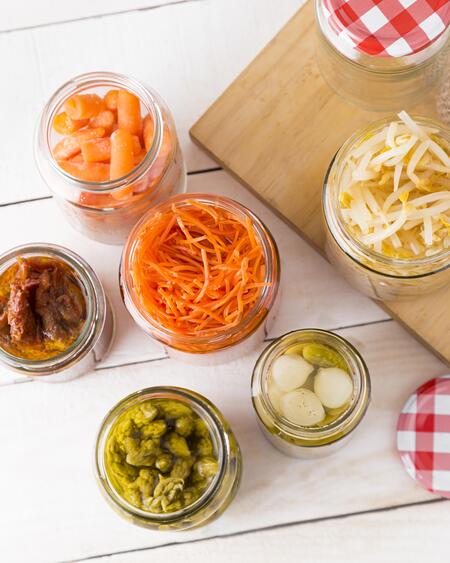
— Speaking of ingredients, it’s worth noting the trust in fermented products, as they are often associated with natural, homemade preserves. Today, Asian varieties like kimchi, miso, and kombucha are also popular. Is there a difference in nutritional value between exotic fermented foods and our traditional ones?— In reality, people traditionally fermented whatever was readily available. We traditionally fermented white cabbage, while in Asia they used napa cabbage and peppers, which resulted in kimchi.Overall, fermented foods are equally beneficial regardless of their region of origin. There is no difference in terms of the quantity of probiotics (beneficial bacteria for the gut) they contain. The only difference is in flavor, so you can choose what you prefer.However, there is one important caveat: you should choose products with a short shelf life. If store-bought sauerkraut, for example, has a long shelf life, it no longer contains live microorganisms. From a probiotic standpoint, such a product becomes essentially «empty.»
— Today, a major trend is gaining popularity: personalized nutrition. If you can’t get the necessary tests done, what subtle bodily signals can tell you that a particular food doesn’t agree with you?— We all have different ethnic backgrounds, and different regions have developed their own historical dietary habits. For instance, the people of the Far North tend to favor fatty and meat-heavy foods, whereas southern populations tend toward plant-based diets. This is precisely why the reaction to the same food can differ among individuals.It is indeed possible to determine individual food intolerances. The most reliable method is specialized testing (such as «Immunohealth»). However, there is also a method accessible to everyone—the elimination diet.The core concept is to exclude major trigger foods from your diet for one to two weeks—for example, dairy, gluten-containing products, preservatives, and others. After this period, once the body has «calmed down, ” you begin reintroducing one excluded food into your diet at a time, with a two-to-three-day interval between each introduction. This allows you to track your body’s reaction to specific foods.You can tell a food doesn’t suit you by several signs: headaches after eating, a feeling of brain fog, skin rashes, or low energy. Changes can also appear in the digestive tract: flatulence, bloating, or gurgling. Intolerance can manifest in specific ways, too. For example, if you get a runny nose after eating, but show no other signs of a cold.The food that triggered the reaction must be excluded again before you can introduce the next one. In this way, step by step, you can create a personalized menu for yourself.
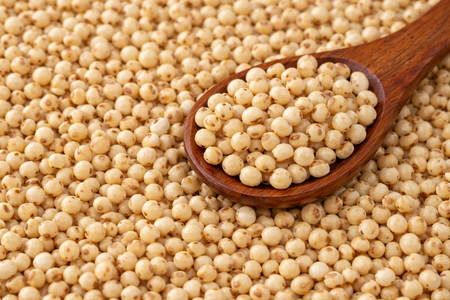
— But if we talk about products positioned as beneficial for everyone—superfoods? Chia seeds and goji berries have already become mainstream. What’s next? What «under-publicized» product could become the new trend?— Today, everything is moving toward functional nutrition for the microbiome. Probiotics are gaining immense popularity right now, and soon prebiotics will join them—substances that serve as food for beneficial bacteria. Prebiotics are found, for example, in chicory, Jerusalem artichokes, and artichokes.I would also highlight microalgae, such as spirulina and chlorella. Given the growing awareness in dietary approaches, these superfoods could experience a resurgence in popularity. This is exactly the case where new things are simply old things rediscovered.Lastly, I’d like to mention forgotten ancient grains, such as sorghum and hemp seeds. They are rich in protein, trace minerals, and vitamins, and they are naturally gluten-free.

— Besides superfoods, there are also superdrinks that offer additional benefits. So-called «smart water» with numerous nutrients has even appeared. Do these drinks actually work?— Vitaminized water typically contains inorganic and inactive forms of trace elements and vitamins. To get any noticeable effect from such water, you would have to drink a whole barrel. In my opinion, this is more of a marketing ploy.Our body absorbs nutrients much more effectively, of course, from food, because food contains forms of vitamins and trace elements that are natural to our bodies. Therefore, to replenish any deficit or simply meet nutrient needs, you need food or supplements in active forms—not superdrinks.— We talk a lot about what’s inside, but there’s also the outer packaging. The trend toward eco-friendly packaging is gaining momentum today. Is there a connection between this «green» packaging and the healthiness of the product inside?— In reality, judging a product by its packaging is like judging a book by its cover. The naturalness of the contents and the eco-friendliness of the container are often unrelated categories. The packaging itself represents care for the environment, whereas the internal contents represent care for health.Of course, it is ideal when both principles are followed in production. But in practice, eco-friendly packaging can sometimes contain outright «chemicals,» and conversely, healthy buckwheat might be packaged in polyethylene.Therefore, these two aspects—the naturalness of the product and the eco-friendliness of its packaging—should be evaluated separately.
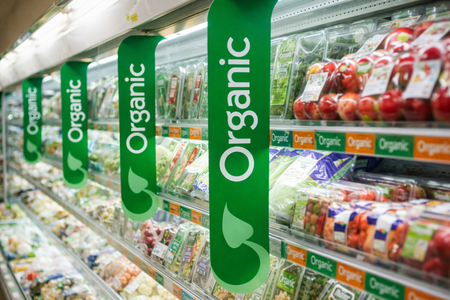
— With the rise of the organic product trend, instances of «greenwashing» have become more common, where unscrupulous manufacturers merely create an illusion of naturalness. A prime example is the «organic» label. How can one avoid deception and choose a truly organic product?— You always need to study the product’s ingredients list. Imagine looking at a guest list for a party: if you see many unfamiliar names, that’s already a warning sign. It’s the same with ingredients: the clearer the ingredients are, the better.You should also pay close attention to their order: the first three items represent what is most abundant in the product. If items like molasses, sugar, or starch appear at the beginning of the list, it’s best to avoid purchasing it.You should also be cautious about the presence of glutamates, various complex chemical names, and E-additives: the more there are, the worse it is. An ideal ingredient list should be simple, understandable, and brief.— In summary, from your professional perspective, what trend do you believe will last a long time and genuinely transform the approach to healthy eating?— Without a doubt, it is the trend toward personalized nutrition. We are moving beyond the era where simply eating healthy products was enough. Now, we are moving toward eating healthy products tailored specifically for us. I believe more research will be conducted in this area. Therefore, I am confident that personalized nutrition will be a lasting and promising trend.