Material is being prepared for publication.
The Civil War in the United States became the deadliest conflict in American history, fundamentally reshaping the nation’s political, social, and cultural landscape. The confrontation between the industrial North and the agrarian South, which relied on slave labor, escalated into four years of violence that claimed over 620,000 lives—more than all other American wars combined. This conflict not only determined the fate of slavery and national unity but also spurred a powerful cultural response: literature, painting, photography, and music that interpreted, documented, and mythologized the war. Our timeline follows the key events of the war, illustrating how culture accompanied every stage of this tragic and heroic confrontation.
November 6, 1860
Election of Abraham Lincoln as President of the United States
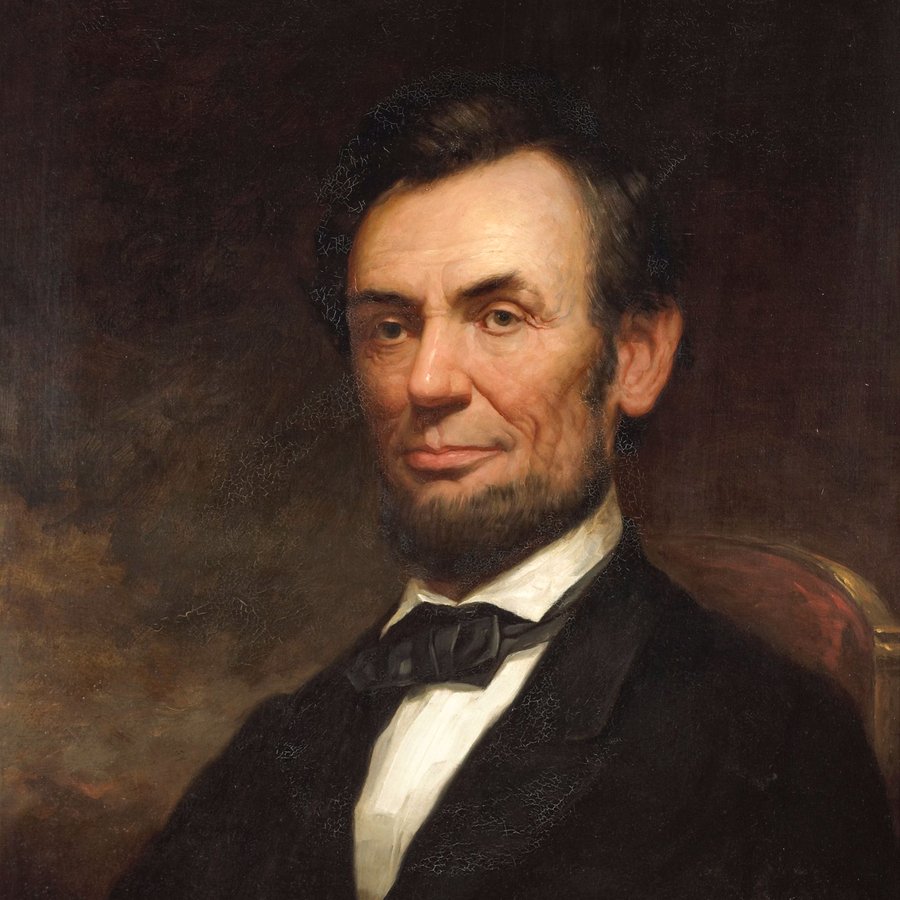
Portrait of Abraham Lincoln by George Henry Stevens. Fragment
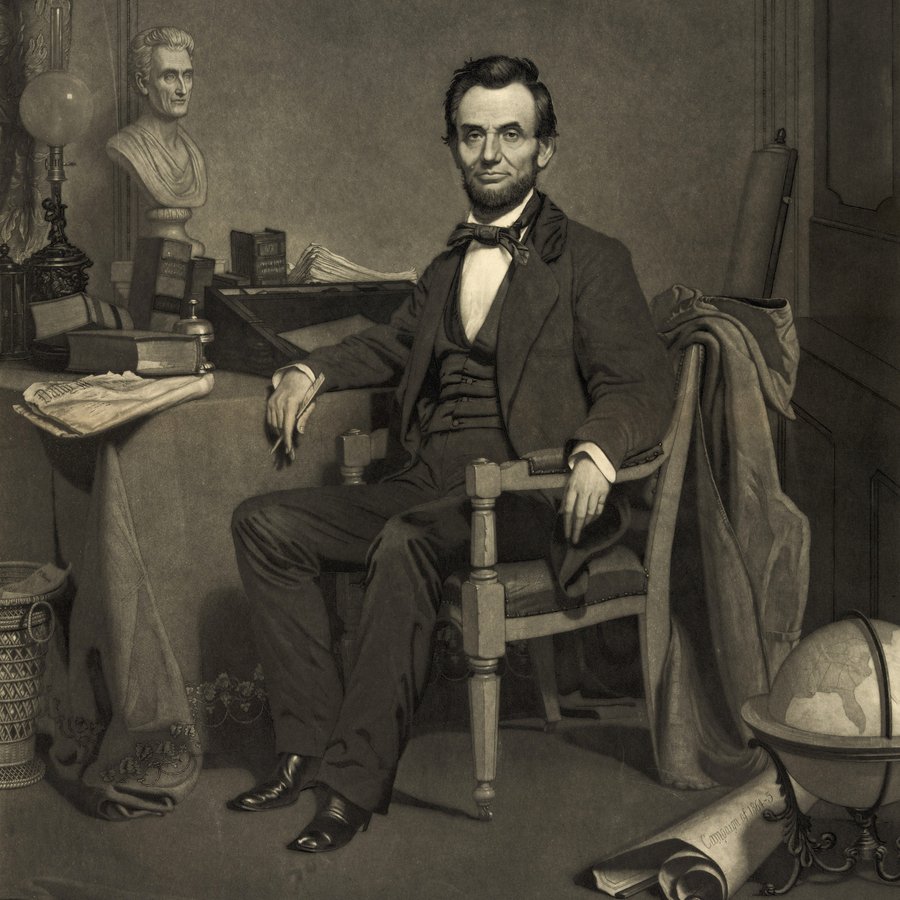
John Sartain. Abraham Lincoln. President of the United States of America. Engraving. 1860s.
Abraham Lincoln. Lithograph by Herline & Hensel
On November 6, 1860, Abraham Lincoln, a candidate from the Republican Party formed in 1854, won the presidential election by securing 1,866,452 votes and 180 electoral votes, with a voter turnout of 81,2%. His main rivals were Democrats Stephen Douglas (1,375,157 votes) and John Breckinridge (847,953 votes), as well as Constitutional Party candidate John Bell. Lincoln became the first Republican president, and his victory was perceived in the South as a direct threat to the institution of slavery, despite his moderate statements about non-interference in the affairs of states where slavery was legalized.
Lincoln’s election sparked a cultural reaction, particularly in satirical graphic arts. Publications like Harper’s Weekly and other illustrated magazines featured caricatures depicting Lincoln as both the «Railroad Candidate» (a nod to his work with the Illinois Central Railroad) and as a radical abolitionist bringing destruction to the South. In the South, his victory, conversely, prompted the creation of patriotic songs and poems praising «Southern chivalry» and threatening secession. Northern literature, in contrast, saw the emergence of optimistic odes honoring the new president, and Walt Whitman, even before the war, foreshadowed an era of democratic renewal in his poetry. Photography, by this time an accessible medium, was actively employed to reproduce images of Lincoln, transforming him into a recognizable national symbol—for both supporters and opponents.
2. December 20, 1860–February 1, 1861
The Southern Secession
Winslow Homer. The last delegation from South Carolina to the United States Congress in 1860. Wood engraving
On December 20, 1860, the convention of South Carolina in Charleston unanimously adopted the Ordinance of Secession, declaring that «the union between South Carolina and the other states… is dissolved.» In its Declaration of Causes of Secession, South Carolina specifically cited Lincoln’s election and the «hostility» of the northern states toward slavery. Following this, Mississippi seceded in January 1861 (January 9), followed by Florida (January 10), Alabama (January 11), Georgia (January 19), and Louisiana (January 26), with Texas joining them on February 1. The secession process was marked by massive rallies, parades, and ceremonies where crowds celebrated the South’s new independence.
The moment of South Carolina’s secession was captured in engravings published in newspapers across the country, including the famous December 22, 1860, issue of Harper’s Weekly which featured an image of the South Carolina Congressional delegation. In Charleston, emergency editions of the Charleston Mercury were published with the headline «The Union is Broken!», instantly becoming collectible relics and symbols of the Southern spirit. New patriotic songs emerged in the South, such as «Dixie,» which quickly became the unofficial anthem of the Confederacy. Secessionist literature was presented in numerous pamphlets and speeches justifying the right to secede—from the speeches of Jefferson Davis to the writings of John Calhoun. These texts forged the ideological foundation for a new nation—Southerners referred to their secession as the «Second American Revolution.»
February 4, 1861 Formation of the Confederate States of America
Alexander Hamilton Stevens. Second half of the 19th century. Fragment
Photograph of US Senator Jefferson Davis, taken about a year before he became president of the Confederate States of America. 1859. Fragment
On February 4, 1861, delegates from six seceding states (South Carolina, Mississippi, Florida, Alabama, Georgia, and Louisiana) gathered in Montgomery, Alabama, and established a new nation—the Confederate States of America. A provisional constitution was adopted on February 8, and on February 9, Jefferson Davis of Mississippi, a former U.S. Senator and Secretary of War, was elected president. In his inauguration speech on February 18, Davis declared that the Confederacy was created to protect the «sacred right to self-governance» and slavery as the «cornerstone» of the new nation. By the time Lincoln was inaugurated in March, Texas had joined the Confederacy.
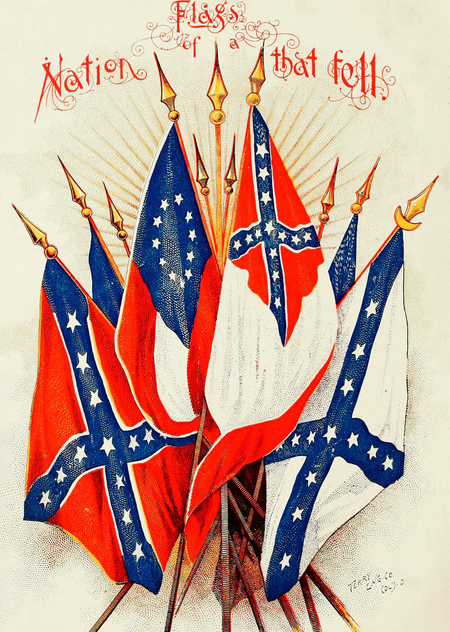
The creation of the Confederacy required the development of new symbols, anthems, and rituals. The Confederate flag—"Stars and Stripes» (early versions featured seven stars)—was approved, along with a state seal depicting George Washington on horseback. Southern poets and composers created national anthems, including «Southern Song» and «God Save the South.» In the visual arts, portraits of Jefferson Davis and other Confederacy leaders appeared; these were commissioned for government buildings and published as lithographs. The literary manifesto of the new nation was the speeches of Davis and Alexander Stephens, the Vice President of the Confederacy, who, in his famous Cornerstone Speech (March 1861), openly declared that slavery was a «natural and normal condition» of the Black race—this speech became one of the most quoted documents of the era.
March 4, 1861
Lincoln’s Inauguration
Abraham Lincoln’s Inauguration, March 4, 1861. The U.S. Capitol. Washington, District of Columbia. Lincoln stands beneath a wooden canopy, in front, positioned between the left and central pillars.
On March 4, 1861, Abraham Lincoln was inaugurated as the 16th President of the United States on the steps of the Capitol in Washington, which was not yet complete. In his inaugural address, Lincoln appealed to the seceding states for reconciliation, stating that he «had no intention of directly or indirectly interfering with the institution of slavery in states where it existed.» However, he categorically rejected the right to secession, calling it «legally void, ” and promised to maintain federal property in the South. The speech concluded with a poignant appeal to the „mystical threads of memory“ connecting all Americans—these were the last words of peace before the storm.
Lincoln’s inauguration was one of the first major events widely documented through photography. Matthew Brady and his assistants captured a series of images featuring the crowd, the presidential platform, and Lincoln himself—these photographs were reproduced as stereoscopic cards and engravings distributed across the country. Lincoln’s speech was immediately published in newspapers and became the subject of literary analysis; Northern poets lauded it as an exemplar of wisdom, while Southern pamphleteers mocked it as «hypocritical.» In painting, the inauguration inspired the creation of several major canvases, the most famous of which by George Peter Alexander Healy depicts Lincoln against the backdrop of the Capitol. This artistic tradition continued into the 20th century, when Lincoln’s inauguration became the subject of historical films and dramatic documentaries.
May 12–14, 1861
Fall of Fort Sumter
Carrère and Ives. Attack on Fort Sumter. Charleston Harbor, April 12 and 13, 1861. Lithograph
On April 12, 1861, at 4:30 AM, Confederate batteries commanded by General Pierre Beauregard opened fire on Fort Sumter in Charleston Harbor, where the federal garrison, commanded by Major Robert Anderson, was stationed. After 34 hours of continuous bombardment, the fort surrendered on April 13—the only casualties were two soldiers who died in a stray explosion during the surrender salute. On April 15, Lincoln issued the proclamation on secession and called for 75,000 volunteers to suppress the rebellion, which provoked four additional states to secede.
Following the fall of Fort Sumter, hundreds of engravings, lithographs, and popular prints were created, depicting the burning fortifications and exploding projectiles. In the North, these images were used to mobilize public opinion and recruit volunteers; in the South, they served to glorify the Confederacy’s «first victory.» Poetry immediately featured verses dedicated to the «heroes of Sumter,» and composers created marches and patriotic songs. One of the most famous poems—"Ballad of Fort Sumter"—was written as early as April 1861 and circulated in pamphlet form. Photographers, including Alfred Rudolph Ward, took a series of pictures of the fort immediately after its fall—these became among the first visual documents of the war. In 20th-century cinema, the events at Fort Sumter became a traditional opening scene for many Civil War films.
April 17 — June 1861 Joining the Confederacy
Portrait of General Robert E. Lee, an officer in the Confederate army. March 1864
7th New York Cavalry Regiment. General I. N. Palmer and his staff in the foreground. Camp near Washington, District of Columbia. 1861
In response to Lincoln’s call for volunteers, four upper Southern states, which had previously been hesitant, decided to join the Confederacy: Virginia (April 17), Arkansas (May 6), Tennessee (May 7), and North Carolina (May 20). Virginia’s accession was particularly significant—it was the wealthiest and most populous Southern state, home to many founding fathers. The Confederacy immediately moved its capital from Montgomery to Richmond, which lent symbolic legitimacy to the new nation. However, the western counties of Virginia refused to recognize the secession and formed the separate state of West Virginia in 1863, remaining in the Union.
Richmond became the cultural center of the Confederacy, where newspapers were published, literary journals were issued, and artists worked. Virginia poetry, especially poems about the «Old Dominion, ” became an important part of the Southern cultural identity. Literature included novels and short stories that glorified „secession“ as a legitimate act of self-determination—for example, the works of John Esten Cook. Portraits of Confederate generals, especially Robert E. Lee, who took command of the Army of Virginia, began to be mass-printed. Songs such as „God Save the South“ and „Maryland, My Maryland“ became anthems for the new nation. In the North, conversely, Virginia’s accession was perceived as treason, and polemical poems and pamphlets appeared in literature, branding the „traitors.“