Navigation
Introduction
- Concept and Problem Statement
Content:
- Real Animals and the Genesis of the Technology
- Animatronics and Puppetry
- Technological Development and the Hybrid Format
- Contemporary Cinema: Full CGI
Introduction
Concept
There are currently many films in which the audience can see talking animals. This is captivating both from the perspective of the emergence of an unusual artistic character that the viewer will observe throughout the entire film, and from the development of the technology that allows the animal to speak believably.
The concept of this visual study is to analyze the evolution of the technology used to create talking animals. The analysis will trace a path from black-and-white films, animatronics, and puppets, all the way to modern films utilizing CGI and realistic 3D models.
To understand how this talking effect is created, one must trace how the technology itself has changed, how the animation methods have evolved, and the level of realism achieved in the animals. For illustrative purposes, we will examine various films that have employed this technology, as well as the seminal works key to the technology’s development.
The main challenge lies in how to depict talking animals in a way that is realistic without falling into the «uncanny valley”—that feeling of discomfort viewers experience while watching. Previously, puppetry or animatronics were often used, but these looked unrealistic and doll-like. This sometimes created an odd sensation regarding the animal’s movement and how it was supposed to speak.
In modern films, due to technological advancements and the use of CGI, animals have become more realistic and lifelike; their faces and mouths move much better. However, the key is maintaining a balance between realism and the fact that the animal is speaking. Despite the rapid technological progress and perceived realism, onscreen animals face several issues. For example, excessive realism can be frightening and alienating, and if the animal’s facial expressions are not sufficiently developed, it creates a sense of unnatural behavior from the creature.
Contents
Real Animals and the Genesis of the Technology
One of the earliest works that utilized talking animal technology was the short film «Speaking of Animals» from the 1940s.
These films, released in theaters by Paramount Pictures starting in 1941, comprised over 50 individual 10-minute shorts. The animals were filmed live, and their mouths were replaced with hand-drawn animation.
These replacement mouths were created based on footage featuring real actors. Their faces were painted black, their lips white, and they were asked to deliver lines. The mouths were processed using rotoscoping—a compositing technique that involves frame-by-frame tracing and cutout of an object to separate it from the background and generate a mask. The resulting animation was then overlaid onto the animal footage using a reverse projection. This technique became known as the «Duo-Plane Process.» The renowned animator Tex Avery was also involved in this process.
In 1943, the film won an Oscar for Best Short Film (One-Reel).
A still from the film Speaking of Animals, 1942
Executing photo-tracing using a special projector—the rotoscope
Animatronics and Puppetry
In the 20th century, many films utilized puppets and animatronics in cinema to portray certain creatures that needed to move, speak, and resemble real beings convincingly. For this reason, when the goal was to create a talking animal, animatronics or puppets were sometimes used. For example, in the series «Sabrina the Teenage Witch, ” there was a cat namedSalem. He was a magical, talking cat who appeared in shots quite often. Salem was portrayed using four real cats and a puppet-marionette when a close-up shot of Salem’s dialogue was required. This method was neither complex nor overly expensive, yet it captured the hearts of many viewers.
The puppet itself contained mechanical components that allowed for realistic turns of the head, movement of the eyes, and the opening and closing of the mouth. This created the impression that the cat was a living, speaking creature. Although the viewer visually recognized that it was not a real cat, they were completely captivated by the character.
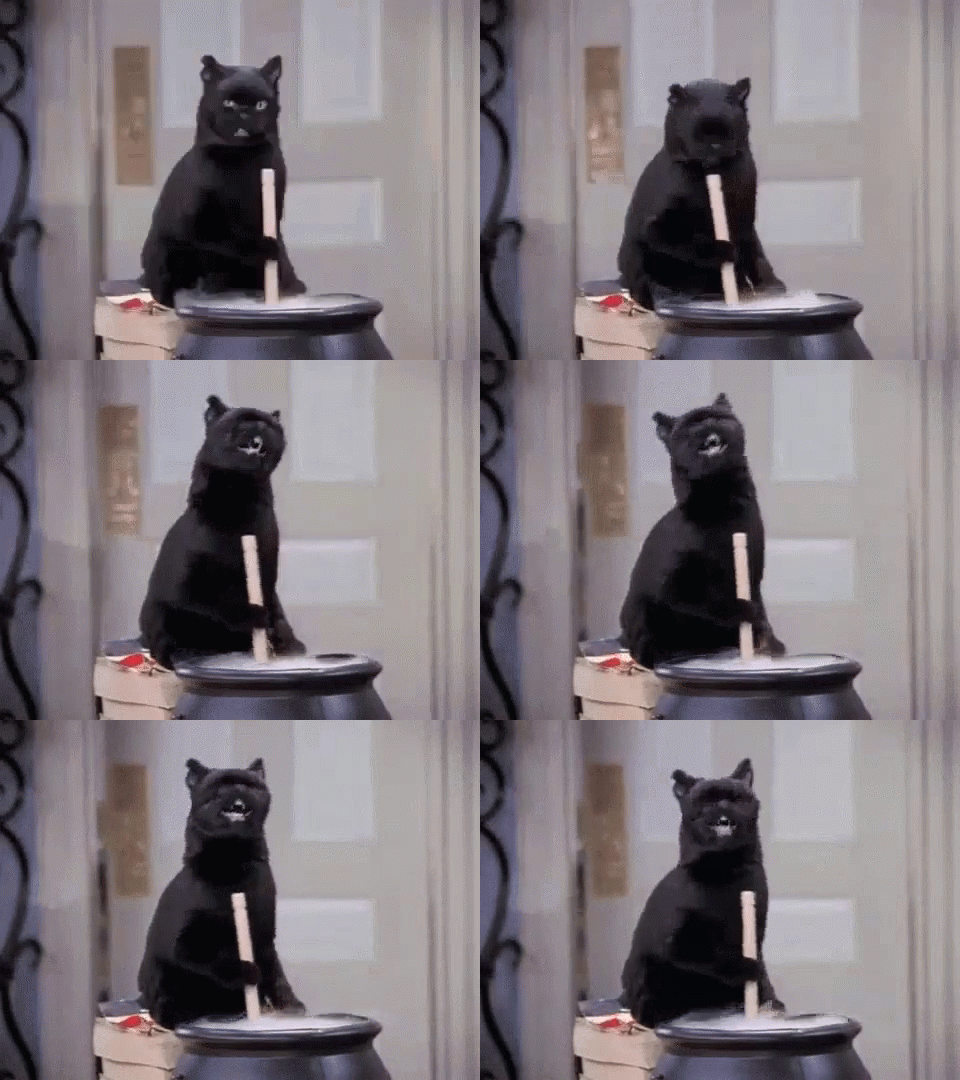
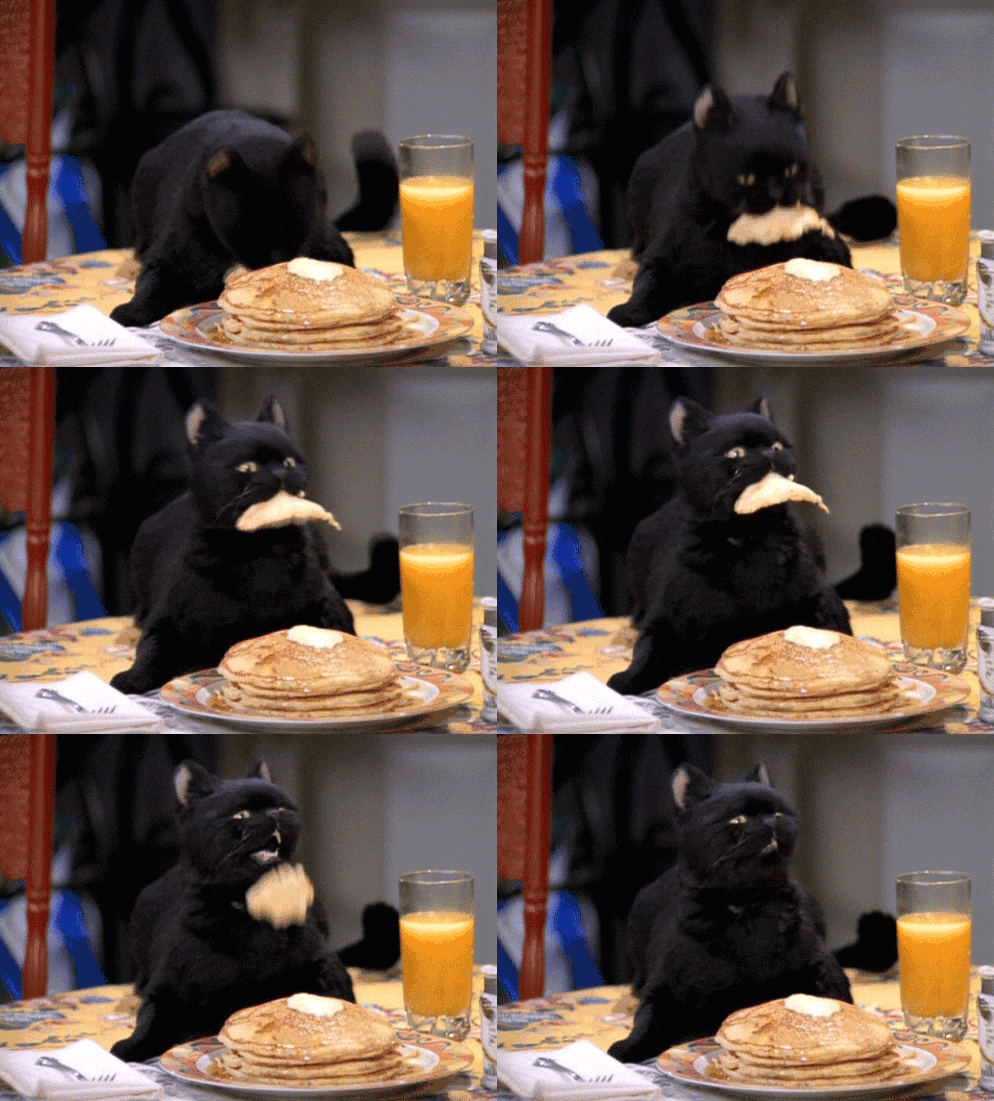
Stills featuring the marionette puppet from the series «Sabrina the Teenage Witch,» 1996.
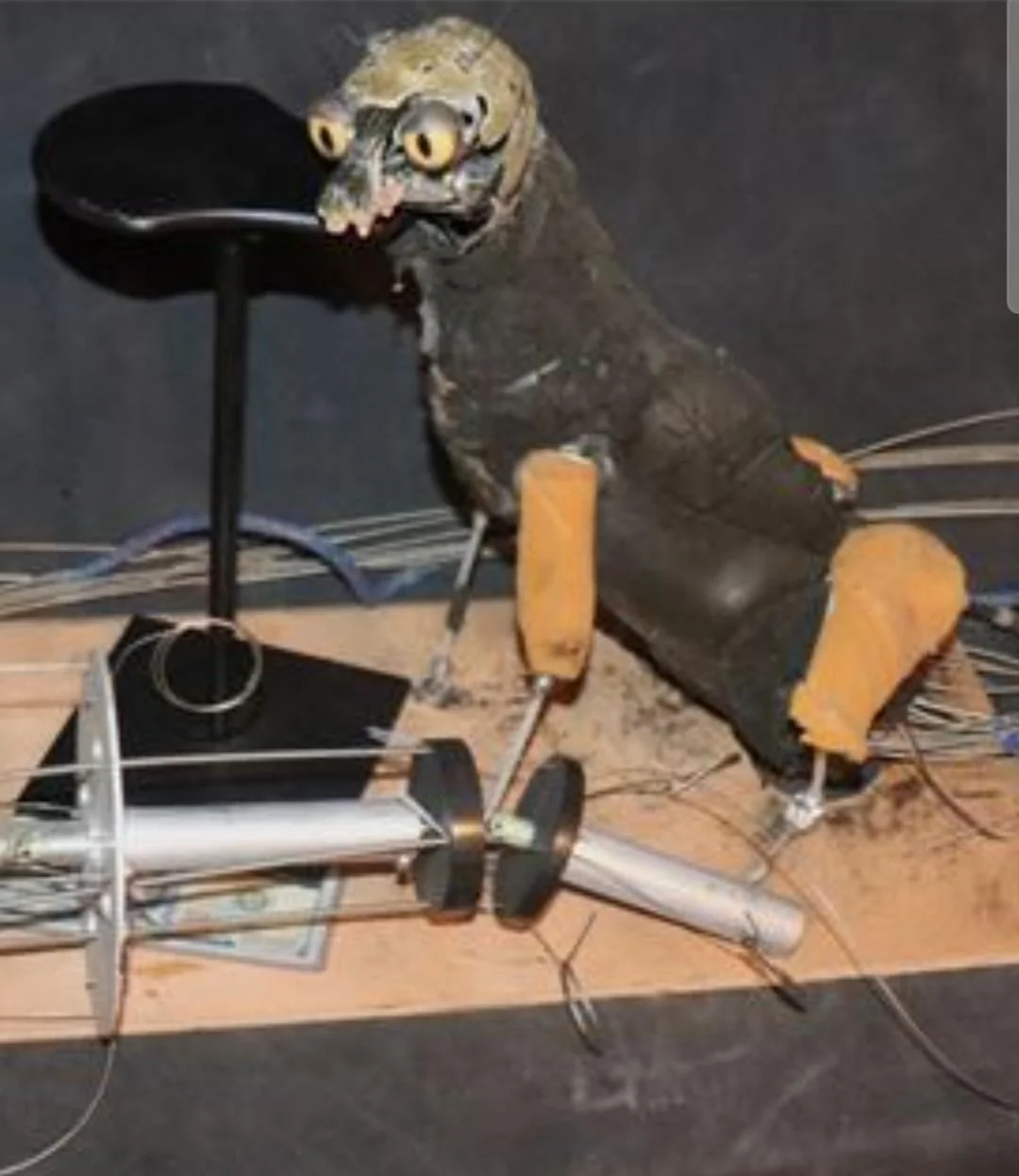
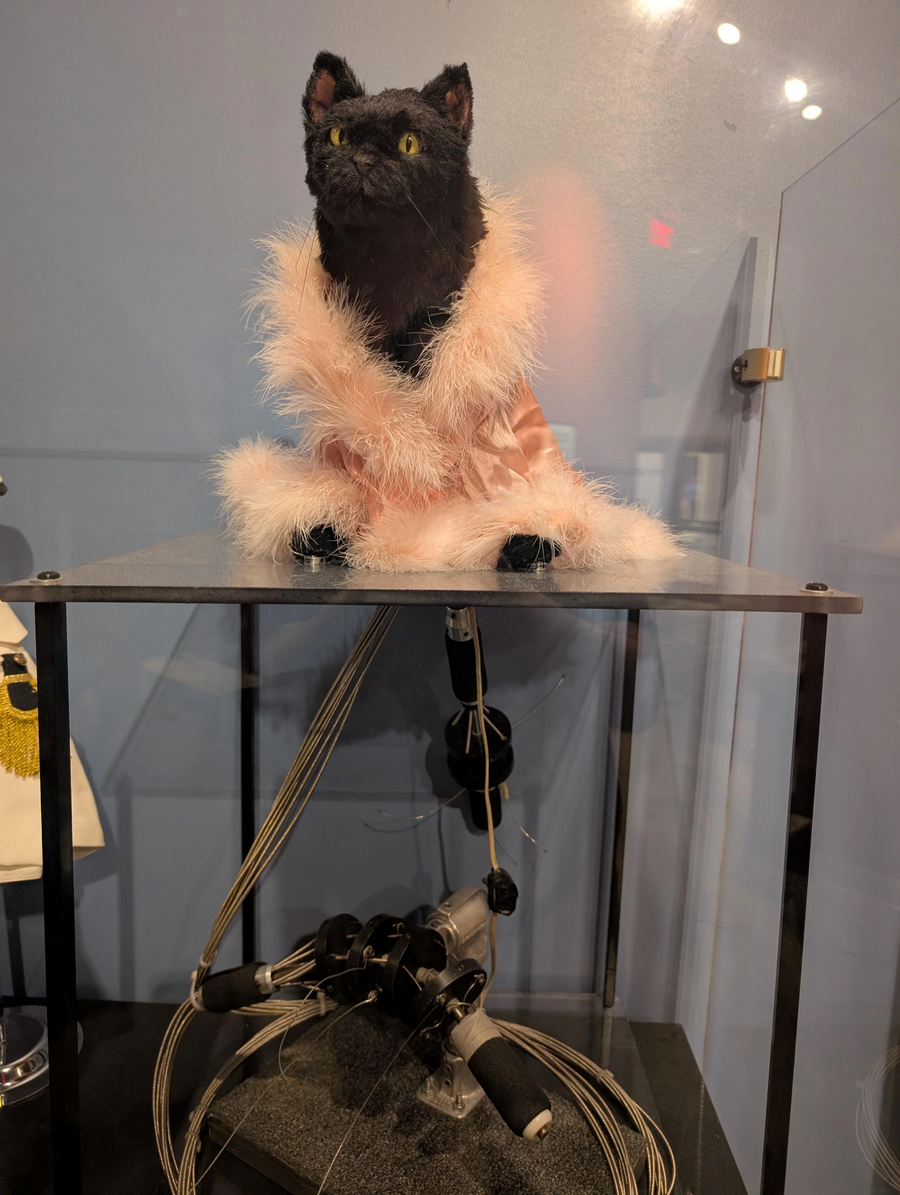
Several Salem cat marionettes
Although not quite animals, the unusual speaking creatures were masterfully depicted in the film «Dark Crystal.» Every character in the film was created using animatronics and special puppets, without the involvement of live actors. Mechanisms were specially developed for each character, allowing the puppet to be controlled either manually or via remote control. Eye, mouth, and finger movements were regulated using various cables and mechanisms. In some scenes, several operators could control a single character, each responsible for different parts of the character’s face.
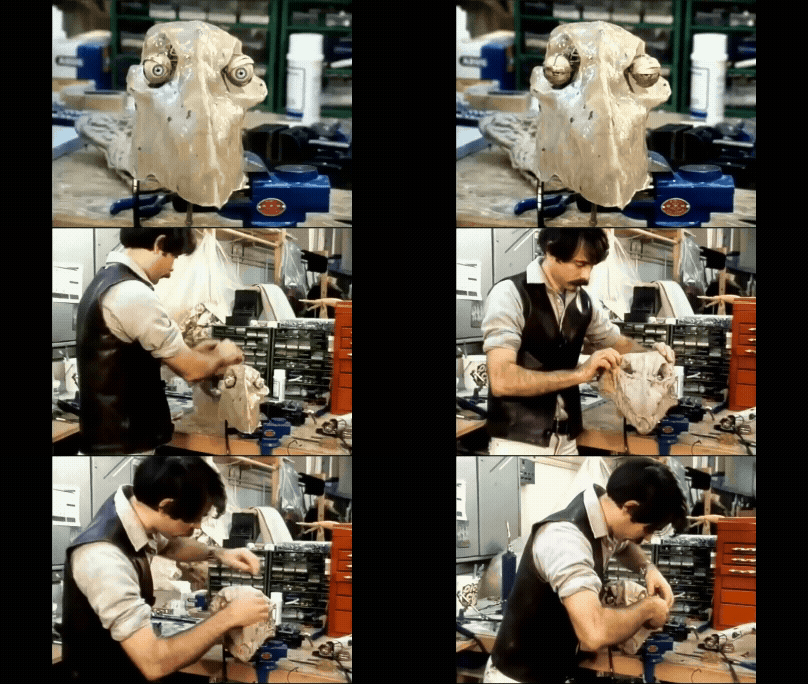
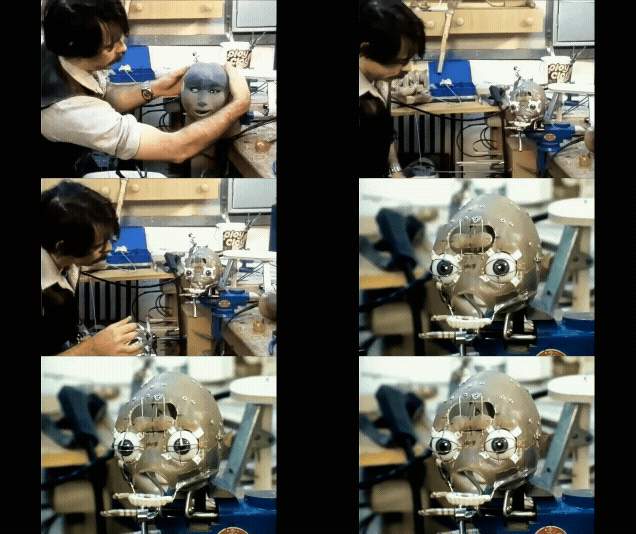
Marionettes and animatronics from the film «Dark Crystal,» 1982
Animatronics from the film «Dark Crystal,» 1982
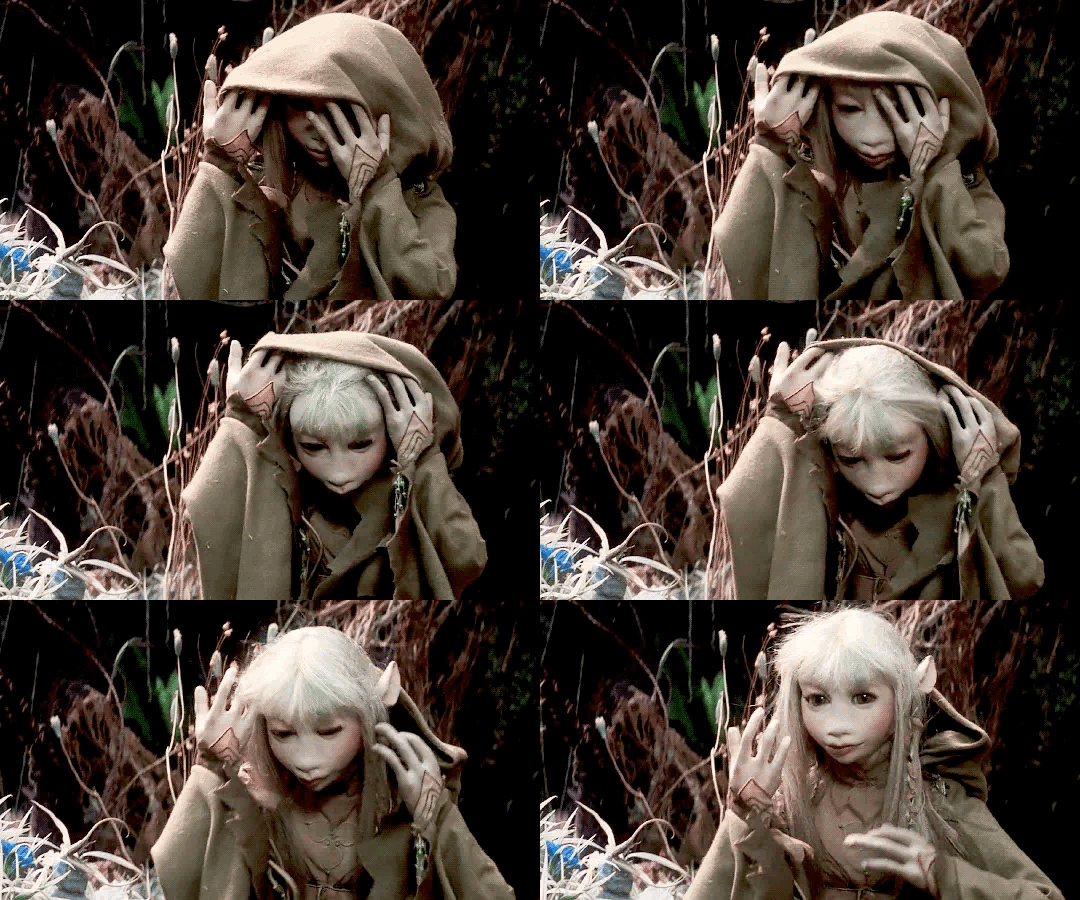
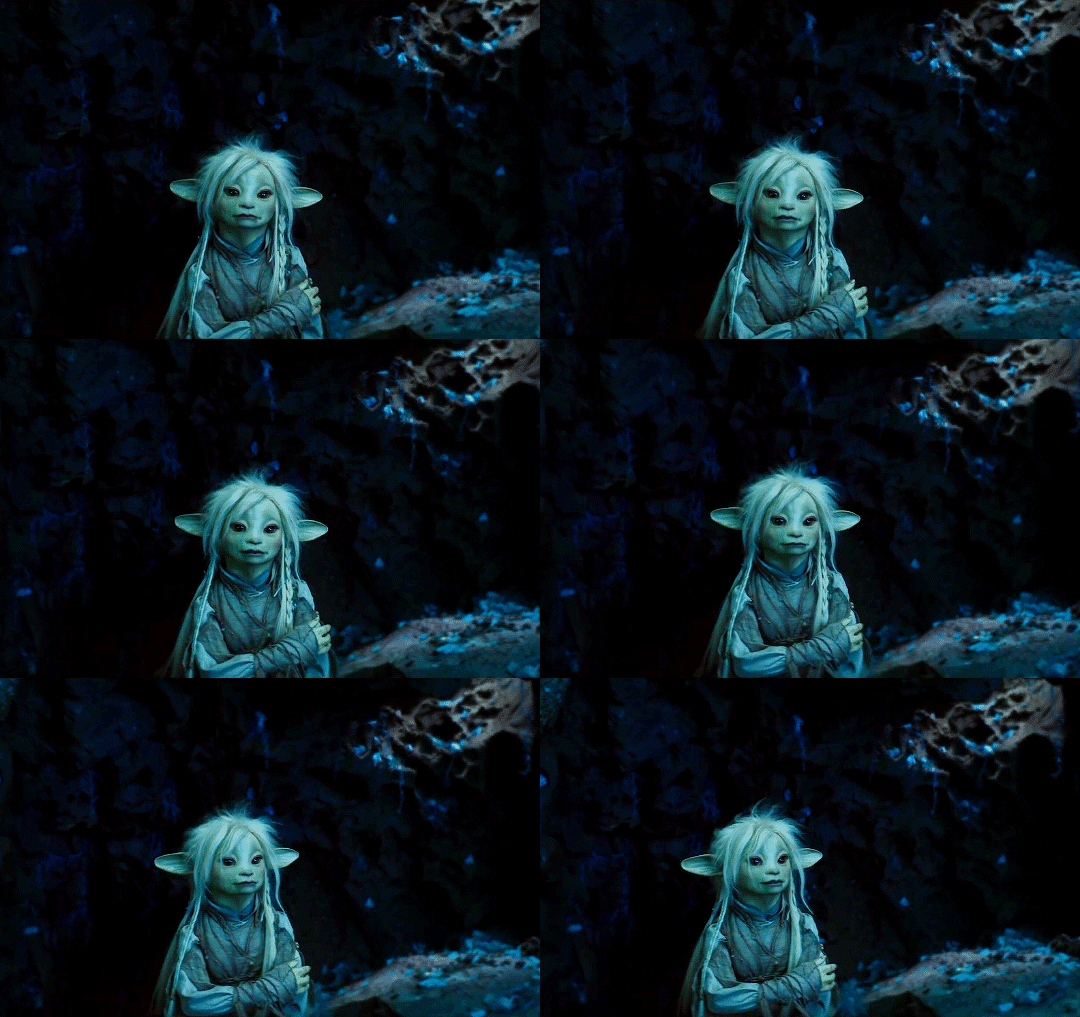
Stills from the film «Dark Crystal,» 1982
Still from the film «Dark Crystal,» 1982
Technology Development and Hybrid Format
Stills from the film «Babe,» 1995
Towards the end of the 20th century and the early 2000s, as technology advanced, companies began experimenting with and trying hybrid approaches to create talking animals. They started integrating CGI graphics to generate animated faces. One key film in this evolution was Babe (1995). This movie utilized animatronics alongside real animals. Additionally, the three-dimensional re-projection method was employed. This technique allowed CGI animation to be layered onto live animals, while maintaining the realism of the fur, its movement, and the light falling upon it.
The film received an Academy Award in 1995 for Best Visual Effects.
The Process of Creating a CGI Face Using 3D Reprojection
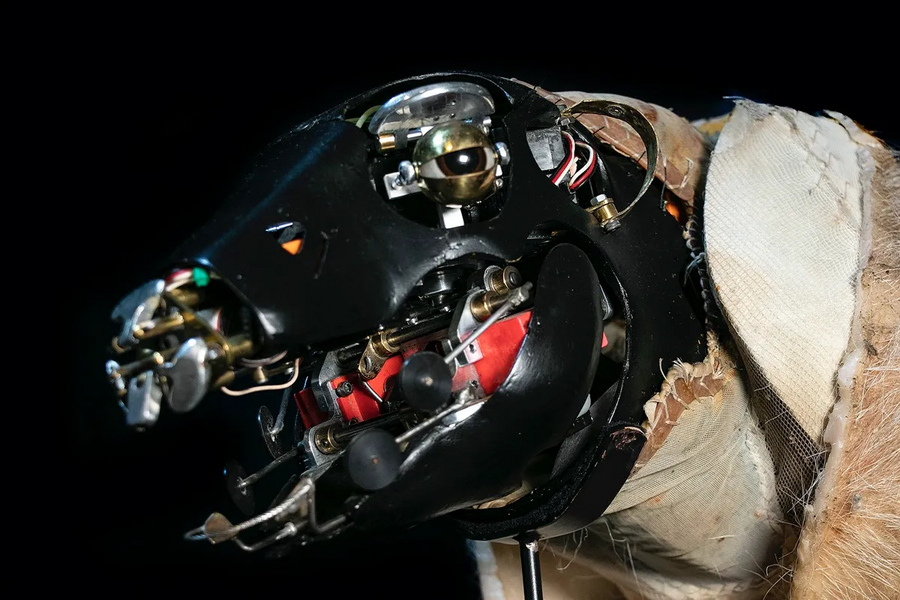
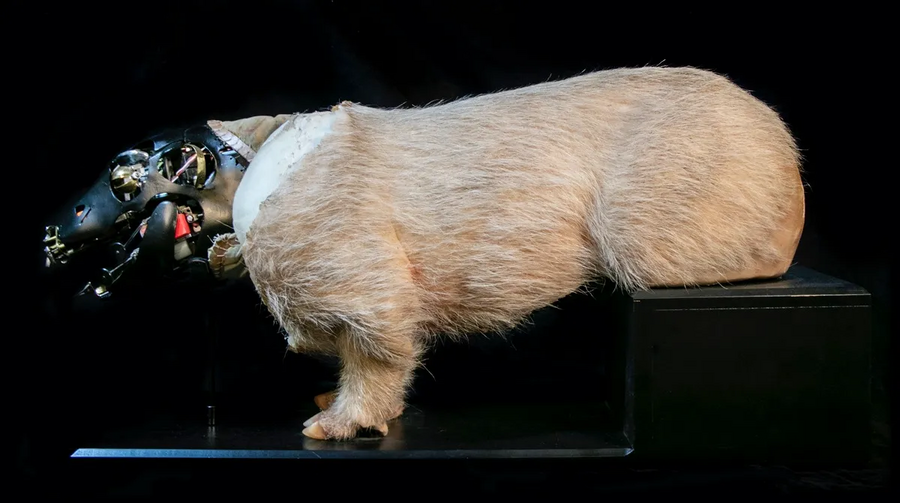
Bayb the animatronic pig, image provided by Bob Lindenmeier.
Thanks to CGI graphics, we were able to achieve maximum realism in the animals' dialogue, and in cases where animatronics were used, they moved just as realistically and resembled a real piglet.
The process of creating the CGI animal muzzle involved manually tracking the animal’s head frame by frame. Subsequently, a skeleton was built for the muzzle, and the CGI talking muzzle was created based on that track. Various methods were experimented with for animating the speech, but attempts to replicate the real animal’s mouth movements resulted in something strange and unconvincing, unlike natural speech. Therefore, the team adopted a new approach: they only animated the key mouth movements, which successfully created the effect of realistic, human-like conversation.
How the tracking and the CGI face were created