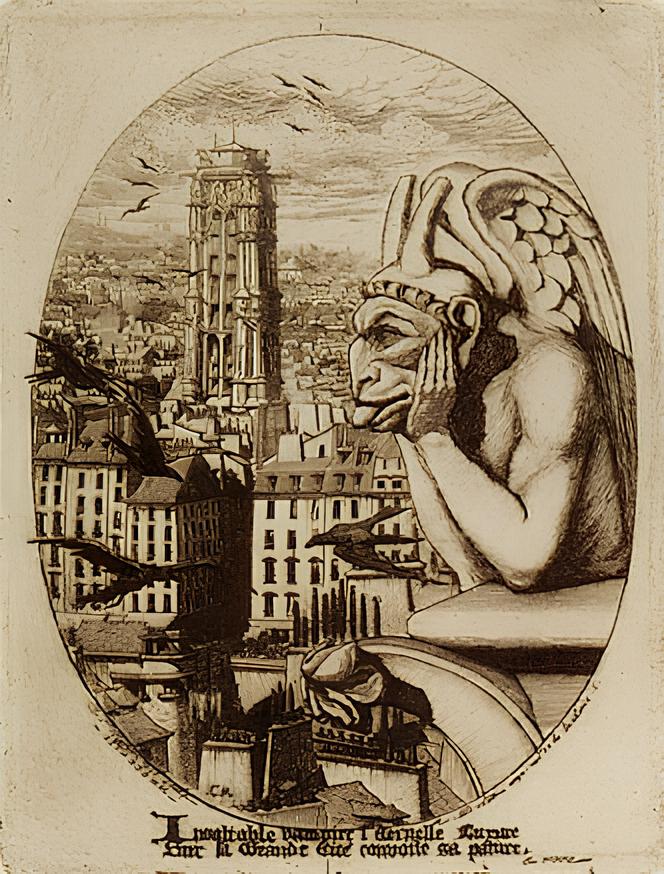
The difference between the gargoyles and chimeras of Notre Dame Cathedral.
Gothic cathedrals are richly adorned with gargoyles and chimeras. Notre Dame boasts a vast number of sculptures executed in a fantastical or grotesquely comic style. However, the familiar term «gargoyle» cannot be applied to every statue on the cathedral; some are worthy only of the title «chimera,» a distinction that is significant in understanding the specifics of how these creatures came to exist on the walls of Notre Dame.
The first chapter of my visual study is dedicated to those who were the first to take up residence on the cathedral walls—the gargoyles. In this section, I will examine the history and visual characteristics of these statues, as well as the reason for their name.
In the second chapter of the study, I will look at those who appeared on the Notre Dame walls much later but nonetheless left their mark—the chimeras—who, emulating the gargoyles, became a distinct and independent part of the cathedral’s life.
Gargoyles:
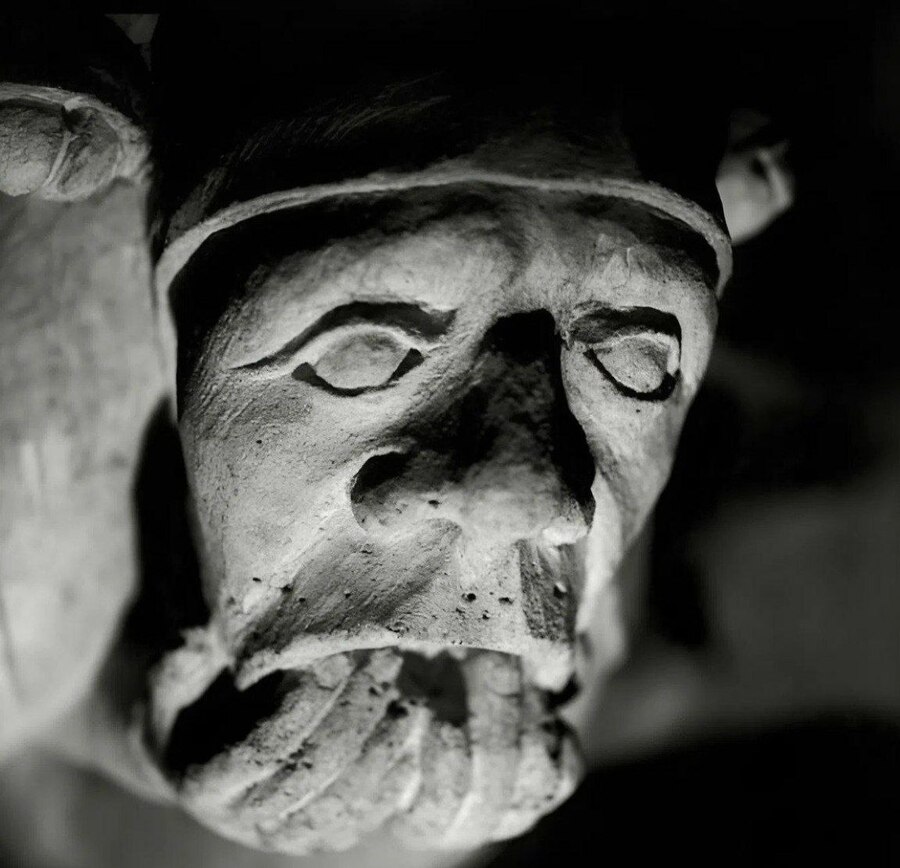
Inspired by temples in Egypt, Rome, and Greece, medieval architects embellished their designs with gargoyles. Creating legendary figures, the builders referenced French folklore—specifically, the 7th-century legend of Saint-Romain and La Gargouille, a fire-breathing monster whose head was nailed to the church to serve as a waterspout.
Gargoyle from Notre Dame Cathedral in Paris, top-down view. *Image quality enhanced using artificial intelligence
Image quality has been enhanced using artificial intelligence.
Image quality has been enhanced using artificial intelligence.
These images clearly show the gargoyle downspout system. Such photos are rare because it isn’t entirely clear what kind of sculpture is rising above the city. This rather unappealing statue serves a vital practical function—water drainage—which helps protect the cathedral’s facade and foundation from water damage.
When Notre Dame was completed in 1345, numerous limestone gargoyles adorned the exterior walls.
These creatures possess a distinctive appearance, combining features such as: a hollow, streamlined body, a long neck, and a pronounced animal head. They are often depicted as winged, with prominent, pointed ears and clawed limbs.
Image quality has been enhanced using artificial intelligence.
If you examine all the images closely, you can discern several common traits related to the position and facial expressions of the statues. They often «contort their faces» and express their emotions vividly, which simultaneously unifies and serves as a defining characteristic of each gargoyle.
However, not all members of the «gargoyle family» exhibit strongly pronounced animalistic traits; some resemble humans quite closely, even in their clothing attributes or cranial structure.
Image quality has been enhanced using artificial intelligence.
Also, due to the direct assignment of the melts, mythical characters become encased in layers of ice during the cold season, which only adds to their greater expressiveness.
Gargoyle as part of the drainage system of a large cathedral. From E. E. Viollet-le-Duc’s «Dictionary of French Architecture, 11th–16th Centuries, ” 19th century edition.
The diagram clearly illustrates the operating principle of the water drainage system, which is the primary function of gargoyles and the basis for their name, as «gargouille» translates from French as «gutter» or «downspout.»
Many clergy were opposed to such constructions on the cathedral walls, so they removed the gargoyles from their mounting points.
However, because the sculptures were carved from durable limestone (Lutetian limestone) sourced from the Seine River basin, they have remained well-preserved and have barely changed in appearance. Furthermore, it is worth noting that medieval Paris was home to many skilled artisans, particularly sculptors.
Chimeras: