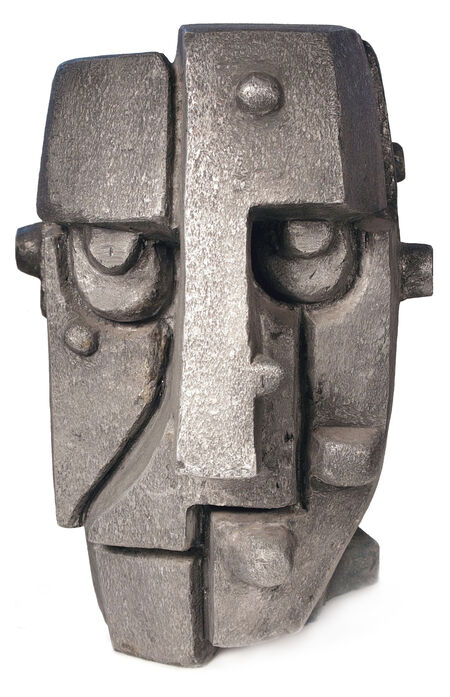
The head—a part of the body that connects especially closely with identity. We recognize people by their faces, reading expressions in their eyes and mouth, correlating appearance with name, character, and social status. In everyday language, the head signifies intellect, consciousness, control, and individuality: «to keep one’s head, ” „to lose one’s head, ” „to be the head.“ Yet, this connection is not universal or immutable; across different cultures, the skull, face, hair, name, and remains may have held disparate ritual and social meanings.
This gives rise to a paradox: the head can be physically separated from the body, yet still be perceived as what maintains the person’s presence. Conversely—a face can remain visible, recognizable, and widely reproduced even when the person is deceased, absent, or never existed as a real individual.
This allows us to frame the central research question: what exactly does culture deem to be preserved in the head when the head is separated from the body? Biological remains? Identity? A vanquished enemy? A saint? Power? Memory? A reproducible image?
LITERATURE:
1. Hans Belting, «Anthropology of the Image: Image, Medium, Body»: This work explores the image not merely as a surface depiction, but through the relationship between the body, the image carrier, and the viewer. In his model, the body is not simply the object of the image but a kind of «living medium» where images emerge, are perceived, and are preserved.
Each carrier offers the viewer a specific mode of presence—for instance, when faced with remains, we encounter the material trace of a human being; when facing a reliquary, we encounter an object that can be incorporated into religious practice.2. David Friedberg, «The Power of Images»: This examines not just what images signify, but how people react to them—worshipping them, fearing them, destroying them, kissing them, desecrating them, or believing they possess agency. This perspective allows us to move beyond iconographic analysis: it is important to ask not only «what is depicted?» but also «what do people do with this object, and what do they expect from it?»
1. The Head as a Unique Body Part
Why is the head capable of being perceived as an independent entity, even when the body is absent? What exactly makes a head a head: its anatomical form, its face, its gaze, its name, its material substance, or its capacity to represent an absent person?
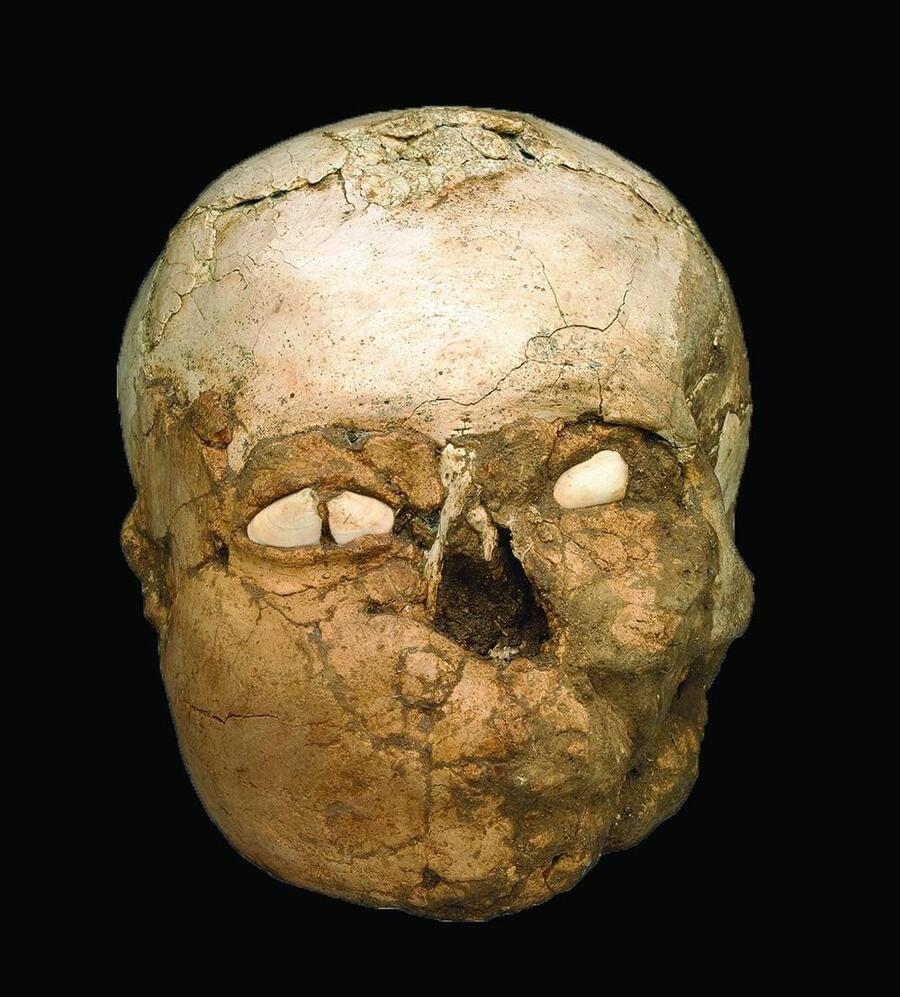
Jericho Stuccoed Skulls Neolithic, circa 7th millennium BCE https://www.britishmuseum.org/blog/facing-past-jericho-skull
Archaeological finds related to post-mortem treatment of skulls. Some skulls were modeled with plaster, indicating facial features and sometimes inlaid with eyes. They allow us to investigate how human remains transform into an image capable of preserving memory of a specific deceased individual.The precise functions and meaning for the communities that created them remain subjects of archaeological interpretation. However, the remains do not merely preserve; they restore the appearance of a face. The skull becomes something more than a biological remnant, but it is not yet an autonomous work of art in the modern sense.
Olmec stone heads
2. (Other’s) Head as Power, Trophy, and Proof of Victory
Ethiopian emperor beheading people (18th century)
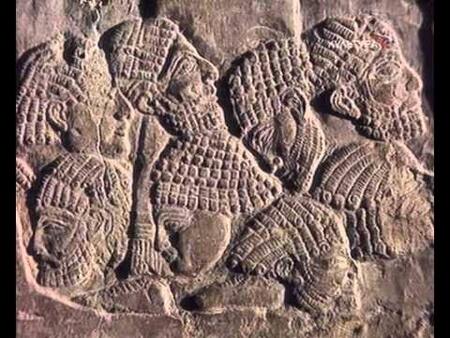
Assyrian palace reliefs from the 7th century BCE depict military campaigns and the consequences of conquests. Such reliefs must be understood within the context of royal representation: violence here is not a random incident but a component of the visual language of imperial power. The portrayal of victory confirms the ruler’s capacity to subjugate enemies and maintain the established order.Michel Foucault, Discipline and Punish: public punishment as a means by which power manifests itself on the body of the condemned.
Benvenuto Cellini. «Perseus with the Head of Medusa» 1545–1554, bronze, Florence
The severed head of an enemy signifies that the adversary can no longer act, and the victor gains the right to display their defeat. The head becomes a kind of evidence: an event of violence transforms into a public image that can be seen, remembered, and passed on to others.
In the ancient and medieval military context, a trophy could attest to victory, confirm the victor’s status, and maintain the collective memory of the conflict.In Cellini’s work, Perseus holds Medusa’s head over her fallen body. The composition divides the victor and the vanquished: the living hero stands vertically, his body occupying space, whereas Medusa’s head is transformed into an attribute of triumph. Yet, the image does not simply state that Perseus won. It structures the relationship between the hero and the viewer: the victory becomes a spectacle that must be presented and acknowledged.
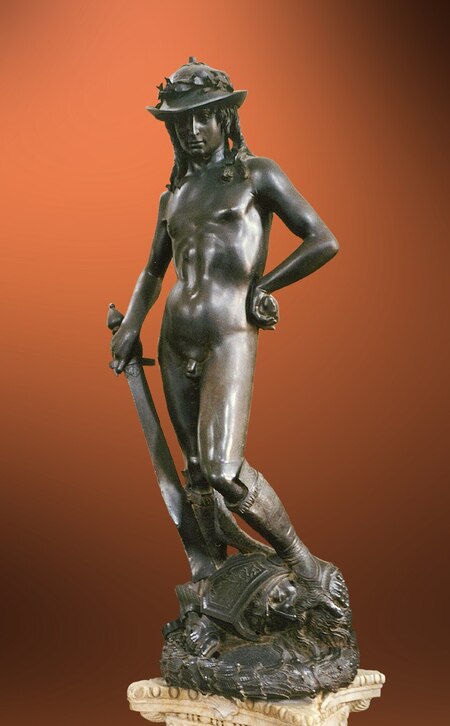
Донателло. «Давид» Около 1440-х годов, бронза
Караваджо. «Давид с головой Голиафа» Около 1609-1610, масло на холсте
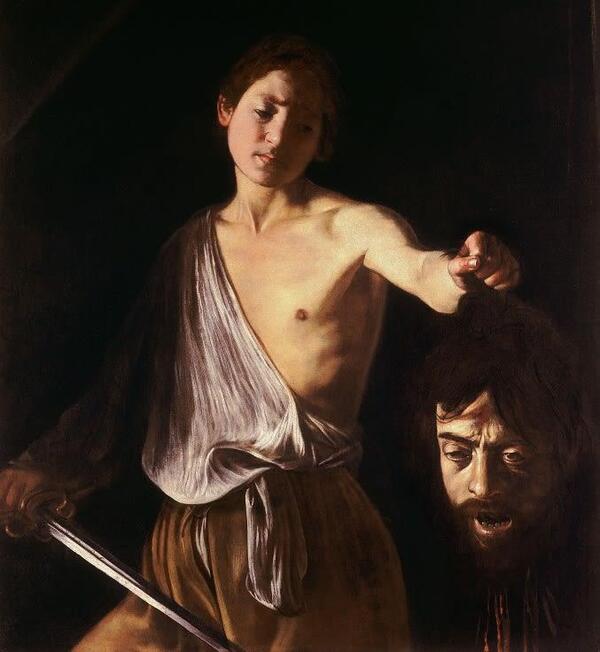
In the case of the sculpture, the head of Goliath rests at the feet of the hero. The body of the defeated almost disappears from the narrative, and the head becomes proof of the weak triumphing over the strong. Unlike a glorified victory, Caravaggio introduces psychological ambiguity: David does not appear as a triumphant conqueror. The image allows for interpretations involving compassion, revulsion, contemplation of death, and self-knowledge.
For Donatello, the head primarily confirms the victory; for Caravaggio, it transforms into an emotionally complex presence of the vanquished.
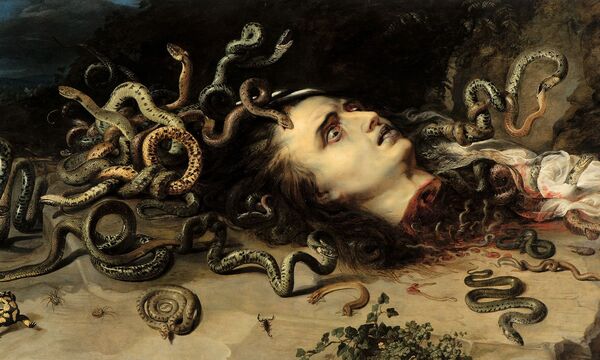
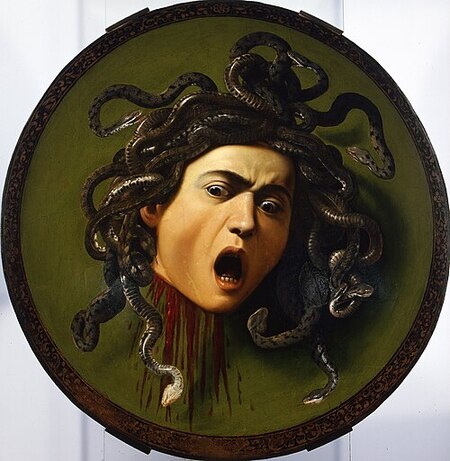
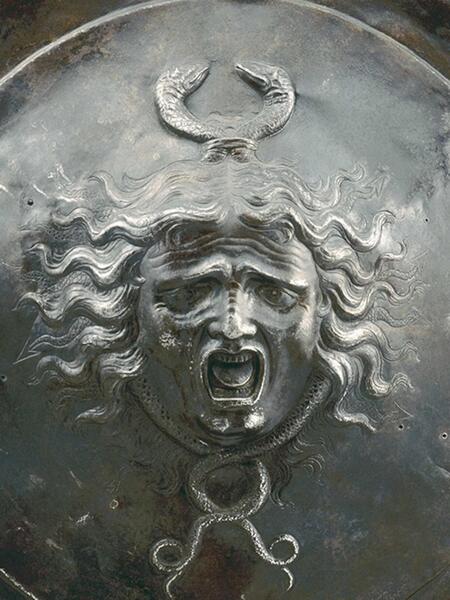
The head of Medusa appears on shields, ceramics, architectural decor, and other objects. It not only serves as a reminder of Perseus’s victory but also functions as a protective symbol. How does the image of a dangerous creature transform into a means of protection from danger?
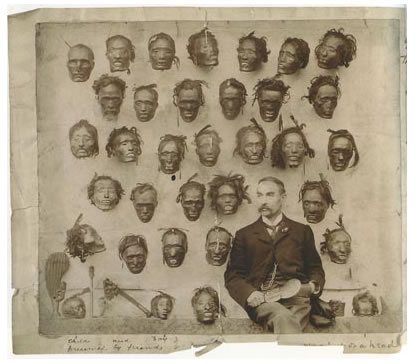
The Momokoi Collection, curated by British officer Robley
Head Authority
The image displays antisemitic propaganda poster art from the WWII era, titled «Le complot juif contre l’Europe!» («The Jewish Conspiracy Against Europe!»). The poster was created and distributed between 1941 and 1942 in the Nazi-occupied parts of Europe (including France and Belgium) as an instrument of German Nazi propaganda.
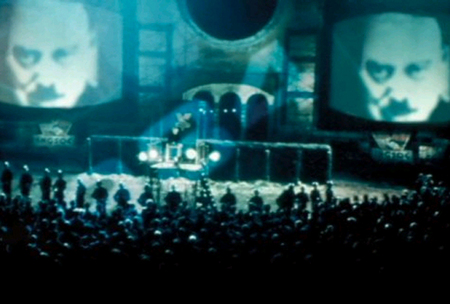
In George Orwell’s novel Nineteen Eighty-Four, the immense portrait of Big Brother is omnipresent. It creates the impression that a person is constantly being watched. This is not a literal, separate head, but a monumentalized face that gains power through its scale, repetition, and presence in the public sphere. Big Brother does not necessarily have to be a physically present individual. His image continues to exert influence regardless of whether a specific prototype exists in the form depicted by the propaganda. Here, the face becomes a symbol of the system, rather than merely a portrait of a leader.
The largest bust of Lenin, Ulan-Ude
3. The Head as Shrine, Relic, and Vessel of Presence
sacred presence, memory, materiality, cult
If the head in the trophy’s image signifies defeat and the acquisition of power, in the Christian context, it can symbolize the presence of a saint. The narrative of John the Baptist is particularly evocative, as his head after execution becomes an independent subject for depiction, veneration, and storytelling.
Caravaggio. «Salome with the Head of John the Baptist» c. 1607–1610, National Gallery, London
Saint John the Baptist Chapter 19th-Century Icon. Volga Region.
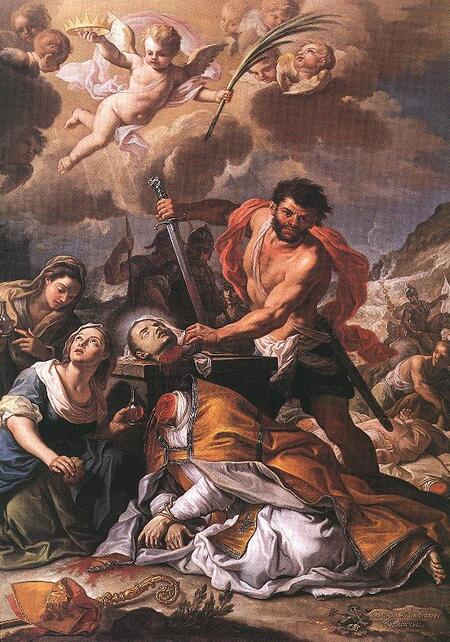
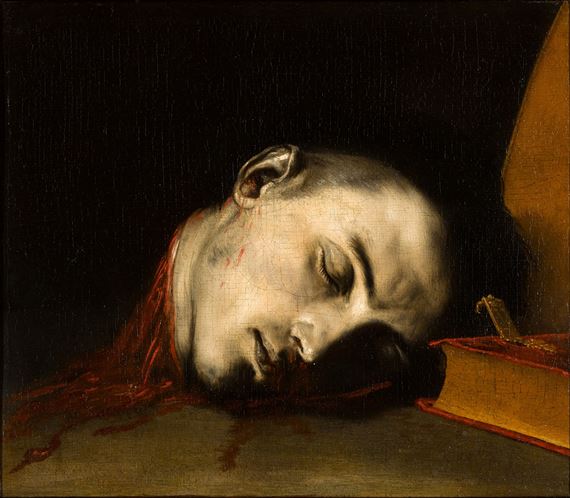
2 — Hossepe de Ribera, «The Decapitated Head of Saint John the Baptist, ” circa 1630s
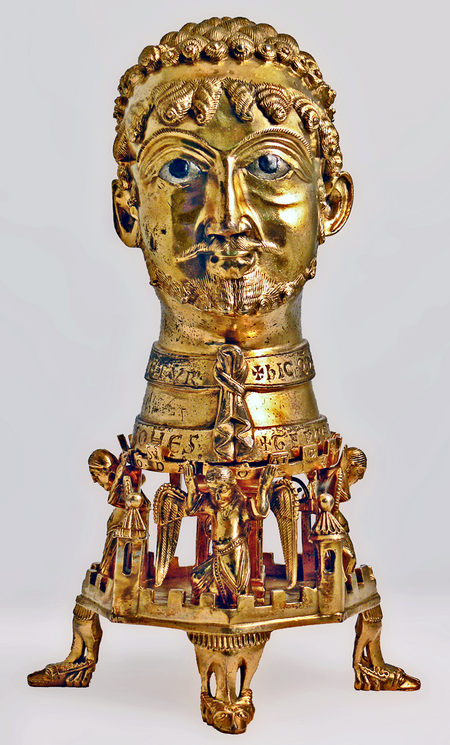
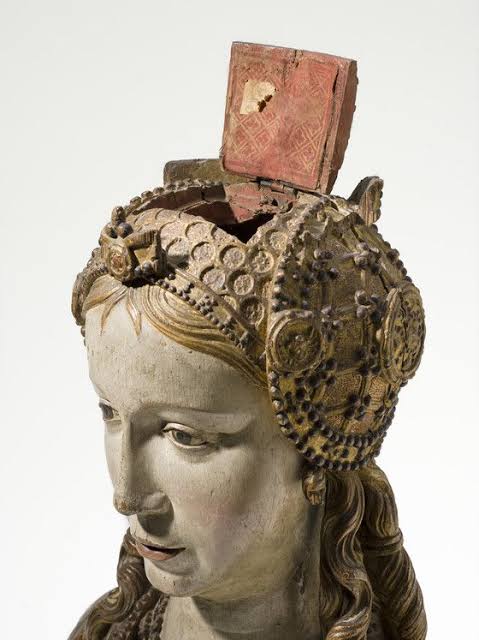
Medieval and Late Medieval Head Reliquaries Europe, primarily 12th–15th centuries
A medieval reliquary shaped like a head. Three functions must be distinguished within it. The first is depiction: the object lends the saint a recognizable likeness. The second is vessel: it may contain a physical relic—that is, a material remnant connecting the object to the venerated person. The third is participant in practice: the reliquary is not just viewed, but may be displayed on specific days, carried in processions, placed in sacred spaces, and incorporated into rituals.
Belting helps understand why the connection between image and material carrier is so significant here. The saint’s head can be present in the depiction, in the relic, and in religious memory, but these modes of presence are not identical. The image may serve as a reminder of the saint; the relic claims a material connection to him; the ritual makes this connection socially significant.