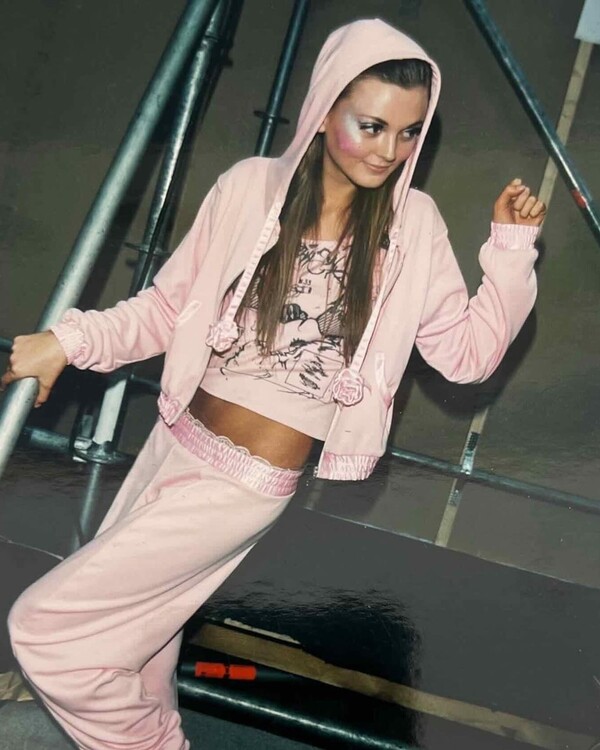
…femininity, semi-transparent eroticism are still present in my collections…
Concept
The relevance of this work stems from the contemporary return to the aesthetic of Y2K glamour as a visual language of Russian fashion. Characteristic velvet suits, bright colors, shine, and intentional body exposure are today’s markers of that era.The work of the namesake brand, Masha Cigaly, which the author believes achieved its greatest popularity precisely during this period, allows us to examine how athletic style, chic, and club culture were interwoven. The main material consists of the collection from the XXX Fall-Winter 2003–2004 season, which the designer herself named the «Gothic Glamour of the Noughties,» and the «Five Stars» Spring-Summer 2004 collection.
How did glamour, sportswear, and subcultural motifs intersect in Russian fashion of the 2000s? How did this convergence manifest in MASHA TSIGAL’s collections?
The hypothesis posits that brand success and the precise capture of glamour arise from combining a familiar sportswear silhouette with expressive texture, proprietary graphics, and stage presentation. As the collection transitions into the «Five Stars» line, the recurrence of the object and its highly recognizable decor assume increasing significance in the brand’s public image.
Rubrication Principle
The research begins with a broad context of glamour and transitions to a specific analysis of Masha Tsigal during this era. The introduction outlines the contemporary interest in the Y2K period. The first chapter defines glamour and its characteristics; the second examines its dissemination and evolution in Russia. The third chapter is dedicated to the origin of Tsigal’s signature techniques, and the fourth focuses on gothic and sporty glamour within the brand.
Selection of visual materials and bibliography
Visual materials are selected to allow for an analysis of silhouette, texture, and the representation of corporeality. The research includes archival photographs, magazine clippings, photo and text documentation from the 2005 and 2007 shows, as well as contemporary photographs of the brand.The study utilizes academic papers, collection descriptions, and interviews. The texts were chosen to explore the concept of glamour and to clarify the dates of the collections and descriptions, while the interviews reveal the designer’s perspective. This information is, to a lesser extent, correlated with the author’s personal observations made during discussions about the research with peers.
1/ What is glamour?
Steven Gandel connects glamour with publicity, spectacle, consumption, and the convergence of exclusivity and replicability. Such an image promises a special lifestyle and offers recognizable pathways to attain it; this is why it is crucial to understand the «admirer» of this glamour—their desires will vary depending on whether they are interested in music or reading fashion magazines.
Liisa Winkler for Valentino 2003. Source: https://ru.pinterest.com/pin/23362491797603349/
This is precisely why it is important to understand what makes something appealing in a given context. For instance, a tracksuit, while maintaining its structure, can be presented as comfortable apparel, part of a stage persona, or one piece of a designer collection. The effect of «glamour» emerges from the relationships between elements (material, setting, etc.). This definition allows us to categorize objects based on how they relate to fashion and public success, and the response they elicit from the viewer—a striking item does not automatically become glamorous.
Paris Hilton, 2001. Source: https://au.pinterest.com/pin/30821578690735424/
Ghandl analyzes glamor—from European urban culture to the Hollywood star system and contemporary media—where the general public accesses images of exceptional lives and people through reproducible imagery. From this perspective, a memorable image serves a dual function: it singles out the individual among the crowd and allows for the reproduction of their type (since reproducing only the look associated with an event is far easier than reproducing the entire event). Clothing acquires significance beyond its material or direct practical function.
Masha Tsigal also plays on the duality of the appeal and reproducibility of the cult image; instead of suggesting an evening gown, she draws attention to sportswear valued for the designer’s collection.
Alexander McQueen, Autumn 2007; Christian Dior (John Galliano), Spring 2006. Source: https://www.fitnyc.edu/museum/exhibitions/gothic-dark-glamour.php
The dissemination of a glamorous image relies on repetition through photographs, tagging of photoshoot participants, and the designer-maker’s name. Through these images, people who have never owned such clothing can recognize and reproduce it, as if identifying with the item’s popularity.In this context, the tracksuit is particularly convenient: it is easily recognizable and reproducible because the differences are largely concentrated in color, material, and decoration. For instance, Juicy Couture in the Metropolitan Museum’s 2004 collection demonstrates the similarity of forms across various international settings.Cygal’s design approach manifests through drawings, texture, body presentation, and various cultural references, and against the backdrop of the tracksuit’s prevalence, these unique characteristics of the garment become more noticeable.
Plush Suit, 2026. Source: https://mashatsigal.com/shop/
The key visual indicators of glamour in the study are silhouette (the possibility of movement, fit to the body), decoration (through accents and cultural references), color (the bright pink color combined with provocative poses and comic-book-style decoration forms a new interpretation of femininity by the designer), and material.Glamour is defined by image recognition and its appeal; therefore, the combined analysis of these key characteristics allows us to view Masha Tsigal’s work as a collection of hybrid forms rather than a single, distinct attribute of the «noughties.»
2/ Glamour in Russia
Hereafter, the term «Russian Glamour» will be used to denote a segment of visual culture, rather than to characterize society as a whole.
In this chapter, we will examine how the designer, fashion media, and the music scene interacted. The analysis is based on specific materials and does not imply that the aesthetic of the Moscow fashion scene represents the experience of the entire country.
The culture of Russian celebrities in the 1990s and 2000s is intertwined with volatile socioeconomic conditions. Consequently, fame in one field often served as a foundation for their presence in others—the same persona could organically thrive in a music scene, a high-society event, or a magazine photoshoot.
This helps preserve the individual’s recognizability: an item initially presented on the runway gains personality when worn by a person, and then acquires character and lifestyle in a magazine feature.
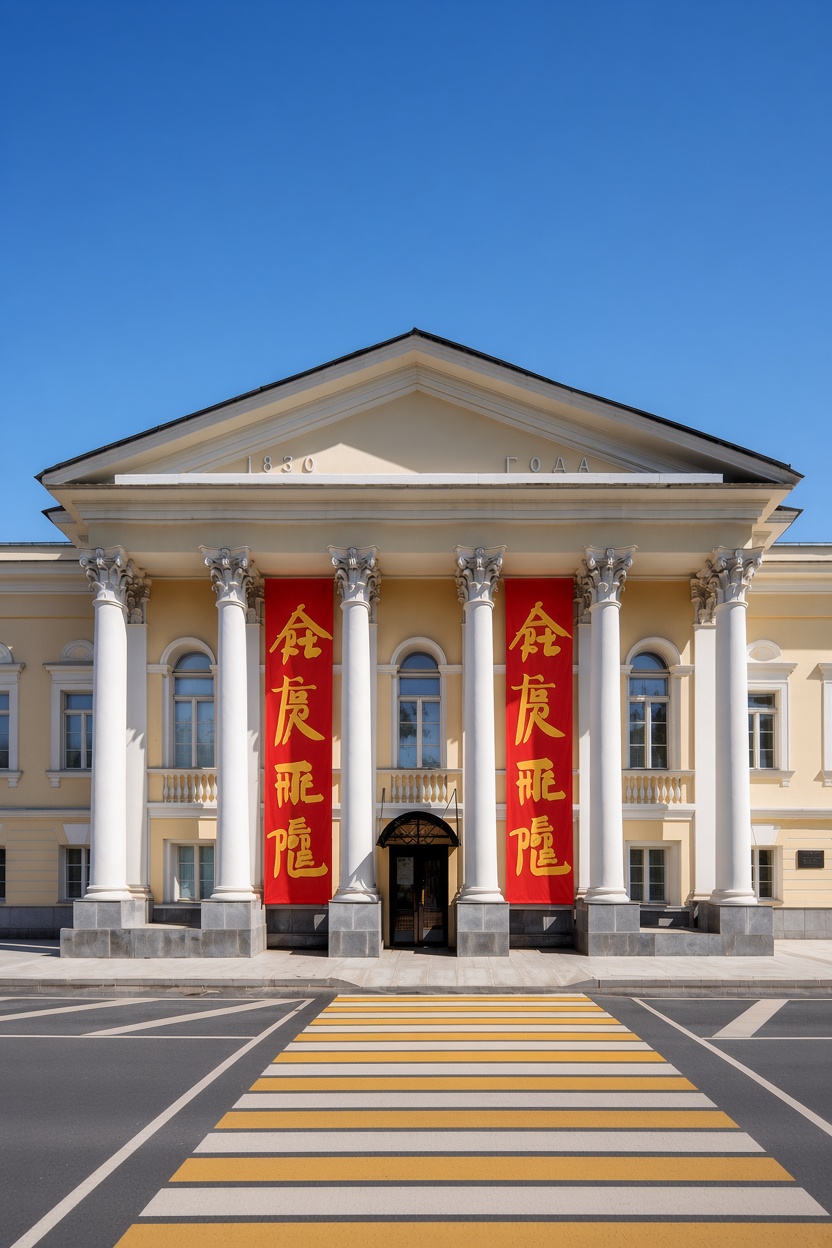
The exhibition concept, «Here We Were: An Archive of Russian Fashion,» presented at GES-2 traces the evolution of Russian fashion—from artistic performances and club shows to runway fashion weeks and boutiques.In the photograph, printed materials are displayed in a slanted showcase, with garments visible behind them. The clothing is part of a broader statement: the designer who created it outfits stage stars and/or contacts magazines; and in the store, the item retains traces of that work, even if the buyer uses it outside of its original artistic context.
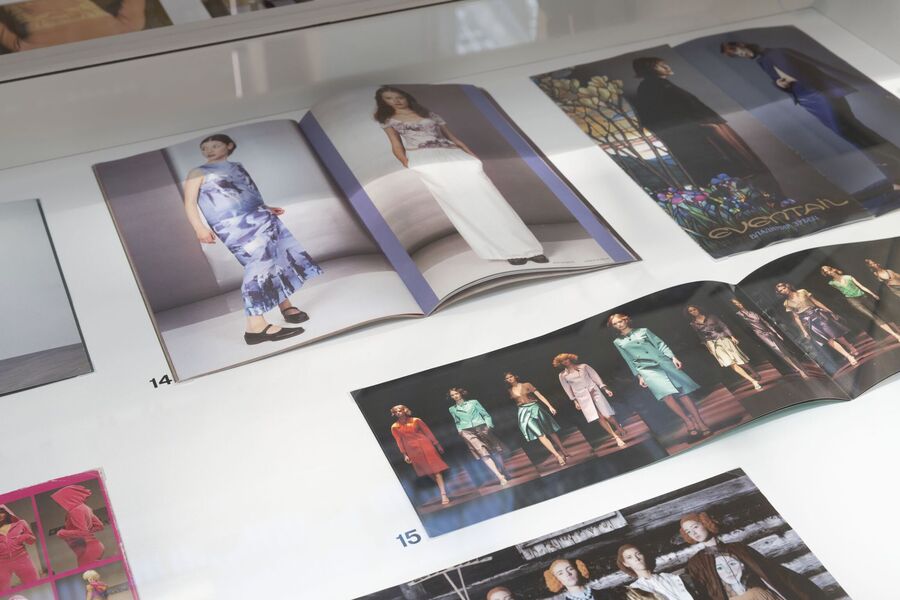
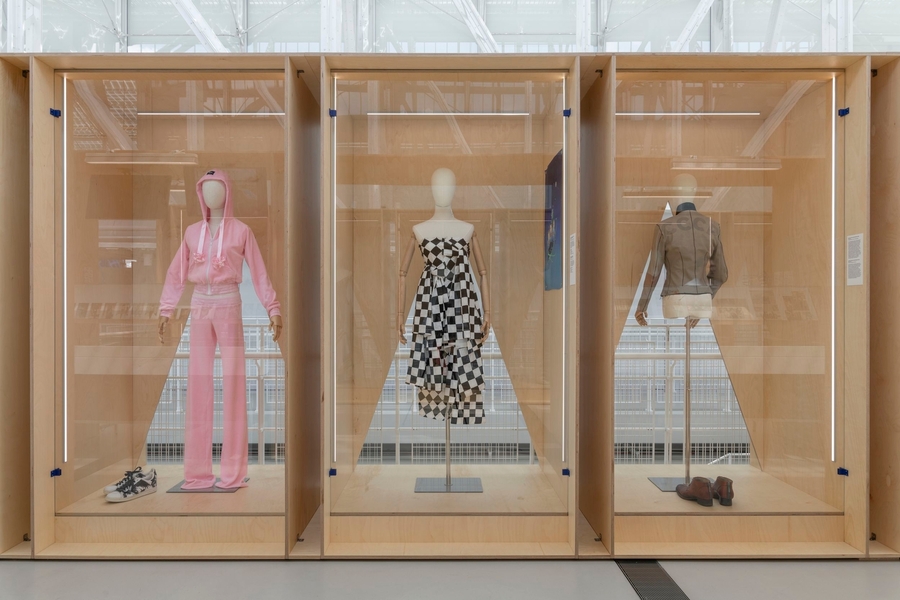
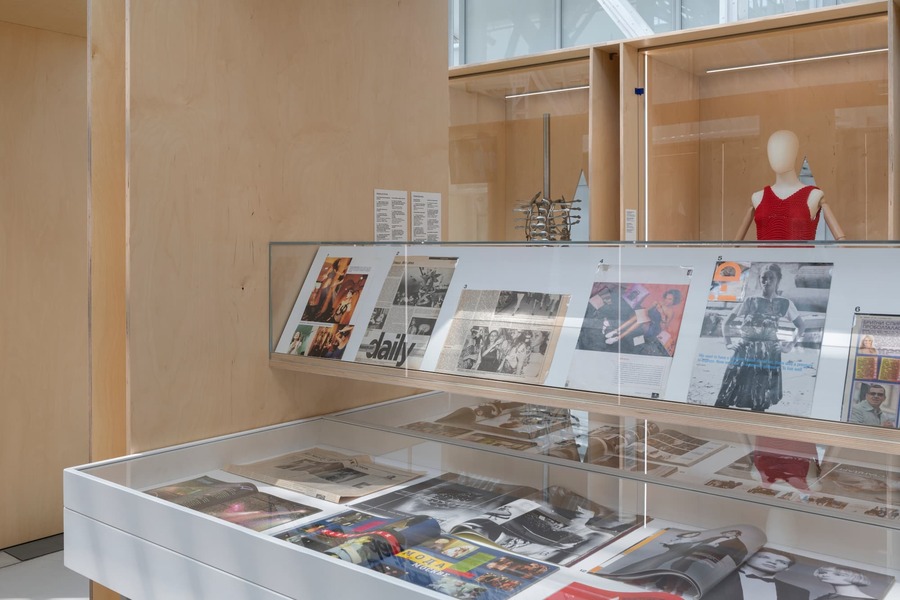
Exhibition «Here We Were. Archives of Russian Fashion. 1993–2005,» Daniil Annenkov, 2024. Source: https://mediiia.com/kiiids/project/30f514ca3ba84a59a4c54c16c202cda8
The i-D reproduction from February 2002 features a model wearing a Masha Tsigal dress for a project on Eastern European fashion; the illustration on the bodice, the text below, and the authorship credit connect the clothing to the individual and a commentary on contemporary life. The magazine clipping confirms the designer’s international presence in the 90s, predating the fixation on the brand’s pink tracksuit image, and showcases the variety of clothing and its presentation, though it does not yet prove mass sales.
3/ The Brand Story of Masha Tsigal
This chapter is dedicated to the origins and methods of using the brand’s visual techniques—those established before the XXX collection and subsequently preserved. The study also includes biographical information where it helps to understand the structure of a specific object.
Masha Tsigal comes from an artistic family. She studied at the Stroganov School and then continued her education in the United Kingdom, focusing on Fashion Design and Marketing. In interviews, the designer often mentions that this education allowed her to temper her creativity and improve the commercial viability of her collections. Her early works include the «We Will Be Like the Sun» collection, made from vinyl records, and «Laplandia, ” made from acrylic.